
The football behind Sergio Ramos’s ratings
- Defensive intervention
- Elite
- Aerial timing
- Elite
- Passing range
- Excellent
- Decision-making
- Very Good
- Leadership
- Elite
- Finishing
- Good
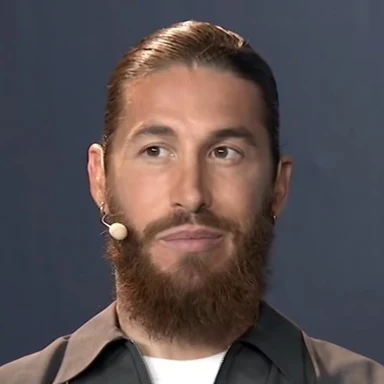 Photo: Real Madrid. Source and license in Image credits.
Sergio Ramos García
A forceful centre-back whose duels, passing and set-piece movement made defensive initiative a defining part of Madrid and Spain’s success.
Senior club · all competitions
Completed club records only; not a complete career total.
Active club snapshots and records with another scope are excluded. Assist totals are not combined across incompatible definitions.
Stored archive snapshots, not live counters. Missing values are not zero; records with different scopes are never added together.
G/M = goals ÷ appearances. G+A = goals + assists. Per-90 metrics use documented minutes.
Senior international · all competitions
Spain · completed playing record, 2005–2021
Stored archive snapshots, not live counters. Missing values are not zero; records with different scopes are never added together.
G/M = goals ÷ appearances. G+A = goals + assists. Per-90 metrics use documented minutes.
In context
A defender’s initiative expressed through confrontation, progression and decisive headers, with judgment and discipline inseparable from the achievement.
Reading the game
Sergio Ramos makes the centre-back’s relationship with risk unusually visible. He wanted to influence an attack before it became a shot: step into a receiver, carry the ball beyond the first opponent, or follow a forward away from the line. Those choices could win territory and keep Madrid attacking, but they also created responsibilities for the partner and midfielders covering behind him. The same initiative made him dangerous at attacking set pieces, where the timing of a run mattered as much as the leap. His famous goals are therefore part of the explanation, not a complete measure of his defending. A serious assessment must also ask whether an intervention was necessary, whether the space behind was protected and whether aggression remained under control. This dossier uses 2016/17 as a shared reference for both ratings, while distinguishing the earlier right-back, the established central defender and the later captain. Across those versions, his importance lies in making defence an active contribution to territory and momentum, with costs that should remain visible alongside the rewards.
Historical references support the chronology; tactical explanations are museum editorial analysis.
Historical references: Real Madrid: Sergio Ramos’s career and honours ↗ · UEFA: Ramos named the 2016/17 Champions League defender of the season ↗ · UEFA: Ramos on the 2014 final and Munich semi-final ↗
Career
| Period | Club | Apps | Goals | G/M |
|---|---|---|---|---|
| 2004—2005 | SevillaFirst Sevilla spell: 39 senior league appearances, including one in 2005/06 before the Madrid move. Reserve-team and cup matches are excluded. Senior club · league only | 39 | 2 | 0.05 |
| 2005—2021 | Real MadridReal Madrid’s official first-team total: 671 matches and 101 goals. The sixteen league rows are a subset of this record, not additional appearances. Senior club · all competitions Senior · #4 | 671 | 101 | 0.15 |
| 2021—2023 | Paris Saint-GermainBoth completed Ligue 1 seasons combined: 12 plus 33 appearances and two goals in each season. This league scope excludes European and cup matches. Senior club · league only Senior · #4 | 45 | 4 | 0.09 |
| 2023—2024 | SevillaReturn season at Sevilla: La Liga only. These 28 appearances and three goals do not include his Champions League or cup contribution. Senior club · league only Senior · #4 | 28 | 3 | 0.11 |
| 2025—2025 | MonterreyThe club’s farewell confirms 34 appearances and eight goals: 27 Liga MX matches, two Leagues Cup, one Concacaf Champions Cup and four Club World Cup matches. Liga MX includes play-offs. This completed spell is not a claim about a current club. Senior club · all competitions Senior · #93 | 34 | 8 | 0.24 |
Stored archive snapshots, not live counters. Missing values are not zero; records with different scopes are never added together.
G/M = goals ÷ appearances. G+A = goals + assists. Per-90 metrics use documented minutes.
Honours
Real Madrid · continental
Real Madrid · league
Real Madrid · domestic cup
Real Madrid · domestic cup
Real Madrid · continental
Real Madrid · world
Paris Saint-Germain · league
Spain · world
Spain · continental
Real Madrid · individual
Story
Career chapter
The first-team breakthrough at Sevilla and the 2005 move to Madrid did not immediately produce the central defender remembered from later finals. Right-back work required him to defend a wide channel, join attacks and recover over longer distances. Spain’s 2008 European Championship and 2010 World Cup teams used that version alongside established central defenders. Those years help explain his willingness to move beyond a fixed starting position. They should not be retroactively described as a decade spent only at centre-back. His development involved carrying useful habits from the flank into a role with different consequences for leaving the line.
Historical references: Real Madrid: Sergio Ramos’s career and honours ↗ · RFEF: Sergio Ramos’s 180 appearances and 23 goals ↗ · UEFA: Ramos’s Madrid legacy and return to Sevilla ↗
Career chapter
As the central role became established, his first decision increasingly affected the whole defensive line. Stepping towards a forward could prevent a turn, but the partner had to understand who would protect the space behind. The 2012 Spain side and Madrid’s subsequent European campaign provide different collective settings for that problem. In 2014, his two headers in Munich and late equaliser in Lisbon made the attacking dimension impossible to ignore. They did not replace his defensive responsibilities. The useful lesson is how one player could be asked to protect his own penalty area and then attack the other with very different movements.
Historical references: Real Madrid: Sergio Ramos’s career and honours ↗ · RFEF: Sergio Ramos’s 180 appearances and 23 goals ↗ · UEFA: Ramos on the 2014 final and Munich semi-final ↗
Career chapter
The captaincy years brought a mature combination of defensive confrontation, passing responsibility and set-piece threat. The 2016/17 season is the rating reference because it gives those strands a coherent club context, rather than borrowing the best moment from every year. UEFA’s defender award provides a contemporary anchor, not an official numerical grade. Kroos, Modrić and Casemiro influenced the options around him, while his central partner helped manage the space he left. Later, the eleven league goals in 2019/20 show a different attacking output, including penalties. That later total belongs to its own season and does not inflate the reference version’s finishing.
Historical references: National Football Teams: Ramos’s league seasons and international matches ↗ · UEFA: Ramos named the 2016/17 Champions League defender of the season ↗ · UEFA: Ramos’s Madrid legacy and return to Sevilla ↗
Career chapter
Leaving Madrid in 2021 changed the surroundings in which his habits operated. Paris offered another possession-heavy team; the return to Sevilla restored a familiar club in a different competitive situation. Monterrey then placed him in Mexican and international club competitions during 2025. The club’s farewell records thirty-four matches and eight goals across four competitions, a completed spell rather than a live total. These chapters should not be collapsed into a claim that his athletic profile remained unchanged. They show how experience and technical choices travel between teams while match demands change. The documented Monterrey departure closes the listed spell, without implying retirement or a subsequent destination.
Historical references: UEFA: Ramos’s Madrid legacy and return to Sevilla ↗ · Monterrey: Ramos’s farewell, 34 matches and eight goals ↗
Profile
Ball-Playing Centre-Back
Also plays · Full-Back
Steps towards receivers, carries into open lanes and changes the point of attack with diagonals. Aerial timing creates scoring threats, while central defending depends on partnership, recovery and choosing when to hold the line.
Front-foot defending
Aerial timing
Passing range
Set-piece movement
Illustrative role zones · not tracking data
Ramos often tried to stop an attack at the receiver rather than retreat towards his own box. The useful cue was whether the opponent could turn or was receiving with a closed body. A well-timed step could win the ball and preserve territorial pressure. A late or unnecessary step could instead open the channel behind him. Partnership and midfield cover are therefore part of the action’s quality, not background details.
His passing mattered when it made the next receiver easier to find. A short carry could attract the first presser; a diagonal could move the attack away from a crowded side. Those actions required awareness of the midfield’s positions and the space available after a turnover. They should be assessed alongside secure circulation, rather than through the length of the pass alone. The defender’s purpose was to improve the team’s next action.
In the opponent’s box, the challenge was to lose a marker and meet the delivery with a useful angle. The 2014 and 2017 European ties offer clear examples of that attacking timing. Defending a cross asks a different question: which space must be protected, and can the clearance avoid a second chance? Strong heading technique supports both jobs, but a goal does not prove that every defensive aerial decision was correct.
The force of a duel is only useful when it serves the defensive situation. Ramos’s appetite for contact could unsettle a forward, yet unnecessary fouls could give away territory or reduce the team’s margin for another challenge. Our evaluation therefore separates aggression, tackling technique and decision-making. The aim is not to treat intensity as an automatic virtue. A centre-back must recognise when staying connected to the line is more valuable than winning an isolated confrontation.
Historical references: Real Madrid: Sergio Ramos’s career and honours ↗ · UEFA: Ramos named the 2016/17 Champions League defender of the season ↗ · UEFA: Ramos’s Madrid legacy and return to Sevilla ↗ · UEFA: Ramos on the 2014 final and Munich semi-final ↗ · UEFA: Ramos’s heading interventions against Napoli in 2017 ↗
Reading the game
| Era / team | Primary Role | Tactical Character |
|---|---|---|
| 2004–2011Sevilla · Real Madrid · Spain | Right-back with central experience | Wide duels, forward support and recovery runs shape the early role. |
| 2011–2015Real Madrid · Spain | Establishing the central partnership | Stepping towards receivers depends on cover and coordination. |
| 2015–2021Real Madrid · Spain | Captain, passer and set-piece target | Central responsibility expands while aggression still requires restraint. |
| 2021–2025Paris Saint-Germain · Sevilla · Monterrey | Experience across later club settings | Retains a central role across changing teams; the listed Monterrey spell ends in 2025. |
Historical references: Real Madrid: Sergio Ramos’s career and honours ↗ · RFEF: Sergio Ramos’s 180 appearances and 23 goals ↗ · UEFA: Ramos named the 2016/17 Champions League defender of the season ↗ · UEFA: Ramos’s Madrid legacy and return to Sevilla ↗ · UEFA: Ramos on the 2014 final and Munich semi-final ↗ · Monterrey: Ramos’s farewell, 34 matches and eight goals ↗
Reading the game
He sought to change a defensive situation rather than merely survive it. That could mean arriving before the forward’s second touch or carrying into an available lane. The defining quality is initiative; the necessary qualification is that its value depends on timing and the cover behind the action.
The most memorable set-piece interventions begin before contact with the ball. Ramos could alter his route, escape a marker’s sight and arrive as the delivery entered the dangerous zone. The jump and finish completed a sequence whose first advantage had already been created by movement and anticipation.
His leadership was visible in willingness to take responsibility for the next action, whether a pass out of defence or a run into the box. That presence could help a team recover conviction. It still needs to be distinguished from flawless judgment: accepting responsibility does not make every chosen action correct.
The former right-back brought comfort moving forward and defending larger spaces into central defence. Spain’s tournament progression makes the change especially visible. Adaptation did not mean performing both roles identically; it meant deciding which habits remained useful when the centre of the pitch required more coordination and less freedom to chase.
Historical references: Real Madrid: Sergio Ramos’s career and honours ↗ · RFEF: Sergio Ramos’s 180 appearances and 23 goals ↗ · UEFA: Ramos named the 2016/17 Champions League defender of the season ↗ · UEFA: Ramos’s Madrid legacy and return to Sevilla ↗ · UEFA: Ramos on the 2014 final and Munich semi-final ↗ · UEFA: Ramos’s heading interventions against Napoli in 2017 ↗
Reading the game
Centre-back
A league-winning Madrid season and Spain’s 2012 title mark a central role becoming established. The emphasis is on partnership and choosing when to step away from the line.
Attacking centre-back
Munich and Lisbon provide the historical anchors. The attacking timing is exceptional, while the defensive assessment still requires the work between those decisive moments.
Ball-playing centre-back
The league and European double brings defensive initiative, passing and set-piece threat into one season. Both numerical and qualitative ratings use this version, with discipline treated as a separate decision-making question.
Centre-back and penalty taker
Eleven league goals belong to the later captain’s season, with penalties contributing to that output. The total is kept separate from the 2016/17 reference and from all-competition statistics.
Historical references: Real Madrid: Sergio Ramos’s career and honours ↗ · RFEF: Sergio Ramos’s 180 appearances and 23 goals ↗ · National Football Teams: Ramos’s league seasons and international matches ↗ · UEFA: Ramos named the 2016/17 Champions League defender of the season ↗ · UEFA: Ramos’s Madrid legacy and return to Sevilla ↗ · UEFA: Ramos on the 2014 final and Munich semi-final ↗
Statistics
| Season | Club | Apps | Goals | G/M |
|---|---|---|---|---|
| 2025 | Monterrey Senior club · all competitions | 34 | 8 | 0.24 |
| 2023–24 | Sevilla Senior club · league only | 28 | 3 | 0.11 |
| 2022–23 | Paris Saint-Germain Senior club · league only | 33 | 2 | 0.06 |
| 2021–22 | Paris Saint-Germain Senior club · league only | 12 | 2 | 0.17 |
| 2020–21 | Real Madrid Senior club · league only | 15 | 2 | 0.13 |
| 2019–20 | Real Madrid Senior club · league only | 35 | 11 | 0.31 |
| 2018–19 | Real Madrid Senior club · league only | 28 | 6 | 0.21 |
| 2017–18 | Real Madrid Senior club · league only | 26 | 4 | 0.15 |
| 2016–17 | Real Madrid Senior club · league only | 28 | 7 | 0.25 |
| 2015–16 | Real Madrid Senior club · league only | 23 | 2 | 0.09 |
Stored archive snapshots, not live counters. Missing values are not zero; records with different scopes are never added together.
G/M = goals ÷ appearances. G+A = goals + assists. Per-90 metrics use documented minutes.
European rows contain completed league seasons; Monterrey’s 2025 row explicitly contains all four competitions in the club’s farewell total. The scopes differ and should not be compared as identical workloads. Madrid’s 469 league appearances and 72 goals overlap its all-competition aggregate. Assists remain unknown. The listed record ends with the confirmed Monterrey departure in 2025; no later club or retirement is inferred.
Club competitions
| Competition | Apps | Goals | G/M |
|---|---|---|---|
FIFA Club World Cup2025 · MonterreyThe club’s farewell separates four Club World Cup appearances and the goal against Inter. Already included in Monterrey’s 34-match record. | 4 | 1 | 0.25 |
Stored archive snapshots, not live counters. Missing values are not zero; records with different scopes are never added together.
G/M = goals ÷ appearances. G+A = goals + assists. Per-90 metrics use documented minutes.
International
International career
A right-back in Spain’s 2008 and 2010 champions and a central defender in the 2012 champions. RFEF records 180 appearances and 23 goals; his last senior match was in March 2021.
Senior international · tournament splits
| Competition | Apps | Goals | G/M |
|---|---|---|---|
FIFA World CupWorld Cup finals · 2006–2018Final-tournament appearances only; qualifiers and shoot-out kicks are excluded from these appearance and goal totals. | 17 | 0 | 0.00 |
UEFA European ChampionshipEURO finals · 2008–2016Three final tournaments; the successful penalty in the 2012 semi-final shoot-out is not a match goal. | 15 | 0 | 0.00 |
Stored archive snapshots, not live counters. Missing values are not zero; records with different scopes are never added together.
G/M = goals ÷ appearances. G+A = goals + assists. Per-90 metrics use documented minutes.
Reading the game
Ramos belongs to a tradition of defenders who refuse to treat the back line as a passive boundary. His career shows how a centre-back can shape the game through confrontation, passing and movement into the opponent’s penalty area. The Madrid years gave that approach an exceptional stage, including European finals in which his attacking contribution changed the match. Yet remembering only those moments would miss the repeatable work: recognising the receiver’s body shape, coordinating with a partner and choosing a useful first pass after regaining possession. It would also conceal the downside of unnecessary contact or leaving the line at the wrong moment. His example is valuable because initiative and restraint cannot be separated in a defender’s education. Spain adds another perspective, with a right-back in the 2008 and 2010 champions becoming a central defender in 2012. Later spells in Paris, Sevilla and Monterrey belong to the same career without being treated as evidence for the 2016/17 ratings. His legacy is a forceful interpretation of defensive responsibility, best understood through decisions and their consequences rather than the trophy count alone.
Historical references: Real Madrid: Sergio Ramos’s career and honours ↗ · RFEF: Sergio Ramos’s 180 appearances and 23 goals ↗ · UEFA: Ramos’s Madrid legacy and return to Sevilla ↗ · Monterrey: Ramos’s farewell, 34 matches and eight goals ↗
Archive
Ball-Playing Centre-Back · editorial peak 2016—2017
Joaquín Caparrós · Fabio Capello · Bernd Schuster · José Mourinho · Carlo Ancelotti · Zinedine Zidane · Luis Aragonés · Vicente del Bosque · Mauricio Pochettino · Christophe Galtier · Domènec Torrent
Cristiano Ronaldo— Overlapping Real Madrid era · Ronaldo Nazário— Overlapping Real Madrid era · Zinedine Zidane— Overlapping Real Madrid era · Lionel Messi— Overlapping Paris Saint-Germain era
Galácticos — Real Madrid · Mourinho’s record league — Real Madrid · Four European Cups in five years — Real Madrid · League champions and a changing attack — Paris Saint-Germain

Adaptive tournament manager
1992—Present · AC Milan · Real Madrid
Elite knockout strategist
2000—Present · Real Madrid · Inter Milan
Midfield balance and dressing-room trust
2013—Present · Real Madrid Photo: Barcex (Wikimedia Commons); crop by EndzoneEnthusiast. Source and license in Image credits.
Discipline and defensive balance
1982—2018 · AC Milan · Real Madrid Photo: Илья Хохлов / Football.ua. Source and license in Image credits.
Continuity and technical control
1987—2016 · Real Madrid
Sporting CP · Manchester United · Real Madrid
2002—Present
FC Barcelona · Paris Saint-Germain · Inter Miami CF
2004—Present Photo: Bryan Berlin / WikiPortraits. Source and license in Image credits.
Dinamo Zagreb · Zrinjski Mostar · Inter Zaprešić
2003—Present
Barcelona
1999—2014
Barcelona · Al Sadd
1998—2019 Photo: Tam Tam. Source and license in Image credits.
FC Barcelona · Vissel Kobe · Emirates Club
2002—2024
FC Barcelona Atlètic · Barcelona
2023—Present
AS Saint-Étienne B · AS Saint-Étienne · OGC Nice
2017—Present
Real Valladolid · Real Madrid · Al-Rayyan
1987—2005Statistics are displayed only within the scope supported by each cited source.
Real MadridReal Madrid: Sergio Ramos’s career and honoursRFEFRFEF: Sergio Ramos’s 180 appearances and 23 goalsNational Football TeamsNational Football Teams: Ramos’s league seasons and international matchesUEFAUEFA: Ramos named the 2016/17 Champions League defender of the seasonUEFAUEFA: Ramos’s Madrid legacy and return to SevillaUEFAUEFA: Ramos on the 2014 final and Munich semi-finalUEFAUEFA: Ramos’s heading interventions against Napoli in 2017CF MonterreyMonterrey: Ramos’s farewell, 34 matches and eight goalsCF MonterreySergio Ramos departure, December 2025Wikipedia (cited biographical reference)Sergio Ramos — biographical and career reference