
The football behind Pau Cubarsí’s ratings
- Progressive distribution
- Elite
- Composure under pressure
- Elite
- Defensive anticipation
- Excellent
- Line coordination
- Excellent
- Recovery and contact
- Very Good
- Attacking end product
- Limited

Pau Cubarsí Paredes
A Spanish centre-back whose composure and forward passing connect defensive positioning with Barcelona’s first phase of attack.
Senior international · all competitions
Spain · RFEF record checked 15 September 2026
Stored archive snapshots, not live counters. Missing values are not zero; records with different scopes are never added together.
G/M = goals ÷ appearances. G+A = goals + assists. Per-90 metrics use documented minutes.
In context
An emerging example of the centre-back as both a defender of space and an organiser of the next possession. His career remains open.
Reading the game
Pau Cubarsí offers a way to understand how a centre-back can influence an attack before the ball reaches midfield. A defender who merely returns possession leaves the next player facing the same pressure. A defender who recognises a free receiver beyond that pressure changes the problem for the opposition. Cubarsí’s early Barcelona performances made that difference visible: the pass mattered because of where it arrived, when it arrived and what the receiver could do next. His defensive work belongs in the same picture. Stepping forward to intercept can sustain an attack, while an unnecessary challenge can expose the space behind the entire team. The task therefore asks for restraint as well as initiative. This dossier reads his development through those connected decisions, from an academy-trained passer to a regular in a demanding senior defence. His emergence under Xavi and continued responsibility under Hansi Flick provide different settings for studying that role. International tournament football adds another test, but neither early trophies nor a confident first impression settle his eventual historical standing. The useful question is how reliably he can connect progression, protection and collective timing.
Historical references support the chronology; tactical explanations are museum editorial analysis.
Historical references: FC Barcelona: Pau Cubarsí profile and honours ↗ · UEFA technical analysis: Cubarsí against Napoli ↗ · UEFA: Matchday 5 Team of the Week, 2024/25 ↗
Career
| Period | Club | Apps | Goals | G/M |
|---|---|---|---|---|
| 2023—2024 | FC Barcelona AtlèticNine league appearances for the reserve side in 2023/24, listed separately from the first team. Girona and the earlier Barcelona academy years are developmental history, not senior first-team club spells. Senior club · league only | 9 | 0 | 0.00 |
| 2024—Now | BarcelonaFirst-team league seasons through 2025/26: 19, 35 and 31 appearances sum to 85, with one goal. Cups, the reserve team and the ongoing 2026/27 season are excluded. Shirt numbers span his first-team progression; five is the current profile number. Senior club · league only Senior · #33 / 2 / 5 | 85 | 1 | 0.01 |
Stored archive snapshots, not live counters. Missing values are not zero; records with different scopes are never added together.
G/M = goals ÷ appearances. G+A = goals + assists. Per-90 metrics use documented minutes.
Honours
Barcelona · league
Barcelona · domestic cup
Barcelona · domestic cup
Spain Olympic team · world
Spain · world
Spain · individual
Story
Career chapter
Cubarsí joined Barcelona’s academy from Girona in 2018, and the reserve side later provided a bridge into senior football. His competitive first-team debut followed in January 2024 against Unionistas in the Copa del Rey. That pathway matters because technical education and competitive readiness are related but different things. A pass rehearsed in training must survive an opponent who can close the receiver, challenge the next touch or counter into the space left behind. The early chapter is therefore best understood as a transfer of familiar principles into a less forgiving environment. Xavi’s willingness to use him gave those principles a place in real first-team decisions.
Historical references: FC Barcelona: Pau Cubarsí profile and honours ↗ · National Football Teams: Cubarsí league and international records ↗ · Barcelona: first-team breakthrough and shirt numbers ↗
Career chapter
The March 2024 home win over Napoli supplied a particularly useful reference. On his Champions League debut, Cubarsí received the Player of the Match award; UEFA’s analysis highlighted both his distribution and defensive interventions. The significance lies in that combination. Passing through pressure would have been less useful without the capacity to protect the next phase, and confident defending alone would not explain his influence on Barcelona’s progression. His senior Spain debut arrived in the same month. Olympic gold followed that summer with Santi Denia’s separate age-group side, a different competitive setting that should not be confused with the senior European Championship.
Historical references: UEFA technical analysis: Cubarsí against Napoli ↗ · RFEF: Spain’s youngest defensive debutant ↗ · Barcelona: Cubarsí, Eric and Fermín win Olympic gold ↗
Career chapter
The 2024/25 campaign moved the discussion from a promising introduction to repeated responsibility. Barcelona records 56 appearances in a season that brought the league, Copa del Rey and Spanish Super Cup. Our tactical reading focuses on the demands behind that continuity: judging when to squeeze the pitch, when to hold position and how to pass without leaving the next receiver isolated. His dismissal in the first leg at Benfica also belongs in the account. It shows why the margin for a defensive intervention matters in European knockout football. Development is not a smooth sequence of successful first impressions; maintaining useful decisions after setbacks is part of becoming dependable.
Historical references: FC Barcelona: Pau Cubarsí profile and honours ↗ · UEFA: Matchday 5 Team of the Week, 2024/25 ↗ · UEFA: Barcelona–Benfica second-leg preview, March 2025 ↗
Career chapter
His hundredth competitive Barcelona appearance came in December 2025, an early marker of how quickly opportunities had become sustained responsibility. The following summer, Spain’s federation recorded his role in a World Cup-winning team and his best young player award. Those events broaden the evidence beyond a single club breakthrough. They also require careful interpretation: a team’s defensive record cannot be assigned to one centre-back, and an individual tournament award is not a forecast of an entire career. This chapter follows the ability to repeat useful actions under new demands. The dossier keeps later achievements separate from its 2024/25 rating reference, allowing the evaluation and the chronology to remain intelligible.
Historical references: Barcelona: 100 competitive appearances, 16 December 2025 ↗ · RFEF: Cubarsí senior Spain match record ↗ · RFEF: Cubarsí named best young player at the 2026 World Cup ↗
Profile
Ball-Playing Centre-Back
Receives with an open body shape, looks for a free midfielder and can vary the range of the next pass. Without the ball, his reading of the next action and coordination with the defensive line are central; recovery speed, physical duels and attacking output are evaluated separately.
Progressive distribution
Composure under pressure
Defensive anticipation
Line coordination
Illustrative role zones · not tracking data
A centre-back receiving under pressure needs information before the ball arrives. The useful quality in Cubarsí’s game is the connection between his receiving shape and the next available route. Opening his body can preserve access to midfield and the opposite side. If neither route is secure, recycling possession remains a positive decision when it gives teammates time to change the picture.
The most useful forward ball reaches a teammate who can continue the move. A firm pass into a tightly marked midfielder may look ambitious while creating another problem. Cubarsí’s progression is best assessed through the receiver’s situation: the angle of arrival, the opponent’s momentum and the support nearby. A longer pass becomes valuable when it changes those conditions rather than simply covering distance.
A high defensive line depends on shared timing. One player stepping forward while another drops can open the route the team meant to close. Cubarsí’s positioning should therefore be read alongside the pressure on the ball and the movements of his partners. Anticipation helps him arrive early, but it must be paired with a willingness to retreat when the passer has time.
An interception, a standing tackle and a block solve different problems. Closing the passing route early can avoid a duel; holding the body between ball and goal can be preferable to reaching around an attacker. This is the basis of our strong reading of his anticipation. The Benfica dismissal is a reminder that confidence must remain sensitive to distance, cover and the cost of missing the ball.
Good positioning improves the starting point of a duel without guaranteeing its outcome. Aerial contests still demand timing and contact strength, while open-field recovery asks for turning speed and running power. Cubarsí’s passing reputation should not inflate those separate qualities. Nor should occasional attacking set-piece involvement turn him into a goalscoring specialist. His clearest contribution remains organising the conditions for the next action.
Historical references: UEFA technical analysis: Cubarsí against Napoli ↗ · UEFA: Matchday 5 Team of the Week, 2024/25 ↗ · UEFA: Barcelona–Benfica second-leg preview, March 2025 ↗
Reading the game
| Era / team | Primary Role | Tactical Character |
|---|---|---|
| 2023–2024FC Barcelona Atlètic | Reserve-team preparation | Learning to carry academy passing principles into senior duels. |
| 2024Barcelona | First-team distributor | Connecting the back line to midfield under Xavi. |
| 2024–2025Barcelona | A coordinated high-line defender | Balancing early progression with the timing of defensive pressure. |
| 2025–PresentSpain | Club continuity and senior tournaments | Repeating core decisions in different team settings. |
Historical references: UEFA technical analysis: Cubarsí against Napoli ↗ · Barcelona: 100 competitive appearances, 16 December 2025 ↗ · National Football Teams: Cubarsí league and international records ↗ · RFEF: Cubarsí named best young player at the 2026 World Cup ↗ · UEFA: Matchday 5 Team of the Week, 2024/25 ↗ · UEFA: Barcelona–Benfica second-leg preview, March 2025 ↗
Reading the game
The pause before a pass can be active work. It may invite the first opponent closer and leave a teammate free elsewhere. Cubarsí’s composure is useful when it serves that relationship. Waiting has a limit, however: the decision must arrive before pressure closes the route or leaves the receiver with an avoidable emergency.
A completed pass can conceal very different outcomes. One gives the receiver a forward view; another forces an immediate return under pressure. Our reading of Cubarsí values his attempt to find the former. This shifts attention from the appearance of technical neatness to the practical advantage the team can use after his touch.
Stepping towards an attacker can stop a move before it develops, especially when the receiver faces away from goal. The same movement can be costly if the covering defender is too far away. Cubarsí’s initiative is most convincing when read as one part of a coordinated response, with the rest of the line shaping the risk.
Playing regularly at centre-back places a young player inside decisions with immediate consequences for everyone behind the ball. Cubarsí earned that responsibility unusually early. The distinctive feature is the trust attached to the role, rather than age as an achievement in itself. His future development still depends on turning those opportunities into durable habits across changing opponents and partnerships.
Historical references: UEFA technical analysis: Cubarsí against Napoli ↗ · Barcelona: 100 competitive appearances, 16 December 2025 ↗ · UEFA: Matchday 5 Team of the Week, 2024/25 ↗
Reading the game
Barcelona centre-back
The Napoli tie is a compact reference for his first-team emergence. The relevant contrast is between the intensity of the occasion and the clarity of his decisions. Studying this version means following how he connected the defensive line to midfield, then returned to defending when the move changed direction. It is an early sample, not a complete career peak.
Spain Olympic centre-back
The Paris campaign places his defensive responsibilities in a short tournament with a different coach and teammates. Olympic gold is the historical anchor; the football question is how a young defender maintains useful habits while the team changes around him. This version belongs to Spain’s age-group side. Its matches and medal are kept distinct from senior caps and EURO honours.
Barcelona ball-playing centre-back
This is the shared reference for both rating systems. Repeated club appearances offer a wider basis than a single celebrated debut. Passing, anticipation and positioning carry the evaluation, while physical dominance and attacking output remain separate considerations. The season also includes setbacks, so the assessment does not turn a domestic trophy collection into a claim of flawless individual defending.
Spain senior centre-back
Spain’s World Cup title and Cubarsí’s best young player award give the later career chapter its own reference. The award recognises a tournament, while the team’s defensive result reflects a collective effort. This version extends the dossier beyond Barcelona without retrospectively raising the 2024/25 ratings. Longevity, adaptation and repeated performance will still determine how the achievement fits into a larger career.
Historical references: FC Barcelona: Pau Cubarsí profile and honours ↗ · UEFA technical analysis: Cubarsí against Napoli ↗ · Barcelona: Cubarsí, Eric and Fermín win Olympic gold ↗ · RFEF: Cubarsí named best young player at the 2026 World Cup ↗ · UEFA: Barcelona–Benfica second-leg preview, March 2025 ↗
Statistics
Stored archive snapshots, not live counters. Missing values are not zero; records with different scopes are never added together.
G/M = goals ÷ appearances. G+A = goals + assists. Per-90 metrics use documented minutes.
League-only records through 2025/26, checked 15 September 2026. Reserve and first-team rows remain separate; assists are unverified. Barcelona separately records 24 first-team competitive appearances in 2023/24 and 56 in 2024/25. Those all-competition totals are not league figures. The club’s 100-appearance milestone is dated 16 December 2025, not a current career total. League rows overlap their club aggregates.
Club competitions
| Competition | Apps |
|---|---|
UEFA Champions LeagueThrough 16 December 2025 · BarcelonaThe club’s century milestone attributes 22 of his first 100 competitive appearances to the Champions League. This is a dated competition subset, not the 2024/25 season or a current total. Goals and assists are not supplied by competition in that milestone report and remain unknown here. | 22 |
Stored archive snapshots, not live counters. Missing values are not zero; records with different scopes are never added together.
G/M = goals ÷ appearances. G+A = goals + assists. Per-90 metrics use documented minutes.
International
International career
The RFEF profile lists 20 senior appearances and no goals, beginning with Colombia on 22 March 2024. The latest match in that snapshot is the 2026 World Cup final. Olympic gold in Paris belongs to Spain’s separate age-group side and adds no senior caps. He was not a member of Spain’s final EURO 2024 squad; the Olympic title must not be relabelled as a European Championship.
Senior international · tournament splits
| Competition | Apps | Goals | G/M |
|---|---|---|---|
FIFA World Cup2026 finals · Spain senior teamEight senior World Cup finals appearances from the federation match list. Qualifiers and the 2024 Olympics are excluded. These matches are already included in the senior international total; team clean sheets and goals conceded are not individual centre-back statistics. | 8 | 0 | 0.00 |
Stored archive snapshots, not live counters. Missing values are not zero; records with different scopes are never added together.
G/M = goals ÷ appearances. G+A = goals + assists. Per-90 metrics use documented minutes.
Reading the game
Cubarsí’s career is still open, so its significance is better approached as a developing contribution than as a finished ranking. He makes the centre-back’s relationship with the rest of a possession team particularly clear. The first pass can affect the quality of the next midfield reception; the defender’s starting position can determine whether a lost ball becomes an emergency. Those connections help explain why a player in this position can matter even when the visible attacking totals remain modest. There is also a useful distinction between maturity and completeness. Looking composed under pressure is a valuable skill, but it does not remove the need to improve physical duels, recovery decisions and communication across different partnerships. A productive reading of his early career holds both observations together. Barcelona’s trust, an Olympic title with Spain’s age-group team and subsequent senior international recognition offer important landmarks. They do not make every action successful or every future development inevitable. His eventual place in football history will depend on the durability of these qualities over many seasons. For now, he is a strong example of how passing intelligence and defensive judgement can grow together, rather than competing for space in the same player.
Historical references: Barcelona: 100 competitive appearances, 16 December 2025 ↗ · Barcelona: Cubarsí, Eric and Fermín win Olympic gold ↗ · RFEF: Cubarsí named best young player at the 2026 World Cup ↗
Archive
Ball-Playing Centre-Back · editorial peak 2024—2025
Rafael Márquez · Xavi Hernández · Hansi Flick · Luis de la Fuente · Santi Denia
Robert Lewandowski— Overlapping Barcelona era · Lamine Yamal— Overlapping Barcelona era · Pedri— Overlapping Barcelona era · Rodri— Overlapping Spain era
Rebuilding after Messi — Barcelona
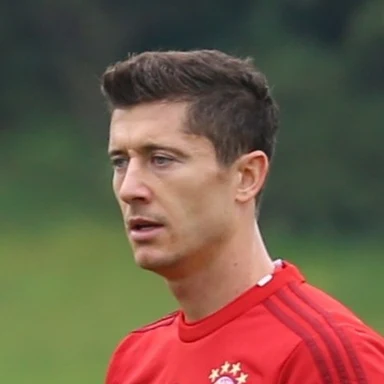 Photo: Rufus46. Source and license in Image credits.
Delta Warsaw · Legia Warsaw II · Znicz Pruszków
2005—Present
FC Barcelona
2023—Present
UD Las Palmas · Barcelona
2019—Present
Barcelona
1999—2014
Barcelona · Al Sadd
1998—2019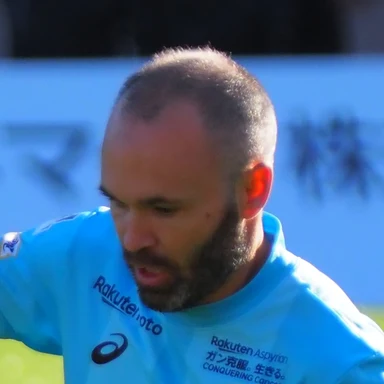 Photo: Tam Tam. Source and license in Image credits.
FC Barcelona · Vissel Kobe · Emirates Club
2002—2024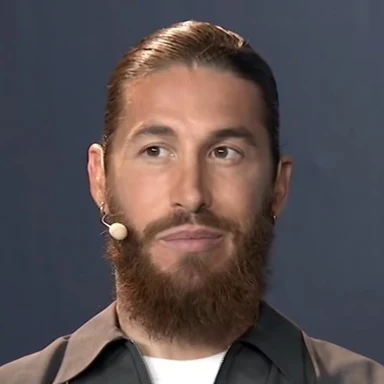 Photo: Real Madrid. Source and license in Image credits.
Sevilla · Real Madrid · Paris Saint-Germain
2004—Present
AS Saint-Étienne B · AS Saint-Étienne · OGC Nice
2017—Present
Real Valladolid · Real Madrid · Al-Rayyan
1987—2005Statistics are displayed only within the scope supported by each cited source.
FC BarcelonaFC Barcelona: Pau Cubarsí profile and honoursUEFAUEFA technical analysis: Cubarsí against NapoliFC BarcelonaBarcelona: 100 competitive appearances, 16 December 2025RFEFRFEF: Cubarsí senior Spain match recordRFEFRFEF: Spain’s youngest defensive debutantFC BarcelonaBarcelona: Cubarsí, Eric and Fermín win Olympic goldNational Football TeamsNational Football Teams: Cubarsí league and international recordsRFEFRFEF: Cubarsí named best young player at the 2026 World CupUEFAUEFA: Matchday 5 Team of the Week, 2024/25UEFAUEFA: Barcelona–Benfica second-leg preview, March 2025FC BarcelonaBarcelona: first-team breakthrough and shirt numbersEA SportsEA player identity: Cubarsí’s preferred footRFEFRFEF: the final EURO 2024 squad change