The football behind Carles Puyol’s ratings
- Defensive anticipation
- Elite
- Recovery angles
- Elite
- Aerial timing and contact
- Elite
- Intervention timing
- Elite
- Defensive leadership
- Generational
- Progressive distribution
- Good

Carles Puyol Saforcada
Barcelona’s long-serving captain combined assertive duels, recovery speed and growing spatial judgment to protect teams built around possession.
Senior club · all competitions
Completed club records only; not a complete career total.
Active club snapshots and records with another scope are excluded. Assist totals are not combined across incompatible definitions.
Stored archive snapshots, not live counters. Missing values are not zero; records with different scopes are never added together.
G/M = goals ÷ appearances. G+A = goals + assists. Per-90 metrics use documented minutes.
Senior international · all competitions
Spain · completed senior record, 2000–2013
Stored archive snapshots, not live counters. Missing values are not zero; records with different scopes are never added together.
G/M = goals ÷ appearances. G+A = goals + assists. Per-90 metrics use documented minutes.
In context
Puyol showed how covering, intervention timing and shared responsibility could support the attacking ambition of Barcelona and Spain.
Reading the game
Carles Puyol helps explain the defensive work behind a team remembered for having the ball. Barcelona’s midfield could move high and its full-backs could advance because the players behind them were prepared to defend the space a turnover exposed. Puyol brought the speed to reach that space, the strength to contest it and an increasing awareness of when the ball was less important than the route towards goal. His contribution was not confined to emergency tackles. A small covering movement could let a partner step forward; delaying an attacker could give the midfield time to return. Moving from right-back into central defence enlarged the area for which he had to take responsibility. The adaptability remained useful, as the 2009 European final showed when he returned to the flank. Spain’s victories in 2008 and 2010 placed similar qualities in a different collective structure. To understand Puyol is to look beyond the contrast between elegant attackers and combative defenders. His defending was one of the ways those teams made their attacking ambition workable.
Historical references support the chronology; tactical explanations are museum editorial analysis.
Historical references: Barcelona: Puyol’s roles, captaincy and honours ↗ · RFEF: Puyol’s spatial reading and complete Spain record ↗ · UEFA: Puyol at right-back in the 2009 final ↗
Career
| Period | Club | Apps | Goals | G/M |
|---|---|---|---|---|
| 1999—2014 | BarcelonaBarcelona’s recognised competitive first-team record is 593 appearances and eighteen goals across fifteen seasons. The club separately records seventy friendlies and the 1997 Copa Catalunya appearance; these are not added to the competitive total. Reserve-team league appearances are outside this row. Senior club · all competitions Captaincy · #32 / 24 / 5 | 593 | 18 | 0.03 |
Stored archive snapshots, not live counters. Missing values are not zero; records with different scopes are never added together.
G/M = goals ÷ appearances. G+A = goals + assists. Per-90 metrics use documented minutes.
Honours
Barcelona · league
Barcelona · domestic cup
Barcelona · continental
Barcelona · domestic cup
Barcelona · continental
Barcelona · world
Spain · world
Spain · continental
Story
Career chapter
Puyol’s first senior appearance came in the 1997 Copa Catalunya, before the competitive debut Barcelona recognises at Valladolid under Van Gaal in 1999. The distinction keeps his development separate from the fifteen-season first-team record. At right-back, speed and determination helped him contest direct opponents; the move towards central defence required a broader picture of runners and cover. His 2002 goal-line block against Lokomotiv Moscow is an early illustration of that recovery instinct. Yet the larger progression was towards preventing the emergency. As the club passed through an unsettled period, Puyol was learning how individual duels fitted into the organisation of an entire back line.
Historical references: Barcelona: the 1997 appearance and the 1999 competitive debut ↗ · UEFA: Puyol’s European career and defensive contribution ↗
Career chapter
Taking the armband in 2004 made Puyol a public reference point just as Rijkaard’s Barcelona was becoming a successful team. Beside defenders with different passing and covering qualities, he could attack a receiver’s first touch or protect the space outside his partner. League titles and the 2006 European victory gave that work a lasting stage. The following two seasons brought less collective success, so his story should not be presented as uninterrupted control. Spain’s EURO 2008 triumph supplied a fresh setting: a centre-back partnership with Marchena behind a midfield that increasingly trusted its ability to keep the ball and recover it together.
Historical references: Barcelona: Puyol’s roles, captaincy and honours ↗ · UEFA: Puyol’s European career and defensive contribution ↗ · RFEF: Puyol’s spatial reading and complete Spain record ↗
Career chapter
Guardiola’s Barcelona required defenders to participate in possession while remaining alert to the first pass out of an opponent’s defence. Piqué’s arrival created a partnership in which advancing, holding and covering had to be continually shared. Puyol’s return to right-back for the 2009 European final demonstrated that the duties mattered more than a fixed position label. Spain’s 2010 campaign then paired the two centrally, with Puyol’s header against Germany deciding the semi-final. Wembley in 2011 was different: injuries limited his involvement and he entered late as a substitute. Allowing Abidal to lift the trophy expressed his captaincy without pretending that he had played the same final role each time.
Historical references: Barcelona: Puyol’s roles, captaincy and honours ↗ · UEFA: Puyol’s European career and defensive contribution ↗ · UEFA: Puyol’s header sends Spain to the 2010 final ↗ · UEFA: Puyol at right-back in the 2009 final ↗
Career chapter
The later Puyol could still recognise when to close an opponent and when to remain connected to his partner, but reading a situation did not guarantee the body could execute every response. Injuries increasingly interrupted his seasons, and knee surgery kept him out of EURO 2012. He returned to reach one hundred Spain appearances against Uruguay in February 2013, his final senior international. Barcelona’s 2012/13 league title belongs to this closing chapter, not to a timeless version of his peak. Retirement in 2014 ended the playing career. The distinction between sustained understanding and declining availability makes the farewell more informative than a simple story of unchanging determination.
Historical references: Barcelona: Puyol’s roles, captaincy and honours ↗ · RFEF: Puyol’s hundredth Spain appearance ↗ · National Football Teams: Puyol’s league seasons and international match log ↗ · UEFA: Puyol’s farewell and absence from EURO 2012 ↗
Profile
Stopper
Also plays · Full-Back
Closes receivers, covers the route towards goal and contests aerial balls through timing and contact. After the regain, a secure pass reconnects the midfield. Central responsibility is complemented by the ability to defend at full-back when the team needs it.
Recovery angles
Timing the intervention
Aerial timing and contact
Shared defensive responsibility
Illustrative role zones · not tracking data
Puyol’s aggression worked best when it reduced an opponent’s options. Closing a receiver before he could face forward made the next touch predictable and brought a standing challenge within reach. If the receiver protected the ball well, staying connected could be more useful than lunging. The surrounding cover mattered: stepping out was sustainable when a partner could guard the space behind. His strongest defending combined the willingness to engage with a judgment about what that engagement would expose.
A recovery could begin with a diagonal movement towards his own goal rather than a straight chase after the carrier. That angle helped Puyol stay between the attacker and the most valuable space. From there he could delay, block or challenge once the ball moved far enough from the opponent. Wide experience helped when he was drawn out of central defence. The purpose was to make the next attacking action harder while teammates restored their positions.
Puyol’s aerial work depended on reading the flight, establishing contact and finding a moment to rise without losing balance. He was not a towering defender who could rely on reach alone. At defensive set pieces, attention to the opponent’s movement helped him contest the first ball; in attack, a run from deeper could generate momentum. The Germany goal in 2010 offers a clear example of an attacking arrival, but his everyday aerial value lay in repeatedly disrupting clean contact.
Puyol’s passing served the next teammate more often than it sought to direct the whole attack. After winning the ball, a secure connection could restore access to the midfield and prevent another immediate defensive action. In settled possession he still needed to offer a usable angle and recognise when to carry into open ground. Describing him only as a destroyer misses these responsibilities. His distribution was functional within a technically demanding team, while the more ambitious progression could be shared with others.
Historical references: Barcelona: Puyol’s roles, captaincy and honours ↗ · UEFA: Puyol’s European career and defensive contribution ↗ · RFEF: Puyol’s spatial reading and complete Spain record ↗ · UEFA: Puyol’s header sends Spain to the 2010 final ↗
Reading the game
| Era / team | Primary Role | Tactical Character |
|---|---|---|
| 1999–2004Barcelona | From direct opponent to collective cover | Right-back experience expands into central responsibility and recovery across the line. |
| 2004–2008Barcelona | Captain at the centre of the defence | Engages receivers and balances the differing strengths of his defensive partners. |
| 2008–2011Barcelona | Protect an advancing possession team | Shares cover with Piqué and adapts to full-back when the line-up requires it. |
| 2008–2010Spain | Control tournament space | Plays centrally with Marchena in 2008 and Piqué in 2010 behind Spain’s midfield. |
| 2011–2014Barcelona | Select the intervention as availability narrows | Experience preserves defensive reading while injuries interrupt continuity. |
Historical references: Barcelona: Puyol’s roles, captaincy and honours ↗ · Barcelona: the 1997 appearance and the 1999 competitive debut ↗ · UEFA: Puyol’s European career and defensive contribution ↗ · RFEF: Puyol’s spatial reading and complete Spain record ↗ · UEFA: Puyol at right-back in the 2009 final ↗ · UEFA: Puyol’s farewell and absence from EURO 2012 ↗
Reading the game
Being beaten by an initial touch did not automatically remove Puyol from the situation. He could turn, recover towards goal and search for a second intervention. That persistence was most useful when the recovery angle protected the team, rather than merely taking him back towards the opponent who had escaped.
Experience made Puyol more attentive to what a forward movement would leave behind. An opponent receiving the ball was not always the greatest immediate threat; the runner beyond could matter more. His maturity involved choosing the danger to address, rather than abandoning the assertiveness that had made him effective.
Playing at full-back demanded attention to the touchline, the inside runner and the timing of support. Central defence widened the picture to both sides. Puyol’s ability to move between the jobs gave coaches a way to solve selection problems without asking him to abandon his core defensive habits.
Puyol’s decision to let Abidal lift the European trophy in 2011 provides a concrete expression of leadership. The captain could recognise what the moment meant to another player and step aside. That act complements the demanding defender on the pitch: responsibility for the group included knowing when to share recognition.
Historical references: Barcelona: Puyol’s roles, captaincy and honours ↗ · Barcelona: the 1997 appearance and the 1999 competitive debut ↗ · UEFA: Puyol’s European career and defensive contribution ↗ · RFEF: Puyol’s spatial reading and complete Spain record ↗ · UEFA: Puyol at right-back in the 2009 final ↗
Reading the game
Central defender and captain
The Rijkaard-era version combines direct defending with the responsibility of leading a side whose attacking relationships are becoming established. His work beside different defensive partners gives the creators a more secure base. The European title is the setting for understanding the role, rather than a substitute for examining how he closed, covered and restarted possession.
Centre-back with full-back flexibility
The reference season brings central defending, coverage of an advancing team and the capacity to move to right-back. Puyol complements Piqué without reducing their partnership to one player passing and the other tackling. Both evaluation panels use this season. The Rome final illustrates adaptation within the campaign, while later tournament performances remain separate peak contexts.
Tournament centre-back
Puyol’s World Cup version works behind Spain’s midfield alongside Piqué. The famous semi-final header is the visible attacking contribution; his defensive task is to keep the team connected when possession moves away from the opponent’s penalty area. Seven appearances in the title-winning campaign give a compact tournament view of his anticipation, aerial timing and responsibility for cover.
Historical references: Barcelona: Puyol’s roles, captaincy and honours ↗ · UEFA: Puyol’s European career and defensive contribution ↗ · RFEF: Puyol’s spatial reading and complete Spain record ↗ · National Football Teams: Puyol’s league seasons and international match log ↗ · UEFA: Puyol’s header sends Spain to the 2010 final ↗ · UEFA: Puyol at right-back in the 2009 final ↗
Statistics
| Season | Club | Apps | Goals | G/M |
|---|---|---|---|---|
| 2013–14 | Barcelona Senior club · league only | 5 | 1 | 0.20 |
| 2012–13 | Barcelona Senior club · league only | 13 | 1 | 0.08 |
| 2011–12 | Barcelona Senior club · league only | 26 | 3 | 0.12 |
| 2010–11 | Barcelona Senior club · league only | 17 | 1 | 0.06 |
| 2009–10 | Barcelona Senior club · league only | 32 | 1 | 0.03 |
| 2008–09 | Barcelona Senior club · league only | 28 | 1 | 0.04 |
| 2007–08 | Barcelona Senior club · league only | 30 | 0 | 0.00 |
| 2006–07 | Barcelona Senior club · league only | 35 | 1 | 0.03 |
| 2005–06 | Barcelona Senior club · league only | 35 | 1 | 0.03 |
| 2004–05 | Barcelona Senior club · league only | 36 | 0 | 0.00 |
Stored archive snapshots, not live counters. Missing values are not zero; records with different scopes are never added together.
G/M = goals ÷ appearances. G+A = goals + assists. Per-90 metrics use documented minutes.
First-team La Liga seasons only, totalling 392 appearances and twelve goals. The 2006/07 goal count follows StatMuse’s one league goal; National Football Teams lists two in that row. The European goal that season belongs to a separate competition. Cup matches, reserve-team football and friendlies are excluded, and assists remain unverified. These seasons are already included in the club aggregate.
Club competitions
| Competition | Apps | Goals | G/M |
|---|---|---|---|
La Liga1999–2014 · first-team league matchesLeague-only record across fifteen seasons. Uses one league goal in 2006/07 and keeps the separate European goal out of this tally. Reserve-team divisions and domestic cups are excluded. | 392 | 12 | 0.03 |
UEFA Champions LeagueChampions League proper · 1999–2013UEFA’s competition tally excludes qualifying rounds and the UEFA Cup. His final Champions League appearance was against Ajax in November 2013; the playing career continued into 2014. | 115 | 2 | 0.02 |
Stored archive snapshots, not live counters. Missing values are not zero; records with different scopes are never added together.
G/M = goals ÷ appearances. G+A = goals + assists. Per-90 metrics use documented minutes.
International
International career
A hundred senior appearances brought the EURO 2008 and 2010 World Cup titles. His three goals came against Northern Ireland, Estonia and Germany, the last deciding the 2010 semi-final. The Olympic silver medal in 2000 belongs to a separate team record. He missed EURO 2012 and played his final senior international against Uruguay in February 2013.
Senior international · tournament splits
| Competition | Apps | Goals | G/M |
|---|---|---|---|
FIFA World CupWorld Cup finals · 2002, 2006 and 2010Four, three and seven appearances across three tournaments. The Germany header is his only World Cup finals goal; an own goal does not count towards this scoring total. | 14 | 1 | 0.07 |
UEFA European ChampionshipEURO finals · 2004 and 2008Three appearances in 2004 and five in 2008. Injury prevented participation in the 2012 finals, so Spain’s later title is not listed as a Puyol honour. | 8 | 0 | 0.00 |
Stored archive snapshots, not live counters. Missing values are not zero; records with different scopes are never added together.
G/M = goals ÷ appearances. G+A = goals + assists. Per-90 metrics use documented minutes.
Reading the game
Puyol’s career makes defensive responsibility visible within an era usually described through passing and possession. The point is not that Barcelona needed effort in place of technique. It needed different skills to work together: a defender willing to contest the first ball, a partner ready to cover and midfielders positioned to receive once possession returned. Puyol could carry out several of those tasks without needing to become the main distributor. His development also challenges the idea that an aggressive defender must always chase the ball. Experience made his choices more selective, with attention to space and the consequences of leaving the line. That evolution belongs alongside the famous blocks and headers. His captaincy gave the sporting story another dimension, particularly when he made room for Abidal to lift the 2011 European trophy. The gesture was memorable because leadership could mean sharing the central moment. A single-club career, European victories and Spain’s breakthrough titles establish the historical setting. The enduring football lesson lies in the relationship between courage and judgment: commitment becomes more valuable when the defender understands which danger to confront first.
Historical references: Barcelona: the 1997 appearance and the 1999 competitive debut ↗ · UEFA: Puyol’s European career and defensive contribution ↗ · RFEF: Puyol’s spatial reading and complete Spain record ↗
Archive
Stopper · editorial peak 2008—2009
Louis van Gaal · Lorenzo Serra Ferrer · Carles Rexach · Radomir Antić · Frank Rijkaard · Pep Guardiola · Tito Vilanova · Gerardo Martino · José Antonio Camacho · Iñaki Sáez · Luis Aragonés · Vicente del Bosque
Thierry Henry— Overlapping Barcelona era · Xavi— Overlapping Barcelona era · Lionel Messi— Overlapping Barcelona era · Ronaldinho— Overlapping Barcelona era
Ronaldo, Figo and the centenary — Barcelona · Ronaldinho and renewal — Barcelona · Guardiola’s positional game — Barcelona

AS Monaco · Juventus · Arsenal
1994—2014
Barcelona · Al Sadd
1998—2019
FC Barcelona · Paris Saint-Germain · Inter Miami CF
2004—PresentBarcelona · Al Sadd
1998—2019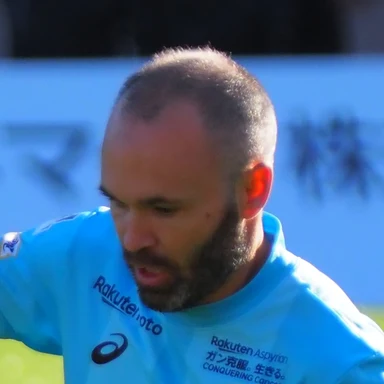 Photo: Tam Tam. Source and license in Image credits.
FC Barcelona · Vissel Kobe · Emirates Club
2002—2024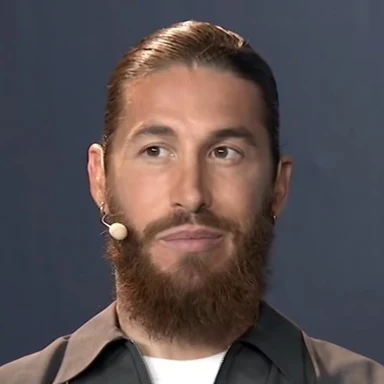 Photo: Real Madrid. Source and license in Image credits.
Sevilla · Real Madrid · Paris Saint-Germain
2004—Present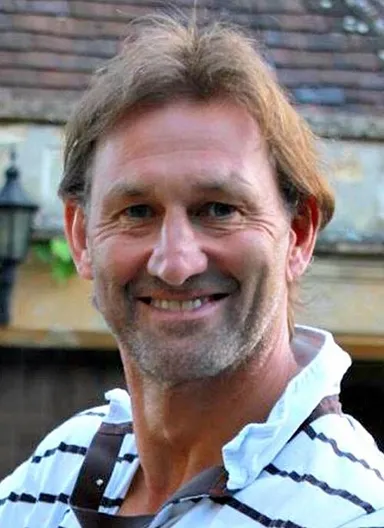 Photo: Jade Moulds. Source and license in Image credits.
Arsenal
1983—2002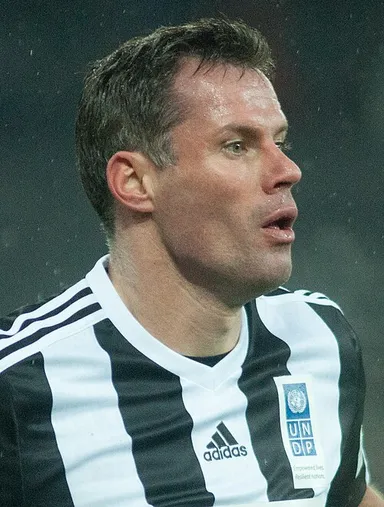 Photo: Ludovic Péron. Source and license in Image credits.
Liverpool
1997—2013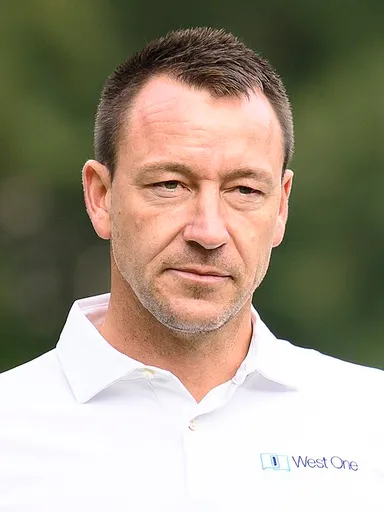 Photo: ChristopherJClarke. Source and license in Image credits.
Chelsea · Nottingham Forest ·
Statistics are displayed only within the scope supported by each cited source.
FC BarcelonaBarcelona: Puyol’s roles, captaincy and honoursFC BarcelonaBarcelona: the 1997 appearance and the 1999 competitive debutFC BarcelonaBarcelona: Puyol’s 593 competitive appearances and eighteen goalsUEFAUEFA: Puyol’s European career and defensive contributionRFEFRFEF: Puyol’s spatial reading and complete Spain recordRFEFRFEF: Puyol’s hundredth Spain appearanceNational Football TeamsNational Football Teams: Puyol’s league seasons and international match logStatMuseStatMuse: Puyol’s Barcelona league record by seasonUEFAUEFA: Puyol’s header sends Spain to the 2010 finalUEFAUEFA: Puyol at right-back in the 2009 finalUEFAUEFA: Puyol’s farewell and absence from EURO 2012RSSSFRSSSF: Puyol’s Spain appearances by competitionFC BarcelonaCarles Puyol — Barça LegendsFC Barcelona25 years since Carles Puyol’s debutUEFAEuropean Qualifiers information kit — player records