Defining creative qualities
- Disguised passing
- Generational
- First-touch control
- Generational
- Creative dribbling
- Generational
- Reading the runner
- Elite
- Defensive contribution
- Limited
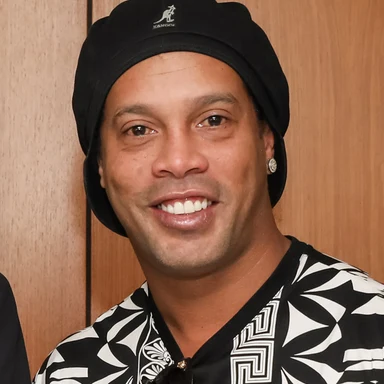 Photo: Marcos Corrêa/PR. Source and license in Image credits.
Ronaldo de Assis Moreira
A left-sided creator whose dribbling and disguised passing helped Barcelona return to the summit of European football.
Senior club · all competitions
Completed club records only; not a complete career total.
Active club snapshots and records with another scope are excluded. Assist totals are not combined across incompatible definitions.
Stored archive snapshots, not live counters. Missing values are not zero; records with different scopes are never added together.
G/M = goals ÷ appearances. G+A = goals + assists. Per-90 metrics use documented minutes.
Senior international · all competitions
Stored archive snapshots, not live counters. Missing values are not zero; records with different scopes are never added together.
G/M = goals ÷ appearances. G+A = goals + assists. Per-90 metrics use documented minutes.
In context
His Barcelona peak turned individual improvisation into a reliable source of chances. The later Libertadores win at Atlético Mineiro added a South American club chapter to an already international career.
Reading the game
Ronaldinho matters because his invention changed what a defence had to prepare for. From a position on the left, the same body shape could lead to a dribble, a shot or a pass towards a runner on the opposite side. An opponent could not simply respond to the apparent direction of his gaze. That uncertainty bought time for both the ball carrier and his teammates, making technique a way of organising an attack rather than an isolated exhibition.
At Barcelona, this talent belonged to a recognisable structure. Midfield support helped him receive, the centre-forward occupied the back line and runners supplied targets beyond the first defender. He could come inside without every teammate following the ball. Understanding that arrangement explains why his finest football was simultaneously expressive and productive. The Barcelona revival, his contribution to Brazil's 2002 World Cup and the later Libertadores success mark different uses of the same creative intelligence. His importance lies in the relationship between deception and cooperation: the unexpected touch mattered because somebody else could read what it made possible.
Historical references support the chronology; tactical explanations are museum editorial analysis.
Historical references: Barcelona: Ronaldinho’s 207 official matches and 94 goals ↗ · Atlético Mineiro: Ronaldinho’s complete club contribution ↗ · FIFA: Ronaldinho’s contribution against England in 2002 ↗ · UEFA: Ronaldinho creates Giuly’s winner at Milan ↗
Career
| Period | Club | Apps | Goals | G/M |
|---|---|---|---|---|
| 1998—2001 | GrêmioFirst senior club in Porto Alegre. | — | — | — |
| 2001—2003 | Paris Saint-GermainPSG’s official record for 2001–2003: 77 competitive appearances and 25 goals. Assists remain unverified. Senior club · all competitions | 77 | 25 | 0.32 |
| 2003—2008 | FC BarcelonaBarcelona’s 21 March 2018 club article explicitly records 207 official matches and 94 goals, with goals broken down by competition. That defined scope is used here; broader archive totals are not mixed into it. Assists remain unverified. Senior club · all competitions | 207 | 94 | 0.45 |
| 2008—2011 | AC MilanMilan’s club profile records 95 appearances and 26 goals across competitions; the separate Serie A subtotal is not added again. Assists remain unverified. Senior club · all competitions | 95 | 26 | 0.27 |
| 2011—2012 | FlamengoReturned to Brazilian club football. | — | — | — |
| 2012—2014 | Atlético MineiroAtlético’s club account covers June 2012 to July 2014: 88 appearances, 28 goals and 32 assists, using the club’s assist definition. Senior club · all competitions Performance record
| 88 | 28 | 0.32 |
| 2014—2015 | QuerétaroA Mexican league chapter. | — | — | — |
| 2015—2015 | FluminenseLast competitive club spell; retirement was announced in 2018. | — | — | — |
Stored archive snapshots, not live counters. Missing values are not zero; records with different scopes are never added together.
G/M = goals ÷ appearances. G+A = goals + assists. Per-90 metrics use documented minutes.
Honours
Brazil · world
FC Barcelona · continental
France Football · individual
Atlético Mineiro · continental
FC Barcelona · league
FC Barcelona · domestic cup
FIFA · individual
Brazil · continental
Brazil · world
Atlético Mineiro · continental
Atlético Mineiro · league
Story
Career chapter
Grêmio and Paris Saint-Germain placed Ronaldinho in different environments before Barcelona. His early invention already combined carrying with the ability to release another attacker, but senior football asked him to decide when each action helped the team. Paris provided his first European stage between 2001 and 2003. Brazil supplied a parallel role at the 2002 World Cup: he connected play with Rivaldo and Ronaldo rather than reproducing a permanent left-wing assignment. Against England, his carry and pass for Rivaldo preceded the famous free-kick. The sequence is a useful introduction to the player: progressing, creating and finishing could emerge from the same source of uncertainty for defenders.
Historical references: PSG: Ronaldinho’s official club record ↗ · FIFA: Ronaldinho’s 97 Brazil caps and 33 goals ↗ · FIFA: Ronaldinho’s contribution against England in 2002 ↗ · Ronaldinho — biographical and career reference ↗
Club chapter
Barcelona gave his creativity a stable attacking home from 2003. Starting on the left allowed him to face the pitch, move inside and find teammates attacking different lanes. Eto'o could threaten the space behind, while Giuly supplied a run from the other side; the midfield kept the next passing option available. These relationships made freedom useful rather than leaving him to invent alone. His two goals at the Bernabéu in 2005 showed the scoring threat, while the pass for Giuly in Milan in 2006 showed how one decision could unlock a compact opponent. The league titles and European Cup emerged from a team in which those different solutions reinforced each other.
Historical references: Barcelona: Ronaldinho’s 207 official matches and 94 goals ↗ · UEFA: Ronaldinho creates Giuly’s winner at Milan ↗ · Barcelona: Ronaldinho’s two goals at the Bernabéu in 2005 ↗ · Ronaldinho — biographical and career reference ↗
Explore club contextCareer chapter
After Barcelona, the balance of his game gradually shifted towards distribution. Milan offered a more measured creative chapter, followed by a return to Brazil with Flamengo and then Atlético Mineiro. At Atlético, receiving between midfield and attack allowed him to look for runners rather than repeatedly carrying from the touchline. Jô provided a forward reference and the attacking movement around him gave his passing a purpose. The 2013 Libertadores title was therefore a reinvention within a collective effort, not a replay of Barcelona at the same physical intensity. The club's record of his goals and assists also captures the dual contribution: he could still supply the chance or finish it himself.
Historical references: AC Milan: Ronaldinho’s appearances and goals ↗ · Atlético Mineiro: Ronaldinho’s complete club contribution ↗ · Atlético in 2013: Ronaldinho, Jô and Tardelli ↗ · Ronaldinho — biographical and career reference ↗
Career chapter
The final club chapters took him to Querétaro and Fluminense, with his last competitive spell ending in 2015. The retirement announcement arrived in 2018, so those dates should not be treated as three additional seasons of senior club football. Looking back also requires separating the performer remembered in highlights from the player operating over a whole campaign. The later years did not reproduce Barcelona's sustained acceleration or the same attacking structure. They showed how passing imagination could remain useful after the balance of his game changed. His career is best read as several related versions, each depending on the movement, support and physical demands of its own team.
Historical references: AC Milan: Ronaldinho’s appearances and goals ↗ · Atlético Mineiro: Ronaldinho’s complete club contribution ↗ · FIFA: Ronaldinho’s career and 2018 retirement ↗ · Ronaldinho — biographical and career reference ↗
Profile
Wide Playmaker
Also plays · Inverted Winger / Advanced Playmaker
Received wide left, invited the full-back forward and attacked either side with a sudden change of touch. Could switch from a feint to a through ball without changing body shape.
Disguise
Dribbling
First touch
Creative passing
Illustrative role zones · not tracking data
Ronaldinho could keep the preparation for a pass similar to the preparation for a dribble. A defender leaning towards the expected action then had to recover before contesting the real one. The deception was useful because it delayed a challenge or opened a lane. Its success depended on reading the opponent's response and having a teammate ready for the option that suddenly became available.
A wide starting position gave him room to face an opponent, but he did not have to remain beside the touchline. Moving inside opened diagonal passes towards the striker or the far-side runner. Barcelona needed others to preserve width and occupy the back line during that movement. His freedom worked best when the surrounding positions stayed distinct enough to stretch the defence.
His changes of touch could move the ball away from a reaching foot while his body protected the next action. The outside-to-inside feint is a clear example: the defender is invited to commit before the exit changes. At his peak, acceleration then turned the initial advantage into penetration. A trick without that continuation might entertain, but would not necessarily improve the attack.
The pass to Giuly in the 2006 semi-final is a reminder that vision is a relationship. Ronaldinho had to recognise the run, release at the correct instant and choose a trajectory the receiver could use. Holding the ball first could draw attention away from that movement. His invention became most effective when teammates anticipated the possibility without arriving in the space too early.
Against Bremen in 2006, he sent a free-kick under a wall expecting to jump. The episode illustrates his attention to defensive expectation, rather than a technique that should be repeated regardless of context. Open play required similar judgment. Allowing him to remain available for creation placed covering responsibilities elsewhere, so his attacking freedom needed a connected midfield and clear protection after possession was lost.
Historical references: UEFA: Ronaldinho creates Giuly’s winner at Milan ↗ · UEFA: the free-kick and diagonal pass against Bremen ↗ · Barcelona: Ronaldinho’s two goals at the Bernabéu in 2005 ↗
Reading the game
| Era / team | Primary Role | Tactical Character |
|---|---|---|
| 2001–2003Paris Saint-Germain | European apprenticeship | Combines carrying and invention while learning when to release another attacker. |
| 2002Brazil | Connecting the Brazilian front line | Supports Ronaldo and Rivaldo through carries, combinations and set pieces. |
| 2003–2008FC Barcelona | Freedom from a left-sided base | Moves inside to create while runners and midfield support preserve the surrounding structure. |
| 2008–2011AC Milan | A more measured creative role | Places greater emphasis on distribution and selecting moments to accelerate. |
| 2012–2014Atlético Mineiro | Central creation in a new setting | Receives behind the forwards and turns their movement into passing options. |
Historical references: PSG: Ronaldinho’s official club record ↗ · AC Milan: Ronaldinho’s appearances and goals ↗ · Atlético Mineiro: Ronaldinho’s complete club contribution ↗ · Atlético in 2013: Ronaldinho, Jô and Tardelli ↗ · FIFA: Ronaldinho’s contribution against England in 2002 ↗ · UEFA: Ronaldinho creates Giuly’s winner at Milan ↗ · UEFA: the free-kick and diagonal pass against Bremen ↗
Reading the game
The defender could not assume that Ronaldinho's gaze or shoulder position revealed the intended pass. By keeping several options alive until late, he made anticipation less reliable. This was not simply theatrical misdirection: a delayed defensive step could give the receiving teammate enough time to turn or allow a runner to cross the line before the cover reacted.
Slowing a move could invite an opponent towards him and change the space elsewhere. Ronaldinho's value lay in recognising when that invitation had achieved enough. The following pass needed to arrive before the opening closed. Waiting indefinitely would only give the defence time to settle, so the pause and the release must be understood as one connected action.
An unusual touch could solve a practical problem: escaping a reaching foot, changing the passing angle or avoiding the path a goalkeeper expected. The memorable skill should be judged by what it enabled next. This keeps the analysis close to the game itself, where the same trick can be productive in one situation and an unnecessary risk in another.
His later Atlético role placed more emphasis on finding others from a central receiving position. The first burst was no longer the only route into an attack. A well-timed pass could make a teammate's movement carry the threat instead. That adaptation required willing runners and a team able to keep supplying its creator in useful areas.
Historical references: Atlético Mineiro: Ronaldinho’s complete club contribution ↗ · Atlético in 2013: Ronaldinho, Jô and Tardelli ↗ · UEFA: Ronaldinho creates Giuly’s winner at Milan ↗ · UEFA: the free-kick and diagonal pass against Bremen ↗ · Barcelona: Ronaldinho’s two goals at the Bernabéu in 2005 ↗
Reading the game
Free attacking connector
The 2002 Brazil version placed him in relation to Ronaldo and Rivaldo rather than as the sole centre of the attack. Carrying could draw an opponent before a pass released one of the other forwards. The England quarter-final captures both creation and set-piece threat, while the red card also belongs to the record. This version shows a young creator contributing within a wider distribution of attacking responsibility.
Left-sided playmaker
Between 2004 and 2006, his most complete Barcelona version combined acceleration, disguise and decisive passing with a sustained scoring threat. The Bernabéu goals and the Milan assist are different expressions of that range. Starting left made him accessible without fixing the destination of the move. The peak depended on the team maintaining targets and support around him, allowing invention to become a repeatable attacking resource.
Central attacking playmaker
Atlético's 2012–2013 version is a later creative high point, not a claim that his physical level matched Barcelona. He could receive centrally and use the movement ahead to advance the attack through passing. The Libertadores triumph made that adaptation consequential. It also depended on the rest of the team converting chances, defending and surviving difficult moments; his creativity was a major component of a collective achievement.
Historical references: Barcelona: Ronaldinho’s 207 official matches and 94 goals ↗ · Atlético Mineiro: Ronaldinho’s complete club contribution ↗ · Atlético in 2013: Ronaldinho, Jô and Tardelli ↗ · FIFA: Ronaldinho’s contribution against England in 2002 ↗ · UEFA: Ronaldinho creates Giuly’s winner at Milan ↗ · Barcelona: Ronaldinho’s two goals at the Bernabéu in 2005 ↗
Statistics
| Season | Club | Apps | Goals | G/M |
|---|---|---|---|---|
| 2005–06 | FC Barcelona Senior club · all competitions | 45 | 26 | 0.58 |
Stored archive snapshots, not live counters. Missing values are not zero; records with different scopes are never added together.
G/M = goals ÷ appearances. G+A = goals + assists. Per-90 metrics use documented minutes.
Selected season only: Barcelona’s player archive records 45 official appearances and 26 goals in 2005/06. Its broader career archive uses a different scope from the club’s 207-match retrospective; totals are not combined. Unverified assists remain blank.
International
International career
FIFA records 97 senior Brazil appearances and 33 goals. Youth and Olympic teams are excluded from these senior totals. A World Cup winner in 2002, he also won the 1999 Copa América and the 2005 Confederations Cup.
Reading the game
Ronaldinho's place in football history rests on more than a catalogue of spectacular skills. His Barcelona years helped restore a club's competitive authority while demonstrating how a wide creator could become the centre of its attacking imagination. The important detail is that freedom was supported by relationships: someone offered the return pass, someone ran beyond and someone maintained the balance behind the move. Remembering those partners makes his originality easier to explain, not less impressive.
His peak was also a bounded period, rather than a level sustained unchanged throughout his career. The later Milan and Brazilian chapters should be understood through different physical demands and a greater emphasis on distribution. Winning the Libertadores with Atlético Mineiro showed that a changed version could still contribute to a major collective achievement. The 2015 end of his competitive club career and the 2018 retirement announcement are separate milestones. What remains most distinctive is the way he connected pleasure in technique with a practical advantage: misleading an opponent, opening a passing lane or inviting a teammate into space. His legacy is strongest when the remembered trick is placed back inside the match that gave it a purpose.
Historical references: Barcelona: Ronaldinho’s 207 official matches and 94 goals ↗ · AC Milan: Ronaldinho’s appearances and goals ↗ · Atlético Mineiro: Ronaldinho’s complete club contribution ↗ · FIFA: Ronaldinho’s career and 2018 retirement ↗
Archive
Inverted Winger · editorial peak 2004—2006
Thierry Henry— Overlapping FC Barcelona era · Paolo Maldini— Overlapping AC Milan era · Carles Puyol— Overlapping FC Barcelona era · Xavi— Overlapping FC Barcelona era
Cup success through uncertain years — Paris Saint-Germain · Ronaldinho and renewal — FC Barcelona · Ancelotti’s orchestra — AC Milan

Barcelona · Al Sadd
1998—2019
FC Barcelona · Paris Saint-Germain · Inter Miami CF
2004—Present Photo: Tam Tam. Source and license in Image credits.
FC Barcelona · Vissel Kobe · Emirates Club
2002—2024
Cruzeiro · PSV · Barcelona
1993—2011 Photo: Unknown author. Source and license in Image credits.
Santos · New York Cosmos
1956—1977 Photo: Евгений Асмолов. Source and license in Image credits.
São Paulo · AC Milan · Real Madrid
2001—2017 Photo: Bryan Berlin / WikiPortraits. Source and license in Image credits.
Santos · FC Barcelona · Paris Saint-Germain
2009—Present Photo: Bryan Berlin / WikiPortraits. Source and license in Image credits.
Flamengo · Real Madrid
2017—Present
FC Barcelona
2023—PresentStatistics are displayed only within the scope supported by each cited source.
FC BarcelonaBarcelona: Ronaldinho’s 207 official matches and 94 goalsFC Barcelona PlayersBarcelona Players: Ronaldinho’s season archiveParis Saint-GermainPSG: Ronaldinho’s official club recordAC MilanAC Milan: Ronaldinho’s appearances and goalsAtlético MineiroAtlético Mineiro: Ronaldinho’s complete club contributionAtlético MineiroAtlético’s 2014 Recopa and Ronaldinho’s farewellAtlético MineiroAtlético in 2013: Ronaldinho, Jô and TardelliFIFAFIFA: Ronaldinho’s 97 Brazil caps and 33 goalsFIFAFIFA: Ronaldinho’s contribution against England in 2002FIFAFIFA: Ronaldinho’s career and 2018 retirementUEFAUEFA: Ronaldinho creates Giuly’s winner at MilanUEFAUEFA: the free-kick and diagonal pass against BremenFC BarcelonaBarcelona: Ronaldinho’s two goals at the Bernabéu in 2005FC BarcelonaRonaldinho — Barcelona careerWikipedia (cited biographical reference)Ronaldinho — biographical and career reference