14

Ligue 1
First · 1985–86
Latest · 2025–26View winning seasons
1985–86 · 1993–94 · 2012–13 · 2013–14 · 2014–15 · 2015–16 · 2017–18 · 2018–19 · 2019–20 · 2021–22 · 2022–23 · 2023–24 · 2024–25 · 2025–26
Paris Saint-Germain Football Club
A young capital-city club whose history runs from the first cup and league winners to the 1996 European breakthrough and successive Champions League titles.
Overview
Historical assessment
Overall Historical Index
88/100Football Legends DB editorial assessment
Football Legends DB editorial / historical index. This is not an official FIFA or UEFA ranking, a live form table or a player rating.
Version 1.0: editors assess eight dimensions from 0–100 using the cited historical record. The overall score is their equally weighted arithmetic mean, rounded to the nearest whole number. Trophy totals are evidence, not points automatically added to a formula.
Assessment guide: 0–39 limited documented impact; 40–59 established national contribution; 60–79 sustained national or continental influence; 80–94 major international influence; 95–100 a historical benchmark across generations. These are editorial judgements, not measured percentiles. Missing evidence means no published index.
World titles and sustained success across eras inform the historical and international assessments. Scores may be revised when the evidence or editorial assessment changes.
Assessment notes · An editorial balance of European breakthroughs, French dominance, global reach and a history beginning in 1970. The score is not a live performance ranking.
Current chapter
Season
2026–27Verified
Luis Enrique’s team added the August 2026 UEFA Super Cup against Aston Villa. The subsequent French Super Cup defeat at Lens is recorded separately from that European success.
Honours
First · 1985–86
Latest · 2025–26First · 1981–82
Latest · 2024–25First · 1994–95
Latest · 2019–20First · 1995
Latest · 2025First · 2024–25
Latest · 2025–26First · 1995–96
Latest · 1995–96First · 2025
Latest · 2026First · 2025
Latest · 2025First · 2001
Latest · 2001History
The 1970 foundation and 1972 split preceded a return to the top division in 1974 and a permanent relationship with the Parc.
Tactical identity · Building a new sporting institution
Peyroche’s cup winners in 1982 and 1983 preceded Houllier’s first league champions in 1986.
Tactical identity · Technical invention within collective organisation
Explore the defining match ↗Artur Jorge won the 1994 league; Fernandez lifted the 1996 Cup Winners’ Cup. Further cup success followed under Ricardo and Joël Bats.
Tactical identity · Athletic power and creative midfield leadership
Explore the defining match ↗Ronaldinho and Pauleta gave different teams attacking identities. Cup trophies offered continuity despite uneven league results.
Tactical identity · Individual creativity and penalty-area finishing
Investment brought Ibrahimović, Silva and Cavani. Ancelotti won the 2013 league, followed by Blanc’s three consecutive championships.
Tactical identity · Possession control and an attacking focal point
Neymar and Mbappé joined the attack. Tuchel’s team reached Lisbon in 2020, losing the Champions League final to Bayern.
Tactical identity · Creative freedom supported by flexible structure
Messi joined Neymar and Mbappé for two seasons. Further league titles did not yet deliver the long-awaited European Cup.
Tactical identity · Integrating distinct attacking roles
The 2025 triumph over Inter was followed by a successful defence against Arsenal in 2026. Shared pressing and mobile attackers gave the side a distinct identity.
Tactical identity · Coordinated pressing and positional exchanges
Explore the defining match ↗Defining games
Coupe de France final
Paris Saint-Germain 2–2 Saint-Étienne
After extra time · won 6–5 on penalties
Parc des Princes, Paris
Rocheteau’s late extra-time equaliser led to a shootout in which Pilorget converted the decisive kick.
UEFA Cup quarter-final · second leg
Paris Saint-Germain 4–1 Real Madrid
5–4 on aggregate
Parc des Princes, Paris
A late header completed the recovery from the first-leg 3–1 defeat and sent Paris into the semi-finals.
Cup Winners’ Cup final
Paris Saint-Germain 1–0 Rapid Vienna
King Baudouin Stadium, Brussels
Bruno Ngotty’s free-kick defeated Rapid Vienna and gave Luis Fernandez’s team a European trophy.
Champions League final
Doué scored twice as coordinated pressure and attacking rotations produced the largest winning margin in a European Cup final.
Champions League final
Paris Saint-Germain 1–1 Arsenal
After extra time · won 4–3 on penalties
Puskás Aréna, Budapest
Paris prevailed in the shootout after a drawn final, retaining the European title against Arsenal.
Legends
Defender
An academy defender from the first generation, he converted the decisive penalty in the 1982 cup final and held the club appearance record for decades.
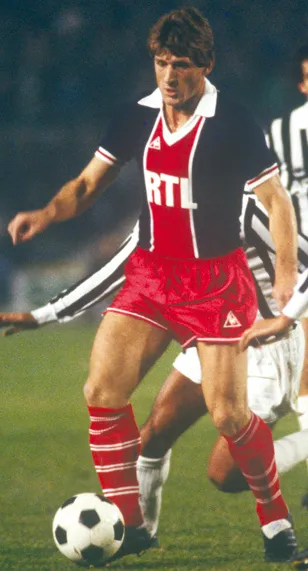 Photo: Unknown authorUnknown author. Source and license in Image credits.
Midfielder
The creative organiser of the first league champions combined close control, disguise and passes into the forward line.
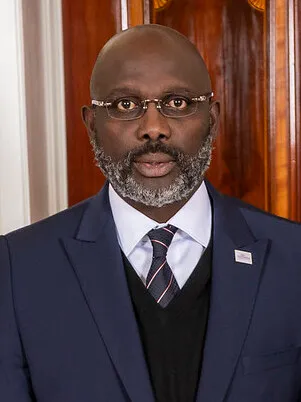 Photo: United States Department of State Africa U.S.-Africa Leaders Summit: Photos and Videos. Source and license in Image credits.
Forward
Powerful running and individual invention made him a central attacker in the 1990s European rise.
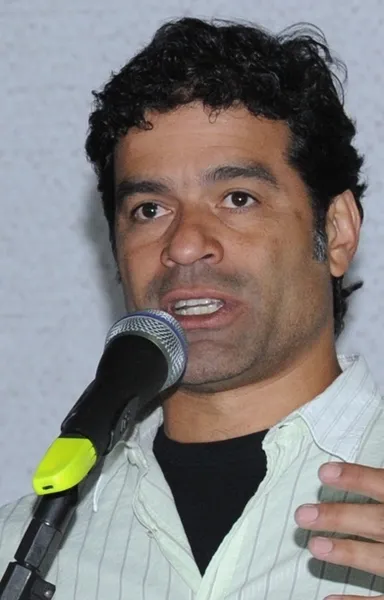 Photo: Rai_em_2009.jpg: Elza Fiúza/ABr
derivative work: Yanguas. Source and license in Image credits.
Midfielder
A captain and creative midfielder who connected the 1994 league champions to the 1996 European trophy.
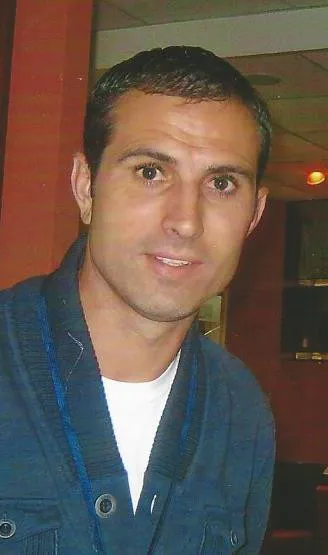 Photo: Christophe95. Source and license in Image credits.
Forward
The penalty-area finisher became a supporter reference during less stable years, winning the 2004 and 2006 French Cups.
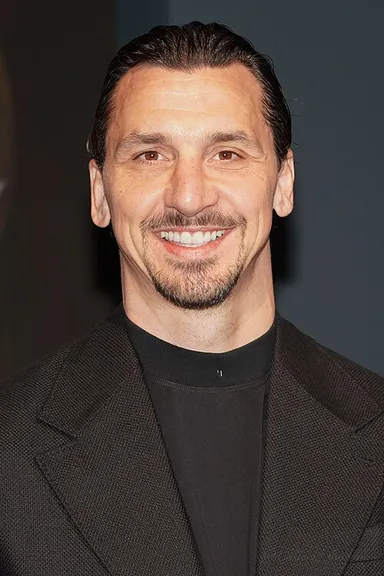 Photo: Colleen Sturtevant. Source and license in Image credits.
Forward
A focal point for scoring and combination play as Paris began a run of domestic dominance.
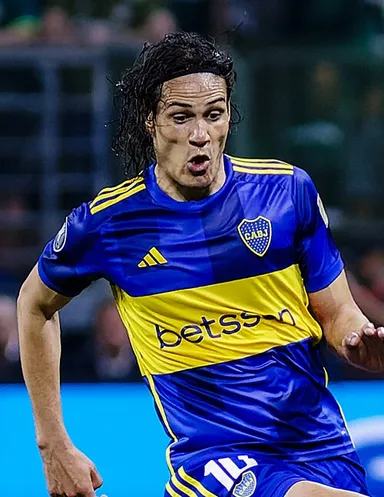 Photo: soccerdigital. Source and license in Image credits.
Forward
Relentless movement and penalty-area finishing produced two hundred competitive goals for the club.
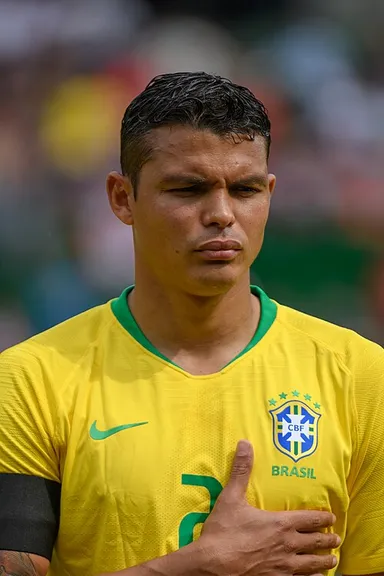 Photo: Granada. Source and license in Image credits.
Defender
The defensive captain helped anchor the league-winning era and the first Champions League final in 2020.
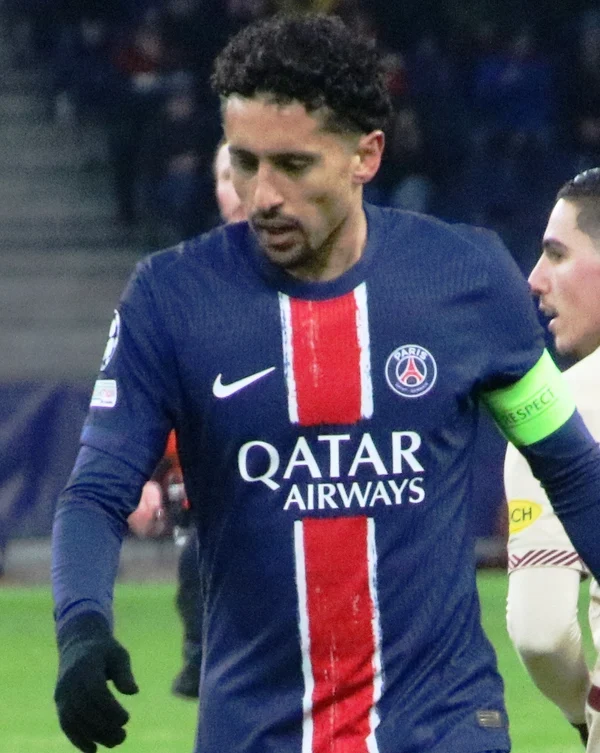 Photo: Werner100359 / Wikimedia Commons. Source and license in Image credits.
Defender
An adaptable defender and captain whose long service connected the first European final to the first European Cup and its defence.
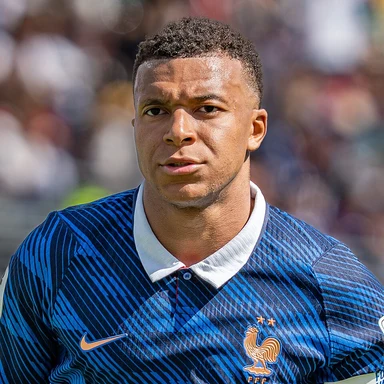 Photo: Bryan Berlin / WikiPortraits. Source and license in Image credits.
Forward
Acceleration, runs beyond the defence and varied finishing made him Paris’s record scorer before his 2024 departure.
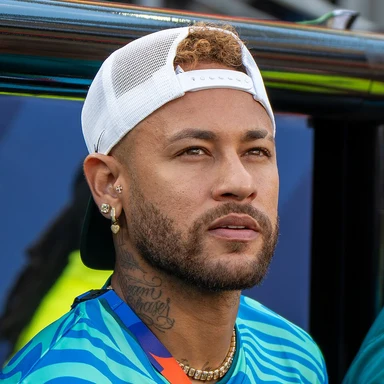 Photo: Bryan Berlin / WikiPortraits. Source and license in Image credits.
Forward
A creator and dribbler whose combinations and carries helped the club reach its first Champions League final.
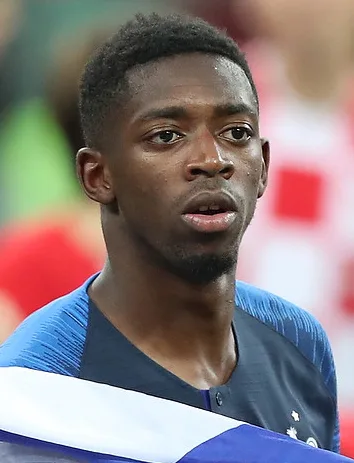
Forward
Movement across the attack and leading the first press made him central to Luis Enrique’s European champions.
An academy defender from the first generation, he converted the decisive penalty in the 1982 cup final and held the club appearance record for decades.
Photo: Unknown authorUnknown author. Source and license in Image credits.The creative organiser of the first league champions combined close control, disguise and passes into the forward line.
Photo: United States Department of State Africa U.S.-Africa Leaders Summit: Photos and Videos. Source and license in Image credits.Powerful running and individual invention made him a central attacker in the 1990s European rise.
Photo: Rai_em_2009.jpg: Elza Fiúza/ABr
derivative work: Yanguas. Source and license in Image credits.A captain and creative midfielder who connected the 1994 league champions to the 1996 European trophy.
Photo: Christophe95. Source and license in Image credits.The penalty-area finisher became a supporter reference during less stable years, winning the 2004 and 2006 French Cups.
Photo: Colleen Sturtevant. Source and license in Image credits.A focal point for scoring and combination play as Paris began a run of domestic dominance.
Photo: soccerdigital. Source and license in Image credits.Relentless movement and penalty-area finishing produced two hundred competitive goals for the club.
Photo: Granada. Source and license in Image credits.The defensive captain helped anchor the league-winning era and the first Champions League final in 2020.
Photo: Bryan Berlin / WikiPortraits. Source and license in Image credits.Acceleration, runs beyond the defence and varied finishing made him Paris’s record scorer before his 2024 departure.
Photo: Bryan Berlin / WikiPortraits. Source and license in Image credits.A creator and dribbler whose combinations and carries helped the club reach its first Champions League final.
Photo: Werner100359 / Wikimedia Commons. Source and license in Image credits.An adaptable defender and captain whose long service connected the first European final to the first European Cup and its defence.
Movement across the attack and leading the first press made him central to Luis Enrique’s European champions.

Buffon’s influence joined the visible save with the preparation and collective decisions before it, sustaining elite goal protection through changing roles.

Barcelona’s record scorer combined 672 goals with 305 club-credited assists across 778 appearances. His career runs from the right wing through the false-nine role to a freer playmaking position; Argentina’s 2022 World Cup triumph completed the defining chapter of his international career.
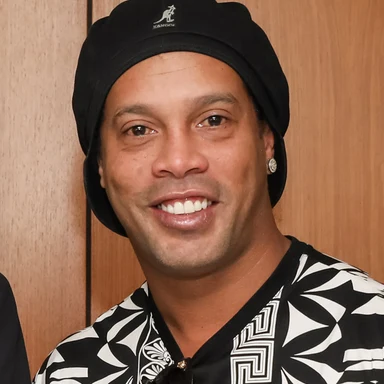 Photo: Marcos Corrêa/PR. Source and license in Image credits.
His Barcelona peak turned individual improvisation into a reliable source of chances. The later Libertadores win at Atlético Mineiro added a South American club chapter to an already international career.
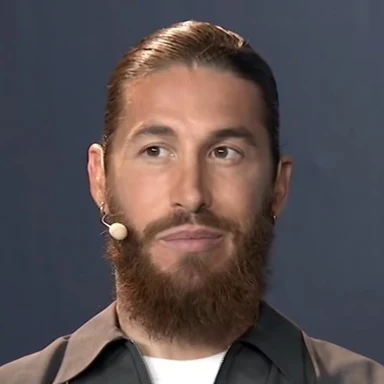 Photo: Real Madrid. Source and license in Image credits.
A defender’s initiative expressed through confrontation, progression and decisive headers, with judgment and discipline inseparable from the achievement.

From Napoli’s Scudetto to Georgia’s first EURO and European success with Paris, Kvaratskhelia connects expressive wing play with collective achievement.

From Madrid’s academy to Inter’s wing-back role, Paris’s rotations and Morocco’s tournament teams.

A developing reference for the two-way left-back: his impact depends on when he advances, how he defends and how the team protects the space between those actions.

A developing reference for the mobile midfield controller: influence grows through the next useful connection as much as through the final pass.
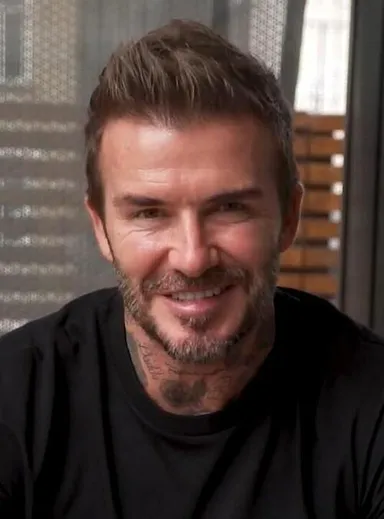 Photo: Soccer Aid for Unicef. Source and license in Image credits.
He could see the run early and make a distant passing angle useful to the teammate receiving the ball.
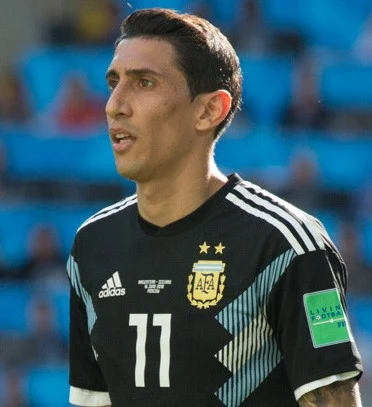 Photo: Екатерина Лаут. Source and license in Image credits.
His Madrid record closes at 190 official appearances and 36 goals; PSG’s post-farewell review records 295 matches, 92 goals and 111 assists. These club figures remain separate from his completed Argentina career of 145 appearances and 31 goals, and from the ongoing Rosario return.
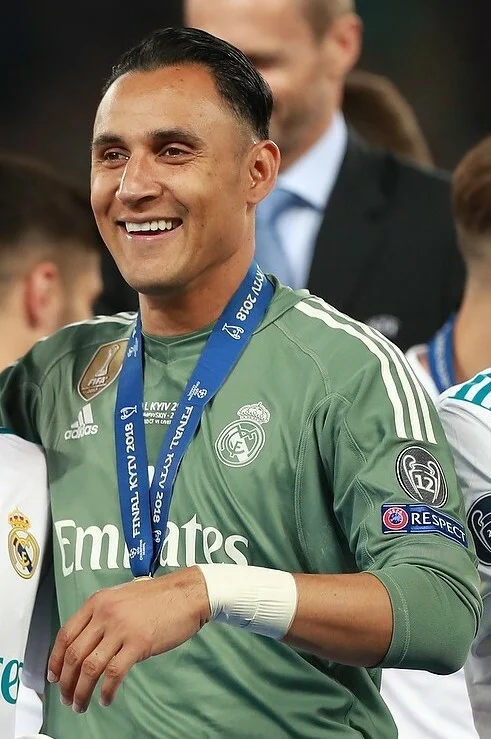 Photo: Антон Зайцев / soccer.ru. Source and license in Image credits.
Navas connects Costa Rica’s most successful World Cup run with Real Madrid’s three consecutive European titles. His legacy rests on decisive goalkeeping within different defensive systems, not on treating every trophy as proof of identical personal playing time.
Coaching legacy
Club tenure only. Honours include senior first-team league, cup, super cup, continental and world titles where verified. European titles count European Cup / Champions League wins.
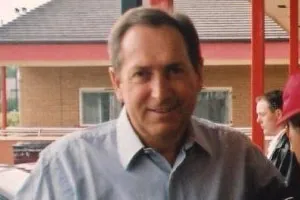 Photo: Stew jones. Source and license in Image credits.
1985–1988
Led the first French champions in 1986, balancing Sušić’s invention with an organised collective.
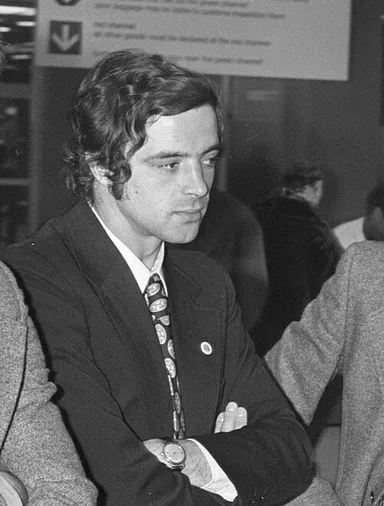 Photo: W. Punt for Anefo. Source and license in Image credits.
1991–1994 · 1998–1999
Built the 1994 champions and the side that eliminated Madrid in the 1993 UEFA Cup.
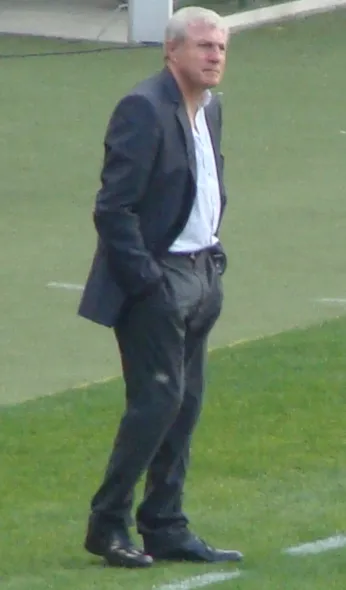 Photo: Liondartois. Source and license in Image credits.
1994–1996 · 2000–2003
The former Paris midfielder coached the 1996 Cup Winners’ Cup victory and later returned for a second spell.

2011–2013
Guided the 2013 league title, the first of the investment era and the first since 1994.
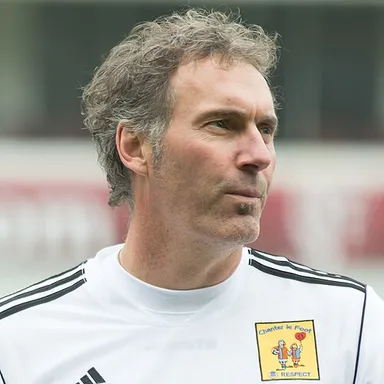 Photo: Julien Manceau. Source and license in Image credits.
2013–2016
Three consecutive league titles and domestic cup sweeps gave his possession-based side a sustained national influence.

2018–2020
Won two leagues and reached the club’s first Champions League final in 2020; the final itself ended in defeat.

2023–present
A mobile, coordinated attack delivered three leagues and the consecutive European titles of 2025 and 2026.
Completed titles through 15 September 2026
Club identity
Sušić’s invention, Blanc’s possession and Luis Enrique’s coordinated movement represent different technical traditions within the club.
The foundation in 1970 and investment from 2011 mark distinct institutional chapters. Early trophies remain part of the club’s identity.
International recruitment has changed from Weah and Raí to Ibrahimović and later a mobile European-winning attack. Each generation required a different balance.
The academy dates to 1975. Pilorget and later graduates show a development tradition that predates the modern training campus.
The Parc des Princes and the red central stripe give supporters durable reference points through changes in ownership and playing style.
The 1996 Cup Winners’ Cup, 2020 final defeat and 2025–26 European titles are separate milestones in a long pursuit.
Identity
Stadium
Current home / Paris
The modern stadium opened in June 1972. Paris established it as its permanent home in 1974, making the ground central to the club’s trophy nights and supporter culture.
Rivalries
Paris and Marseille’s national rivalry intensified through the strong teams and title contests of the 1980s and 1990s.
Weah, Raí, Papin and their contemporaries gave the contest its early modern faces. It connects two cities and two large supporter communities.
Development
Founded · 1975
A regional development pathway linking technical training, education and progression towards the first team.
Historical role
Founded on 4 November 1975, the academy produced Pilorget in its first generation and later players including Anelka, Coman and Kimpembe. The move to the new campus is a later infrastructure chapter, not the academy’s foundation.
Famous graduates
Collection
Kits
Home kit / 1973–74
Home kit / 1995–96
Home kit / 2024–25
Commercial
TECHNICAL SUPPLIER
Kit studies are abstract colour and pattern references, not reproductions of official shirts.
Records
Reached against Tottenham on 26 November 2025. This is a dated milestone, not the captain’s current appearance total.
As of 2026-09-15The 1970–71 second-division title is a separate achievement and is not included in the fourteen top-flight championships.
As of 2026-09-15The 2025 edition was played in January 2026. The August 2026 edition was lost to Lens; the calendar year does not create another title.
As of 2026-09-15The 5–0 victory over Inter in the 2025 final established the record.
As of 2026-09-15