

The football behind Achraf Hakimi’s ratings
- Repeated acceleration
- Elite
- Off-ball timing
- Elite
- Final-third delivery
- Excellent
- Recovery pace
- Elite
- Defensive positioning
- Very Good
- Aerial coverage
- Moderate

Achraf Hakimi Mouh
A right-back whose repeated runs, inside arrivals and recovery speed expand the team’s attacking options.
Senior club · all competitions
Completed club records only; not a complete career total.
Active club snapshots and records with another scope are excluded. Assist totals are not combined across incompatible definitions.
Stored archive snapshots, not live counters. Missing values are not zero; records with different scopes are never added together.
G/M = goals ÷ appearances. G+A = goals + assists. Per-90 metrics use documented minutes.
Senior international · all competitions
Morocco senior snapshot · source updated 8 September 2026
Stored archive snapshots, not live counters. Missing values are not zero; records with different scopes are never added together.
G/M = goals ÷ appearances. G+A = goals + assists. Per-90 metrics use documented minutes.
In context
From Madrid’s academy to Inter’s wing-back role, Paris’s rotations and Morocco’s tournament teams.
Reading the game
Achraf Hakimi changes the way a team can use its right side. A defender who repeatedly reaches the final third forces opponents to account for a runner arriving from behind the play, not simply an attacker already standing in front of them. His pace matters, but timing makes it productive: he can go outside a winger, travel through an inside lane or delay until the defence has turned towards the ball. The different stages of his career reveal why formation labels alone are insufficient. Inter gave him the breadth of a wing-back’s corridor; Paris developed a right-back who could appear in central scoring positions without becoming a permanent forward. Morocco has required the same player to protect a compact defensive unit and choose his attacking moments more carefully. These responsibilities expose the cost of his ambition as well as its reward. Space behind him must be covered, and recovery speed cannot solve every positional error. Understanding Hakimi means following the whole sequence: the run that stretches a defence, the chance it helps create and the work required when possession changes.
Historical references support the chronology; tactical explanations are museum editorial analysis.
Historical references: PSG: Achraf Hakimi’s identity and career ↗ · Inter: the 3–5–2 in the title run ↗ · UEFA: Hakimi’s transitions against Arsenal ↗ · UEFA: Paris’s movement in the 2025 final ↗
Career
| Period | Club | Apps | Goals | G/M |
|---|---|---|---|---|
| 2016—2017 | Real Madrid CastillaCastilla’s 2016/17 league record, shown separately from Real Madrid’s first team. Senior club · league only | 28 | 1 | 0.04 |
| 2017—2018 | Real MadridReal Madrid records 17 first-team appearances; the two goals are also present in the nine-match league subset. Castilla is excluded. Senior club · all competitions Senior · #19 | 17 | 2 | 0.12 |
| 2018—2020 | Borussia DortmundTwo-year loan from Real Madrid. League-only total: 21 plus 33 appearances and two plus five goals; cup and European matches are excluded. Senior club · league only Loan · #5 | 54 | 7 | 0.13 |
| 2020—2021 | Inter MilanInter’s archive records 45 appearances and seven goals; its season review credits nine assists, including eight in Serie A. This uses the club’s assist definition. Senior club · all competitions Senior · #2Performance record
| 45 | 7 | 0.16 |
| 2021—Now | Paris Saint-GermainPSG’s milestone article records 200 appearances, 28 goals and 38 assists on 3 April 2026. This historical snapshot is not a live career total. Senior club · all competitions Senior · #2Performance record
| 200 | 28 | 0.14 |
Stored archive snapshots, not live counters. Missing values are not zero; records with different scopes are never added together.
G/M = goals ÷ appearances. G+A = goals + assists. Per-90 metrics use documented minutes.
Honours
Real Madrid · continental
Real Madrid · world
Real Madrid · continental
Real Madrid · domestic cup
Inter Milan · league
Paris Saint-Germain · league
Paris Saint-Germain · domestic cup
Paris Saint-Germain · continental
Morocco · individual
Morocco Olympic team · world
Story
Career chapter
Real Madrid supplied the technical education and an early view of elite expectations, but a place in a decorated squad was not the same as a settled weekly role. The Dortmund loan gave Hakimi repeated opportunities to interpret wide space, including work on either flank. That distinction matters for development: a quick player learns more than how to run when he must also decide where to receive, when to join and how to recover. His attacking reputation grew through this exposure to real match problems. The period links an academy graduate’s physical potential with the practical experience required to become a dependable source of progression.
Historical references: Real Madrid: Hakimi’s first-team record and honours ↗ · Dortmund: Hakimi’s two-year loan ↗
Career chapter
At Inter, the back three gave Hakimi a clear corridor without making his job simple. The right wing-back could advance beyond midfield while nearby combinations and the forwards’ occupation of central defenders opened routes towards goal. The structure also imposed duties: recover into the defensive line, maintain useful distances and avoid leaving the outside centre-back exposed. This was a lesson in connecting repeated running to a collective plan. The title-winning season showed how a specialist wide runner could become a decisive attacking contributor without needing to dominate possession. His next move would test whether those habits could work from a different defensive starting shape.
Historical references: Inter: Hakimi’s competitive appearances and goals ↗ · Inter: the club’s 2020/21 assist definitions ↗ · Inter: the 3–5–2 in the title run ↗
Career chapter
Paris gradually asked more of Hakimi than providing an outside lane for a star winger. Under Luis Enrique, the movement of the front line allowed him to exchange spaces and arrive inside as well as overlap. The 2025 final made the point vividly: he appeared in front of goal to finish a move created by the team’s rotations. His semi-final performance against Arsenal also joined attacking influence to recovery work and duels. These examples should be understood as coordinated movements, not permission to abandon a position at will. The quality lies in reading the available cover and recognising when another player has opened the route.
Historical references: PSG: Hakimi’s 200-match snapshot ↗ · UEFA: Hakimi’s transitions against Arsenal ↗ · UEFA: Paris’s movement in the 2025 final ↗
Career chapter
Morocco’s 2022 World Cup run placed Hakimi within a side whose compactness and mutual cover were fundamental. With fewer long spells of possession than at an elite club, the right-back had to judge when an attack offered enough support to justify leaving the line. The same player could therefore look more restrained without losing his influence. The Olympic bronze in 2024 belongs to a separate age-restricted team, where he appeared as an over-age leader. Keeping those contexts distinct helps explain his range: leadership and attacking energy can serve different match plans, but neither replaces the collective organisation around him.
Historical references: PSG: Achraf Hakimi’s identity and career ↗ · FIFA: Morocco’s Olympic bronze-medal match ↗
Profile
Full-Back
Also plays · Wing-Back
Provides an outside run or enters the inside channel, then reconnects with the defensive line when possession changes. His freedom depends on coordinated cover.
Repeated acceleration
Overlap timing
Inside arrivals
Recovery pace
Illustrative role zones · not tracking data
An overlap is most dangerous when it changes the defender’s reference point. Hakimi can wait while the winger draws attention, then accelerate into the space outside. The pass need not always reach him: his run may pull a marker away and make an inside action easier. The useful question is whether the movement improves the next decision, not simply whether it is fast.
When a winger holds the touchline or a forward drops away, the channel towards the penalty area can become available to a deeper runner. Hakimi’s central arrivals exploit this moment. They require an understanding of the surrounding positions so that two teammates do not attack the same space. His right-back label describes where the sequence begins, not where every sequence must end.
Low passes across the area and cutbacks can be especially useful after his run has turned defenders towards their own goal. The delivery still requires selection: an early ball may serve a central runner, while another touch can allow support to arrive. Crossing quality is therefore connected to the timing of the run and the positions his teammates have taken.
His speed can repair a dangerous transition, but it is most effective when the route back is chosen early. Sprinting towards the ball without reading the runner behind it can leave another passing lane open. Defensive assessment must include body orientation, cover and restraint, not just a dramatic chase. A high starting position also makes the team’s protection behind him essential.
A defender who enters the box late may be harder to track than a forward already marked there. Hakimi can finish these arrivals with a quick contact before the defence reorganises. That threat is different from asking him to lead the line throughout a match. It rewards the surprise of his entry and the service produced by players occupying the defence ahead of him.
Historical references: Inter: the club’s 2020/21 assist definitions ↗ · UEFA: Hakimi’s transitions against Arsenal ↗ · UEFA: Paris’s movement in the 2025 final ↗
Reading the game
| Era / team | Primary Role | Tactical Character |
|---|---|---|
| 2017–2018Real Madrid | Earn first-team experience | Develops senior judgement behind established Madrid players. |
| 2018–2020Borussia Dortmund | Turn speed into progression | Receives regular opportunities on Dortmund’s flanks. |
| 2020–2021Inter Milan | Cover the whole corridor | Provides width and depth within Conte’s back-three structure. |
| 2021–PresentParis Saint-Germain | Choose the overlap or inside run | Reads Paris’s rotations while retaining recovery duties. |
Historical references: Real Madrid: Hakimi’s first-team record and honours ↗ · Dortmund: Hakimi’s two-year loan ↗ · Inter: the 3–5–2 in the title run ↗ · UEFA: Paris’s movement in the 2025 final ↗
Reading the game
Repeated acceleration asks a marker to solve the same demanding problem throughout a match. Hakimi can remain available after an earlier run was ignored, giving the team another outlet. The value is not mileage alone: the runs must remain connected to the ball carrier and leave a recoverable distance when possession changes.
Going outside and moving inside place different demands on a defender. Hakimi’s ability to choose between them prevents the opponent from treating every advance as a predictable overlap. His teammates’ positions determine which route is useful, making awareness as important as the physical capacity to reach the space.
Inter and Paris show different ways to protect an attacking wide defender. Hakimi’s core tools remain recognisable, but the starting height and the cover around him change. Adaptability means understanding those differences rather than performing the same run regardless of formation, teammates or the current state of the match.
A full-back’s attacking contribution comes with a second responsibility after the ball is lost. Hakimi can use his acceleration to rejoin the contest, yet restraint and a good initial angle often matter before the sprint begins. His best performances connect both jobs instead of treating them as separate identities.
Historical references: Inter: the 3–5–2 in the title run ↗ · UEFA: Hakimi’s transitions against Arsenal ↗ · UEFA: Paris’s movement in the 2025 final ↗
Reading the game
Wing-Back
Regular Dortmund football made his acceleration a repeatable team resource. This version emphasises transition running and wide progression, while leaving room for later improvement in defensive judgement and positional coordination.
Wing-Back
Conte’s title-winning Inter supplied a clear right-sided corridor. Hakimi’s runs worked with midfield support and two forwards, showing how width and depth could come from a player responsible for the entire flank.
Full-Back
Morocco’s World Cup demanded patience, compactness and selective attacks. This reference shows why a quieter attacking display can still be valuable when the right-back’s priority is preserving the team’s defensive distances.
Full-Back
The shared rating reference is Paris’s 2024/25 season. Overlaps, central arrivals and recovery work form one profile; the final goal illustrates his movement without turning the assessment into a striker’s scorecard.
Historical references: PSG: Achraf Hakimi’s identity and career ↗ · Dortmund: Hakimi’s two-year loan ↗ · Inter: the 3–5–2 in the title run ↗ · UEFA: Paris’s movement in the 2025 final ↗
Statistics
| Season | Club | Apps | Goals | G/M |
|---|---|---|---|---|
| 2025–26 | Paris Saint-Germain Senior club · league only | 18 | 2 | 0.11 |
| 2024–25 | Paris Saint-Germain Senior club · league only | 25 | 4 | 0.16 |
| 2023–24 | Paris Saint-Germain Senior club · league only | 25 | 4 | 0.16 |
| 2022–23 | Paris Saint-Germain Senior club · league only | 28 | 5 | 0.18 |
| 2021–22 | Paris Saint-Germain Senior club · league only | 32 | 4 | 0.13 |
| 2020–21 | Inter Milan Senior club · league only Performance record
| 37 | 7 | 0.19 |
| 2019–20 | Borussia Dortmund Senior club · league only | 33 | 5 | 0.15 |
Stored archive snapshots, not live counters. Missing values are not zero; records with different scopes are never added together.
G/M = goals ÷ appearances. G+A = goals + assists. Per-90 metrics use documented minutes.
Selected league seasons through 2025/26. Club snapshots have their own dates and scopes; do not add league rows to all-competition totals. Inter assists follow its own published definition. Unverified assists are unknown, not zero.
Club competitions
| Competition | Goals | Assists |
|---|---|---|
UEFA Champions League2024/25 · ParisPSG’s review credits four goals and five assists in the 2024/25 Champions League. Appearance totals are not inferred from the club season. Performance record
| 4 | 5 |
Stored archive snapshots, not live counters. Missing values are not zero; records with different scopes are never added together.
G/M = goals ÷ appearances. G+A = goals + assists. Per-90 metrics use documented minutes.
International
International career
Morocco’s senior record is separated from the Olympic team. The 2022 World Cup semi-final run and 2024 Olympic bronze required different roles. For AFCON 2025, CAF’s 17 March 2026 ruling recorded a 3–0 final in Morocco’s favour; CAS confirmed receipt of Senegal’s appeal on 25 March. These dated decisions are recorded without presenting the disputed title as an unqualified honour.
Reading the game
Hakimi belongs to a generation for whom full-back is an attacking responsibility as much as a defensive starting point. His route through Spain, Germany, Italy and France offers several interpretations of that responsibility rather than one universal template. The enduring lesson is not that every defender should constantly run forward. It is that a well-timed run from a deeper position can alter a marking scheme that appears secure against the recognised forwards. His opening goal in the 2025 Champions League final provides a particularly clear image of that possibility. Morocco adds a different historical dimension: the 2022 World Cup showed an African team sustaining a disciplined collective plan deep into the tournament, with Hakimi among its important components. Individual recognition in 2025 further raised the visibility of a role often discussed through the achievements of attackers. His career remains unfinished, and the balance between attacking freedom and defensive security remains the proper measure. Trophies establish the settings; his lasting football contribution is the range of decisions a team can entrust to a player nominally stationed at right-back.
Historical references: PSG: Achraf Hakimi’s identity and career ↗ · UEFA: Paris’s movement in the 2025 final ↗ · CAF: Hakimi, 2025 African Player of the Year ↗
Archive
Full-Back · editorial peak 2024—2025
Zinedine Zidane · Lucien Favre · Antonio Conte · Luis Enrique · Hervé Renard · Walid Regragui
Cristiano Ronaldo— Overlapping Real Madrid era · Lionel Messi— Overlapping Paris Saint-Germain era · Luka Modrić— Overlapping Real Madrid era · Neymar— Overlapping Paris Saint-Germain era
Four European Cups in five years — Real Madrid · League champions and a changing attack — Paris Saint-Germain · Luis Enrique’s European champions — Paris Saint-Germain

Sporting CP · Manchester United · Real Madrid
2002—Present
FC Barcelona · Paris Saint-Germain · Inter Miami CF
2004—Present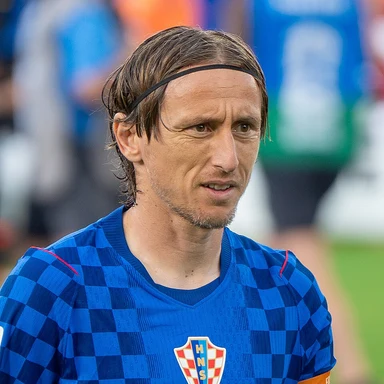 Photo: Bryan Berlin / WikiPortraits. Source and license in Image credits.
Dinamo Zagreb · Zrinjski Mostar · Inter Zaprešić
2003—Present
AC Milan
1985—2009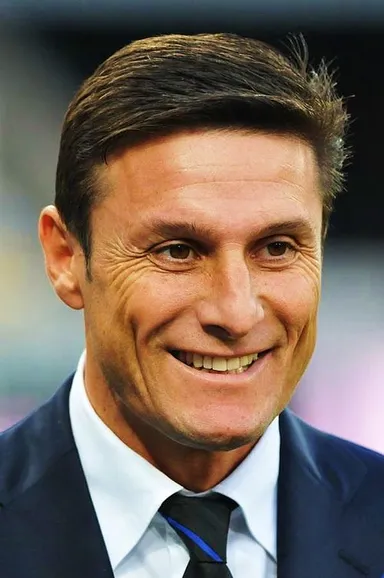 Photo: Илья Хохлов. Source and license in Image credits.
Talleres de Remedios de Escalada · Banfield · Inter Milan
1992—2014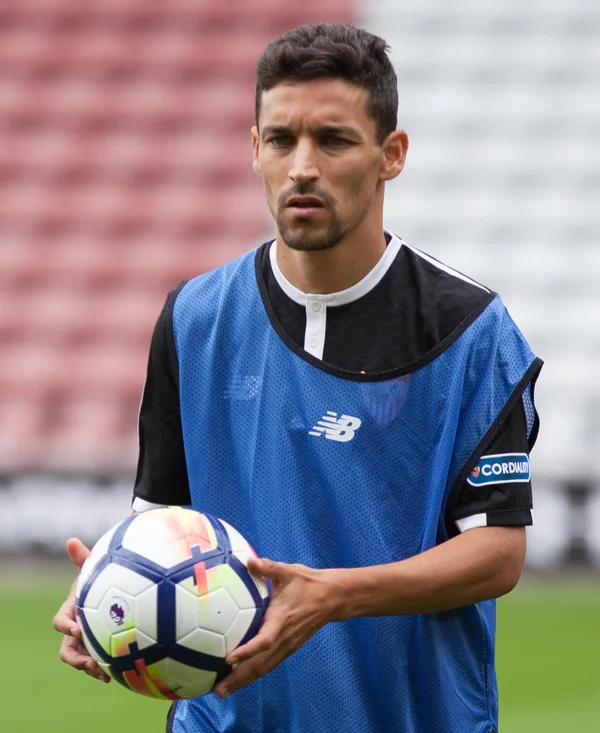 Photo: Steve Hogg / Solent Creatives. Source and license in Image credits.
Sevilla · Manchester City
2003—2024Statistics are displayed only within the scope supported by each cited source.
Paris Saint-GermainPSG: Achraf Hakimi’s identity and careerReal MadridReal Madrid: Hakimi’s first-team record and honoursBorussia DortmundDortmund: Hakimi’s two-year loanInter MilanInter: Hakimi’s competitive appearances and goalsInter MilanInter: the club’s 2020/21 assist definitionsInter MilanInter: the 3–5–2 in the title runParis Saint-GermainPSG: Hakimi’s 200-match snapshotUEFAUEFA: Hakimi’s transitions against ArsenalUEFAUEFA: Paris’s movement in the 2025 finalNational Football TeamsNational Football Teams: Hakimi’s dated senior and league recordsCAFCAF: Hakimi, 2025 African Player of the YearFIFAFIFA: Morocco’s Olympic bronze-medal matchCAFCAF: the dated AFCON final appeal rulingCourt of Arbitration for SportCAS: receipt of Senegal’s appeal