



Athletic
- Acceleration
- Elite
- Aerial reach
- Elite
- Repeated attacking runs
- Excellent

Cristiano Ronaldo dos Santos Aveiro
Portugal’s captain and the leading men’s international goalscorer, whose evolution from wide dribbler to penalty-box reference has stretched across more than two decades.
UEFA-listed height and weight. Published measurements may differ between organisations; these are not live measurements.
UEFA player profile ↗ · Checked 2026-09-10Senior club · all competitions
Completed club records only; not a complete career total.
Active club snapshots and records with another scope are excluded. Assist totals are not combined across incompatible definitions.
Stored archive snapshots, not live counters. Missing values are not zero; records with different scopes are never added together.
G/M = goals ÷ appearances. G+A = goals + assists. Per-90 metrics use documented minutes.
Senior international · all competitions
Stored archive snapshots, not live counters. Missing values are not zero; records with different scopes are never added together.
G/M = goals ÷ appearances. G+A = goals + assists. Per-90 metrics use documented minutes.
In context
Cristiano Ronaldo’s career is presented here without blending incompatible datasets: 451 goals in 438 Real Madrid appearances, 145 in 346 across two Manchester United spells, 101 in 133 for Juventus, and a live Saudi Pro League record of 104 goals in 110 matches as of 28 August 2026.
Reading the game
Cristiano Ronaldo's career makes the distinction between a winger's starting position and a striker's responsibility unusually clear. He emerged as a player who wanted the ball outside a defender, with room for stepovers and acceleration. He became the player most likely to arrive at the end of the move. That change involved more than moving closer to goal: he learned to influence attacks while someone else was carrying, combining or crossing.
Manchester United gave that transformation a fluid attacking setting. Real Madrid then offered several different versions of it, from the long diagonal runs of the Mourinho years to the concentrated penalty-area work of the later European campaigns. The same player could threaten an open field, the far post and a crowded six-yard box. His value therefore asks us to look beyond touches and possession: a run can shape the defence before a pass is made. Portugal adds a separate national history, including the collective achievement of EURO 2016. Understanding Ronaldo means following how technique, athletic ability and anticipation became a repeatable way of reaching the decisive space, and how teams supplied the conditions for it.
Historical references support the chronology; tactical explanations are museum editorial analysis.
Historical references: United’s fluid attack against Aston Villa, 2008 ↗ · Real Madrid’s record-breaking 2011/12 league season ↗ · Real Madrid v Juventus: the 2017 Cardiff final ↗ · Portugal v France: the EURO 2016 final ↗
Career
| Period | Club | Apps | Goals | G/M |
|---|---|---|---|---|
| 2002—2003 | Sporting CPA one-season senior breakthrough in Lisbon before his move to Manchester. Senior club · all competitions Senior · #28 | 33 | 5 | 0.15 |
| 2003—2009 | Manchester UnitedSix seasons transformed an audacious winger into a Ballon d’Or-winning, Champions League-winning forward. Senior club · all competitions Senior · #7 | 292 | 118 | 0.40 |
| 2009—2018 | Real MadridNine seasons, 451 goals and sixteen team trophies made him the club’s record goalscorer. Senior club · all competitions Senior · #9 / 7 | 438 | 451 | 1.03 |
| 2018—2021 | JuventusThree seasons in Turin produced 101 goals, five trophies and the 2020–21 Serie A top-scorer award. Senior club · all competitions Senior · #7 | 133 | 101 | 0.76 |
| 2021—2022 | Manchester UnitedThe separate return spell completed Manchester United’s official combined total of 346 appearances and 145 goals. Senior club · all competitions Senior · #7 | 54 | 27 | 0.50 |
| 2023—Now | Al NassrActive Saudi Pro League record through 28 August 2026; cup and continental matches are intentionally excluded. Senior club · league only Captaincy · #7 | 110 | 104 | 0.95 |
Stored archive snapshots, not live counters. Missing values are not zero; records with different scopes are never added together.
G/M = goals ÷ appearances. G+A = goals + assists. Per-90 metrics use documented minutes.
Honours
Manchester United · Real Madrid · continental
Manchester United · Real Madrid · Juventus · league
Portugal · continental
Portugal · continental
France Football · individual
European Sports Media · individual
Story
Club chapter
At Manchester United, Ronaldo initially made the flank a place of confrontation. Stepovers and changes of pace invited a full-back to commit; the subsequent acceleration could open a crossing angle or a route inside. Over time, the destination of those actions changed. He increasingly attacked the goal himself, while also learning when to release the ball and continue his run.
The attack with Wayne Rooney and Carlos Tevez made fixed labels less useful. Teammates could leave central space, exchange positions or work back while Ronaldo became the finishing reference. His 2007/08 season marked the clearest early synthesis: the freedom of a wide attacker combined with responsibility for the final touch. The transformation was about what he did after passing as much as what he did while dribbling.
Historical references: United’s fluid attack against Aston Villa, 2008 ↗ · Cristiano Ronaldo’s first Manchester United spell ↗
Explore club contextClub chapter
Madrid did not use one unchanging version of Ronaldo. Under José Mourinho, his left-sided starting point gave him a runway for diagonal attacks as possession changed hands. A defender had to protect the inside route without offering a free sprint outside. The attack could reach goal before the opposition recovered its shape.
Under Carlo Ancelotti and later Zinedine Zidane, his relationship with Karim Benzema and the supporting players became central to a more concentrated finishing role. Benzema's movement could open a lane; a full-back's width could let Ronaldo stay inside. He still moved across the front line, but increasingly saved his separation for the moment a delivery arrived. The Madrid record contains several tactical arrangements, not one permanent position.
Historical references: Real Madrid’s record-breaking 2011/12 league season ↗ · Real Madrid’s 2014 semi-final victory in Munich ↗ · Real Madrid v Juventus: the 2017 Cardiff final ↗ · Cristiano Ronaldo — club legend ↗ · Cristiano Ronaldo in the Champions League — records and statistics ↗
Explore club contextClub chapter
Juventus inherited a forward whose most valuable work often came at the end of an attack. Ronaldo could begin to the left of a central partner, move beyond a combination or attack a cross from outside the defender's immediate view. The challenge was to connect those movements to service without asking him to recreate the entire attack on his own.
His scoring remained productive across three seasons with different coaches. That continuity makes Turin useful for separating an individual skill from a particular team's balance. Finding the finish could transfer between systems; the surrounding distribution of width, progression and defensive work still had to be solved collectively. A successful scorer did not remove those other requirements.
Historical references: Juventus says goodbye to Cristiano Ronaldo ↗
Explore club contextCareer chapter
The Al Nassr chapter shifts the setting again: different opponents and teammates, with more of Ronaldo's work concentrated around the final delivery. His short movement towards a rebound or a cutback can matter more than a long carry from the wing. The league's August 2026 account of his winner against Al Taawoun offers a concrete example: he finished close to goal after teammates created the route through the penalty area.
This late phase should be read on its own competitive terms. It illustrates the persistence of anticipation and finishing habits as the physical and tactical setting changes; it does not make every season across different leagues directly equivalent.
Historical references: Ronaldo becomes Al Nassr’s Saudi Pro League-era top scorer ↗
Profile
Goalscoring forward
Also plays · Left-sided forward / Centre-forward
The early touchline dribbler progressively narrowed his starting position and reduced low-value touches. His mature game is built on blind-side movement, explosive separation, aerial timing, repeatable high-volume shooting and penalty-box anticipation.
Off-ball movement
Aerial timing
Ball striking
Transition threat
Penalty-box finishing
Illustrative role zones · not tracking data
Early Ronaldo used stepovers to make the defender shift weight before accelerating past the planted foot. In open space, longer touches could put his stride length to work. From the left, the threat of cutting onto his right foot also made the outside route useful. Later, he needed fewer of these confrontations because a run beyond the ball could create a better shooting position than another dribble.
His penalty-area movement often begins by leaving a defender's clear line of sight. A small move away can create room for a second run across the marker. He must read the passer as well: accelerating before the cross is ready can consume the space too early. Near-post bursts, far-post arrivals and delayed runs offer different answers to the same problem of reaching the ball unopposed.
Jumping ability matters only if the forward reaches a useful take-off point. Ronaldo's approach can turn a standing contest into a moving one, allowing momentum and timing to work together. In the air, body control helps direct the header rather than merely win contact. A cross towards a smaller full-back at the far post presents a different opportunity from a central duel with two centre-backs.
His right-footed striking range makes shooting from distance a credible threat, but his scoring repertoire also includes left-foot finishes and quick contacts close to goal. Placement and release time matter alongside force. One-touch finishes reduce the goalkeeper's preparation time; a controlled extra touch can improve the angle. The mature penalty-area role made selecting the contact increasingly important relative to creating a spectacular shot.
Ronaldo's combinations often serve the next run. A lay-off can draw a defender forward while he attacks behind, and a central partner can occupy the marker he wants to escape. As his role narrowed, teams needed others to provide more progression and width. This exchange explains both the efficiency of the specialist finisher and the team-building demands that accompany him.
Historical references: United’s fluid attack against Aston Villa, 2008 ↗ · Manchester United v Chelsea: the 2008 final ↗ · Real Madrid’s 2014 semi-final victory in Munich ↗ · Real Madrid v Juventus: the 2017 Cardiff final ↗ · Juventus says goodbye to Cristiano Ronaldo ↗
Reading the game
| Era / team | Primary Role | Tactical Character |
|---|---|---|
| 2003–2006Manchester United | Touchline dribbler | Invites the full-back into a duel, then uses changes of pace to open a crossing angle or an inward route. |
| 2006–2009Manchester United | Roaming scoring winger | Exchanges positions across the attack and adds far-post arrivals to his one-on-one threat. |
| 2009–2013Real Madrid | Left-sided transition forward | Attacks diagonally at speed, connecting early forward passes to shots before the defence can recover. |
| 2013–2018Real Madrid | Inside forward / mobile finisher | Combines with the central forward and increasingly attacks deliveries inside the box while teammates provide width. |
| 2018–2021Juventus | Goalscoring forward | Starts beside a central partner or moves inside from the left, concentrating on the final run and contact. |
| 2021–PresentManchester United / Al Nassr | Penalty-area reference | Prioritises the last line, crosses and second balls; progression and sustained width depend more on supporting players. |
Historical references: United’s fluid attack against Aston Villa, 2008 ↗ · Manchester United v Chelsea: the 2008 final ↗ · Real Madrid’s record-breaking 2011/12 league season ↗ · Real Madrid’s 2014 semi-final victory in Munich ↗ · Real Madrid v Juventus: the 2017 Cardiff final ↗ · Cristiano Ronaldo’s first Manchester United spell ↗ · Ronaldo to leave United — official statement ↗ · Juventus says goodbye to Cristiano Ronaldo ↗ · Ronaldo becomes Al Nassr’s Saudi Pro League-era top scorer ↗
Reading the game
A winger is often judged by the duel directly ahead of him. Ronaldo added a second contest on the opposite side of the attack: the arrival against the far-side defender. That made him relevant when play moved away from his starting flank. The opponent could survive his dribble and still face him again at the finish, now attacking a different marker.
A defender can follow the first movement and still lose the next one. Ronaldo's changes of direction inside the box make marking a continuing task rather than a single successful decision. A short retreat can separate him from contact before another acceleration. The useful advantage is often only a stride, but that can be enough when the ball arrives at shooting height.
A defence prepared for the right-foot shot still has to account for the header, the left-foot contact and the run behind. These threats do not all need to be equally strong to affect its choices. Their coexistence reduces the safety of forcing him towards one obvious solution. Teammates can also vary the service rather than search for a single ideal pass.
His longevity is easier to understand as a redistribution of tasks than as an unchanged athletic peak. The young winger spent more actions trying to create separation with the ball. The older forward concentrated on where the next delivery might finish. He retained demanding physical actions, especially short accelerations and jumps, while changing how often and where he needed to use them.
Historical references: United’s fluid attack against Aston Villa, 2008 ↗ · Manchester United v Chelsea: the 2008 final ↗ · Real Madrid’s 2014 semi-final victory in Munich ↗ · Real Madrid v Juventus: the 2017 Cardiff final ↗ · Ronaldo becomes Al Nassr’s Saudi Pro League-era top scorer ↗
Reading the game
Roaming wide forward
This version still carried the one-on-one threat of a winger, but no longer depended on receiving wide to decide a match. The Moscow final header is a useful image: Ronaldo arrived to finish a cross rather than create it. Alongside Rooney and Tevez, he could alternate between advancing the ball and attacking the space they vacated. This peak joins broad involvement to an emerging specialist's instinct for the final action.
Left-sided scoring forward
Mourinho's league-winning side gave Ronaldo space to attack at speed from the left. The key relationship was between the runner and the early pass: a diagonal sprint could turn a regained ball into a shooting opportunity before defenders reset. Compared with the later penalty-area specialist, this Ronaldo covered more ground towards goal. His danger lay in connecting the start of a transition to its finish, not simply waiting for service.
Inside forward in a front three
The first Ancelotti season placed Ronaldo alongside Benzema and Gareth Bale in an attack able to alternate patient possession with rapid release. His counterattacking goal in Munich illustrates the division of labour: Benzema released Bale, who supplied Ronaldo's finish. He did not have to carry every attack to remain its decisive runner. This version combined the earlier open-field threat with the increasingly economical work of arriving at the right moment.
Mobile penalty-area forward
The Cardiff final offers a clear view of the later peak. With Benzema alongside him and Isco behind, Ronaldo could move across the front rather than stay fixed against a centre-back. His two goals came from deliveries by Dani Carvajal and Luka Modrić. The distinction from the earlier winger is the timing of his main contribution: he increasingly met an attack already constructed by others and supplied its decisive contact.
Historical references: United’s fluid attack against Aston Villa, 2008 ↗ · Manchester United v Chelsea: the 2008 final ↗ · Real Madrid’s record-breaking 2011/12 league season ↗ · Real Madrid’s 2014 semi-final victory in Munich ↗ · Real Madrid v Juventus: the 2017 Cardiff final ↗
Statistics
| Season | Club | Apps | Goals | G/M |
|---|---|---|---|---|
| 2026–27 | Al Nassr Senior club · league only | 3 | 2 | 0.67 |
| 2025–26 | Al Nassr Senior club · league only | 30 | 28 | 0.93 |
| 2024–25 | Al Nassr Senior club · league only | 30 | 25 | 0.83 |
| 2023–24 | Al Nassr Senior club · league only | 31 | 35 | 1.13 |
| 2022–23 | Al Nassr Senior club · league only | 16 | 14 | 0.88 |
| 2022–23 | Manchester United Senior club · all competitions | 16 | 3 | 0.19 |
| 2021–22 | Manchester United Senior club · all competitions | 38 | 24 | 0.63 |
| 2020–21 | Juventus Senior club · all competitions | 44 | 36 | 0.82 |
| 2019–20 | Juventus Senior club · all competitions | 46 | 37 | 0.80 |
| 2018–19 | Juventus Senior club · all competitions | 43 | 28 | 0.65 |
Stored archive snapshots, not live counters. Missing values are not zero; records with different scopes are never added together.
G/M = goals ÷ appearances. G+A = goals + assists. Per-90 metrics use documented minutes.
Club competitions
| Competition | Apps | Goals | G/M |
|---|---|---|---|
UEFA Champions League2003–2022Main competition only; qualifying rounds excluded. Performance record
| 183 | 140 | 0.77 |
Stored archive snapshots, not live counters. Missing values are not zero; records with different scopes are never added together.
G/M = goals ÷ appearances. G+A = goals + assists. Per-90 metrics use documented minutes.
International
International career
Senior national-team record listed by the Portuguese Football Federation; youth and Olympic appearances are excluded.
Senior international · tournament splits
| Competition | Apps | Goals | G/M |
|---|---|---|---|
UEFA European Championship2004–2024Final tournaments only; qualifying rounds excluded. | 30 | 14 | 0.47 |
Stored archive snapshots, not live counters. Missing values are not zero; records with different scopes are never added together.
G/M = goals ÷ appearances. G+A = goals + assists. Per-90 metrics use documented minutes.
Reading the game
Ronaldo's historical importance lies in making the wide forward a primary destination for goals rather than chiefly a supplier of them. He did not invent inward runs or attacking the far post, but his career brought those actions together with unusual physical range and finishing variety. The result challenges a familiar way of watching football: the most influential attacker in a move need not be the player with the most touches. Creating separation without the ball is a technical and tactical achievement in its own right.
His European club career also shows how a player can remain valuable while the surrounding attack changes. That adaptability depended on teammates who supplied width, passes and defensive balance; the individual record should not erase their work. Portugal's EURO 2016 victory adds an important qualification to a story usually told through one name. Ronaldo contributed to the campaign, but injury removed him from the final and the team won through Éder's goal. The national achievement and the individual career belong together without becoming interchangeable. His legacy is best read through those relationships, and through the changing work behind a remarkably sustained scoring role.
Historical references: United’s fluid attack against Aston Villa, 2008 ↗ · Real Madrid v Juventus: the 2017 Cardiff final ↗ · Portugal v France: the EURO 2016 final ↗
Archive
Goalscoring Forward · editorial peak 2011—2018
Sir Alex Ferguson · Manuel Pellegrini · José Mourinho · Carlo Ancelotti · Rafael Benítez · Zinedine Zidane · Massimiliano Allegri · Maurizio Sarri · Andrea Pirlo · Ole Gunnar Solskjær · Ralf Rangnick · Erik ten Hag · Rudi Garcia · Luís Castro · Stefano Pioli
Gianluigi Buffon— Overlapping Juventus era · Kaká— Overlapping Real Madrid era · Luka Modrić— Overlapping Real Madrid era · Sergio Ramos— Overlapping Real Madrid era
A flexible front line — Manchester United · Mourinho’s record league — Real Madrid · Four European Cups in five years — Real Madrid · Nine consecutive league titles — Juventus

Adaptive tournament manager
1992—Present · AC Milan · Real Madrid
Elite knockout strategist
2000—Present · Real Madrid · Inter Milan
Era-building leader
1974—2013 · Manchester United Photo: Palácio do Planalto. Source and license in Image credits.
An attacking organiser across football cultures
1989—Present · Benfica · Flamengo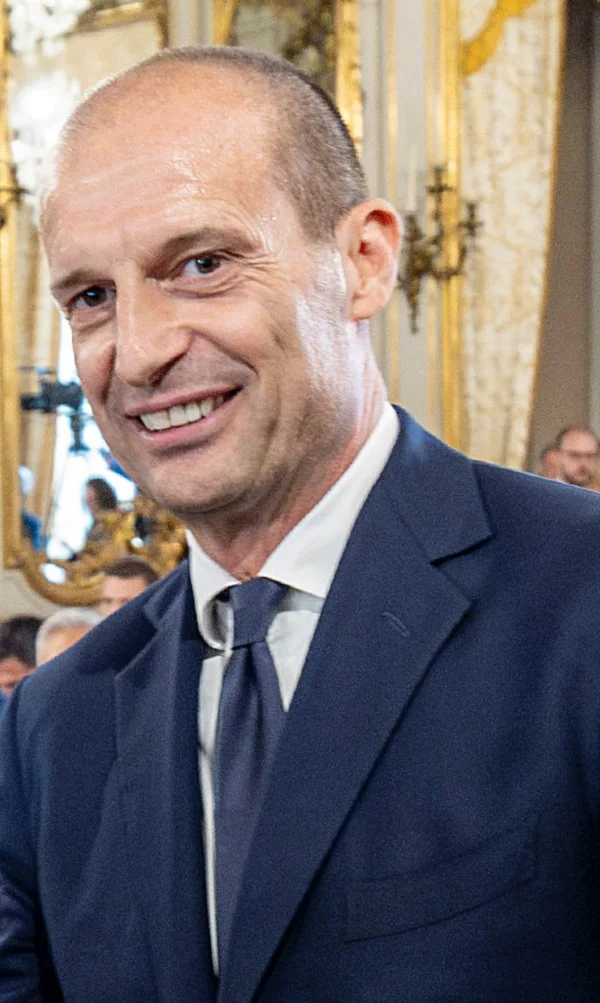 Photo: Quirinale / Presidenza della Repubblica Italiana. Source and license in Image credits.
Adaptability within a balanced team
2003—Present · Juventus · AC Milan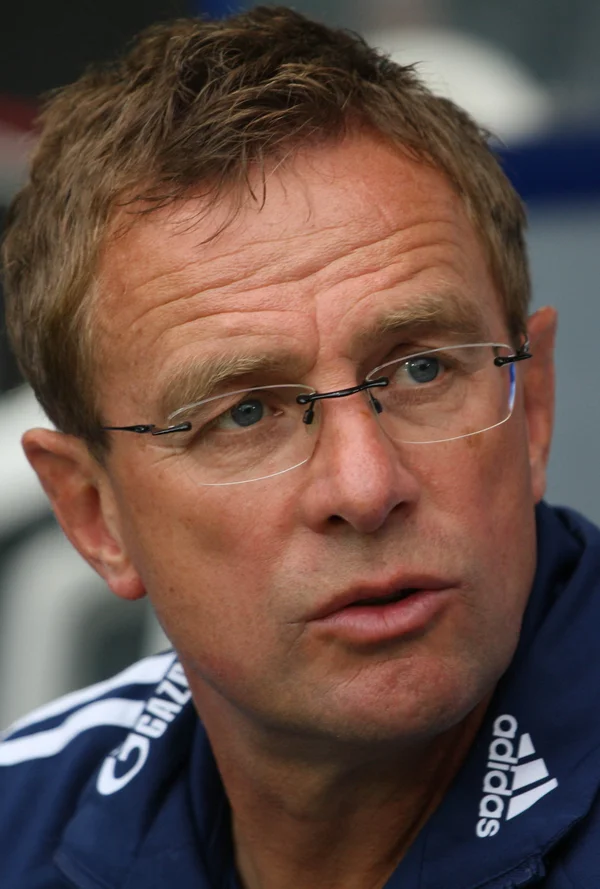 Photo: Thomas Rodenbücher / xtranews.de. Source and license in Image credits.
A pioneer of organised pressing
1983—Present ·
Midfield balance and dressing-room trust
2013—Present · Real Madrid
Parma · Juventus · Paris Saint-Germain
1995—2023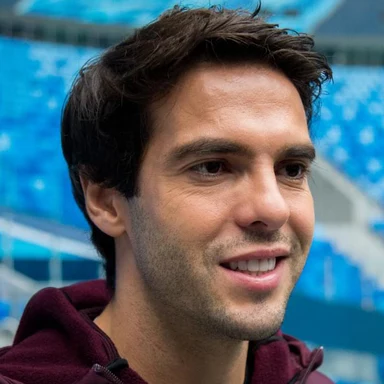 Photo: Евгений Асмолов. Source and license in Image credits.
São Paulo · AC Milan · Real Madrid
2001—2017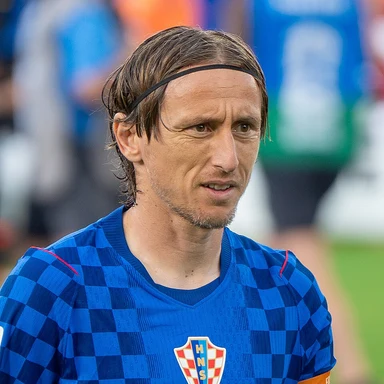 Photo: Bryan Berlin / WikiPortraits. Source and license in Image credits.
Dinamo Zagreb · Zrinjski Mostar · Inter Zaprešić
2003—Present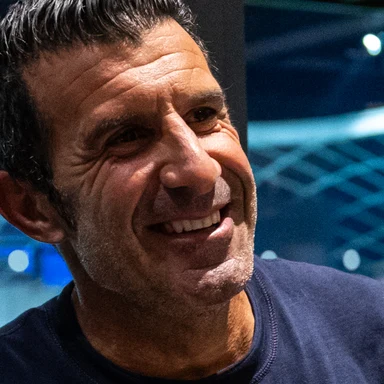 Photo: Žan Kolman. Source and license in Image credits.
Sporting CP · Barcelona · Real Madrid
1989—2009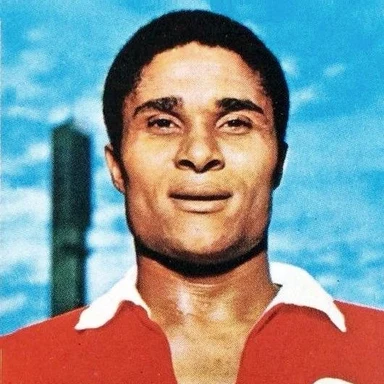 Photo: Panini. Source and license in Image credits.
Sporting Lourenço Marques · Benfica · Boston Minutemen
1957—1980
Novara · Udinese · Sampdoria
2012—PresentStatistics are displayed only within the scope supported by each cited source.
Manchester UnitedUnited’s fluid attack against Aston Villa, 2008UEFAManchester United v Chelsea: the 2008 finalReal Madrid C.F.Real Madrid’s record-breaking 2011/12 league seasonUEFAReal Madrid’s 2014 semi-final victory in MunichUEFAReal Madrid v Juventus: the 2017 Cardiff finalUEFAPortugal v France: the EURO 2016 finalUEFACristiano Ronaldo — UEFA Champions League statistical recordUEFACristiano Ronaldo — EURO finals records through 2024Real Madrid C.F.Cristiano Ronaldo — club legendSporting Clube de PortugalCristiano Ronaldo — Sporting archiveManchester UnitedCristiano Ronaldo’s first Manchester United spellManchester UnitedRonaldo to leave United — official statementJuventus F.C.Juventus says goodbye to Cristiano RonaldoPortuguese Football FederationCristiano Ronaldo — senior national-team recordUEFACristiano Ronaldo in the Champions League — records and statisticsUEFA2024/25 UEFA Nations League season reviewSaudi Pro LeagueRonaldo becomes Al Nassr’s Saudi Pro League-era top scorer