
The football behind Luís Figo’s ratings
- Changes of rhythm
- Elite
- Varied crossing
- Elite
- Close control
- Elite
- Wide chance creation
- Elite
- Possession protection
- Excellent
- Defensive specialisation
- Limited
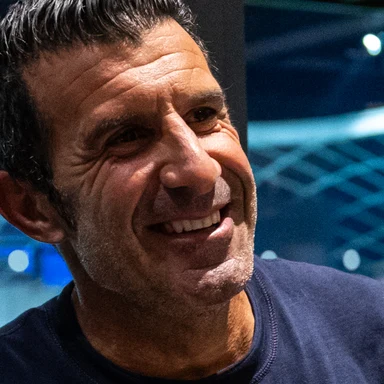 Photo: Žan Kolman. Source and license in Image credits.
Luís Filipe Madeira Caeiro Figo
A wide creator who used close control, changes of rhythm and varied delivery to turn individual duels into opportunities for the whole attack.
Senior club · all competitions
Completed club records only; not a complete career total.
Active club snapshots and records with another scope are excluded. Assist totals are not combined across incompatible definitions.
Stored archive snapshots, not live counters. Missing values are not zero; records with different scopes are never added together.
G/M = goals ÷ appearances. G+A = goals + assists. Per-90 metrics use documented minutes.
Senior international · all competitions
Portugal · senior internationals, 1991–2006
Stored archive snapshots, not live counters. Missing values are not zero; records with different scopes are never added together.
G/M = goals ÷ appearances. G+A = goals + assists. Per-90 metrics use documented minutes.
In context
A bridge between the touchline winger and the playmaker, with the patience to draw a defender and the technique to exploit the response.
Reading the game
Luís Figo made the flank a place where an attack could think. He did not need to sprint past the full-back at the first opportunity. By slowing the ball, shifting his weight and keeping it close, he encouraged the defender to reveal a preference: protect the outside, block the inward turn or wait for support. Figo could then choose the route that made the next pass useful. His crossing was part of this same decision, ranging from an early delivery to a ball pulled back after reaching the byline. At Barcelona, this gave a side containing central scorers a reliable source of width and invention. At Madrid, it helped different attacking personalities share the ball. With Portugal, his ability to carry responsibility across the pitch connected generations rather than merely supplying one striker. The famous transfer between Spain’s rivals belongs to his history, but the football explains why that move mattered so much. This dossier presents a creator whose influence began before the final ball, in the way he shaped the defender’s choices and gave teammates time to arrive.
Historical references support the chronology; tactical explanations are museum editorial analysis.
Historical references: Barcelona Players: Figo’s official and unofficial records ↗ · Real Madrid: Figo’s Spanish-language career archive ↗ · UEFA: Portugal’s EURO 2000 comeback against England ↗
Career
| Period | Club | Apps | Goals | G/M |
|---|---|---|---|---|
| 1989—1995 | Sporting CPSenior development in Lisbon and the 1995 Portuguese Cup. A reconciled full-spell aggregate is not asserted here; the league season rows retain the named database’s coverage. Youth international matches are separate. Senior club · league only | — | — | — |
| 1995—2000 | BarcelonaBarcelona’s archive separates 249 official appearances and 45 goals from 45 unofficial appearances and 14 goals. The combined display of 294 matches and 59 goals is not used as a competitive total. Senior club · all competitions Senior · #7 | 249 | 45 | 0.18 |
| 2000—2005 | Real MadridThe Spanish-language club archive records 245 official matches and 58 goals. Its English counterpart gives 163 and 38, which is not an all-competition equivalent. The selected database league rows also sum to 163 and 38; those rows are not added to the club total. Senior club · all competitions Senior · #10 | 245 | 58 | 0.24 |
| 2005—2009 | Inter MilanInter’s club tribute records 140 appearances and 11 goals across four seasons. The league subset is shown separately by season. The 2009 farewell closes his playing career, before Inter’s 2009/10 treble. Senior club · all competitions Senior · #7 | 140 | 11 | 0.08 |
Stored archive snapshots, not live counters. Missing values are not zero; records with different scopes are never added together.
G/M = goals ÷ appearances. G+A = goals + assists. Per-90 metrics use documented minutes.
Honours
Sporting CP · domestic cup
Barcelona · league
Barcelona · domestic cup
Barcelona · domestic cup
Barcelona · continental
Real Madrid · league
Real Madrid · continental
Inter Milan · league
Inter Milan · domestic cup
Inter Milan · domestic cup
Barcelona / Real Madrid · individual
Real Madrid · individual
Barcelona · continental
Real Madrid · continental
Real Madrid · domestic cup
Real Madrid · world
Story
Career chapter
Figo’s first-team development at Sporting ran alongside the rise of a gifted Portuguese generation. The 1989 European under-16 title and the 1991 world under-20 title were youth achievements, not senior international trophies, but they established the expectation surrounding him. In Lisbon, increasing responsibility meant learning to keep possession useful against organised opposition rather than relying only on individual flair. The Portuguese Cup in 1995 supplied a senior club landmark before his move abroad. Barcelona would offer a wider stage for the same problem: how to turn a winger’s freedom into dependable service for the players occupying the centre.
Historical references: UEFA: Luís Figo’s career in context ↗
Career chapter
Barcelona asked Figo to provide width without becoming detached from the attack. He could stay outside to isolate a defender, then move closer to midfield when the ball needed a safer route forward. Different central partners made the final choice important: a runner attacking the near post required a different delivery from a player waiting behind the defence. The Cup Winners’ Cup and consecutive league titles frame this period, while his final Barcelona season supplies the reference for both evaluations here. By then, his game joined repeated one-against-one threats to the patience needed to choose the right moment for a pass.
Historical references: Barcelona Players: Figo’s official and unofficial records ↗ · UEFA: Luís Figo’s career in context ↗
Career chapter
The move to Madrid in 2000 changed the meaning of Figo’s presence in Spanish football. A leading Barcelona player had joined the principal rival, making every return emotionally charged. On the pitch, his task remained concrete: carry the ball into a useful wide position and connect an attack with several players expecting decisive touches. Zidane later supplied a different kind of invention, while Figo preserved an outside route and the option of a cross. The 2002 European title was the collective high point. His first Madrid league success preceded Zidane’s arrival, a useful reminder that the celebrated group developed over time.
Historical references: Real Madrid: Figo’s Spanish-language career archive ↗ · UEFA: Luís Figo’s career in context ↗ · UEFA: Figo’s 2005 move to Inter ↗
Career chapter
Inter gave Figo a new setting for an increasingly economical game. The winger could still confront a defender, but he did not need every possession to become a long sprint. Receiving in the right place, protecting the ball and finding a runner early helped the team keep attacks connected. Four league titles belong to these seasons; the first was the championship awarded to Inter for 2005/06, which should not be confused with their original finishing position. His farewell against Atalanta in May 2009 closed the playing career. The later version illustrates adaptation, not a claim that the physical peak lasted unchanged until retirement.
Historical references: Inter: four seasons with Luís Figo ↗ · Inter: Figo’s farewell against Atalanta ↗ · Inter: the awarded 2005/06 championship ↗
Profile
Traditional Winger
Also plays · Trequartista
Starts from the right, invites the defender to commit and chooses between going outside, combining inside and delivering early. His crossing and protection of possession give central attackers time and different routes to goal.
Changes of rhythm
Varied crossing
Close control
Wide chance creation
Illustrative role zones · not tracking data
Figo often began a duel by making the defender wait. Small touches and changes of body angle kept both the outside route and the inward turn available. When the full-back shifted weight, a short acceleration could create the separation needed for the next action. The object was not always to escape completely; a small opening could be enough to deliver the ball.
His delivery varied with the position of the receiver. An early cross could reach a striker before the centre-backs settled, while a later cutback invited an arrival from behind the first line. Carrying towards the byline changed the goalkeeper’s angle and forced defenders to turn. This made crossing a sequence of decisions about space and timing rather than simply a repeated technical gesture.
Although associated with the right touchline, Figo could move inside to give a midfielder another passing option. Receiving closer to the centre made combinations available and allowed him to switch attention towards the opposite side. The useful distinction was between starting wide and remaining wide: his initial position stretched the defence, but the next action could bring him into the attack’s central conversation.
Figo used his body to keep the ball beyond the nearest challenge, buying time for support to arrive. A backward pass after drawing two opponents could still improve the attack if it released a teammate into space. His patience had a practical purpose. It also carried a risk: holding the ball too long could let the opposition recover or leave a runner’s movement unused.
The role worked best when a full-back or midfielder remained available behind him and forwards attacked the delivery. Figo could contribute to pressing and recovery, but defensive coverage was not the defining quality of his peak. Nor was he a constant penalty-area finisher. Evaluating him as a creator means recognising the work that moved a defence before the final shot became possible.
Historical references: Barcelona Players: Figo’s official and unofficial records ↗ · Real Madrid: Figo’s Spanish-language career archive ↗
Reading the game
| Era / team | Primary Role | Tactical Character |
|---|---|---|
| 1989–1995Sporting CP | A young wide midfielder | Develops senior responsibility alongside a successful Portuguese youth generation. |
| 1995–2000Barcelona | A creator from the right | Uses width to isolate defenders, then chooses between delivery and combinations. |
| 2000–2005Real Madrid | An outside route for Madrid | Balances individual dribbling with service for a changing group of attackers. |
| 2005–2009Inter Milan | An experienced possession outlet | Relies increasingly on receiving position, protection and early delivery. |
Historical references: Barcelona Players: Figo’s official and unofficial records ↗ · Real Madrid: Figo’s Spanish-language career archive ↗ · Inter: four seasons with Luís Figo ↗ · UEFA: Luís Figo’s career in context ↗
Reading the game
A pause could make a full-back’s balance visible. Figo kept the ball close enough to change direction while watching whether the defender stepped forward or protected the outside. The resulting acceleration was effective because it followed a decision he had helped provoke, rather than relying on a race from equal starting positions.
Figo could make the same wide reception lead to different kinds of service. A curled cross, a low ball across the area and a shorter pass inside asked different questions of the defence. The variety mattered because teammates could attack several spaces without depending on the winger reaching one fixed crossing point.
His body often did as much protective work as his feet. Turning a shoulder between opponent and ball allowed him to keep possession while assessing the next pass. That skill helped a wide player remain useful when the obvious route closed and the contest became about retaining an advantage in limited space.
The first defender was only one part of Figo’s decision. He also needed to see the striker’s run, the supporting midfielder and the defender moving across to help. Choosing among those relationships turned individual skill into team creation, and explains why a successful dribble was not the only useful outcome of his possession.
At Inter, an earlier release or a better receiving position could replace some of the repeated running of his Spanish years. The player remained recognisable through his touch and delivery while the balance of actions changed. Adaptation preserved a contribution to the team without requiring every later performance to reproduce his most explosive period.
Historical references: Real Madrid: Figo’s Spanish-language career archive ↗ · Inter: four seasons with Luís Figo ↗
Reading the game
Traditional Winger
A Barcelona version defined by width, repeated duels and service for central attackers. League and cup success provide the team context; the individual contribution is best understood through how the right side created useful choices.
Traditional Winger
The shared reference season for the numeric and qualitative evaluations. Close control, changes of pace and varied delivery are assessed together. EURO 2000 is a neighbouring international landmark, recorded separately from the club-season statistics.
Traditional Winger
A creator sharing the attack with Zidane and Madrid’s forwards. Maintaining an outside route gave the team a different option from its central combinations. The European title identifies this version without making it identical to the earlier Barcelona peak.
Traditional Winger
A later reference built on positioning, retention and delivery. The emphasis shifts towards choosing when to intervene and releasing the runner efficiently. It is an example of role evolution rather than a claim of unchanged physical capacity.
Historical references: Barcelona Players: Figo’s official and unofficial records ↗ · Inter: four seasons with Luís Figo ↗ · UEFA: Luís Figo’s career in context ↗ · UEFA: Portugal’s EURO 2000 comeback against England ↗
Statistics
| Season | Club | Apps | Goals | G/M |
|---|---|---|---|---|
| 2008–09 | Inter Milan Senior club · league only | 22 | 1 | 0.05 |
| 2007–08 | Inter Milan Senior club · league only | 17 | 1 | 0.06 |
| 2006–07 | Inter Milan Senior club · league only | 32 | 2 | 0.06 |
| 2005–06 | Inter Milan Senior club · league only | 34 | 5 | 0.15 |
| 2004–05 | Real Madrid Senior club · league only | 33 | 3 | 0.09 |
| 2003–04 | Real Madrid Senior club · league only | 36 | 9 | 0.25 |
| 2002–03 | Real Madrid Senior club · league only | 32 | 10 | 0.31 |
| 2001–02 | Real Madrid Senior club · league only | 28 | 7 | 0.25 |
| 2000–01 | Real Madrid Senior club · league only | 34 | 9 | 0.26 |
| 1999–00 | Barcelona Senior club · league only | 32 | 9 | 0.28 |
Stored archive snapshots, not live counters. Missing values are not zero; records with different scopes are never added together.
G/M = goals ÷ appearances. G+A = goals + assists. Per-90 metrics use documented minutes.
League-only rows transcribed from National Football Teams, checked 15 September 2026. Historical appearance counts can differ by provider; these rows preserve that source’s coverage rather than reconstructing missing matches. Sporting’s full-spell aggregate remains unverified. All assists remain unknown. League rows overlap the all-competition club records and must not be added to them.
Club competitions
| Competition | Apps | Goals | G/M |
|---|---|---|---|
UEFA Champions League1999/00 · BarcelonaRSSSF’s Champions League season record: 13 matches and five goals. This is separate from nine league goals and excludes other competitions. | 13 | 5 | 0.38 |
Stored archive snapshots, not live counters. Missing values are not zero; records with different scopes are never added together.
G/M = goals ÷ appearances. G+A = goals + assists. Per-90 metrics use documented minutes.
International
International career
Figo finished with 127 senior appearances and 32 goals. Portugal reached the EURO 2000 semi-finals, the EURO 2004 final and fourth place at the 2006 World Cup. His 1989 under-16 European title and 1991 under-20 world title belong to youth football, not this senior record.
Reading the game
Figo’s place in football history rests on a combination of individual confrontation and collective judgment. He could dominate an isolated duel, yet the purpose was usually larger than completing a dribble. Beating the first defender changed the angle of a cross, drew a midfielder away from the centre or gave a forward a clearer route to the ball. That connection between the duel and the team is what makes his game instructive. The 2000 Ballon d’Or and the following year’s FIFA award recognised a player whose influence crossed club and international football; they should not be compressed into a single season or assigned entirely to one shirt. His move from Barcelona to Madrid also became a lasting part of the rivalry’s emotional history. Neither that controversy nor the later trophy list should obscure the changing player. At Inter, he increasingly relied on timing, positioning and delivery as repeated explosive actions became less central. His freedom still required runners, support and defensive balance around him. He left a model of wide creativity in which patience could be aggressive: waiting was often the means of making an opponent commit, not a retreat from the contest.
Historical references: Inter: four seasons with Luís Figo ↗ · UEFA: Luís Figo’s career in context ↗ · FIFA: the history of the world player award ↗ · UEFA: Figo’s 2005 move to Inter ↗
Archive
Traditional Winger · editorial peak 1999—2000
Johan Cruyff · Bobby Robson · Louis van Gaal · Vicente del Bosque · Roberto Mancini · José Mourinho · Humberto Coelho · Luiz Felipe Scolari
Ronaldo Nazário— Overlapping Barcelona era · Zinedine Zidane— Overlapping Real Madrid era · Carles Puyol— Overlapping Barcelona era · Xavi— Overlapping Barcelona era
The Dream Team — Barcelona · Ronaldo, Figo and the centenary — Barcelona · Galácticos — Real Madrid · The treble — Inter Milan

Positional football visionary
1985—2013 ·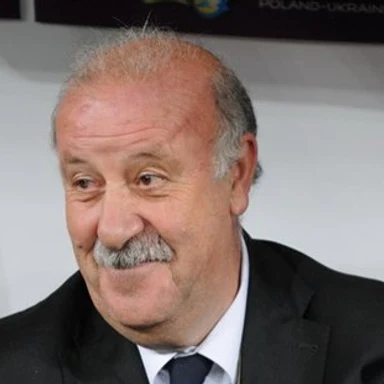 Photo: Илья Хохлов / Football.ua. Source and license in Image credits.
Continuity and technical control
1987—2016 · Real Madrid
Cruzeiro · PSV · Barcelona
1993—2011
AS Cannes · Bordeaux · Juventus
1989—2006 Photo: Web Summit. Source and license in Image credits.
União São João · Palmeiras · Inter Milan
1991—2016
Sporting CP · Manchester United · Real Madrid
2002—Present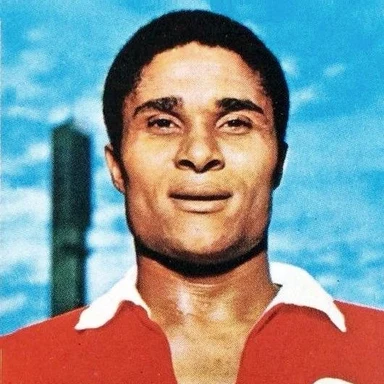 Photo: Panini. Source and license in Image credits.
Sporting Lourenço Marques · Benfica · Boston Minutemen
1957—1980
Novara · Udinese · Sampdoria
2012—Present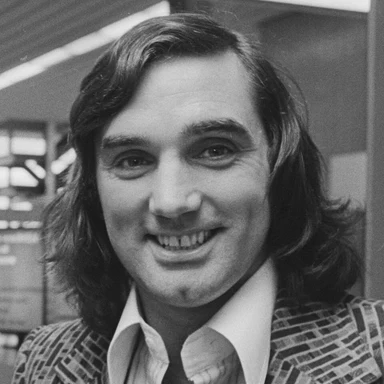 Photo: Bert Verhoeff for Anefo , NL-HaNA, ANEFO / neg. stroken, 1945-1989. Source and license in Image credits.
Manchester United · Jewish Guild · Dunstable Town
1963—1984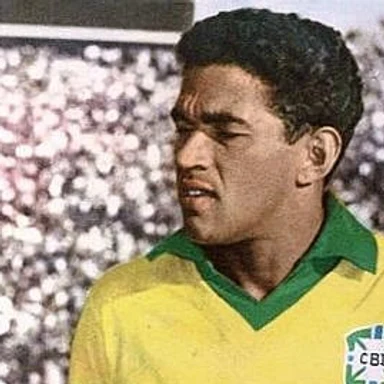 Photo: El Gráfico, n° 2233. Source and license in Image credits.
Botafogo · Corinthians · Atlético Junior
1953—1972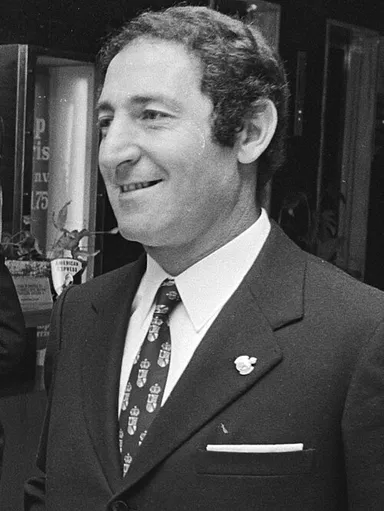 Photo: Fotograaf Onbekend / Anefo. Source and license in Image credits.
Racing Santander · Real Madrid
1952—1971Statistics are displayed only within the scope supported by each cited source.
FC Barcelona PlayersBarcelona Players: Figo’s official and unofficial recordsReal MadridReal Madrid: Figo’s Spanish-language career archiveReal MadridReal Madrid: the differing English-language recordInterInter: four seasons with Luís FigoNational Football TeamsNational Football Teams: Figo’s league and Portugal recordsUEFAUEFA: Luís Figo’s career in contextUEFAUEFA: Portugal’s EURO 2000 comeback against EnglandFIFAFIFA: the history of the world player awardUEFAUEFA: Figo’s 2005 move to InterRSSSFRSSSF: Figo’s European competition match archiveFederação Portuguesa de FutebolPortugal federation: historical caps and goalsInterInter: Figo’s farewell against AtalantaUEFAUEFA: Figo’s European honoursInterInter: Figo’s competition breakdownInterInter: the awarded 2005/06 championshipReal MadridReal Madrid: official team honours