9

Ligue 1
First · 1936–37
Latest · 2009–10View winning seasons
1936–37 · 1947–48 · 1970–71 · 1971–72 · 1988–89 · 1989–90 · 1990–91 · 1991–92 · 2009–10

Olympique de Marseille
White and sky blue, the Vélodrome and the night in Munich: Marseille carries the football identity of a Mediterranean port onto the European stage.
Overview
Historical assessment
Overall Historical Index
84/100Football Legends DB editorial assessment
Football Legends DB editorial / historical index. This is not an official FIFA or UEFA ranking, a live form table or a player rating.
Version 1.0: editors assess eight dimensions from 0–100 using the cited historical record. The overall score is their equally weighted arithmetic mean, rounded to the nearest whole number. Trophy totals are evidence, not points automatically added to a formula.
Assessment guide: 0–39 limited documented impact; 40–59 established national contribution; 60–79 sustained national or continental influence; 80–94 major international influence; 95–100 a historical benchmark across generations. These are editorial judgements, not measured percentiles. Missing evidence means no published index.
World titles and sustained success across eras inform the historical and international assessments. Scores may be revised when the evidence or editorial assessment changes.
Assessment notes · Editorial assessment balancing the 1993 European title, domestic trophies and cultural influence against interrupted top-flight continuity and an uneven academy pathway.
Current chapter
Season
2026–27Verified
The September 2026 snapshot places Bruno Genesio on the bench and Stéphane Richard at the head of the club’s executive board. Gouiri remains a prominent attacking reference as the new league campaign develops.
Honours
First · 1936–37
Latest · 2009–10First · 1923–24
Latest · 1988–89First · 1992–93
Latest · 1992–93First · 2009–10
Latest · 2011–12First · 1971
Latest · 2011First · 2005
Latest · 2005First · 1994–95
Latest · 1994–95First · 1957
Latest · 1957History
René Dufaure de Montmirail founded OM on 31 August 1899. White shirts, blue initials and the motto Droit au But became its early signatures.
The early cup teams turned regional success into a national presence, before professional football and the Vélodrome changed the club’s scale.
Tactical identity · An early attacking identity built around accomplished forwards.
The 1929 national championship predates the professional league introduced in 1932. It is recorded here separately from the nine professional top-flight titles.
The 1948 championship gave way to a more uncertain decade, with Andersson providing a consistent attacking reference.
Tactical identity · A prolific centre-forward at the heart of the attack.
A prolific striker and an inventive winger became the faces of a team that returned Marseille to the top of French football.
Tactical identity · Width and service for a decisive penalty-area scorer.
Domestic dominance culminated in the 1993 European title. Papin and Waddle had left before the Munich final; the winning side had its own balance.
Tactical identity · Individual invention supported by an organised, competitive defensive core.
The Valenciennes affair led to the withdrawal of the 1993 league title and administrative relegation in 1994. Winning Division 2 in 1995 did not secure immediate promotion; Marseille returned in 1996.
After two seasons in Division 2, Marseille rebuilt and reached UEFA Cup finals in 1999 and 2004. Neither final produced a trophy.
Tactical identity · Experienced leadership and a centre-forward who could turn transitions into goals.
Deschamps added a coaching chapter to his playing legacy, delivering the 2010 league title and three League Cups.
Tactical identity · Collective discipline, midfield control and attacking contributions from several positions.
The return of Payet and Mandanda helped define a new chapter under McCourt, with a run to the 2018 Europa League final.
Tactical identity · Creative passing between the lines and scoring threats from wide positions.
The club introduced a new visual identity in April 2026. This archive uses the new crest while preserving the distinct meaning of earlier shirts and symbols.
Defining games
Coupe de France
Olympique de Marseille 4–3 AS Monaco
Parc des Princes
Papin’s three goals helped complete the league–cup double.
European Cup
Olympique de Marseille 0–0 Red Star Belgrade
After extra time · lost 3–5 on penalties
Stadio San Nicola
Marseille’s first European Cup final ended in a shoot-out defeat.
UEFA Champions League
Boli headed in the winner before half-time; Deschamps lifted the trophy after Marseille held Milan scoreless.
Ligue 1
Olympique de Marseille 5–4 Montpellier
Stade Vélodrome
A 0–4 half-time deficit became a 5–4 home victory.
UEFA Cup
Olympique de Marseille 2–0
Second leg · won 2–0 on aggregate
Stade Vélodrome
Two Drogba goals settled the semi-final after a goalless first leg.
UEFA Europa League
Olympique de Marseille 5–2
Second leg · won 5–3 on aggregate
Stade Vélodrome
Payet’s curling finish helped overturn the first-leg deficit on a night of five Marseille goals.
Legends
Forward
A leading forward in the cup-winning teams of the 1920s.
Forward
The prolific Swedish striker became a defining Marseille figure during a difficult post-war decade.
Forward
His 44 league goals in 1970/71 remain a landmark of French football.
Winger
An inventive right winger whose service complemented Skoblar’s finishing.
Forward
An acrobatic finisher and the attacking symbol of Marseille’s return to domestic dominance.
Winger
His dribbling and disguise gave the title-winning sides a distinctive creative edge.
Midfielder
A creative force in the European champions; his corner supplied Boli’s decisive header.
Midfielder
Captain in Munich, later the coach who brought the league championship back in 2010.
Defender
The central defender whose header decided the 1993 European final.
Goalkeeper
Goalkeeper in the 1993 triumph, he returned for another spell that included the 2004 UEFA Cup final.
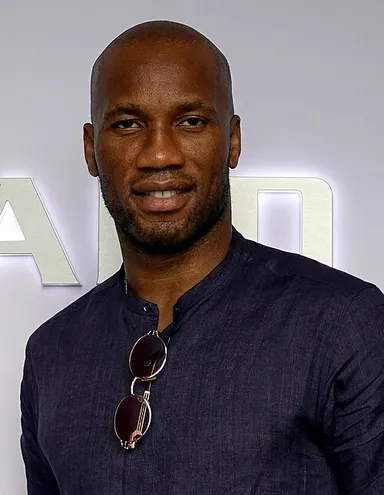 Photo: Y.Leclercq©. Source and license in Image credits.
Forward
One season was enough: his power and finishing drove the memorable 2004 European run.
Forward
A mobile, prolific forward and captain of the 2010 league champions.
A leading forward in the cup-winning teams of the 1920s.
The prolific Swedish striker became a defining Marseille figure during a difficult post-war decade.
His 44 league goals in 1970/71 remain a landmark of French football.
An inventive right winger whose service complemented Skoblar’s finishing.
An acrobatic finisher and the attacking symbol of Marseille’s return to domestic dominance.
His dribbling and disguise gave the title-winning sides a distinctive creative edge.
A creative force in the European champions; his corner supplied Boli’s decisive header.
Captain in Munich, later the coach who brought the league championship back in 2010.
The central defender whose header decided the 1993 European final.
Goalkeeper in the 1993 triumph, he returned for another spell that included the 2004 UEFA Cup final.
Photo: Y.Leclercq©. Source and license in Image credits.One season was enough: his power and finishing drove the memorable 2004 European run.
A mobile, prolific forward and captain of the 2010 league champions.
The club’s record appearance maker, a long-serving goalkeeper across two spells.
A playmaker remembered for imaginative passing and the decisive goal against Leipzig in 2018.
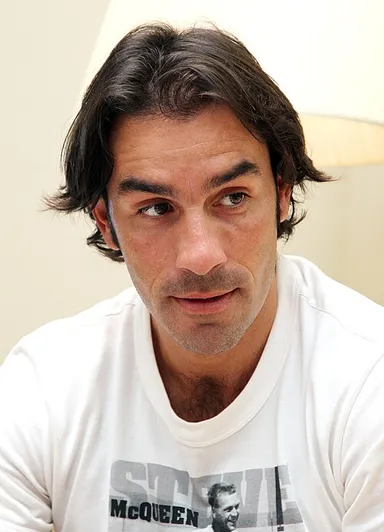 Photo: Doha Stadium Plus Qatar. Source and license in Image credits.
His elegance came from making the next action useful: receive, connect, move and arrive to finish.
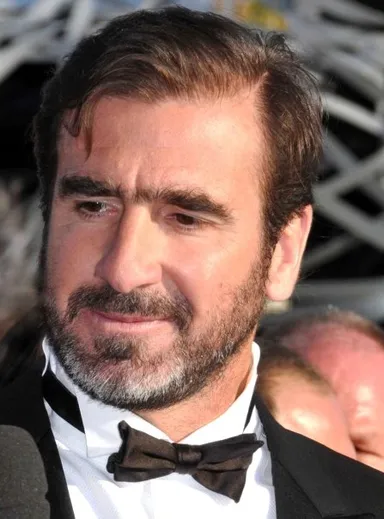 Photo: Georges Biard. Source and license in Image credits.
Cantona’s raised collar became a symbol of United’s new confidence, but his football explains the enduring status more precisely: he connected the attack and repeatedly decided tight matches. Four Premier League titles and two FA Cups at United define the club record here. His 2021 Hall of Fame induction recognises that league influence without turning later United trophies into personal achievements.
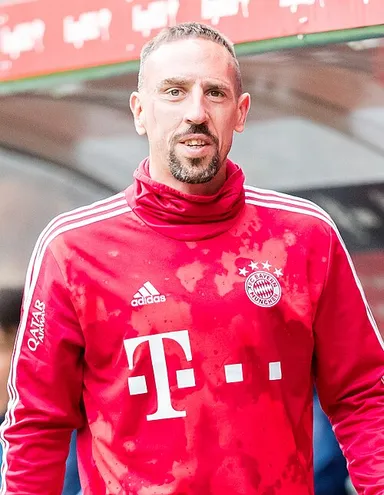 Photo: Sven Mandel. Source and license in Image credits.
Ribéry’s Bayern legacy combines longevity with a particular way of creating chances. His nine league titles describe the scale of the team’s success; his ability to make the left side unpredictable explains his part in it. He could be the player who broke the first line, then the teammate who kept the move alive. The European player award in 2013 recognised that blend of individual invention and influence within an outstanding collective.
Coaching legacy
Club tenure only. Honours include senior first-team league, cup, super cup, continental and world titles where verified. European titles count European Cup / Champions League wins.
1964–1966 · 1968–1970 · 1972–1973
A recurring architect of recovery, including the 1969 cup and the finish to the 1972 double-winning season.
1970–1972
Guided the 1971 championship side; Zatelli took over during the following title-winning season.
1988–1990 · 1995–1997
Won the 1989 double and the 1990 league, then returned to help restore top-flight status in 1996.
1991 · 1991–1992 · 1992–1993
Coached the 1993 European champions. His two recognised league titles exclude the withdrawn 1993 championship.
1997–1999
Led Marseille to the 1999 UEFA Cup final and a league finish one point behind Bordeaux.
2001 · 2004 · 2013–2014
A Marseille figure whose 2004 team reached the UEFA Cup final with Drogba at its attacking centre.
2009–2012
Won the league, three League Cups and two Champions Trophies during his Marseille coaching spell.
2014–2015
His pressing and attacking ambition left a tactical memory despite a fourth-place finish in his full season.
2016–2019
Built the side that reached the 2018 Europa League final, with Payet and Thauvin as creative and scoring references.
Club identity
The club’s white and blue colours and maritime references connect its football identity with Marseille’s port setting.
The founding motto expresses directness and ambition. It predates the great European nights and remains part of the club’s historical vocabulary.
The stadium is central to Marseille’s emotional life: major European ties turn a home fixture into a shared city memory.
Skoblar and Magnusson, then Papin and Waddle, embody a recurring relationship between invention on the flank and decisive finishing.
The 1993 title remains a defining reference across generations. Later UEFA Cup and Europa League finals extended the European story without adding another title in those competitions.
The rivalry with Paris Saint-Germain gives the national calendar one of its most anticipated fixtures, connecting sporting competition with two powerful city identities.
Identity
Stadium
Current home / Marseille
Marseille moved here in 1937. The club currently presents its 67,000-capacity home under the commercial name CEPAC Vélodrome; the historical archive retains the familiar Stade Vélodrome name.
Former home / Marseille
The Huveaune served as Marseille’s principal home before the move to the Vélodrome. It belongs to the era in which the club first built a national cup reputation.
Rivalries
Paris and Marseille’s national rivalry intensified through the strong teams and title contests of the 1980s and 1990s.
Weah, Raí, Papin and their contemporaries gave the contest its early modern faces. It connects two cities and two large supporter communities.
Development
Combine football development with education and personal support, using a shared coaching approach and partnerships with local amateur clubs.
Historical role
Nasri, Flamini, the Ayew brothers, Lopez and Kamara represent different academy generations. A Marseille birthplace alone does not make a player an OM graduate: Zidane developed at Cannes, while Mandanda trained at Le Havre.
Famous graduates
Collection
Kits
Home kit / 2026–27
Away kit / 2026–27
Third kit / 2026–27
Commercial
TECHNICAL SUPPLIER
Kit studies are abstract colour and pattern references, not reproductions of official shirts.
Records
Official first-team appearances across Mandanda’s two Marseille spells.
As of 2026-09-15Skoblar’s 1970/71 total belongs to the league campaign, not all competitions combined.
As of 2026-09-15FFF’s professional championship register excludes the withdrawn 1993 title. The pre-professional 1929 title is recorded separately in the timeline.
As of 2026-09-15The 1971 honour was shared with Rennes after a draw; Marseille also won the competition in 2010 and 2011.
As of 2026-09-15A 1–0 win over Milan in Munich secured the European Cup. The 2005 Intertoto Cup is listed as a separate honour.
As of 2026-09-15Runners-up in 1999, 2004 and 2018. These appearances are milestones, not additional European titles.
As of 2026-09-15One league, three League Cups and two Champions Trophies between 2009 and 2012.
As of 2026-09-15The coach of the 1993 European champions; the withdrawn domestic title is excluded from his league total.
As of 2026-09-15