The football behind Robert Pires’s ratings
- First-touch orientation
- Elite
- Left-side combinations
- Elite
- Disguised passing
- Excellent
- Timed box arrivals
- Elite
- Carrying past pressure
- Excellent
- Defensive support
- Moderate
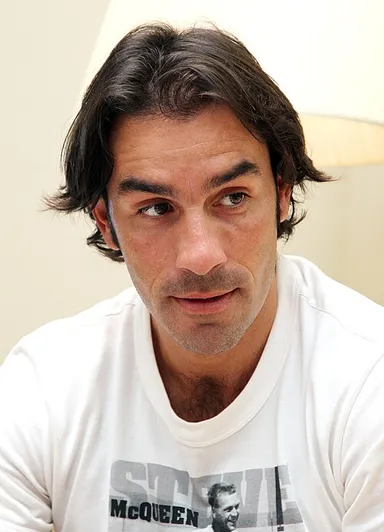 Photo: Doha Stadium Plus Qatar. Source and license in Image credits.
Robert Emmanuel Pires
A creative left-sided attacker whose touch, combinations and timed runs made him both a supplier and a scorer for Arsenal and France.
Senior club · all competitions
Completed club records only; not a complete career total.
Active club snapshots and records with another scope are excluded. Assist totals are not combined across incompatible definitions.
Stored archive snapshots, not live counters. Missing values are not zero; records with different scopes are never added together.
G/M = goals ÷ appearances. G+A = goals + assists. Per-90 metrics use documented minutes.
Senior international · all competitions
France · FFF senior register, 1996–2004
Stored archive snapshots, not live counters. Missing values are not zero; records with different scopes are never added together.
G/M = goals ÷ appearances. G+A = goals + assists. Per-90 metrics use documented minutes.
In context
His elegance came from making the next action useful: receive, connect, move and arrive to finish.
Reading the game
Robert Pires made the left side of an attack feel like a meeting place rather than a boundary. He could receive near the touchline, exchange passes with a forward, move inside and arrive where the next chance would fall. At Arsenal, that movement connected the ambition of Thierry Henry with the support of Ashley Cole and the imagination of Dennis Bergkamp. The result was a winger whose contribution could not be explained by crosses alone. His best football combined the patience to keep a combination alive with the appetite to finish it himself. France offered another expression of that usefulness: a substitute could enter a final and help decide it, as his delivery for David Trezeguet did at EURO 2000. Yet the career also contains interruption, from the injury that removed him from the 2002 World Cup to the early substitution in his final Arsenal match. Those setbacks matter because they separate a sustained body of intelligent football from a collection of trophies. Pires remains a compelling example of how touch, timing and shared space can make an attacking partnership greater than its individual parts.
Historical references support the chronology; tactical explanations are museum editorial analysis.
Historical references: Arsenal: Pires’ completed club record ↗ · Pires reflects on France, injuries and unfinished ambitions ↗ · Pires leaves Arsenal after the 2006 European final ↗ · Pires remembers creating the EURO 2000 golden goal ↗
Career
| Period | Club | Apps | Goals | G/M |
|---|---|---|---|---|
| 1993—1998 | MetzMetz’s retirement tribute records 198 appearances and 48 goals for the first team. The six league rows below account for 162 appearances and 43 goals. Youth development at Reims and Metz reserve matches are outside this professional first-team selection. Senior club · all competitions Senior · #7 | 198 | 48 | 0.24 |
| 1998—2000 | MarseilleTwo French top-flight seasons: 66 league appearances and eight goals. The 1999 UEFA Cup final belongs to the story but European and domestic cup matches are excluded from this aggregate. Senior club · league only | 66 | 8 | 0.12 |
| 2000—2006 | ArsenalArsenal’s historical register gives 284 appearances and 84 goals. Premier League figures are a separate subset: 189 appearances, 62 goals and 41 assists. Complete all-competition assists have not been verified. Senior club · all competitions Senior · #7 | 284 | 84 | 0.30 |
| 2006—2010 | VillarrealVillarreal’s official retrospective records 129 matches and 18 goals over four seasons. The league subset is 104 appearances and 13 goals. A knee injury delayed his first league appearance until March 2007. Senior club · all competitions Senior · #7 | 129 | 18 | 0.14 |
| 2010—2011 | Senior club · league only | 9 | 0 | 0.00 |
| 2014—2014 | FC GoaEight appearances and one goal in the 2014 Indian Super League record. This is his final playing season in the selected career; the formal retirement announcement came in February 2016. Senior club · league only | 8 | 1 | 0.13 |
Stored archive snapshots, not live counters. Missing values are not zero; records with different scopes are never added together.
G/M = goals ÷ appearances. G+A = goals + assists. Per-90 metrics use documented minutes.
Honours
Metz · domestic cup
Arsenal · league
Arsenal · domestic cup
France · world
France · continental
France · world
Robert Pires · individual
Story
Career chapter
At Metz, Pires learned to give attacking technique a regular place in senior football. The 1996 League Cup provided an early trophy, while the near miss in the 1998 title race left a different kind of memory. Marseille then brought greater expectation and another season ending short of the biggest prizes, including the 1999 UEFA Cup final. International football developed alongside those experiences. He belonged to France’s 1998 world champions, but his most enduring tournament action came two years later: introduced from the bench against Italy, he created the opening for Trezeguet’s golden goal. Opportunity and readiness met in a single attack.
Historical references: Metz: first trophy, club totals and retirement announcement ↗ · Pires reflects on France, injuries and unfinished ambitions ↗ · Pires remembers creating the EURO 2000 golden goal ↗
Career chapter
The move to Arsenal gave Pires a new league and a familiar language of attacking ambition. Establishing himself took adjustment: receiving the ball was only the beginning, and the speed of the next decision mattered. By 2001/02 he was supplying chances and goals within a side pursuing two domestic trophies. The Football Writers’ award recognised that season’s influence, even though a serious knee injury in March ended his playing contribution before the finish. Arsenal completed the double without him on the pitch in the decisive weeks. France also lost his availability for the World Cup. An exceptional season therefore carried a substantial personal absence.
Historical references: Pires: Premier League career and seasons ↗ · Pires reflects on France, injuries and unfinished ambitions ↗ · Pires wins the 2002 Football Writers’ award ↗
Career chapter
After returning, Pires became an especially dependable source of goals from the left. The winner against Southampton in the 2003 FA Cup final condensed that responsibility into one decisive finish. In 2003/04, his movement helped Arsenal combine invention with repeated entries into scoring positions as the league campaign finished unbeaten. The team’s wider run reached 49 matches across three seasons; that record should not be confused with one 38-game campaign. His Arsenal farewell was less fitting. In the 2006 Champions League final, Lehmann’s dismissal forced a tactical sacrifice, and Pires was replaced early so a goalkeeper could enter. A team emergency determined his last appearance.
Historical references: Arsenal’s unbeaten league campaign and 49-match run ↗ · Pires leaves Arsenal after the 2006 European final ↗
Career chapter
Villarreal offered a different setting, but another serious knee injury delayed Pires’ league debut until March 2007. The recovery mattered beyond simply extending his career. In a team comfortable combining through midfield, he could still connect nearby players and recognise where an attack needed another passing option. He contributed to the club’s second-place league finish in 2007/08 before shorter spells at Aston Villa and, later, Goa. The Indian appearance belonged to the inaugural ISL season in 2014. His formal retirement announcement followed in 2016, so the end of his playing record and the date of retirement are different milestones in this archive.
Historical references: Pires: league records and international classification ↗ · Metz: first trophy, club totals and retirement announcement ↗ · Villarreal: Pires’ recovery and Spanish contribution ↗ · Pires scores for Goa in the inaugural ISL season ↗
Profile
Inverted Winger
Also plays · Inside Forward / Trequartista
Receives from the left with an open body, combines inside with forwards and moves again to finish the attack. Width and midfield cover supplied by teammates make this freedom possible; the peak assessment prioritises technical timing over defensive range.
First-touch orientation
Left-side combinations
Disguised passing
Timed box arrivals
Illustrative role zones · not tracking data
Our tactical reading begins with the left-side relationship. When Henry moved towards the flank, Pires could enter the space he had left; when Cole advanced outside, Pires could receive inside and turn towards goal. These movements required somebody to offer width and somebody to threaten depth. Their value came from changing those responsibilities without crowding the same lane. A defender following one player could therefore create an opening for another, making the combination more difficult to control than a sequence of isolated dribbles.
Pires often looked unhurried because control and orientation happened together. Receiving with his body partly open allowed the next pass to travel inside while the possibility of carrying outside remained visible. A small pause could invite the defender to commit before he released the ball. This was an advantage in combinations, not a guarantee that pressure disappeared. If the receiver lacked a nearby option, or the first touch became too long, the same narrow space could close quickly around him.
The pass was rarely the natural end of his involvement. Pires could move again after releasing the ball, especially when a forward had occupied the nearest centre-back. That made a nominal wide midfielder available for a return pass, a cutback or a loose ball in front of goal. His right foot gave him a useful finishing angle when arriving from the left. The scoring contribution depended on recognising the opening early enough to reach it, rather than waiting wide for every attack to return.
The attacking interpretation has a defensive condition. When Pires moved inside or beyond the ball, the full-back and central midfielders had to remain connected behind the move. His job on losing possession included recovering a useful position and limiting an easy pass, even if tackling was not his defining strength. A role that asks him to create repeatedly should not also assume the coverage of a specialist ball winner. The strongest version of the team coordinated that trade-off instead of ignoring it.
Historical references: Arsenal: Pires’ completed club record ↗ · Pires: Premier League career and seasons ↗ · Arsenal’s unbeaten league campaign and 49-match run ↗ · Pires leaves Arsenal after the 2006 European final ↗ · Villarreal: Pires’ recovery and Spanish contribution ↗
Reading the game
| Era / team | Primary Role | Tactical Character |
|---|---|---|
| 1993–2000Metz / Marseille | Build an attacking identity in France | Develop from Metz’s regular attacker into a Marseille and France contributor. |
| 2000–2002Arsenal | Create from Arsenal’s left side | Learn the new tempo and connect dribbling to the next pass. |
| 2002–2006Arsenal | Add the finish to the combination | Move inside after releasing the ball and support the forwards near goal. |
| 2006–2014Villarreal / Aston Villa / Goa | Keep the combination useful as the role changes | Use experience and touch as availability and physical demands change. |
Historical references: Pires: Premier League career and seasons ↗ · Pires: league records and international classification ↗ · Metz: first trophy, club totals and retirement announcement ↗ · Pires reflects on France, injuries and unfinished ambitions ↗ · Pires wins the 2002 Football Writers’ award ↗ · Pires leaves Arsenal after the 2006 European final ↗ · Villarreal: Pires’ recovery and Spanish contribution ↗ · Pires scores for Goa in the inaugural ISL season ↗
Reading the game
A shoulder angle or a slight delay could suggest that Pires would continue down the flank. The pass inside then reached a teammate before the defender fully adjusted. The effect depended less on elaborate tricks than on keeping the ball close enough to choose late and delivering it at a speed the receiver could use.
Pires could begin outside a defender’s immediate attention and become a scorer as the move developed. Once the ball travelled towards a forward, the defender’s eyes and body often followed it. His next run exploited that change. The skill was not invisibility but choosing a moment when an opponent had another urgent problem to solve.
A good combination needs a receiver as much as a passer. Pires could provide an angle, return the ball and move to support the next exchange. That generosity had an attacking purpose: helping Henry or Bergkamp continue the move also increased the chance that space would reopen for him. Shared opportunity and personal goal threat worked together.
The EURO 2000 final gives a precise example of contribution without a starting place. Pires entered late and helped create the winning goal through an attack from the left. That moment does not make every substitute appearance decisive, but it shows why readiness, a clear role and the ability to combine immediately can matter as much as minutes played.
Historical references: Arsenal: Pires’ completed club record ↗ · Pires: Premier League career and seasons ↗ · Pires leaves Arsenal after the 2006 European final ↗ · Pires remembers creating the EURO 2000 golden goal ↗
Reading the game
Left-sided creator before the knee injury
The 2001/02 version emphasises creation from the left and the confidence to influence the next attack. The Football Writers’ award recognises the impact of a campaign shortened by the March knee injury. This is a distinct creative peak, assessed with that interruption visible rather than treating him as present for the final weeks of the double.
Inverted winger and supporting scorer
The 2003/04 season is the common reference for both assessment panels. Pires combined the left-side exchanges with repeated movement into scoring positions, producing 14 goals in 36 league appearances. The version values touch, combination play and timing without borrowing later experience or the highest qualities from every other season. The unbeaten title supplies context for the role; it does not turn every attribute into an elite one.
Experienced wide midfielder in a passing team
The 2007/08 selection examines adaptation rather than claiming that every aspect surpassed his Arsenal peak. In Villarreal’s league runner-up side, Pires could offer touch, short combinations and experienced support after recovering from another major knee injury. The reduced emphasis on explosive running makes the survival of his reading and technique particularly useful to compare with the earlier versions.
Historical references: Pires: Premier League career and seasons ↗ · Pires reflects on France, injuries and unfinished ambitions ↗ · Pires wins the 2002 Football Writers’ award ↗ · Arsenal’s unbeaten league campaign and 49-match run ↗ · Villarreal: Pires’ recovery and Spanish contribution ↗
Statistics
| Season | Club | Apps | Goals | G/M |
|---|---|---|---|---|
| 2014 | FC Goa Senior club · league only | 8 | 1 | 0.13 |
| 2010/11 | Senior club · league only | 9 | 0 | 0.00 |
| 2009/10 | Villarreal Senior club · league only | 29 | 4 | 0.14 |
| 2008/09 | Villarreal Senior club · league only | 32 | 3 | 0.09 |
| 2007/08 | Villarreal Senior club · league only | 32 | 3 | 0.09 |
| 2006/07 | Villarreal Senior club · league only | 11 | 3 | 0.27 |
| 2005/06 | Arsenal Senior club · league only | 33 | 7 | 0.21 |
| 2004/05 | Arsenal Senior club · league only | 33 | 14 | 0.42 |
| 2003/04 | Arsenal Senior club · league only | 36 | 14 | 0.39 |
| 2002/03 | Arsenal Senior club · league only | 26 | 14 | 0.54 |
Stored archive snapshots, not live counters. Missing values are not zero; records with different scopes are never added together.
G/M = goals ÷ appearances. G+A = goals + assists. Per-90 metrics use documented minutes.
Twenty selected first-team league rows cover Metz to Goa. The 1992/93 Metz row begins with his 1993 senior debut; Reims development and Metz B records are excluded. Arsenal uses the Premier League series, including 36 appearances and 14 goals in 2003/04, rather than NFT’s 33/13 entry. These rows total 538 appearances and 127 goals and must not be added to overlapping club aggregates. Season assists remain null. The last playing season is 2014; 2016 denotes his formal retirement.
Club competitions
| Competition | Apps | Goals | G/M |
|---|---|---|---|
Premier LeaguePremier League · Arsenal and Aston VillaArsenal contributes 189 appearances and 62 goals; Villa adds nine appearances without a goal. All 41 recorded league assists belong to Arsenal. Performance record
| 198 | 62 | 0.31 |
French Division 1French Division 1 · Metz and MarseilleMetz 162/43 plus Marseille 66/8; domestic cups, Europe and reserve football are excluded. | 228 | 51 | 0.22 |
La LigaLa Liga · Villarreal, 2006–2010Four league season rows only; the official club total of 129/18 has a wider competition scope. | 104 | 13 | 0.13 |
Stored archive snapshots, not live counters. Missing values are not zero; records with different scopes are never added together.
G/M = goals ÷ appearances. G+A = goals + assists. Per-90 metrics use documented minutes.
International
International career
World champion in 1998 and European champion in 2000, Pires created Trezeguet’s golden goal in the EURO final. He also won the Confederations Cup in 2001 and 2003. Injury ruled him out of the 2002 World Cup, and his last France appearance came against Cyprus in October 2004.
National Football Teams: 78 appearances / 13 goals · Alternative classification excludes the August 2000 FIFA World Stars match; it is not used for the headline total.
Senior international · tournament splits
| Competition | Apps | Goals | G/M |
|---|---|---|---|
FIFA World CupWorld Cup finals · 1998Three appearances in 1998. No 2002 appearance is added because injury kept him out of the tournament. Qualifiers are excluded. | 3 | 0 | 0.00 |
UEFA European ChampionshipEURO finals · 2000 and 2004Three appearances in 2000 and four in 2004. His golden-goal delivery is described separately; an unverified complete assists total is not inferred from that one action. | 7 | 0 | 0.00 |
Stored archive snapshots, not live counters. Missing values are not zero; records with different scopes are never added together.
G/M = goals ÷ appearances. G+A = goals + assists. Per-90 metrics use documented minutes.
Reading the game
Pires left a model of wing play in which the most important movement could happen after the ball had gone. He helped show how a player starting from the flank could participate in midfield combinations, open a path for a forward and still arrive to finish the attack. The modern vocabulary of inside channels makes that contribution easy to describe, but the football depended on the particular relationships around him. Henry’s movement, Cole’s support and Bergkamp’s decisions gave his own intelligence something to work with. The French career broadens the picture: a valued squad member and a decisive substitute could contribute to major victories without owning every match. Villarreal then demonstrated that touch and combination play could retain value after a serious physical setback. None of those achievements requires erasing the missed tournaments, lost finals or more limited later spells. Nor does it require pretending he supplied the defensive range of a specialist midfielder. His strongest claim is more specific. He made attacking football coherent through the speed of his understanding, helping teammates see an option and making himself available when that option became the next chance. The elegance was the visible result of many useful decisions.
Historical references: Arsenal: Pires’ completed club record ↗ · Pires reflects on France, injuries and unfinished ambitions ↗ · Villarreal: Pires’ recovery and Spanish contribution ↗ · Pires remembers creating the EURO 2000 golden goal ↗
Archive
Inverted Winger · editorial peak 2003—2004
Joël Muller · Rolland Courbis · Arsène Wenger · Manuel Pellegrini · Gérard Houllier · Zico · Aimé Jacquet · Roger Lemerre · Jacques Santini
Thierry Henry— Overlapping Arsenal era · Dennis Bergkamp— Overlapping Arsenal era · Patrick Vieira— Overlapping Arsenal era · Tony Adams— Overlapping Arsenal era
Rebuilding and European cup runs — Marseille · Wenger changes the horizon — Arsenal · The Invincibles — Arsenal

AS Monaco · Juventus · Arsenal
1994—2014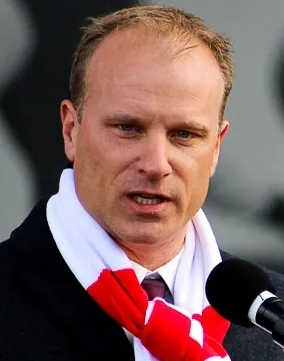 Photo: Kieran Clarke. Source and license in Image credits.
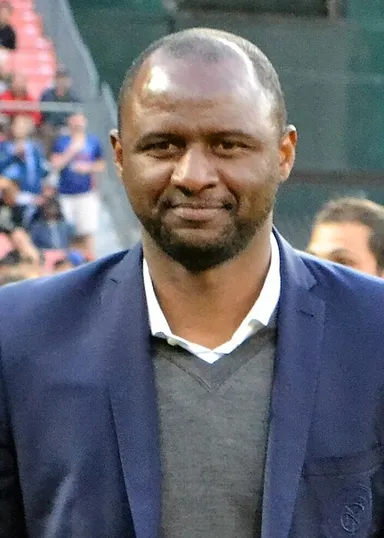 Photo: Simon Heseltine. Source and license in Image credits.
Cannes · AC Milan · Arsenal
1993—2011AS Monaco · Juventus · Arsenal
1994—2014
AS Cannes · Bordeaux · Juventus
1989—2006 Photo: Klearchos Kapoutsis. Source and license in Image credits.
Nancy · Saint-Étienne · Juventus
1972—1987 Photo: Marcos Corrêa/PR. Source and license in Image credits.
Grêmio · Paris Saint-Germain · FC Barcelona
1998—2018 Photo: Bryan Berlin / WikiPortraits. Source and license in Image credits.
Santos · FC Barcelona · Paris Saint-Germain
2009—Present Photo: Bryan Berlin / WikiPortraits. Source and license in Image credits.
Flamengo · Real Madrid
2017—PresentStatistics are displayed only within the scope supported by each cited source.
Arsenal FCArsenal: Pires’ completed club recordPremier LeaguePires: Premier League career and seasonsPremier LeaguePremier League: Pires’ 41 Arsenal assistsNational Football TeamsPires: league records and international classificationFFFRobert Pires: official France profile and honoursRSSSFFrance’s 2000 match against the FIFA World StarsFC MetzMetz: first trophy, club totals and retirement announcementUEFAPires reflects on France, injuries and unfinished ambitionsFootball Writers’ AssociationPires wins the 2002 Football Writers’ awardArsenal FCArsenal’s unbeaten league campaign and 49-match runUEFAPires leaves Arsenal after the 2006 European finalVillarreal CFVillarreal: Pires’ recovery and Spanish contributionFFF TVPires remembers creating the EURO 2000 golden goalIndian Super LeaguePires scores for Goa in the inaugural ISL season