

Premier League
Manchester United · league
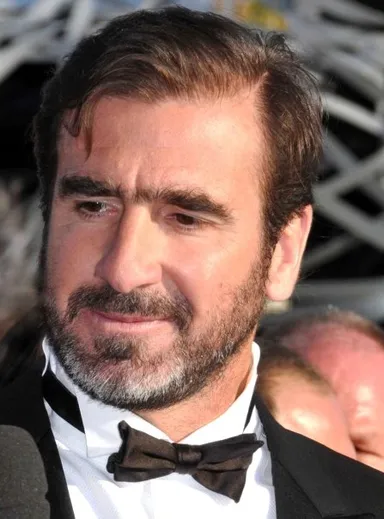 Photo: Georges Biard. Source and license in Image credits.
Éric Daniel Pierre Cantona
Eric Cantona gave Manchester United an attacking reference between midfield and the front line. Strong enough to receive with a defender at his back, he could turn a lay-off into a through ball or arrive to finish the next move. His importance in United’s first Premier League cycle lay in connecting the side’s speed and width to a central source of invention.
Senior club · all competitions
Completed club records only; not a complete career total.
Active club snapshots and records with another scope are excluded. Assist totals are not combined across incompatible definitions.
Stored archive snapshots, not live counters. Missing values are not zero; records with different scopes are never added together.
G/M = goals ÷ appearances. G+A = goals + assists. Per-90 metrics use documented minutes.
Senior international · all competitions
Stored archive snapshots, not live counters. Missing values are not zero; records with different scopes are never added together.
G/M = goals ÷ appearances. G+A = goals + assists. Per-90 metrics use documented minutes.
In context
Cantona’s raised collar became a symbol of United’s new confidence, but his football explains the enduring status more precisely: he connected the attack and repeatedly decided tight matches. Four Premier League titles and two FA Cups at United define the club record here. His 2021 Hall of Fame induction recognises that league influence without turning later United trophies into personal achievements.
Reading the game
Eric Cantona gave Manchester United an attacking reference between midfield and the front line. Strong enough to receive with a defender at his back, he could turn a lay-off into a through ball or arrive to finish the next move. His importance in United’s first Premier League cycle lay in connecting the side’s speed and width to a central source of invention.
Historical references support the chronology; tactical explanations are museum editorial analysis.
Historical references: Premier League: Cantona’s 156 appearances, 70 goals and 56 assists ↗ · Manchester United: the 1990s title cycles and domestic doubles ↗
Career
| Period | Club | Apps | Goals | G/M |
|---|---|---|---|---|
| 1983—1988 | AuxerreCantona began his senior career at Auxerre under Guy Roux. The league record is separated from his Martigues loan. Senior club · league only | 81 | 23 | 0.28 |
| 1985—1986 | MartiguesA loan at Martigues added second-division experience before his return to Auxerre. Senior club · league only Loan | 15 | 4 | 0.27 |
| 1988—1991 | MarseilleHis Marseille years included loans to Bordeaux and Montpellier. Their league appearances are recorded as separate club spells. Senior club · league only | 40 | 13 | 0.33 |
| 1989—1989 | BordeauxA short Bordeaux loan in 1989 brought eleven league appearances and six goals. Senior club · league only Loan | 11 | 6 | 0.55 |
| 1989—1990 | MontpellierHis 1989/90 Montpellier loan ended with a French Cup win; the figures here cover league matches only. Senior club · league only Loan | 33 | 10 | 0.30 |
| 1991—1992 | NîmesNîmes was his final French club before the move to Leeds in 1992. Senior club · league only | 17 | 2 | 0.12 |
| 1992—1992 | Leeds UnitedLeeds gave Cantona his first English league title before his November 1992 move to United. Senior club · league only | 28 | 9 | 0.32 |
| 1992—1997 | Manchester UnitedUnited ended a 26-year league title wait in 1992/93 after Cantona’s arrival from Leeds. Alongside Mark Hughes, he offered a receiver who could hold the ball centrally while runners advanced outside him. The 1993/94 side then won the league and FA Cup double. Cantona scored twice from the penalty spot in the cup final against Chelsea; invention was accompanied by responsibility in decisive moments. Senior club · all competitions Captaincy · #7 | 185 | 82 | 0.44 |
Stored archive snapshots, not live counters. Missing values are not zero; records with different scopes are never added together.
G/M = goals ÷ appearances. G+A = goals + assists. Per-90 metrics use documented minutes.
Honours
Manchester United · league
Manchester United · domestic cup
Leeds United · league
Marseille · league
Montpellier · domestic cup
Story
Career chapter
Cantona developed at Auxerre and gained further experience at Martigues, Marseille, Bordeaux, Montpellier and Nîmes. A loan season at Montpellier brought the 1990 French Cup. Leeds offered a fresh start in 1992: he contributed to the 1991/92 First Division title before joining Manchester United that November. The Leeds championship belongs to the pre-Premier League competition and is recorded separately.
Club chapter
United ended a 26-year league title wait in 1992/93 after Cantona’s arrival from Leeds. Alongside Mark Hughes, he offered a receiver who could hold the ball centrally while runners advanced outside him. The 1993/94 side then won the league and FA Cup double. Cantona scored twice from the penalty spot in the cup final against Chelsea; invention was accompanied by responsibility in decisive moments.
Explore club contextClub chapter
His January 1995 assault on a spectator at Crystal Palace led to a lengthy suspension, a serious disciplinary breach rather than a sporting virtue. Returning in October, Cantona became a decisive figure in the 1995/96 title race and scored the late FA Cup final winner against Liverpool. His combinations also gave United’s emerging young players an experienced attacking partner. The recovery should be understood without erasing the incident.
Explore club contextClub chapter
The 1996/97 league title was Cantona’s fourth with United. His chipped finish against Sunderland illustrated how a short combination could become a moment of individual invention. He retired from club football in May 1997, aged 30. Later beach-soccer achievements and cultural work belong to a separate part of his life; United’s 1999 Champions League title came after his departure and is not one of his playing honours.
Explore club contextProfile
Trequartista
Also plays · Complete Forward
Eric Cantona gave Manchester United an attacking reference between midfield and the front line. Strong enough to receive with a defender at his back, he could turn a lay-off into a through ball or arrive to finish the next move. His importance in United’s first Premier League cycle lay in connecting the side’s speed and width to a central source of invention.
Hold the ball, release the runner
Disguise the pass, keep the finish available
Illustrative role zones · not tracking data
Editorial assessment
Historical role analysis
Seven qualitative bands · not measured scores
Editorial assessment of this period, not an official rating.
These bands are not percentiles or an overall ranking. The chart’s geometry represents ordered bands, not equal differences in ability.
Qualitative judgments describe football actions in context. They do not measure personality or medical fitness. Category assessments are editorial summaries, not averages. A lower defensive band describes the player’s role and contribution, not their value to the team.
Premier League: Cantona’s 156 appearances, 70 goals and 56 assists ↗Reading the game
| Era / team | Primary Role | Tactical Character |
|---|---|---|
| 1992–1994 | Hold the ball, release the runner | Receiving behind the opposing midfield, Cantona could shield the ball and draw a centre-back out before releasing a team-mate. A lay-off was often the start of the combination rather than its end: moving again created another passing angle. That role required runners beyond him. Dropping deep was useful when it opened space, but could leave the attack short of a penalty-area presence if nobody replaced him. |
| 1995–1997 | Disguise the pass, keep the finish available | His upright receiving posture could leave the defender uncertain whether the next action would be a pass, a turn or a shot. The value lay in delaying that decision long enough for a runner to gain separation. Cantona also attacked the box himself, preventing opponents from treating him only as a supplier. These are qualitative descriptions of his role, not claims based on measured tracking data. |
Historical references: Manchester United: Cantona’s 1996 FA Cup final winner ↗ · Manchester United: the 1990s title cycles and domestic doubles ↗
Reading the game
Receiving behind the opposing midfield, Cantona could shield the ball and draw a centre-back out before releasing a team-mate. A lay-off was often the start of the combination rather than its end: moving again created another passing angle. That role required runners beyond him. Dropping deep was useful when it opened space, but could leave the attack short of a penalty-area presence if nobody replaced him.
His upright receiving posture could leave the defender uncertain whether the next action would be a pass, a turn or a shot. The value lay in delaying that decision long enough for a runner to gain separation. Cantona also attacked the box himself, preventing opponents from treating him only as a supplier. These are qualitative descriptions of his role, not claims based on measured tracking data.
Historical references: Premier League: Cantona’s 156 appearances, 70 goals and 56 assists ↗
Reading the game
United ended a 26-year league title wait in 1992/93 after Cantona’s arrival from Leeds. Alongside Mark Hughes, he offered a receiver who could hold the ball centrally while runners advanced outside him. The 1993/94 side then won the league and FA Cup double. Cantona scored twice from the penalty spot in the cup final against Chelsea; invention was accompanied by responsibility in decisive moments.
His January 1995 assault on a spectator at Crystal Palace led to a lengthy suspension, a serious disciplinary breach rather than a sporting virtue. Returning in October, Cantona became a decisive figure in the 1995/96 title race and scored the late FA Cup final winner against Liverpool. His combinations also gave United’s emerging young players an experienced attacking partner. The recovery should be understood without erasing the incident.
Historical references: UEFA: Cantona’s career, retirement and later beach-soccer distinction ↗ · Manchester United: Cantona’s 1996 FA Cup final winner ↗ · Manchester United: the 1990s title cycles and domestic doubles ↗
Statistics
| Season | Club | Apps | Goals | G/M |
|---|---|---|---|---|
| 1996/97 | Manchester United Senior club · league only | 36 | 11 | 0.31 |
| 1995/96 | Manchester United Senior club · league only | 30 | 14 | 0.47 |
| 1994/95 | Manchester United Senior club · league only | 21 | 12 | 0.57 |
| 1993/94 | Manchester United Senior club · league only | 34 | 18 | 0.53 |
| 1992/93 | Manchester United Senior club · league only | 22 | 9 | 0.41 |
Stored archive snapshots, not live counters. Missing values are not zero; records with different scopes are never added together.
G/M = goals ÷ appearances. G+A = goals + assists. Per-90 metrics use documented minutes.
United’s complete competitive record is 185 appearances and 82 goals. The five United season rows cover league matches only, totalling 143 appearances and 64 goals. The Premier League career total of 156 appearances, 70 goals and 56 assists includes Leeds; it is not a United-only total. All-competition assists remain unquantified. The 1991/92 Leeds title predates the Premier League.
Club competitions
| Competition | Apps | Goals | Assists | G/M | G+A/M |
|---|---|---|---|---|---|
Premier League1992/93–1996/97United’s complete competitive record is 185 appearances and 82 goals. The five United season rows cover league matches only, totalling 143 appearances and 64 goals. The Premier League career total of 156 appearances, 70 goals and 56 assists includes Leeds; it is not a United-only total. All-competition assists remain unquantified. The 1991/92 Leeds title predates the Premier League. Performance record
| 156 | 70 | 56 | 0.45 | 0.81 |
Stored archive snapshots, not live counters. Missing values are not zero; records with different scopes are never added together.
G/M = goals ÷ appearances. G+A = goals + assists. Per-90 metrics use documented minutes.
International
International career
The French federation records 45 senior appearances and 20 goals between 1987 and 1995. Cantona played all three of France’s matches at EURO 1992, which ended in the group stage. His national-team career ended before the 1998 World Cup triumph. Youth and beach-soccer honours are excluded from this senior eleven-a-side record.
Reading the game
Cantona’s raised collar became a symbol of United’s new confidence, but his football explains the enduring status more precisely: he connected the attack and repeatedly decided tight matches. Four Premier League titles and two FA Cups at United define the club record here. His 2021 Hall of Fame induction recognises that league influence without turning later United trophies into personal achievements.
Historical references: Premier League: Cantona’s 156 appearances, 70 goals and 56 assists ↗ · Manchester United: Cantona’s 1996 FA Cup final winner ↗
Archive
Trequartista · editorial peak 1995—1996
Sir Alex Ferguson · Guy Roux · Howard Wilkinson
David Beckham— Overlapping Manchester United era · Peter Schmeichel— Overlapping Manchester United era · Roy Keane— Overlapping Manchester United era · Paul Scholes— Overlapping Manchester United era
From Papin to Munich — Marseille · Ferguson’s first great cycle — Manchester United
 Photo: Soccer Aid for Unicef. Source and license in Image credits.
Manchester United · Preston North End · Real Madrid
1992—2013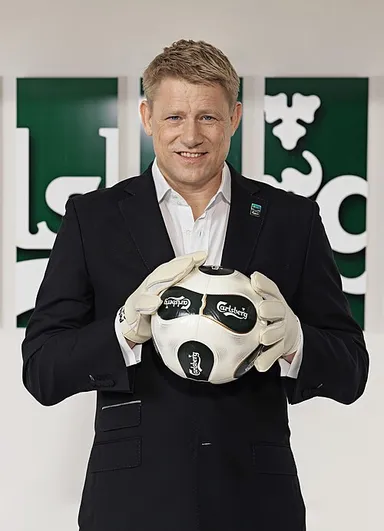 Photo: Carlsberg. Source and license in Image credits.
Gladsaxe-Hero · Hvidovre IF · Brøndby IF
1981—2003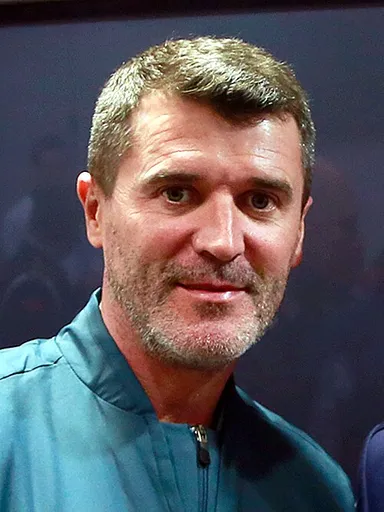 Photo: Irish Defence Forces from Ireland. Source and license in Image credits.
Cobh Ramblers · Nottingham Forest · Manchester United
1989—2006
AS Monaco · Juventus · Arsenal
1994—2014
AS Cannes · Bordeaux · Juventus
1989—2006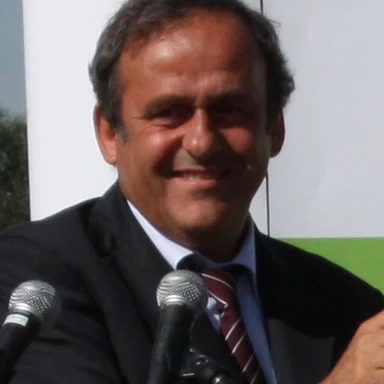 Photo: Klearchos Kapoutsis. Source and license in Image credits.
Nancy · Saint-Étienne · Juventus
1972—1987
Padova · Juventus · Sydney FC
1991—2014 Photo: Unknown author. Source and license in Image credits.
Argentinos Juniors · Boca Juniors · Barcelona
1976—1997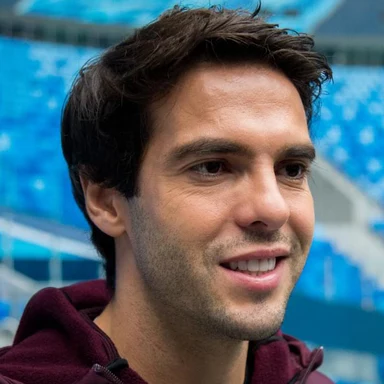 Photo: Евгений Асмолов. Source and license in Image credits.
São Paulo · AC Milan · Real Madrid
2001—2017Statistics are displayed only within the scope supported by each cited source.
MUFCInfoMUFCInfo: Cantona’s competitive United recordPremier LeaguePremier League: Cantona’s 156 appearances, 70 goals and 56 assistsFrench Football FederationFrench FA: Cantona’s senior caps, goals and EURO 1992 matchesNational Football TeamsNational Football Teams: Cantona’s club league seasonsUEFAUEFA: Cantona’s career, retirement and later beach-soccer distinctionManchester UnitedManchester United: Cantona’s 1996 FA Cup final winnerManchester UnitedManchester United: the 1990s title cycles and domestic doubles