Premier League
Manchester United · league
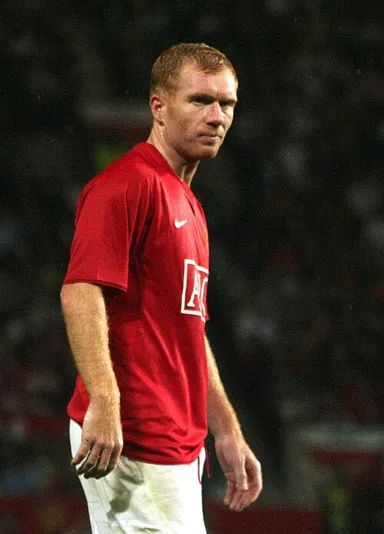 Photo: James Adams. Source and license in Image credits.
Paul Scholes
Paul Scholes gave Manchester United both a scorer arriving from midfield and a passer who could govern the next phase. His career moved from supporting the forwards to directing possession from deeper positions. Eleven Premier League titles and two European crowns frame that evolution, but his defining quality was the speed and precision of the decisions between receiving and releasing the ball.
Senior club · all competitions
Completed club records only; not a complete career total.
Active club snapshots and records with another scope are excluded. Assist totals are not combined across incompatible definitions.
Stored archive snapshots, not live counters. Missing values are not zero; records with different scopes are never added together.
G/M = goals ÷ appearances. G+A = goals + assists. Per-90 metrics use documented minutes.
Senior international · all competitions
Stored archive snapshots, not live counters. Missing values are not zero; records with different scopes are never added together.
G/M = goals ÷ appearances. G+A = goals + assists. Per-90 metrics use documented minutes.
In context
Scholes’s legacy cannot be reduced to long passing. The young midfielder who attacked the box and the later organiser who switched play belonged to the same football intelligence: recognise the space, choose the timing and give the next teammate an advantage. His range did not make him a specialist ball-winner; the strongest account of his career keeps his attacking instincts, passing control and defensive limitations in view.
Reading the game
Paul Scholes gave Manchester United both a scorer arriving from midfield and a passer who could govern the next phase. His career moved from supporting the forwards to directing possession from deeper positions. Eleven Premier League titles and two European crowns frame that evolution, but his defining quality was the speed and precision of the decisions between receiving and releasing the ball.
The tactical descriptions are original historical role analysis. Sources establish the career events and statistical scope; the qualitative judgements are not tracking measurements or a cross-era ranking.
Historical references support the chronology; tactical explanations are museum editorial analysis.
Historical references: Manchester United: Scholes’s final appearance total and academy beginnings ↗ · UEFA: Scholes’s Barcelona winner and the 1999 suspension ↗
Career
| Period | Club | Apps | Goals | G/M |
|---|---|---|---|---|
| 1994—2011 | Manchester UnitedScholes made his United first-team debut against Port Vale in September 1994 and scored twice. Although associated with the Class of 92, he did not play in the 1992 FA Youth Cup-winning side; he appeared in the following year’s final. His early senior role retained a forward’s instincts, finding space around the strikers and arriving to finish rather than always organising from deep. Senior club · league only Senior · #18 | 466 | 102 | 0.22 |
| 2012—2013 | Manchester UnitedScholes first retired in 2011, then returned in January 2012 for the FA Cup tie against Manchester City. His final playing season, 2012/13, brought an eleventh league title before his definitive retirement in 2013. United’s two spells are kept separate in the timeline, while the combined first-team competitive record is 718 appearances and 155 goals. Academy and reserve matches do not belong in that total. Senior club · league only Senior · #22 | 33 | 5 | 0.15 |
Stored archive snapshots, not live counters. Missing values are not zero; records with different scopes are never added together.
G/M = goals ÷ appearances. G+A = goals + assists. Per-90 metrics use documented minutes.
Honours
Manchester United · league
Manchester United · domestic cup
Manchester United · domestic cup
Manchester United · continental
Story
Club chapter
Scholes made his United first-team debut against Port Vale in September 1994 and scored twice. Although associated with the Class of 92, he did not play in the 1992 FA Youth Cup-winning side; he appeared in the following year’s final. His early senior role retained a forward’s instincts, finding space around the strikers and arriving to finish rather than always organising from deep.
Explore club contextClub chapter
The 1998/99 treble placed Scholes inside United’s most celebrated season. He contributed to the European campaign but missed the Champions League final against Bayern through suspension. That distinction matters: a title-winning season is not proof of participation in its final. Alongside his midfield combinations, his movement into scoring positions gave Ferguson an additional threat beyond the starting forwards.
Explore club contextClub chapter
As United’s attack changed, Scholes increasingly influenced games from deeper midfield positions. His long-range goal against Barcelona at Old Trafford decided the 2008 Champions League semi-final tie. This time he played in the victorious final, against Chelsea in Moscow. The period shows a midfielder whose passing could connect a flexible front line without erasing his capacity to settle a match himself.
Explore club contextClub chapter
Scholes first retired in 2011, then returned in January 2012 for the FA Cup tie against Manchester City. His final playing season, 2012/13, brought an eleventh league title before his definitive retirement in 2013. United’s two spells are kept separate in the timeline, while the combined first-team competitive record is 718 appearances and 155 goals. Academy and reserve matches do not belong in that total.
Explore club contextProfile
Regista
Also plays · Advanced playmaker
Paul Scholes gave Manchester United both a scorer arriving from midfield and a passer who could govern the next phase. His career moved from supporting the forwards to directing possession from deeper positions. Eleven Premier League titles and two European crowns frame that evolution, but his defining quality was the speed and precision of the decisions between receiving and releasing the ball.
See the next pass before receiving
Release the ball, arrive to finish
Illustrative role zones · not tracking data
Editorial assessment
Historical role analysis
Seven qualitative bands · not measured scores
Editorial assessment of this period, not an official rating.
These bands are not percentiles or an overall ranking. The chart’s geometry represents ordered bands, not equal differences in ability.
Qualitative judgments describe football actions in context. They do not measure personality or medical fitness. Category assessments are editorial summaries, not averages. A lower defensive band describes the player’s role and contribution, not their value to the team.
Manchester United: Scholes’s final appearance total and academy beginnings ↗Reading the game
| Era / team | Primary Role | Tactical Character |
|---|---|---|
| 1994–2003 | From the academy to first-team goals | Scholes made his United first-team debut against Port Vale in September 1994 and scored twice. Although associated with the Class of 92, he did not play in the 1992 FA Youth Cup-winning side; he appeared in the following year’s final. His early senior role retained a forward’s instincts, finding space around the strikers and arriving to finish rather than always organising from deep. |
| 2003–2013 | A deeper role and the road to Moscow | As United’s attack changed, Scholes increasingly influenced games from deeper midfield positions. His long-range goal against Barcelona at Old Trafford decided the 2008 Champions League semi-final tie. This time he played in the victorious final, against Chelsea in Moscow. The period shows a midfielder whose passing could connect a flexible front line without erasing his capacity to settle a match himself. |
Historical references: Manchester United: Scholes’s final appearance total and academy beginnings ↗ · UEFA: Scholes’s Barcelona winner and the 1999 suspension ↗
Reading the game
Before receiving, Scholes looked beyond the nearest opponent to the next available teammate. An open body position let him move from a short combination to a diagonal switch without an extra turn. The value was not simply distance: a well-weighted pass reached the winger in time to attack, changing the point of pressure before the defence could travel across.
His scoring movement often began while the centre-backs were occupied by the forwards. Scholes delayed his run, entered the space behind the midfield line and met the ball with little preparation. That timing joined his passing game to his finishing: after releasing the ball he could become the next receiver, rather than remain outside the attack to admire the pass.
Historical references: Manchester United: Scholes’s final appearance total and academy beginnings ↗
Reading the game
In 2002/03, Scholes scored 14 goals in 33 Premier League appearances as United regained the title. This scoring version belonged to a midfielder who could combine outside the area and then attack the space created by the forwards.
As United’s attack changed, Scholes increasingly influenced games from deeper midfield positions. His long-range goal against Barcelona at Old Trafford decided the 2008 Champions League semi-final tie. This time he played in the victorious final, against Chelsea in Moscow. The period shows a midfielder whose passing could connect a flexible front line without erasing his capacity to settle a match himself.
Historical references: UEFA: Scholes’s final retirement, goals and major honours ↗ · Premier League: Scholes’s career record and eleven titles ↗ · National Football Teams: Scholes’s league seasons and England record ↗ · UEFA: Scholes’s Barcelona winner and the 1999 suspension ↗
Statistics
| Season | Club | Apps | Goals | G/M |
|---|---|---|---|---|
| 2012/13 | Manchester United Senior club · league only | 16 | 1 | 0.06 |
| 2011/12 | Manchester United Senior club · league only | 17 | 4 | 0.24 |
| 2010/11 | Manchester United Senior club · league only | 22 | 1 | 0.05 |
| 2009/10 | Manchester United Senior club · league only | 28 | 3 | 0.11 |
| 2008/09 | Manchester United Senior club · league only | 21 | 2 | 0.10 |
| 2007/08 | Manchester United Senior club · league only | 24 | 1 | 0.04 |
| 2006/07 | Manchester United Senior club · league only | 30 | 6 | 0.20 |
| 2005/06 | Manchester United Senior club · league only | 20 | 2 | 0.10 |
| 2004/05 | Manchester United Senior club · league only | 33 | 9 | 0.27 |
| 2003/04 | Manchester United Senior club · league only | 28 | 9 | 0.32 |
Stored archive snapshots, not live counters. Missing values are not zero; records with different scopes are never added together.
G/M = goals ÷ appearances. G+A = goals + assists. Per-90 metrics use documented minutes.
The 19 season rows cover Premier League matches only and total 499 appearances and 107 goals. The 2001/02 appearance count follows the league’s official 35, rather than the database’s 34. The league’s career figure of 55 assists is not an all-competition total; individual season assists remain unassigned. United’s complete competitive aggregate is reported separately.
Club competitions
| Competition | Apps | Goals | Assists | G/M | G+A/M |
|---|---|---|---|---|---|
Premier League1994/95–2012/13The 19 season rows cover Premier League matches only and total 499 appearances and 107 goals. The 2001/02 appearance count follows the league’s official 35, rather than the database’s 34. The league’s career figure of 55 assists is not an all-competition total; individual season assists remain unassigned. United’s complete competitive aggregate is reported separately. Performance record
| 499 | 107 | 55 | 0.21 | 0.32 |
Stored archive snapshots, not live counters. Missing values are not zero; records with different scopes are never added together.
G/M = goals ÷ appearances. G+A = goals + assists. Per-90 metrics use documented minutes.
International
International career
Scholes represented England from 1997 to 2004, recording 66 senior caps and 14 goals. His international retirement preceded his final club retirement by nine years. The national-team record is separate from his United appearances and honours; England did not win a senior international tournament during his playing tenure.
Reading the game
Scholes’s legacy cannot be reduced to long passing. The young midfielder who attacked the box and the later organiser who switched play belonged to the same football intelligence: recognise the space, choose the timing and give the next teammate an advantage. His range did not make him a specialist ball-winner; the strongest account of his career keeps his attacking instincts, passing control and defensive limitations in view.
Historical references: Manchester United: Scholes’s final appearance total and academy beginnings ↗ · Premier League: Scholes’s career record and eleven titles ↗
Archive
Regista · editorial peak 2002—2008
Sir Alex Ferguson
Cristiano Ronaldo— Overlapping Manchester United era · Wayne Rooney— Overlapping Manchester United era · David Beckham— Overlapping Manchester United era · Peter Schmeichel— Overlapping Manchester United era
Ferguson’s first great cycle — Manchester United · A flexible front line — Manchester United

Sporting CP · Manchester United · Real Madrid
2002—Present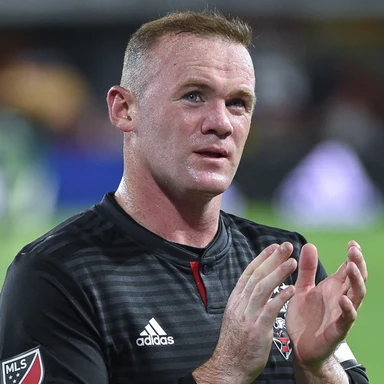 Photo: All-Pro Reels from District of Columbia, USA. Source and license in Image credits.
Everton · Manchester United · D.C. United
2002—2021 Photo: Soccer Aid for Unicef. Source and license in Image credits.
Manchester United · Preston North End · Real Madrid
1992—2013
Liverpool · LA Galaxy
1998—2016
Manchester United · Preston North End · Waterford
1956—1976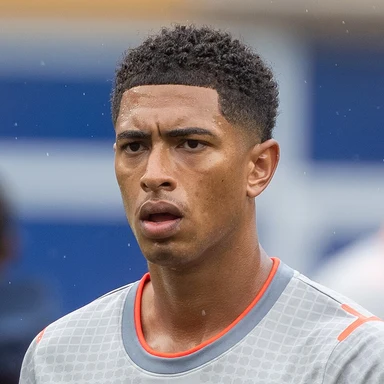 Photo: Bryan Berlin / WikiPortraits. Source and license in Image credits.
Birmingham City · Borussia Dortmund · Real Madrid
2019—Present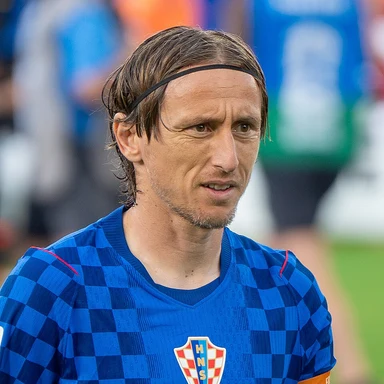 Photo: Bryan Berlin / WikiPortraits. Source and license in Image credits.
Dinamo Zagreb · Zrinjski Mostar · Inter Zaprešić
2003—Present Photo: Real Madrid (YouTube channel). Source and license in Image credits.
Bayern Munich · Bayer Leverkusen · Real Madrid
2007—2024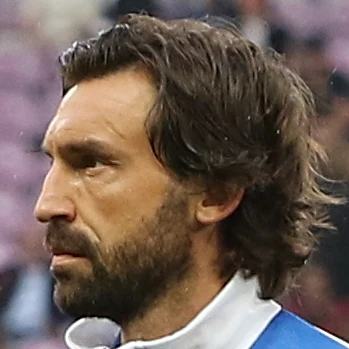 Photo: Clément Bucco-Lechat. Source and license in Image credits.
Brescia · Inter · Reggina
1995—2017Statistics are displayed only within the scope supported by each cited source.
Manchester UnitedManchester United: Scholes’s final appearance total and academy beginningsUEFAUEFA: Scholes’s final retirement, goals and major honoursPremier LeaguePremier League: Scholes’s career record and eleven titlesPremier LeaguePremier League: United’s 2001/02 season and Scholes’s 35 appearancesNational Football TeamsNational Football Teams: Scholes’s league seasons and England recordUEFAUEFA: Scholes’s Barcelona winner and the 1999 suspension