Premier League
Manchester United · league
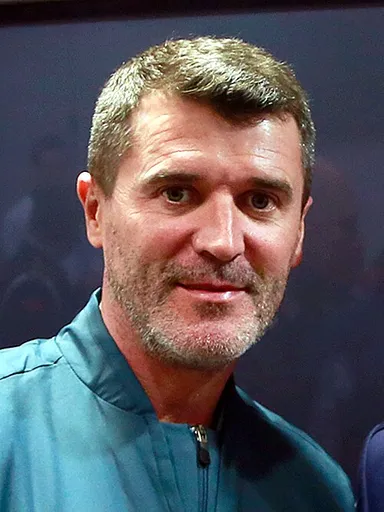 Photo: Irish Defence Forces from Ireland. Source and license in Image credits.
Roy Maurice Keane
Roy Keane joined ball-winning, purposeful passing and repeated movement in Manchester United’s midfield. His influence was technical as well as combative: he kept himself available for the next pass and helped the team recover its shape after losing possession. Seven Premier League titles and a central role in the 1999 treble made him a defining player of Ferguson’s strongest sides.
Senior club · all competitions
Completed club records only; not a complete career total.
Active club snapshots and records with another scope are excluded. Assist totals are not combined across incompatible definitions.
Stored archive snapshots, not live counters. Missing values are not zero; records with different scopes are never added together.
G/M = goals ÷ appearances. G+A = goals + assists. Per-90 metrics use documented minutes.
Senior international · all competitions
Stored archive snapshots, not live counters. Missing values are not zero; records with different scopes are never added together.
G/M = goals ÷ appearances. G+A = goals + assists. Per-90 metrics use documented minutes.
In context
Keane’s United legacy combines seven league titles, four FA Cups and the 1999 European triumph with the everyday work of keeping a midfield connected. Leadership mattered because it was backed by passing, positioning and repeated effort. His 2021 Premier League Hall of Fame induction honours a playing career; later coaching and broadcasting achievements are not added to these player statistics.
Reading the game
Roy Keane joined ball-winning, purposeful passing and repeated movement in Manchester United’s midfield. His influence was technical as well as combative: he kept himself available for the next pass and helped the team recover its shape after losing possession. Seven Premier League titles and a central role in the 1999 treble made him a defining player of Ferguson’s strongest sides.
Historical references support the chronology; tactical explanations are museum editorial analysis.
Historical references: Premier League: Keane’s 366 appearances, 39 goals and 33 assists ↗ · UEFA: Keane’s United departure, captaincy and final suspension ↗
Career
| Period | Club | Apps | Goals | G/M |
|---|---|---|---|---|
| 1989—1990 | Cobh RamblersCobh Ramblers provided Keane’s first senior platform before his move to England; this dossier leaves the disputed early aggregate unquantified. | — | — | — |
| 1990—1993 | Nottingham ForestKeane began his senior career at Cobh Ramblers before joining Nottingham Forest in 1990. Brian Clough gave him a platform in English top-flight football, where his ability to recover the ball and move it quickly became clear. Forest’s relegation in 1993 preceded his transfer to United. Those three Forest seasons include two years before the Premier League began, so they cannot all be included in his Premier League total. Senior club · league only | 114 | 22 | 0.19 |
| 1993—2005 | Manchester UnitedKeane joined United in summer 1993 and won the league and FA Cup double in his first season. He could advance to support the forwards while also covering the space behind a team-mate. Another double followed in 1995/96. When Cantona retired in 1997, Keane took the captaincy; a serious knee injury interrupted that first season as captain, before he returned for the treble campaign. Senior club · all competitions Captaincy · #16 | 480 | 51 | 0.11 |
| 2005—2006 | CelticIn his later United years, Keane increasingly organised play from deeper positions, keeping passes connected and protecting the centre as younger attackers advanced. He left United in November 2005 and joined Celtic in December, contributing to the 2005/06 Scottish league and League Cup double. Persistent hip problems led to his retirement in June 2006. United’s League Cup win later in 2005/06 is not included among his honours here. Senior club · league only Senior · #16 | 10 | 1 | 0.10 |
Stored archive snapshots, not live counters. Missing values are not zero; records with different scopes are never added together.
G/M = goals ÷ appearances. G+A = goals + assists. Per-90 metrics use documented minutes.
Honours
Manchester United · league
Manchester United · domestic cup
Manchester United · continental
Manchester United · world
Celtic · league
Celtic · domestic cup
Story
Career chapter
Keane began his senior career at Cobh Ramblers before joining Nottingham Forest in 1990. Brian Clough gave him a platform in English top-flight football, where his ability to recover the ball and move it quickly became clear. Forest’s relegation in 1993 preceded his transfer to United. Those three Forest seasons include two years before the Premier League began, so they cannot all be included in his Premier League total.
Club chapter
Keane joined United in summer 1993 and won the league and FA Cup double in his first season. He could advance to support the forwards while also covering the space behind a team-mate. Another double followed in 1995/96. When Cantona retired in 1997, Keane took the captaincy; a serious knee injury interrupted that first season as captain, before he returned for the treble campaign.
Explore club contextClub chapter
In Turin in April 1999, United trailed Juventus 2–0 before Keane headed in the first goal of a 3–2 comeback. His midfield work continued after a booking ruled him out of the final. He belongs among the Champions League winners, but did not play against Bayern in Barcelona; Peter Schmeichel captained that match. The following league title in 1999/00 confirmed that his influence extended beyond one celebrated European night.
Explore club contextCareer chapter
In his later United years, Keane increasingly organised play from deeper positions, keeping passes connected and protecting the centre as younger attackers advanced. He left United in November 2005 and joined Celtic in December, contributing to the 2005/06 Scottish league and League Cup double. Persistent hip problems led to his retirement in June 2006. United’s League Cup win later in 2005/06 is not included among his honours here.
Profile
Box-to-Box Midfielder
Also plays · Holding Midfielder
Roy Keane joined ball-winning, purposeful passing and repeated movement in Manchester United’s midfield. His influence was technical as well as combative: he kept himself available for the next pass and helped the team recover its shape after losing possession. Seven Premier League titles and a central role in the 1999 treble made him a defining player of Ferguson’s strongest sides.
Recover possession and offer the next pass
Advance with purpose, cover the centre
Illustrative role zones · not tracking data
Editorial assessment
Historical role analysis
Seven qualitative bands · not measured scores
Editorial assessment of this period, not an official rating.
These bands are not percentiles or an overall ranking. The chart’s geometry represents ordered bands, not equal differences in ability.
Qualitative judgments describe football actions in context. They do not measure personality or medical fitness. Category assessments are editorial summaries, not averages. A lower defensive band describes the player’s role and contribution, not their value to the team.
Premier League: Keane’s 366 appearances, 39 goals and 33 assists ↗Reading the game
| Era / team | Primary Role | Tactical Character |
|---|---|---|
| 1993–2001 | Advance with purpose, cover the centre | As part of a midfield pair, Keane had to judge whether to press, support an attack or hold his position. Stepping forward was valuable when the space behind remained covered; recovering centrally could be more useful than chasing the ball wide. This balance changed as his career progressed. The tactical account is original qualitative analysis, not a tracking-data measurement or a claim that every challenge was well judged. |
| 2001–2006 | Recover possession and offer the next pass | Keane’s contribution did not end with the tackle. A controlled first pass could find a team-mate facing forward, after which he moved to offer another option. That sequence helped United turn a regain into sustained possession rather than an isolated duel won. His passing was often economical, but the angle, weight and timing mattered. Reading him only through aggression misses the technique that made his running useful. |
Historical references: Premier League: Keane’s 366 appearances, 39 goals and 33 assists ↗ · UEFA: Keane’s United departure, captaincy and final suspension ↗ · UEFA: Keane retires in June 2006 after Celtic’s domestic double ↗
Reading the game
Keane’s contribution did not end with the tackle. A controlled first pass could find a team-mate facing forward, after which he moved to offer another option. That sequence helped United turn a regain into sustained possession rather than an isolated duel won. His passing was often economical, but the angle, weight and timing mattered. Reading him only through aggression misses the technique that made his running useful.
As part of a midfield pair, Keane had to judge whether to press, support an attack or hold his position. Stepping forward was valuable when the space behind remained covered; recovering centrally could be more useful than chasing the ball wide. This balance changed as his career progressed. The tactical account is original qualitative analysis, not a tracking-data measurement or a claim that every challenge was well judged.
Historical references: Premier League: Keane’s 366 appearances, 39 goals and 33 assists ↗
Reading the game
In Turin in April 1999, United trailed Juventus 2–0 before Keane headed in the first goal of a 3–2 comeback. His midfield work continued after a booking ruled him out of the final. He belongs among the Champions League winners, but did not play against Bayern in Barcelona; Peter Schmeichel captained that match. The following league title in 1999/00 confirmed that his influence extended beyond one celebrated European night.
In his later United years, Keane increasingly organised play from deeper positions, keeping passes connected and protecting the centre as younger attackers advanced. He left United in November 2005 and joined Celtic in December, contributing to the 2005/06 Scottish league and League Cup double. Persistent hip problems led to his retirement in June 2006. United’s League Cup win later in 2005/06 is not included among his honours here.
Historical references: UEFA: Keane’s goal in United’s 1999 Turin comeback ↗ · UEFA: Keane’s United departure, captaincy and final suspension ↗ · UEFA: Keane retires in June 2006 after Celtic’s domestic double ↗
Statistics
| Season | Club | Apps | Goals | G/M |
|---|---|---|---|---|
| 2005/06 | Manchester United Senior club · league only | 5 | 0 | 0.00 |
| 2004/05 | Manchester United Senior club · league only | 31 | 1 | 0.03 |
| 2003/04 | Manchester United Senior club · league only | 28 | 3 | 0.11 |
| 2002/03 | Manchester United Senior club · league only | 21 | 0 | 0.00 |
| 2001/02 | Manchester United Senior club · league only | 28 | 3 | 0.11 |
| 2000/01 | Manchester United Senior club · league only | 28 | 2 | 0.07 |
| 1999/00 | Manchester United Senior club · league only | 29 | 5 | 0.17 |
| 1998/99 | Manchester United Senior club · league only | 35 | 2 | 0.06 |
| 1997/98 | Manchester United Senior club · league only | 9 | 2 | 0.22 |
| 1996/97 | Manchester United Senior club · league only | 21 | 2 | 0.10 |
Stored archive snapshots, not live counters. Missing values are not zero; records with different scopes are never added together.
G/M = goals ÷ appearances. G+A = goals + assists. Per-90 metrics use documented minutes.
United’s complete competitive record is 480 appearances and 51 goals. The thirteen United season rows are league-only, totalling 326 appearances and 33 goals. The Premier League career total of 366 appearances, 39 goals and 33 assists also includes Nottingham Forest’s 1992/93 season. Other club spells are league-only; all-competition assists remain unquantified. No career total is manufactured by adding records with different scopes.
Club competitions
| Competition | Apps | Goals | Assists | G/M | G+A/M |
|---|---|---|---|---|---|
Premier League1992/93–2005/06United’s complete competitive record is 480 appearances and 51 goals. The thirteen United season rows are league-only, totalling 326 appearances and 33 goals. The Premier League career total of 366 appearances, 39 goals and 33 assists also includes Nottingham Forest’s 1992/93 season. Other club spells are league-only; all-competition assists remain unquantified. No career total is manufactured by adding records with different scopes. Performance record
| 366 | 39 | 33 | 0.11 | 0.20 |
Stored archive snapshots, not live counters. Missing values are not zero; records with different scopes are never added together.
G/M = goals ÷ appearances. G+A = goals + assists. Per-90 metrics use documented minutes.
International
International career
Keane represented the Republic of Ireland from 1991 to 2005. This dossier uses the 67 recognised senior appearances and nine goals recorded by National Football Teams and RSSSF; an older UEFA retirement report lists eight goals, and the database’s separate non-FIFA match is not added. He played at the 1994 World Cup but left the squad before the 2002 tournament after the Saipan dispute. He returned in 2004 before his final international retirement in 2005.
Reading the game
Keane’s United legacy combines seven league titles, four FA Cups and the 1999 European triumph with the everyday work of keeping a midfield connected. Leadership mattered because it was backed by passing, positioning and repeated effort. His 2021 Premier League Hall of Fame induction honours a playing career; later coaching and broadcasting achievements are not added to these player statistics.
Historical references: Premier League: Keane’s 366 appearances, 39 goals and 33 assists ↗ · UEFA: Keane’s United departure, captaincy and final suspension ↗
Archive
Box-to-Box Midfielder · editorial peak 1998—2000
Brian Clough · Sir Alex Ferguson · Gordon Strachan
Cristiano Ronaldo— Overlapping Manchester United era · Wayne Rooney— Overlapping Manchester United era · David Beckham— Overlapping Manchester United era · Peter Schmeichel— Overlapping Manchester United era
Ferguson’s first great cycle — Manchester United · A flexible front line — Manchester United

Sporting CP · Manchester United · Real Madrid
2002—Present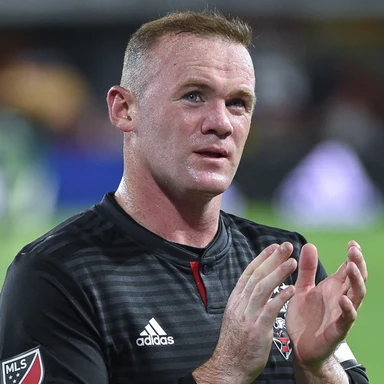 Photo: All-Pro Reels from District of Columbia, USA. Source and license in Image credits.
Everton · Manchester United · D.C. United
2002—2021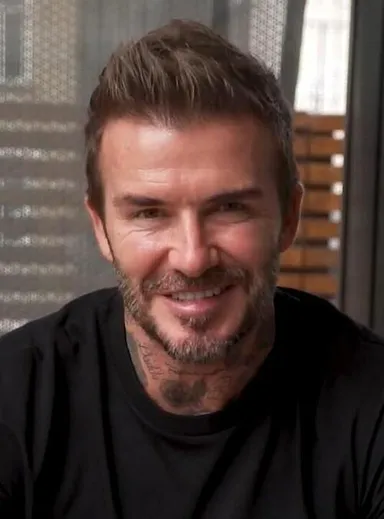 Photo: Soccer Aid for Unicef. Source and license in Image credits.
Manchester United · Preston North End · Real Madrid
1992—2013
Liverpool · LA Galaxy
1998—2016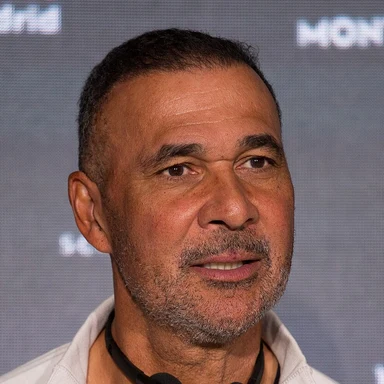 Photo: Barcex. Source and license in Image credits.
Haarlem · Feyenoord · PSV
1979—1998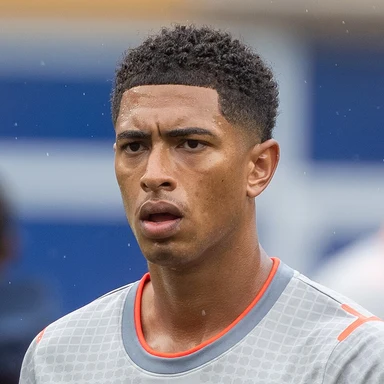 Photo: Bryan Berlin / WikiPortraits. Source and license in Image credits.
Birmingham City · Borussia Dortmund · Real Madrid
2019—PresentStatistics are displayed only within the scope supported by each cited source.
MUFCInfoMUFCInfo: Keane’s competitive United appearances and goalsPremier LeaguePremier League: Keane’s 366 appearances, 39 goals and 33 assistsNational Football TeamsNational Football Teams: Keane’s league seasons and international classificationsRSSSFRSSSF: Ireland’s recognised senior international appearances and goalsUEFAUEFA: Keane’s goal in United’s 1999 Turin comebackUEFAUEFA: Keane’s United departure, captaincy and final suspensionUEFAUEFA: Keane retires in June 2006 after Celtic’s domestic doubleUEFAUEFA: Keane’s final international retirement in 2005