Jack Reynolds
Earlier Ajax coach
Documented history
Ajax identifies Reynolds as an influence on Michels. This is a documented coaching lineage, not a claim that Total Football had a single inventor.

Architect of Total Football
The coach who turned coordinated movement, pressing and positional interchange into a coherent elite system at Ajax and with the Netherlands.
UEFA European Championship · 1988
Netherlands · EURO 1988 finals only. Five matches; excludes qualifiers, friendlies and other appointments. No modern three-point PPG is assigned to this historical tournament.
Stored archive snapshots, not live counters. Missing values are not zero; records with different scopes are never added together.
Win rate = wins ÷ matches. Points per game requires an explicit scoring convention; cup records are not silently treated as league points.
Career origins
Michels returned to Ajax as coach in 1965. The transformation began with survival and professional preparation, before European finals made it famous.
Earlier Ajax coach
Ajax identifies Reynolds as an influence on Michels. This is a documented coaching lineage, not a claim that Total Football had a single inventor.
Player
He spent his senior playing career at Ajax; a back injury ended that career in 1958. Playing honours are not included in his managerial totals.
Manager
Replacing Vic Buckingham during a relegation struggle, Michels secured survival before intensifying training and expanding full-time professional routines.
Manager
Four league titles and three Dutch Cups accompanied two European Cup finals: defeat in 1969, then victory in 1971.
Manager
Across two Barcelona appointments, the 1973/74 league title and 1978 Spanish Cup marked different successes. Cruyff’s arrival helped reconnect coach and attacking organiser.
European Cup
The 2–0 final win over Panathinaikos completed Michels’ first Ajax spell. The 1972 and 1973 titles belonged to Ștefan Kovács’ tenure.
The important progression is from improving working conditions to coordinating decisions on the pitch: an organisation made a demanding style repeatable.
Positional freedom depended on shared responsibilities. Movement without replacement or pressure without support would undermine the same idea.
Tactics
Coaching identity
Total Football joins movement to coverage: players may leave a starting position, but the team must retain usable space and defensive connections.
Compress space after losing the ball so recovery becomes a team action rather than an individual chase.
Permit players to exchange functions while the team preserves occupation of essential zones.
Move the last line forward to keep the team compact around possession.
Tactical analysis
The analytical focus is not how many players change places, but whether the next player preserves the team’s balance.
At Ajax, more demanding preparation accompanied professionalisation. Creative football required a common working standard.
The 1988 champions were not a recreation of the Cruyff team. Gullit and Van Basten offered another route to decisive attacking moments.
Interchange is useful only when another player keeps the vacated zone connected to the rest of the side.
Closing the ball and shortening supporting distances belong to the same action; isolated chasing opens the team.
An advanced defensive line creates attacking proximity but leaves recovery space to defend. This is a trade-off, not a free advantage.
Rijsbergen’s account describes the goalkeeper operating as a sweeper: a supporting role for the space left behind advancing defenders.
Cruyff’s Barcelona debut and the subsequent title show the importance of personnel. A transferable idea still needs the right interpreter.
The Netherlands lost their opening EURO 1988 match, then won four consecutively. Tournament resilience mattered alongside stylistic identity.
Illustrative sequence, not a measured event model.
Coordinate pressure with the defensive line; advancing one unit alone risks a gap between the lines.
Create a supporting angle before exchanging positions; movement should open a pass, not simply add motion.
Preserve distances and a forward outlet; a lead does not remove the need for defensive cover.
Increase attacking support without abandoning the responsibilities that make interchange work.
Interpretation is editorial, not an official rating or a direct quotation. Match results, team statistics and formations retain their documented sources.
Tactical analysis
Signature systems, tactical evolution and defining teams are read together. A starting formation does not describe every phase of play.
Training reform gave collective movement a durable base. Domestic success preceded the final breakthrough in Europe.
From stabilising a struggling team to coordinating an elite attacking collective.
1971 European Cup
The reunion brought Michels’ football into a different squad. The 1973/74 title ended Barcelona’s fourteen-year league wait.
Personnel and club context changed; the method could not simply be copied from Amsterdam.
1974 league · 1978 Spanish Cup
The high line, positional exchange and goalkeeper’s covering role made the team distinctive. The final defeat also belongs in the account.
Club-developed relationships were expressed on an international stage; stylistic impact did not guarantee the title.
1974 World Cup runners-up
Michels’ Cologne won the 1983 German Cup through Littbarski’s goal against city rivals Fortuna. The success did not secure a lasting mandate: sporting director Hannes Löhr dismissed him in August and took over as coach.
A title outside Ajax and Barcelona broadens the record; the subsequent dismissal also belongs in the account.
1982/83 DFB-Pokal winners
After the opening defeat, Michels promoted Van Basten into the starting eleven against England; his hat-trick secured a 3–1 win. Gullit recalled directing the ball quickly to his fresher club teammate while managing his own fatigue. Selection and complementary roles mattered as much as a broad football philosophy.
Do not flatten two generations into one diagram: their personnel and routes to goal differed.
1988 European champions
Ajax2–0Panathinaikos
Final
Ajax’s victory completed the journey from the lost 1969 final. It is Michels’ European Cup title, not a three-title managerial sequence.
West Germany2–1Netherlands
Final
West Germany won the final. Treating the Netherlands as influential should not turn a defeat into evidence that their approach was unbeatable.
1. FC Köln1–0Fortuna Köln
Final
Littbarski scored after 68 minutes in the 1–0 win over Fortuna Cologne. The DFB record names Michels as coach and lists Schumacher, Allofs and Fischer in his starting side. No formation or possession figure is inferred from the team sheet.
Soviet Union0–2Netherlands
Final
Gullit and Van Basten scored in the final. Their finishing resolved a tournament that had begun with defeat against the same opponent.
Interpretation is editorial, not an official rating or a direct quotation. Match results, team statistics and formations retain their documented sources.
Profile
Ajax’s board backed the shift toward full-time football. Demanding more of players worked alongside changes to the conditions in which they trained.
Gullit recalled needing sleep and massage as he recovered from fatigue during EURO 1988. Before the final, Michels restored his free-kick responsibility as his form returned. This was reassurance attached to a concrete football task, not merely a motivational speech.
Gullit recalls personal support when his form was questioned. Discipline and reassurance can coexist; a stern public image is not a complete management model.
Tactical analysis
Reynolds preceded Michels; Cruyff carried ideas onward. The coaching lineage is more useful than a claim of creation from nothing.
Michels and Cruyff reunited at Barcelona before Cruyff’s later coaching career. The player–coach relationship forms a real archive link.
The 1974 runners-up and 1988 champions should remain distinct records. Influence and silverware answer different historical questions.
A qualitative comparison of related coaching traditions, not a numerical ranking or a claim that their teams were identical.
| Dimension | Rinus Michels | Johan Cruyff ↗ |
|---|---|---|
| Starting point | Collective preparation and coordinated movement | Positional understanding and attacking organisation |
| Historical relationship | Coach of Cruyff at Ajax and Barcelona | Player who later developed the tradition as a coach |
Interpretation is editorial, not an official rating or a direct quotation. Match results, team statistics and formations retain their documented sources.
Career
| Period | Organisation | Role |
|---|---|---|
| 1960—1964 | JOS | Head coach |
| 1965—1971 | Head coach | |
| 1971—1975 | Head coach | |
| 1974—1974 | Netherlands | National coach |
| 1975—1976 | Head coach | |
| 1976—1978 | Head coach | |
| 1979—1980 | Los Angeles Aztecs | Head coach |
| 1980—1983 | 1. FC Köln | Head coach |
| 1984—1992 | Netherlands | National coach (three appointments) |
| 1988—1989 | Bayer Leverkusen | Head coach |
Stored archive snapshots, not live counters. Missing values are not zero; records with different scopes are never added together.
Win rate = wins ÷ matches. Points per game requires an explicit scoring convention; cup records are not silently treated as league points.
Honours
Selected Ajax, Barcelona, Cologne and Netherlands honours only. Includes the 1982/83 German Cup; excludes other appointments, individual and playing awards, and the 1971 Fairs Cup trophy play-off. Not a complete career total.
1. FC Köln
FC Barcelona
FC Barcelona
Netherlands
Selected Ajax, Barcelona, Cologne and Netherlands honours only. Includes the 1982/83 German Cup; excludes other appointments, individual and playing awards, and the 1971 Fairs Cup trophy play-off. Not a complete career total.
Stored archive snapshots, not live counters. Missing values are not zero; records with different scopes are never added together.
G/M = goals ÷ appearances. G+A = goals + assists. Per-90 metrics use documented minutes.
Archive

Attacking organiser under Michels at Ajax, Barcelona and the 1974 World Cup.
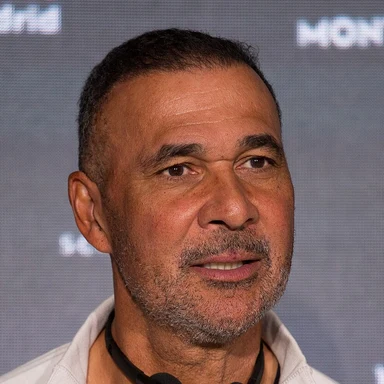 Photo: Barcex. Source and license in Image credits.
Haarlem · Feyenoord · PSV
1979—1998Captain and opening scorer in the 1988 European Championship final.
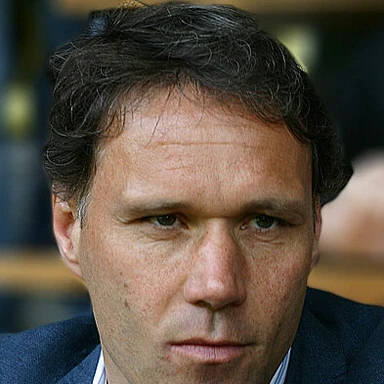 Photo: Paul Blank. Source and license in Image credits.
Five goals at EURO 1988, including the second goal in the final.
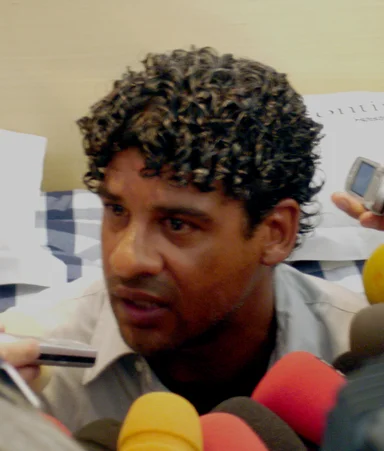 Photo: Mutari. Source and license in Image credits.
The defender alongside Ronald Koeman in Michels’ EURO 1988 champions.

Positional football architect
2007—2026 · Barcelona · Bayern MunichPositional football visionary
1985—2013 ·
Collective intensity and attacking freedom
2008—Present · Barcelona · Paris Saint-Germain Photo: MichaelEmilio. Source and license in Image credits.
Collective movement and attacking relationships
1994—Present · Napoli · RomaCareer and honour facts cite their underlying sources, including clubs and governing bodies. Tactical readings are identified as editorial analysis.
UEFAIn profile: Rinus MichelsAccessed 2026-09-03FIFARinus Michels and the Clockwork OrangeAccessed 2026-09-03DFBCologne 1–0 Fortuna Cologne — 1983 German Cup finalAccessed 2026-09-151. FC KölnHannes Löhr — Michels’ successor at CologneAccessed 2026-09-15UEFAMichels: Total Football and the players’ testimonyAccessed 2026-09-14AjaxAjax heritage: Michels and professionalisationAccessed 2026-09-14AjaxAjax: Michels’ eight managerial honoursAccessed 2026-09-14FC BarcelonaBarcelona: Michels’ two appointmentsAccessed 2026-09-14FC BarcelonaCruyff’s arrival and Barcelona’s 1973/74 titleAccessed 2026-09-14UEFAEURO 1988: tournament recordAccessed 2026-09-14UEFAEURO archive: Ireland’s 1988 resultsAccessed 2026-09-14UEFAWest Germany 1–2 Netherlands: 1988 semi-finalAccessed 2026-09-14UEFASoviet Union 0–2 Netherlands: 1988 finalAccessed 2026-09-14UEFAGullit on Michels and the 1988 championsAccessed 2026-09-14