



A receiver should have a continuation before the ball arrives. Nearby movement supplies an escape from pressure rather than leaving the passer to win a duel alone.
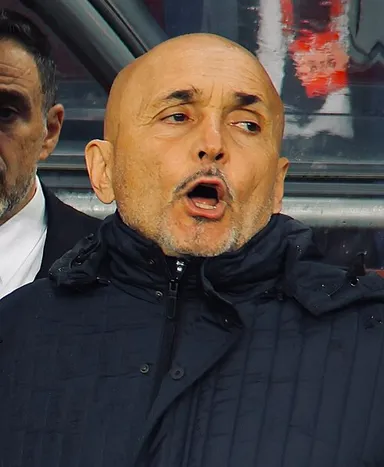 Photo: MichaelEmilio. Source and license in Image credits.
Coach profileActive
Luciano Spalletti
Collective movement and attacking relationships
Spalletti’s legacy connects Totti’s mobile forward role at Roma with the fluid Napoli side that won Serie A in 2023, ending a 33-year wait. League titles at Zenit and Champions League qualification with Udinese and Inter give that legacy breadth. His football depends on coordinated movement, complementary roles and the ability to connect technical control with depth.
- Full name
- Luciano Spalletti
- Birthplace
- Certaldo, Italy
- Coaching since
- 1994
- Latest archived appointment
- Juventus · 2025 — Present
- Nationality
- Italy
- Born
- 7 Mar 1959
- Primary shape
- 4-3-3
- Appointments
- 14
- Selected honours
- 8
Documented performance
Napoli · Champions League group stage · 2022/23
All six 2022/23 Champions League group matches only. Excludes knockout rounds, Serie A and cups; not the complete European season or Napoli appointment.
- Matches
- 6
- Wins
- 5
- Draws
- 0
- Losses
- 1
- Win rate
- 83.3%
Sources & methodology
Stored archive snapshots, not live counters. Missing values are not zero; records with different scopes are never added together.
Win rate = wins ÷ matches. Points per game requires an explicit scoring convention; cup records are not silently treated as league points.
- UEFA: Napoli’s complete 2022/23 Champions League group stage ↗Checked 2026-10-04
Career origins
From Empoli’s youth teams to the Scudetto
Documented history
Spalletti ended his playing career at Empoli and began coaching in the youth setup. A first senior spell in 1994 preceded his return to the first-team job in 1995.
Formative years
- 1994–1998
Promotion through practical teaching
Empoli
Back-to-back promotions took Empoli from Serie C1 to Serie A. His later reputation as a tactician began with making a smaller club’s collective work effectively.
- 2002–2005
Udinese’s first Champions League qualification
Udinese
Fourth place in 2004/05 earned Udinese its first Champions League qualification and brought Spalletti to Roma. The achievement concerns qualification, not a European title.
- 2005–2014
An adaptable attack and titles abroad
Roma’s combinations around Totti and two league titles with Zenit show different applications of collective attacking movement. The squads and competitive settings were not interchangeable.
- 2021–2026
Napoli’s title and a new Juventus chapter
Napoli won the 2023 championship with five matches to spare. His subsequent Italy spell ended before the move to Juventus in October 2025; current club work is a separate chapter.
Career origins · sources
- UEFA: Spalletti’s coaching career through 2018 · UEFA
- FIGC: Spalletti’s return to Empoli and early coaching years · FIGC
- Sampdoria: Spalletti’s appointments and season records · Sampdoria
- Juventus: Spalletti appointed in October 2025 · Juventus
- Juventus: Spalletti’s contract extension through June 2028 · Juventus
- Juventus: Spalletti’s September 2026 press conference · Juventus
- UEFA: Roma’s 2007/08 technical report · UEFA
- UEFA: Zenit’s second league title under Spalletti · UEFA
- Napoli: the 2023 title clinched at Udinese · SSC Napoli
Tactics
Tactical identity
Playing principles and tactical tendencies · qualitative assessment.Coaching identity
Collective movement and attacking relationships
Spalletti asks players to solve situations together through movement, passing angles and timing. Totti’s dropping movements at Roma and Osimhen’s depth at Napoli are different solutions to that ambition. This dossier’s tactical judgments are editorial readings, not numerical ratings.
Tactical principles
Totti’s withdrawal could invite a defender forward while a teammate attacked beyond him. The movement must be coordinated; a dropping striker without supporting runs merely reduces penalty-area presence.
At Napoli, Lobotka’s deeper position connected the build-up while the interiors could advance. Their timing needed to keep him supported rather than stranded beneath the attack.
Tactical analysis
Football philosophy
Roles emerge from relationships
A forward who drops can open space for a midfielder; a striker who runs behind can free an inside receiver. The question is how one movement creates a useful next action for a teammate.
Technical control needs penetration
A deep organiser helps the team escape pressure, but circulation alone cannot threaten the goal. Napoli’s wide attacks and central runs supplied the penetration that made controlled possession dangerous.
Adapt the system, retain the connections
In September 2026, Spalletti explained that Juventus could use different systems with its available squad. A formation is a starting arrangement; preserving support and responsibility matters when personnel change.
Tactical principles
Create the next passing angle
A receiver should have a continuation before the ball arrives. Nearby movement supplies an escape from pressure rather than leaving the passer to win a duel alone.
Vacate a space for the next runner
Totti’s withdrawal could invite a defender forward while a teammate attacked beyond him. The movement must be coordinated; a dropping striker without supporting runs merely reduces penalty-area presence.
Combine a stable organiser with runners
At Napoli, Lobotka’s deeper position connected the build-up while the interiors could advance. Their timing needed to keep him supported rather than stranded beneath the attack.
Stretch the defence in two directions
Kvaratskhelia threatened from the left while Osimhen attacked depth. Width and forward runs made it harder for opponents to crowd the same inside passing lane.
Advance and defend as a group
His stated ambition to press and build collectively requires defenders to follow the attack’s advance. Pressure without cover can expose the spaces it is meant to control.
Read pressure before choosing the route
Short passing attracts pressure only if a further connection is available. When an opponent closes those links, a direct ball towards the forward can be a useful alternative.
Transition sequence
- 01Regain with the group connected
- 02Find the next supporting angle
- 03Attack width or depth together
Illustrative sequence, not a measured event model.
Match-state management
Level score
Keep the organiser supported and time the runs that can break the line.
Leading
Reduce avoidable losses without removing every forward running threat.
Trailing
Add attacking runs while preserving cover around the first lost pass.
Tactical analysis · sources and scope
Interpretation is editorial, not an official rating or a direct quotation. Match results, team statistics and formations retain their documented sources.
- UEFA: Spalletti’s coaching career through 2018 ↗
- FIGC: Spalletti’s return to Empoli and early coaching years ↗
- Sampdoria: Spalletti’s appointments and season records ↗
- Juventus: Spalletti appointed in October 2025 ↗
- Juventus: Spalletti’s contract extension through June 2028 ↗
- Juventus: Spalletti’s September 2026 press conference ↗
- UEFA: Roma retain the Coppa Italia in 2008 ↗
- UEFA: Roma’s 2007/08 technical report ↗
- UEFA: Roma face United after the 2007 quarter-final defeat ↗
- UEFA: Zenit’s second league title under Spalletti ↗
- Napoli: the 2023 title clinched at Udinese ↗
- Napoli: 90 points in the 2022/23 league season ↗
- UEFA: Napoli’s complete 2022/23 Champions League group stage ↗
- UEFA: Napoli’s line-up against Milan in April 2023 ↗
- UEFA: Spalletti on pressing, build-up and collective responsibility ↗
Tactical analysis
Signature systems & defining teams
Signature systems, tactical evolution and defining teams are read together. A starting formation does not describe every phase of play.
Roma: Totti connects the attack ↗
Totti’s withdrawal could invite a defender forward while a teammate attacked beyond him. The movement must be coordinated; a dropping striker without supporting runs merely reduces penalty-area presence.
Tactical evolution
The 4-2-3-1 could become a strikerless-looking attack as Totti withdrew and others advanced. It did not mean that Roma played without a goal threat.
Napoli: control with a threat behind ↗
Lobotka linked the midfield while Kvaratskhelia and Osimhen offered different routes to goal. Napoli’s 90 league points and 20 Champions League group-stage goals describe separate competition scopes.
Tactical evolution
This is the historical championship team, not a projection of the current Juventus squad.
Defining team · documented record
Napoli won Serie A in 2022/23 with 90 points, ending a 33-year wait for the title.
Serie A 2022/23 only. The Champions League group record appears in a separate table.
- Points
- 90
Juventus: adapt to the available players ↗
In September 2026, Spalletti explained that Juventus could use different systems with its available squad. A formation is a starting arrangement; preserving support and responsibility matters when personnel change.
Tactical evolution
The diagram is illustrative, not a confirmed permanent starting formation; the September 2026 source explicitly discusses multiple systems.
Defining matches
Roma2–1Inter Milan
Final
Roma retain the Italian cup
A single-match final brought Roma a second consecutive Coppa Italia. It is a distinct format from the two-legged 2007 final and should not be combined with that tie’s aggregate score.
Manchester United7–1Roma
Quarter-final second leg
The Old Trafford counterexample
The heavy defeat belongs in the dossier beside Roma’s inventive attacking football. It does not establish one simple tactical cause; it shows that a successful domestic method does not guarantee protection in every European tie.
Napoli4–1Liverpool
Group stage
Napoli’s statement against Liverpool
The opening group match set the tone for five wins in six games. The final group record is a complete six-match sample, not a count of the entire Champions League campaign.
Tactical analysis · sources and scope
Interpretation is editorial, not an official rating or a direct quotation. Match results, team statistics and formations retain their documented sources.
- UEFA: Spalletti’s coaching career through 2018 ↗
- FIGC: Spalletti’s return to Empoli and early coaching years ↗
- Sampdoria: Spalletti’s appointments and season records ↗
- Juventus: Spalletti appointed in October 2025 ↗
- Juventus: Spalletti’s contract extension through June 2028 ↗
- Juventus: Spalletti’s September 2026 press conference ↗
- UEFA: Roma retain the Coppa Italia in 2008 ↗
- UEFA: Roma’s 2007/08 technical report ↗
- UEFA: Roma face United after the 2007 quarter-final defeat ↗
- UEFA: Zenit’s second league title under Spalletti ↗
- Napoli: the 2023 title clinched at Udinese ↗
- Napoli: 90 points in the 2022/23 league season ↗
- UEFA: Napoli’s complete 2022/23 Champions League group stage ↗
- UEFA: Napoli’s line-up against Milan in April 2023 ↗
- UEFA: Spalletti on pressing, build-up and collective responsibility ↗
Profile
Management style
Leadership, preparation and shapes in context.Build complementary responsibilities
A forward who drops can open space for a midfielder; a striker who runs behind can free an inside receiver. The question is how one movement creates a useful next action for a teammate.
A method is not a transferable guarantee
Roma, Zenit, Napoli and Juventus presented different squads and pressures. The Italy appointment is another context again. A successful club system cannot be assumed to produce the same relationships with less training time or different personnel.
Shared responsibility and demanding detail
Spalletti’s interviews emphasise collective responsibility, commitment and character. The coaching challenge is to make those demands practical: who supports the ball, who covers an advancing teammate, and who reacts after a loss. Public statements do not establish how every private player relationship worked.
Strengths & trade-offs
Strengths
- Create the next passing angle
- Vacate a space for the next runner
- Stretch the defence in two directions
Trade-offs
- Coordinated attacking movement requires repeated work together.
- An isolated organiser can leave the build-up vulnerable.
Tactical analysis
Why this coach matters
A modern reference for the mobile forward
Roma’s use of Totti helped make the withdrawing central attacker a prominent modern reference. Spalletti did not invent the concept; his team demonstrated how supporting midfield runs could make it effective at the highest level.
Ending Napoli’s 33-year wait
The 2023 title was Napoli’s first since 1990. Its significance combines a city’s long wait with a team whose midfield control, wide creativity and central depth reinforced one another. That historical achievement is distinct from Spalletti’s ongoing Juventus work.
Tactical analysis · sources and scope
Interpretation is editorial, not an official rating or a direct quotation. Match results, team statistics and formations retain their documented sources.
- UEFA: Spalletti’s coaching career through 2018 ↗
- FIGC: Spalletti’s return to Empoli and early coaching years ↗
- Sampdoria: Spalletti’s appointments and season records ↗
- Juventus: Spalletti appointed in October 2025 ↗
- Juventus: Spalletti’s contract extension through June 2028 ↗
- Juventus: Spalletti’s September 2026 press conference ↗
- UEFA: Roma retain the Coppa Italia in 2008 ↗
- UEFA: Roma’s 2007/08 technical report ↗
- UEFA: Roma face United after the 2007 quarter-final defeat ↗
- UEFA: Zenit’s second league title under Spalletti ↗
- Napoli: the 2023 title clinched at Udinese ↗
- Napoli: 90 points in the 2022/23 league season ↗
- UEFA: Napoli’s complete 2022/23 Champions League group stage ↗
- UEFA: Napoli’s line-up against Milan in April 2023 ↗
- UEFA: Spalletti on pressing, build-up and collective responsibility ↗
Career
Management career
Every senior appointment remains distinct in one compact record.| Period | Organisation | Role |
|---|---|---|
| 1994—1994 | Empoli | Interim head coach |
| 1995—1998 | Empoli | Head coach |
| 1998—1999 | SampdoriaTwo spells during 1998/99, separated by a dismissal; the year range is not continuous service. | Head coach |
| 1999—2000 | VeneziaTwo spells during 1999/00, separated by a dismissal; the year range is not continuous service. | Head coach |
| 2000—2001 | Udinese | Head coach |
| 2001—2002 | Ancona | Head coach |
| 2002—2005 | Udinese | Head coach |
| 2005—2009 | Head coach | |
| 2009—2014 | Zenit St Petersburg | Head coach |
| 2016—2017 | Head coach | |
| 2017—2019 | Head coach | |
| 2021—2023 | Head coach | |
| 2023—2025 | Italy | National-team head coach |
| 2025—Now | JuventusCurrent appointment verified on 4 October 2026. Juventus announced a contract extension through 30 June 2028 in April 2026. | Head coach |


Sources & methodology
Stored archive snapshots, not live counters. Missing values are not zero; records with different scopes are never added together.
Win rate = wins ÷ matches. Points per game requires an explicit scoring convention; cup records are not silently treated as league points.
- UEFA: Spalletti’s coaching career through 2018 ↗Checked 2026-10-04
- FIGC: Spalletti’s return to Empoli and early coaching years ↗Checked 2026-10-04
- Sampdoria: Spalletti’s appointments and season records ↗Checked 2026-10-04
- Juventus: Spalletti appointed in October 2025 ↗Checked 2026-10-04
- Juventus: Spalletti’s contract extension through June 2028 ↗Checked 2026-10-04
- Juventus: Spalletti’s September 2026 press conference ↗Checked 2026-10-04
- UEFA: Zenit’s second league title under Spalletti ↗Checked 2026-10-04
- Napoli: the 2023 title clinched at Udinese ↗Checked 2026-10-04
- UEFA: Spalletti on pressing, build-up and collective responsibility ↗Checked 2026-10-04
Honours
Major achievements
Verified top-flight league titles and senior domestic cups, reviewed on 4 October 2026. Includes domestic super cups; excludes Empoli’s lower-division cup, promotions, runners-up finishes and individual awards. The 2011/12 Russian title belongs to the transitional season, not two separate championships.
Coppa Italia
Roma
Supercoppa Italiana
Roma
Russian Premier League
Zenit St Petersburg
Russian Cup
Zenit St Petersburg
Russian Super Cup
Zenit St Petersburg
Serie A
Napoli
Selected trophies by club
Verified top-flight league titles and senior domestic cups, reviewed on 4 October 2026. Includes domestic super cups; excludes Empoli’s lower-division cup, promotions, runners-up finishes and individual awards. The 2011/12 Russian title belongs to the transitional season, not two separate championships.
- Roma
- 3
Sources & methodology
Stored archive snapshots, not live counters. Missing values are not zero; records with different scopes are never added together.
G/M = goals ÷ appearances. G+A = goals + assists. Per-90 metrics use documented minutes.
- UEFA: Spalletti’s coaching career through 2018 ↗Checked 2026-10-04
- UEFA: Roma retain the Coppa Italia in 2008 ↗Checked 2026-10-04
- UEFA: Roma’s 2007/08 technical report ↗Checked 2026-10-04
- UEFA: Zenit’s second league title under Spalletti ↗Checked 2026-10-04
- Napoli: the 2023 title clinched at Udinese ↗Checked 2026-10-04
Archive
Connected archive
Relationships situate the manager inside the wider archive.Key players
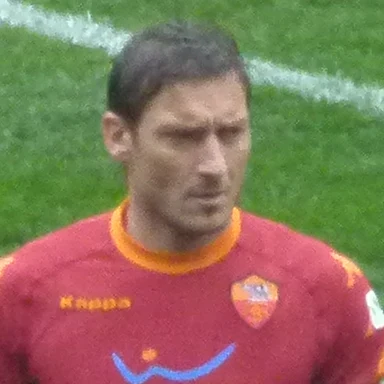 Photo: Totti_2011.jpg : Tontotti derivative work: TFCforever ( talk ). Source and license in Image credits.
Player
Francesco Totti
AS Roma
1993—2017The mobile central attacker around whom Spalletti organised Roma’s combinations in his first spell.

Player
Khvicha Kvaratskhelia
Dinamo Tbilisi · Rustavi · Lokomotiv Moscow
2017—PresentThe left-sided attacking threat in Spalletti’s 2022/23 Napoli championship team.
Related coaches

Coach
Carlo Ancelotti
Adaptive tournament manager
1992—Present · AC Milan · Real Madrid


Coach
José Mourinho
Elite knockout strategist
2000—Present · Real Madrid · Inter Milan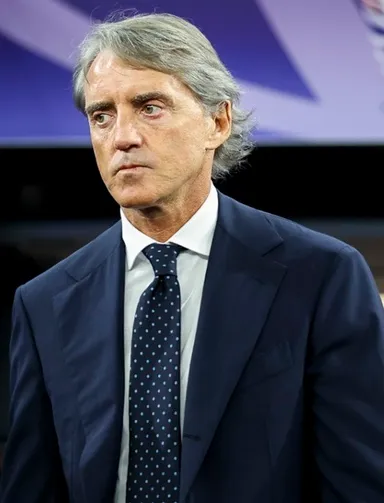 Photo: M.Sadegh Nikgostar. Source and license in Image credits.
Coach
Roberto Mancini
Creative attacking play supported by midfield balance
2001—Present · Inter Milan · Manchester City

Coach
Arrigo Sacchi
Collective pressing pioneer
1973—2001 · AC MilanSources
Career and honour facts cite their underlying sources, including clubs and governing bodies. Tactical readings are identified as editorial analysis.
UEFAUEFA: Spalletti’s coaching career through 2018Accessed 2026-10-04FIGCFIGC: Spalletti’s return to Empoli and early coaching yearsAccessed 2026-10-04SampdoriaSampdoria: Spalletti’s appointments and season recordsAccessed 2026-10-04JuventusJuventus: Spalletti appointed in October 2025Accessed 2026-10-04JuventusJuventus: Spalletti’s contract extension through June 2028Accessed 2026-10-04JuventusJuventus: Spalletti’s September 2026 press conferenceAccessed 2026-10-04UEFAUEFA: Roma retain the Coppa Italia in 2008Accessed 2026-10-04UEFAUEFA: Roma’s 2007/08 technical reportAccessed 2026-10-04UEFAUEFA: Roma face United after the 2007 quarter-final defeatAccessed 2026-10-04UEFAUEFA: Zenit’s second league title under SpallettiAccessed 2026-10-04SSC NapoliNapoli: the 2023 title clinched at UdineseAccessed 2026-10-04SSC NapoliNapoli: 90 points in the 2022/23 league seasonAccessed 2026-10-04UEFAUEFA: Napoli’s complete 2022/23 Champions League group stageAccessed 2026-10-04UEFAUEFA: Napoli’s line-up against Milan in April 2023Accessed 2026-10-04UEFAUEFA: Spalletti on pressing, build-up and collective responsibilityAccessed 2026-10-04