3

Serie A
First · 1941–42
Latest · 2000–01View winning seasons
1941–42 · 1982–83 · 2000–01
Associazione Sportiva Roma S.p.A.
Rome’s yellow-and-red club is shaped by three championship generations, local captains, Brazilian invention and a long European journey.
Overview
Historical assessment
Overall Historical Index
86/100Football Legends DB editorial assessment
Football Legends DB editorial / historical index. This is not an official FIFA or UEFA ranking, a live form table or a player rating.
Version 1.0: editors assess eight dimensions from 0–100 using the cited historical record. The overall score is their equally weighted arithmetic mean, rounded to the nearest whole number. Trophy totals are evidence, not points automatically added to a formula.
Assessment guide: 0–39 limited documented impact; 40–59 established national contribution; 60–79 sustained national or continental influence; 80–94 major international influence; 95–100 a historical benchmark across generations. These are editorial judgements, not measured percentiles. Missing evidence means no published index.
World titles and sustained success across eras inform the historical and international assessments. Scores may be revised when the evidence or editorial assessment changes.
Assessment notes · An editorial assessment of three championship generations, European achievements, enduring local captains and Rome’s football culture.
Current chapter
Season
2026–27Verified
Gasperini remains in charge in September 2026. His current work is separate from the historical title totals of Schaffer, Liedholm and Capello.
Honours
First · 1941–42
Latest · 2000–01First · 1963–64
Latest · 2007–08First · 2001
Latest · 2007First · 2021–22
Latest · 2021–22First · 1960–61
Latest · 1960–61First · 1928
Latest · 1928First · 1972
Latest · 1972History
The merger of three clubs created Roma in 1927. Testaccio shaped early identity before Schaffer, Masetti and Amadei won the first Scudetto.
Tactical identity · A secure goalkeeper and decisive forward play
Explore the defining match ↗A single season in Serie B ended with promotion in 1952. The move to the Olimpico preceded the 1961 Fairs Cup and the first Italian Cups.
Tactical identity · Rebuilding through defensive continuity and new attackers
Viola’s presidency and Liedholm’s organisation brought the 1983 title after forty-one years. The following European Cup final ended in a shootout defeat at home.
Tactical identity · Zonal defending, patient possession and creative midfield play
Explore the defining match ↗Eriksson’s team won the 1986 cup. Giannini and Aldair later helped reach the 1991 UEFA Cup final and win another Italian Cup under Ottavio Bianchi.
Tactical identity · A playmaker’s passing within evolving systems
Totti’s invention, Batistuta’s finishing and attacking wing-backs made the 2001 championship a collective achievement.
Tactical identity · Three central defenders and freedom behind the forwards
Explore the defining match ↗Spalletti’s fluid attack won consecutive Italian Cups; Ranieri’s side then pushed Inter to the final day in 2010 without winning the league.
Tactical identity · A mobile central forward with midfield runners
Garcia restored a strong league challenge. Spalletti returned, followed by Di Francesco’s team reaching the 2018 European semi-finals through the Barcelona comeback.
Tactical identity · Changing attacking structures with experienced leaders
Explore the defining match ↗Mourinho’s team won the 2022 Conference League. The following Europa League final was lost on penalties; later coaching changes included De Rossi and Ranieri.
Tactical identity · Compact defending and purposeful transitions
Explore the defining match ↗Defining games
Serie A
AS Roma 2–0 Modena
Stadio del Partito Nazionale Fascista, Rome
Cappellini and Borsetti secured the final-day victory that delivered Schaffer’s first championship.
Serie A
AS Roma 1–1 Genoa
Stadio Luigi Ferraris, Genoa
Pruzzo’s equaliser in Genoa supplied the point that made Liedholm’s side champions with a match to spare.
Serie A
AS Roma 3–1 Parma
Stadio Olimpico, Rome
Totti, Montella and Batistuta scored in the final-day win that kept Roma ahead of Juventus.
Champions League quarter-final · second leg
AS Roma 3–0 Barcelona
4–4 on aggregate · advanced on away goals
Stadio Olimpico, Rome
Džeko, De Rossi and Manolas overturned the first-leg 4–1 defeat, reaching the semi-finals under the away-goals rule then in force.
Conference League final
AS Roma 1–0 Feyenoord
National Arena, Tirana
Zaniolo’s controlled finish and a resilient team performance brought a new European trophy to Rome.
Legends
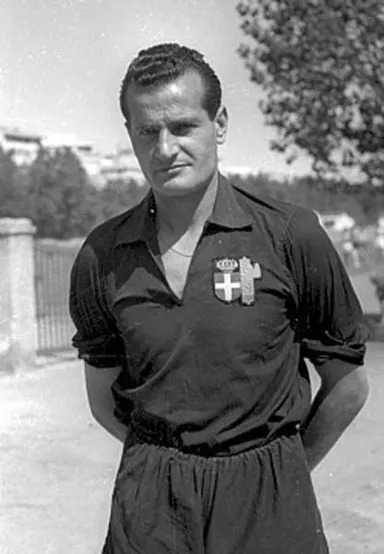 Photo: Unknown authorUnknown author. Source and license in Image credits.
Goalkeeper
The goalkeeper and captain provided continuity from Testaccio to the first league championship.
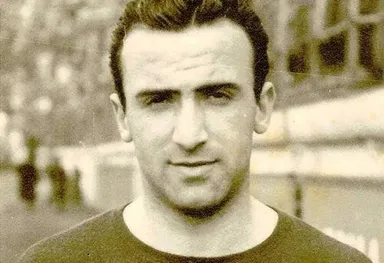 Photo: Unknown authorUnknown author. Source and license in Image credits.
Forward
The young local forward became the goalscoring face of the first championship generation.
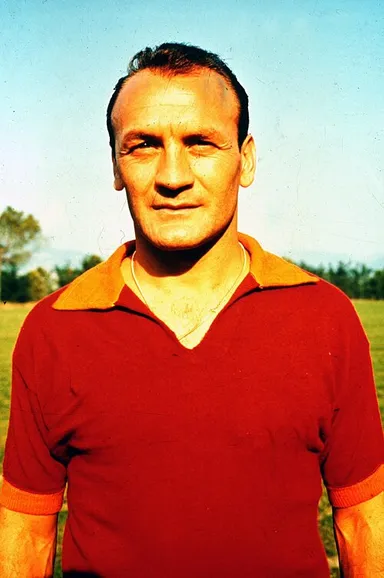 Photo: Unknown authorUnknown author. Source and license in Image credits.
Defender
A long-serving defender and captain who lifted the 1961 Fairs Cup and embodied loyalty to the club.
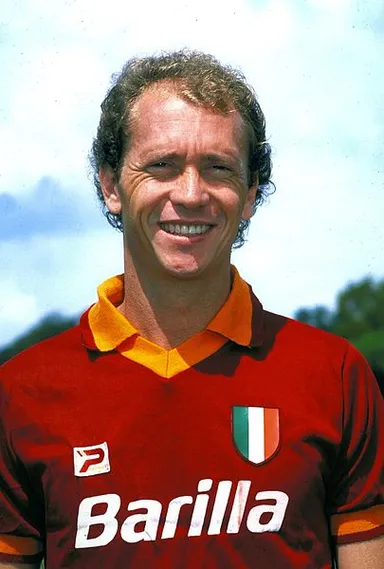 Photo: Unknown authorUnknown author. Source and license in Image credits.
Midfielder
The Brazilian organiser gave Liedholm’s team rhythm, intelligent movement and control in midfield.
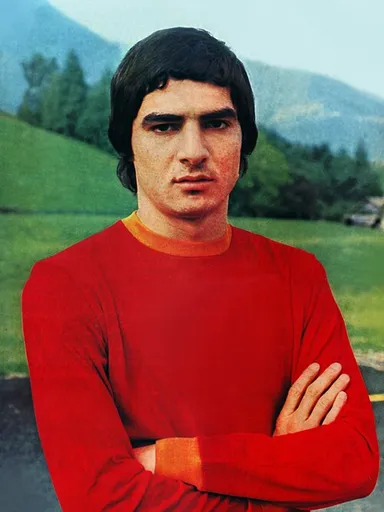 Photo: Unknown authorUnknown author. Source and license in Image credits.
Midfielder
The championship captain combined powerful distribution with composure and positional responsibility.
Winger
Close control and invention on the flank made the local winger a symbol of the 1983 champions.
Forward
The penalty-area scorer supplied the header that secured the 1983 title in Genoa.
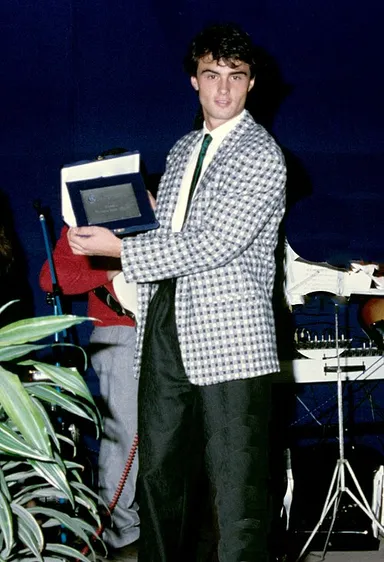 Photo: Indeciso42 at the Italian Wikipedia project.. Source and license in Image credits.
Midfielder
The locally developed playmaker carried creative responsibility and the captaincy into the 1990s.
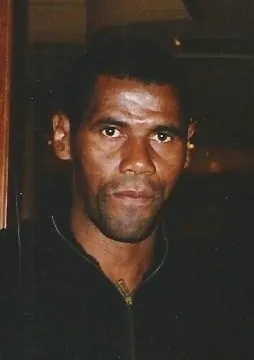 Photo: Christophe95. Source and license in Image credits.
Defender
An elegant defender whose reading of play linked the 1991 cup winners to the 2001 champions.
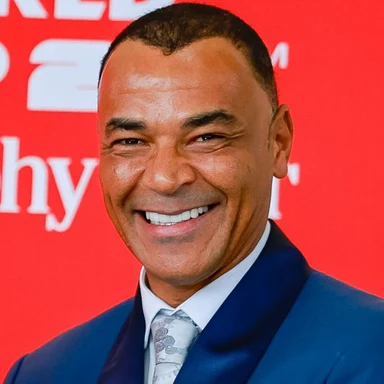 Photo: Lula Oficial. Source and license in Image credits.
Defender
Repeated forward runs from the right supplied width and energy to Capello’s title-winning structure.
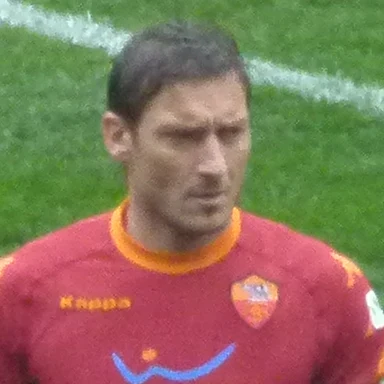 Photo: Totti_2011.jpg : Tontotti derivative work: TFCforever ( talk ). Source and license in Image credits.
Forward
The one-club captain evolved from creator to central forward and finished as Roma’s leading scorer and appearance-maker.
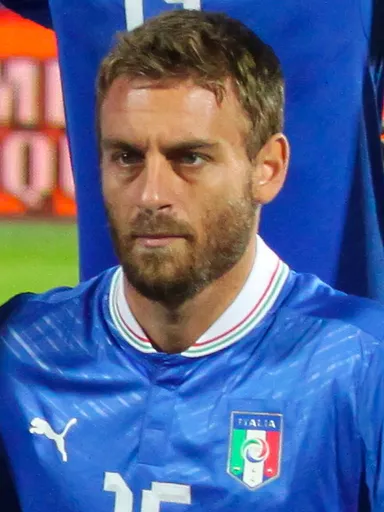 Photo: Biser Todorov (original picture), Mess (derivative work). Source and license in Image credits.
Midfielder
A versatile academy midfielder and later captain who balanced distribution, defensive covering and emotional commitment.
Photo: Unknown authorUnknown author. Source and license in Image credits.The goalkeeper and captain provided continuity from Testaccio to the first league championship.
Photo: Unknown authorUnknown author. Source and license in Image credits.The young local forward became the goalscoring face of the first championship generation.
Photo: Unknown authorUnknown author. Source and license in Image credits.A long-serving defender and captain who lifted the 1961 Fairs Cup and embodied loyalty to the club.
Photo: Unknown authorUnknown author. Source and license in Image credits.The Brazilian organiser gave Liedholm’s team rhythm, intelligent movement and control in midfield.
Photo: Unknown authorUnknown author. Source and license in Image credits.The championship captain combined powerful distribution with composure and positional responsibility.
Close control and invention on the flank made the local winger a symbol of the 1983 champions.
The penalty-area scorer supplied the header that secured the 1983 title in Genoa.
Photo: Indeciso42 at the Italian Wikipedia project.. Source and license in Image credits.The locally developed playmaker carried creative responsibility and the captaincy into the 1990s.
Photo: Christophe95. Source and license in Image credits.An elegant defender whose reading of play linked the 1991 cup winners to the 2001 champions.
Photo: Lula Oficial. Source and license in Image credits.Repeated forward runs from the right supplied width and energy to Capello’s title-winning structure.
Photo: Totti_2011.jpg : Tontotti derivative work: TFCforever ( talk ). Source and license in Image credits.The one-club captain evolved from creator to central forward and finished as Roma’s leading scorer and appearance-maker.
Photo: Biser Todorov (original picture), Mess (derivative work). Source and license in Image credits.A versatile academy midfielder and later captain who balanced distribution, defensive covering and emotional commitment.
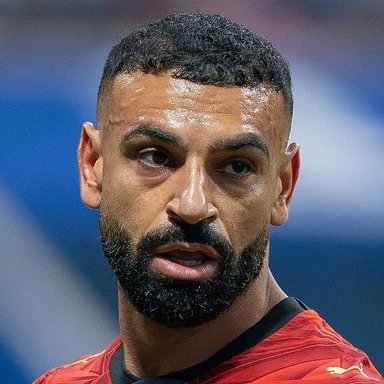 Photo: Bryan Berlin / WikiPortraits. Source and license in Image credits.
Salah helped define Liverpool’s revival through repeated scoring, diagonal movement and growing creativity. His Egyptian national-team story and the 2026 move to Trabzonspor extend a career beyond its completed Anfield chapter.
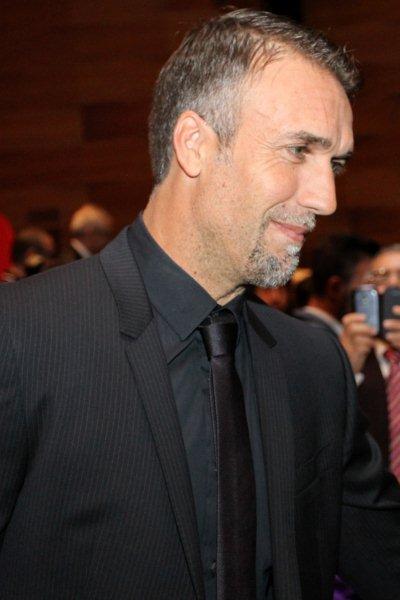 Photo: Roberto Vicario / Wikimedia Commons. Source and license in Image credits.
Batigol’s story joins the force of the finish to the intelligence of the run, across Florence, Rome and Argentina.
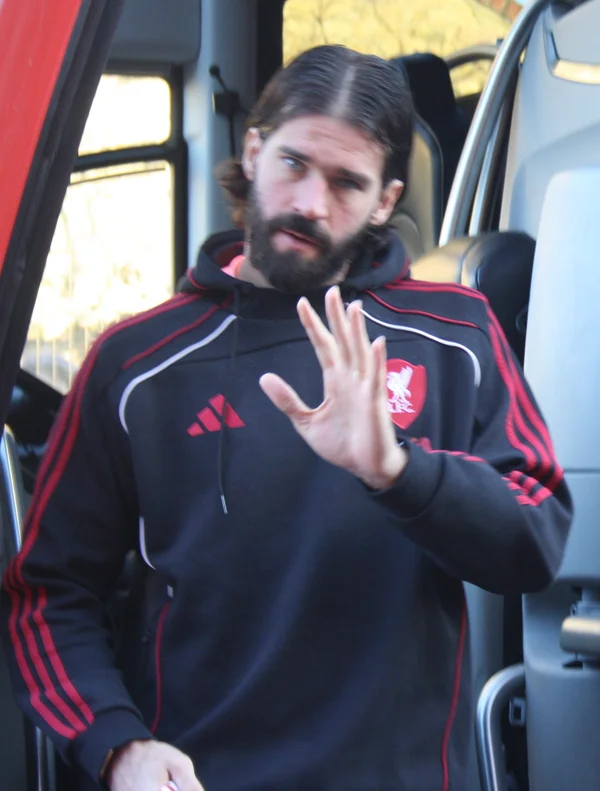 Photo: Timmy96. Source and license in Image credits.
The 2019 Champions League title, two Premier League Golden Gloves and the 2019 Copa América place Alisson among his generation’s defining goalkeepers. His Liverpool appearance milestone is dated August 2025; it is kept apart from completed Roma records and individual league seasons.
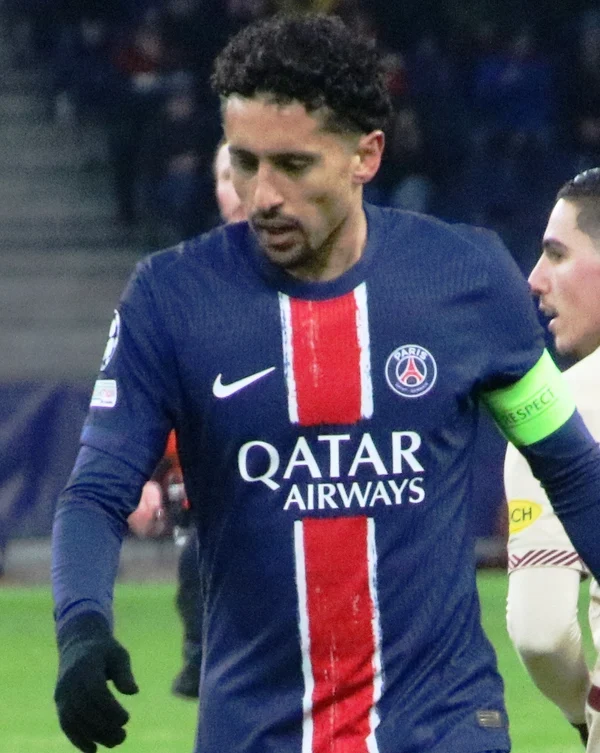 Photo: Werner100359 / Wikimedia Commons. Source and license in Image credits.
His Paris career connects several versions of the club: a young partner to Thiago Silva, a defender trusted in midfield by Tuchel, and the captain of Luis Enrique’s European champions. Continuity has not meant standing still.
Coaching legacy
Club tenure only. Honours include senior first-team league, cup, super cup, continental and world titles where verified. European titles count European Cup / Champions League wins.
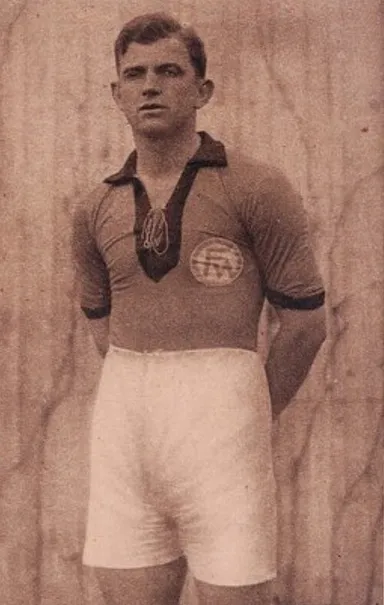 Photo: Romashkowi. Source and license in Image credits.
1940–1942
Organised the first championship team around Masetti’s security and Amadei’s goals.
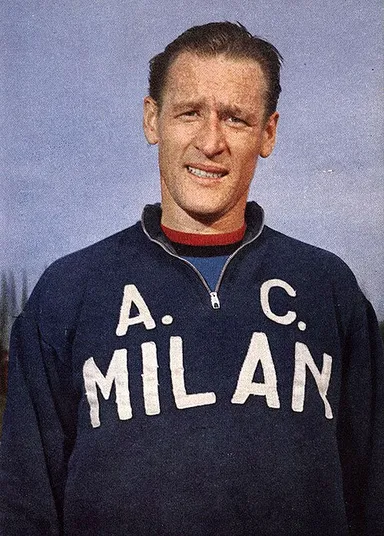 Photo: Unknown photographer. Source and license in Image credits.
1973–1977 · 1979–1984 · 1987–1989 · 1997
Patient possession and zonal organisation underpinned the 1983 champions and 1984 European finalists.
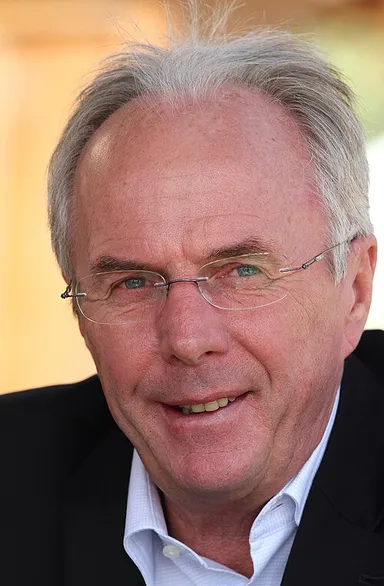 Photo: Doha Stadium Plus Qatar. Source and license in Image credits.
1984–1987
A technically fluent side challenged for the 1986 league and won that season’s Italian Cup.
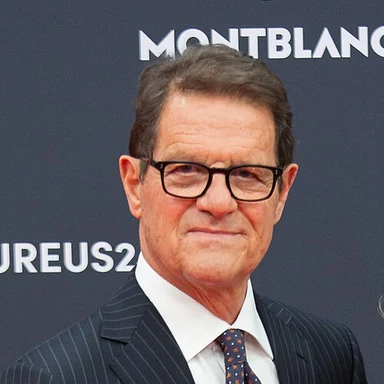 Photo: Barcex (Wikimedia Commons); crop by EndzoneEnthusiast. Source and license in Image credits.
1999–2004
Balanced Totti’s freedom, Batistuta’s scoring and a powerful defensive structure to win in 2001.
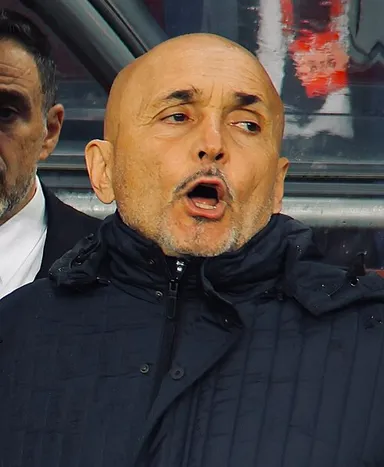 Photo: MichaelEmilio. Source and license in Image credits.
2005–2009 · 2016–2017
Totti’s central attacking role and coordinated midfield runs helped win two Italian Cups; a later return brought another strong league campaign.
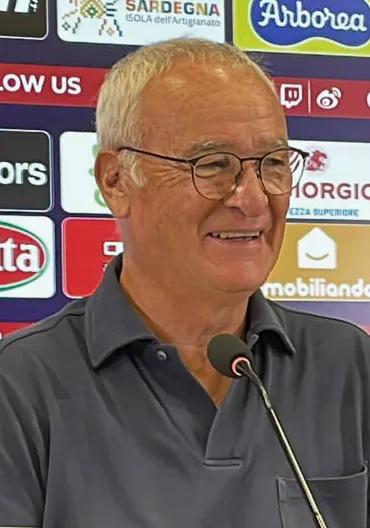 Photo: Sandrino 14. Source and license in Image credits.
2009–2011 · 2019 · 2024–2025
The Roman coach returned three times, including the 2010 title challenge and later periods of stabilisation.

2021–2024
Won the inaugural Conference League and returned to a European final in 2023, losing the Europa League on penalties.
The Conference League is separate from the Champions League
Club identity
Liedholm’s possession, Capello’s balance and Spalletti’s mobile attack demonstrate multiple ways of using a technically gifted squad.
The 1927 merger brought the city’s yellow and red colours into a new institution. June’s foundation and July’s celebration have different meanings.
Local captains worked alongside international recruits such as Falcão, Aldair, Cafu and Batistuta in different championship generations.
Totti and De Rossi connect the youth pathway to long first-team careers. Trigoria provides a home for development beyond a single generation.
Testaccio’s memory, the Curva Sud and the city derby bind sporting outcomes to a strong sense of belonging in Rome.
The Fairs Cup, Conference League and major final defeats form a varied archive. The 2018 comeback remains a defining European night.
Identity
Stadium
Current home / Rome
Roma first played at the modern Olimpico in May 1953. Shared with Lazio, it became the setting for the 1983 and 2001 title celebrations and major European nights.
Former home / Rome
Opened on 3 November 1929, the ground gave early Roma a powerful neighbourhood identity. Its memory remains part of the club’s culture after the move away in 1940.
Rivalries
Roma and Lazio’s city derby began in 1929 and became a central fixture in the capital’s sporting life.
Volk scored the winner in the first derby. The later shared home at the Olimpico gives the competition a common stage and distinct supporter identities.
Napoli and Roma meet in the Derby del Sole, connecting the football identities of Naples and Rome.
The fixture brings together two major clubs of central and southern Italy. Its history includes changing title ambitions and memorable contests between successive attacking generations.
Development
Technical development and local opportunity connect the youth teams to senior football, with education and long-term progression central to the pathway.
Historical role
Anzalone’s training-ground project provided the club with Trigoria. Totti, De Rossi, Florenzi and Pellegrini represent different generations of graduates; the international academy network is a later, separate extension of the club’s methods.
Famous graduates
Collection
Kits
Home kit / 1982–83
Home kit / 2000–01
Home kit / 2021–22
Commercial
TECHNICAL SUPPLIER
Kit studies are abstract colour and pattern references, not reproductions of official shirts.
Records
The Fairs Cup was not a UEFA-organised competition. The Conference League is a separate UEFA tournament; neither is a Champions League title.
As of 2026-09-15The 2018 tie used the away-goals rule in force at the time. The 3–0 home win was a quarter-final result, not a trophy.
As of 2026-09-15