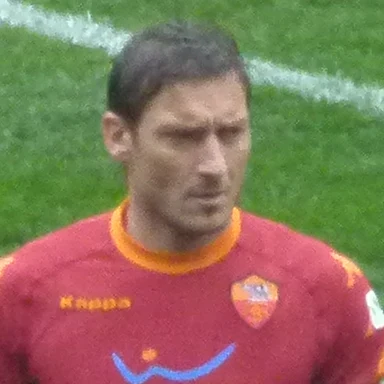

The football behind Gabriel Batistuta’s ratings
- Shot preparation
- Elite
- Penalty-area movement
- Elite
- Attacking headers
- Elite
- Finishing variety
- Elite
- Combination support
- Good
- Deep organisation
- Limited
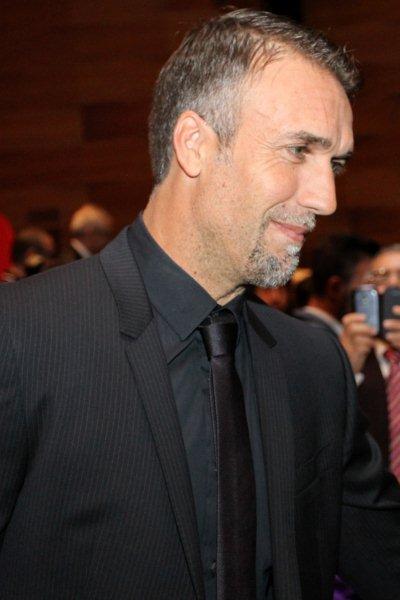 Photo: Roberto Vicario / Wikimedia Commons. Source and license in Image credits.
Gabriel Omar Batistuta
A powerful central scorer whose timing, quick preparation and varied finishing made him a Fiorentina icon and a decisive part of Roma’s 2001 title.
Senior club · all competitions
Completed club records only; not a complete career total.
Active club snapshots and records with another scope are excluded. Assist totals are not combined across incompatible definitions.
Stored archive snapshots, not live counters. Missing values are not zero; records with different scopes are never added together.
G/M = goals ÷ appearances. G+A = goals + assists. Per-90 metrics use documented minutes.
Senior international · all competitions
Argentina · AFA senior record, 1991–2002
Stored archive snapshots, not live counters. Missing values are not zero; records with different scopes are never added together.
G/M = goals ÷ appearances. G+A = goals + assists. Per-90 metrics use documented minutes.
In context
Batigol’s story joins the force of the finish to the intelligence of the run, across Florence, Rome and Argentina.
Reading the game
Gabriel Batistuta matters because his football makes the centre-forward’s job look brutally clear without making it simple. The powerful finish is the visible ending; the important work often comes earlier, in the run that separates him from a marker or the touch that leaves the ball ready to strike. His threat could stretch a defence towards its own goal and give a creative teammate room to work. Fiorentina made him a lasting symbol through seasons of changing fortunes, including a campaign outside Serie A. Roma then supplied a different test: turn established attacking quality into the goals needed by a championship team. Neither setting is fully explained by counting spectacular shots. Watch where he begins a run, which defender must follow and how little preparation he needs once the opening arrives. This dossier follows that relationship between force and timing, using the 2000/01 Roma season for both rating panels while keeping his earlier Fiorentina versions visible in their own right.
Historical references support the chronology; tactical explanations are museum editorial analysis.
Historical references: Roma Hall of Fame: Gabriel Batistuta ↗ · FIGC: Buffon’s completed career and official honours ↗ · FIFA: Batistuta on the art of goalscoring ↗
Career
| Period | Club | Apps | Goals | G/M |
|---|---|---|---|---|
| 1988—1989 | Newell’s Old BoysThe selected NFT league record is sixteen appearances and four goals. Other competitions are excluded; this is not an all-competition Newell’s total. Senior club · league only | 16 | 4 | 0.25 |
| 1989—1990 | River PlateThis row follows NFT’s 1989/90 league series, nineteen appearances and three goals, rather than broader or differently classified early-career totals. Senior club · league only | 19 | 3 | 0.16 |
| 1990—1991 | Boca JuniorsThirty league appearances and thirteen goals in the selected series. Boca won the 1991 Clausura phase, but that phase is not counted here as the overall 1990/91 national championship. Senior club · league only | 30 | 13 | 0.43 |
| 1991—2000 | FiorentinaThe league total includes 243/152 in Serie A and 26/16 in Serie B. FIGC’s 207-goal retrospective covers a broader club scope; differing published all-competition appearance totals are not substituted for these league rows. Senior club · league only Senior · #9 | 269 | 168 | 0.62 |
| 2000—2003 | AS RomaRoma’s official league subset is 63 appearances and thirty goals, including 28/20 in the title season. Its 87/33 all-competition record already contains this subset. Senior club · league only Senior · #18 / 20 / 33 | 63 | 30 | 0.48 |
| 2003—2003 | Inter MilanThe short loan produced twelve league appearances and two goals. These matches belong to the Serie A subset and are already present in the season table. Senior club · league only Loan · #19 | 12 | 2 | 0.17 |
| 2003—2005 | Al-ArabiThe selected Qatar league rows total 21 appearances and 25 goals. All 25 goals came in 2003/04, when he led the league scoring table. Cups are excluded. Senior club · league only | 21 | 25 | 1.19 |
Stored archive snapshots, not live counters. Missing values are not zero; records with different scopes are never added together.
G/M = goals ÷ appearances. G+A = goals + assists. Per-90 metrics use documented minutes.
Honours
River Plate · league
Fiorentina · league
Fiorentina · domestic cup
Fiorentina · domestic cup
AS Roma · league
AS Roma · domestic cup
Argentina · continental
Argentina · world
Argentina · continental
Gabriel Batistuta · individual
Gabriel Batistuta · individual
Gabriel Batistuta · individual
Gabriel Batistuta · individual
Story
Career chapter
Batistuta’s early professional path crossed Newell’s Old Boys, River Plate and Boca Juniors before Italy. The changes of club prevent a misleading origin story in which the finished striker appears fully formed. At Boca, the hat-trick in a 6–1 win over Racing in June 1991 offers a concrete glimpse of his emerging authority around goal. The national-team breakthrough followed at the Copa América that summer, with six goals in Argentina’s winning campaign. These were related stages of recognition, not interchangeable statistics: club goals and international goals describe different competitions. The move to Fiorentina would ask whether that scoring identity could survive a new tactical environment.
Historical references: AFA: Batistuta belongs to all of America ↗ · National Football Teams: Buffon’s league seasons ↗ · Boca remembers Batistuta’s hat-trick against Racing ↗
Career chapter
Fiorentina became the defining relationship of his club career. After relegation, Batistuta remained for the 1993/94 Serie B campaign and helped the team return as champions. That season belongs in his league record, but its sixteen goals must not be relabelled as Serie A goals. Back in the top division, his 26 goals in 1994/95 established a clear scoring benchmark. The 1995/96 Coppa Italia then gave the partnership tangible cup success. The important continuity was the same central threat in changing circumstances: a forward expected to turn service into chances even when the club’s status and ambitions around him were being rebuilt.
Historical references: FIGC: Buffon’s completed career and official honours ↗ · National Football Teams: Buffon’s league seasons ↗
Career chapter
The Italian Super Cup in 1996 added another trophy, while the later Fiorentina seasons sustained his standing as an elite scorer. By 1999/00, the Champions League supplied a particularly memorable away night: his goal decided the match against Arsenal at Wembley. It is a useful example of a striker making a brief opening decisive, but not evidence that Fiorentina won the competition. The long Florence period ended in 2000 with a move to Roma. That departure changed the emotional setting of his goals as much as the shirt: he would soon have to score for a new ambition against the club that had made him its symbol.
Historical references: History Makers: Batistuta’s decisive Roma goals ↗ · FIGC: Buffon’s completed career and official honours ↗ · UEFA: Arsenal versus Fiorentina, October 1999 ↗
Career chapter
At Roma, Batistuta scored twenty league goals in 28 appearances during the 2000/01 title season. Totti and the other forwards gave the attack multiple sources of invention and movement; his finishing helped turn that variety into points. He scored in the final-day victory over Parma, one part of a collective championship performance. The Italian Super Cup followed in 2001, before injuries and declining output changed the later picture. A short Inter loan in 2003 preceded the move to Al-Arabi and retirement in 2005. The chronology matters: the championship striker is the rating reference, while the final seasons remain part of the career rather than additional peak evidence.
Historical references: Roma Hall of Fame: Gabriel Batistuta ↗ · Roma: every goal of the 2000/01 championship ↗ · FIGC: Buffon’s completed career and official honours ↗ · Inter: Batistuta’s short spell ↗
Profile
Complete Forward
Also plays · Poacher
The 2000/01 reference places Batistuta at the end of a varied Roma attack: he occupies centre-backs, changes his route to meet a delivery and prepares a powerful finish with few touches. Totti and the other forwards supply complementary invention and movement. Both panels assess this championship season, keeping the earlier Fiorentina physical peak and later decline separate.
Powerful finishing with little preparation
Separation before the final pass
Attacking headers and volleys
Central presence beside creative teammates
Illustrative role zones · not tracking data
Batistuta’s power is most useful when the ball is already in a hittable position. The first touch, the planted foot and the line to goal compress the time a defender has to intervene. Watch the preparation rather than assuming a hard shot is an isolated physical gift. He can finish a delivery quickly or use a short adjustment to open an angle. That economy is the key distinction from a forward whose main solution is to dribble through several opponents.
His movement asks the passer to find a space rather than a stationary body. A run across the near defender or behind a full-back can make the finish look easier than the chance really was. The Roma goal examples provide specific routes to study, while the season collection shows their place in a broader attack. The important question is when he leaves the marker’s view. Speed helps, but a head start created by timing can be more valuable than a longer sprint.
He gives service from wide areas a forceful target without reducing the attack to repeated high crosses. A low delivery, a dropping ball or a pass into the channel can all become a shot. His strength helps him contest the space, and his attacking headers add another demand for centre-backs. The assessment therefore values finishing variety more than deep orchestration. Being available for the final pass is different from being the player who must organise every stage before it.
The 2000/01 version should be read alongside Totti, the other forwards and the width supplied by the team. Batistuta can occupy defenders and finish moves while another player supplies the imaginative pass. A short combination is useful because it leads to the next attacking position, not because it turns him into a roaming number ten. Both rating panels preserve that distinction: outstanding striking and movement coexist with more limited playmaking, isolated dribbling and defensive specialisation.
Historical references: Roma Hall of Fame: Gabriel Batistuta ↗ · History Makers: Batistuta’s decisive Roma goals ↗ · Roma: every goal of the 2000/01 championship ↗ · FIFA: Batistuta on the art of goalscoring ↗
Reading the game
| Era / team | Primary Role | Tactical Character |
|---|---|---|
| 1988–1991Newell’s / River / Boca | The emerging Argentine striker | Club changes lead toward a clearer central scoring responsibility. |
| 1991–1996Fiorentina | Fiorentina’s central reference | Finishing and physical presence remain valuable through relegation and promotion. |
| 1996–2000Fiorentina / Argentina | The established international scorer | Repeated scoring meets European competition and World Cup responsibility. |
| 2000–2003AS Roma | Roma’s championship target | The central striker complements Totti’s invention and the other forwards’ movement. |
| 2003–2005Inter Milan / Al-Arabi | The final scoring chapter | The Inter loan and Qatar move close the professional sequence. |
Historical references: Roma Hall of Fame: Gabriel Batistuta ↗ · FIGC: Buffon’s completed career and official honours ↗ · Inter: Batistuta’s short spell ↗ · UEFA: Arsenal versus Fiorentina, October 1999 ↗ · Boca remembers Batistuta’s hat-trick against Racing ↗
Reading the game
The memorable strike usually has a small preparation hidden inside it. Watch how the ball arrives beside the supporting leg and how the body opens the route to goal. The power then becomes a way to use a brief window, rather than an explanation that replaces the technical work.
A striker can make the final action look obvious by making the earlier run difficult to follow. Batistuta’s Roma goals invite attention to the defender he leaves behind and the angle he presents to the passer. The finish completes a relationship between two players, even when the scorer dominates the image.
The Serie B season gives the Florence relationship substance beyond a famous shirt and a large goal total. He stayed through a lower division and contributed to the return. Keeping that season visible explains both the emotional attachment and the statistical distinction between his complete league record and Serie A alone.
Argentina’s two Copa América titles and his World Cup goals belong together, but they describe different kinds of achievement. The 1993 final brace shows decisive scoring in a winning campaign. The World Cup hat-tricks show another stage of excellence without turning the later eliminations into titles he never won.
Historical references: History Makers: Batistuta’s decisive Roma goals ↗ · FIGC: Buffon’s completed career and official honours ↗ · AFA: Batistuta belongs to all of America ↗ · FIFA: Batistuta on the art of goalscoring ↗
Reading the game
Complete Forward
The return to Serie A brings 26 league goals and the scoring title. This version is the reference for a striker repeatedly turning Fiorentina’s service into goals across a full top-flight season. It belongs to the earlier physical chapter, rather than supplying extra athletic attributes to the later Roma assessment.
Complete Forward
Twenty-three league goals and the Wembley winner make the final Fiorentina season a distinct viewing window. The European moment highlights how a narrow opportunity can become decisive. It remains a separate career portrait: the goal against Arsenal is not part of the evidence used to score the following Roma season.
Complete Forward
This is the shared reference for both panels: a central scorer in Capello’s title-winning Roma. The focus is on twenty league goals, economical preparation and movement alongside creative teammates. The rating rewards the striker’s specific contribution while leaving later injury decline and earlier Fiorentina athletic peaks outside the same-season judgement.
Historical references: Roma Hall of Fame: Gabriel Batistuta ↗ · National Football Teams: Buffon’s league seasons ↗ · UEFA: Arsenal versus Fiorentina, October 1999 ↗
Statistics
| Season | Club | Apps | Goals | G/M |
|---|---|---|---|---|
| 2004/05 | Al-Arabi Senior club · league only | 3 | 0 | 0.00 |
| 2003/04 | Al-Arabi Senior club · league only | 18 | 25 | 1.39 |
| 2002/03 | Inter Milan Senior club · league only | 12 | 2 | 0.17 |
| 2002/03 | AS Roma Senior club · league only | 12 | 4 | 0.33 |
| 2001/02 | AS Roma Senior club · league only | 23 | 6 | 0.26 |
| 2000/01 | AS Roma Senior club · league only | 28 | 20 | 0.71 |
| 1999/00 | Fiorentina Senior club · league only | 30 | 23 | 0.77 |
| 1998/99 | Fiorentina Senior club · league only | 28 | 21 | 0.75 |
| 1997/98 | Fiorentina Senior club · league only | 31 | 21 | 0.68 |
| 1996/97 | Fiorentina Senior club · league only | 32 | 13 | 0.41 |
Stored archive snapshots, not live counters. Missing values are not zero; records with different scopes are never added together.
G/M = goals ÷ appearances. G+A = goals + assists. Per-90 metrics use documented minutes.
Eighteen selected league rows total 430 appearances and 245 goals under NFT’s series. Fiorentina’s 1993/94 season is Serie B: its 26/16 belongs to the combined league total, not Serie A. The Italian top-flight subset sums to 318/184; FIGC’s retrospective lists 317 appearances, a one-match difference from this selected series. The two 2002/03 rows separate Roma and the Inter loan. Domestic cups, continental cups and national-team matches are excluded. Unknown assists remain null.
Club competitions
| Competition | Apps | Goals | G/M |
|---|---|---|---|
Serie ASerie A · Fiorentina, Roma and InterSelected league subsets: Fiorentina 243/152, Roma 63/30 and Inter 12/2. Serie B is excluded. FIGC’s 317-appearance headline differs by one from this season-based sum. | 318 | 184 | 0.58 |
Serie ASerie A · Roma’s 2000/01 title seasonThe shared rating season is a subset of the Roma and Serie A career records, not an additional total. | 28 | 20 | 0.71 |
Stored archive snapshots, not live counters. Missing values are not zero; records with different scopes are never added together.
G/M = goals ÷ appearances. G+A = goals + assists. Per-90 metrics use documented minutes.
International
International career
The preferred AFA record is 78 appearances and 56 goals. Batistuta won the 1991 and 1993 Copa América, the 1992 King Fahd Cup now recognised in Confederations Cup history, and the 1993 Artemio Franchi trophy. His three World Cups produced ten goals, without a World Cup title.
National Football Teams: 77 appearances / 53 goals · NFT lists 77 FIFA-classified appearances and 53 goals, plus one separately classified appearance and two goals against a Slovakia league selection. Its Australia play-off attribution also differs from RSSSF. A FIFA article from 2016 instead used 77/54. These source-specific records are alternatives, not additions to AFA’s 78/56.
Senior international · tournament splits
| Competition | Apps | Goals | G/M |
|---|---|---|---|
FIFA World CupWorld Cup finals · 1994, 1998 and 2002FIFA’s tournament total is twelve appearances and ten goals: four, five and one across the three editions. AFA’s retrospective contains an eleven-goal sentence; the match-based ten-goal record is used here. | 12 | 10 | 0.83 |
Copa AméricaCopa América · 1991, 1993 and 1995Six appearances in each title-winning edition and four in 1995. Shoot-out kicks are excluded from goals. | 16 | 13 | 0.81 |
FIFA Confederations CupKing Fahd Cup / Confederations Cup · 1992 and 1995Two appearances and two goals in 1992, followed by three appearances and two goals in 1995. | 5 | 4 | 0.80 |
Stored archive snapshots, not live counters. Missing values are not zero; records with different scopes are never added together.
G/M = goals ÷ appearances. G+A = goals + assists. Per-90 metrics use documented minutes.
Reading the game
Batistuta’s legacy is a reminder that a specialist scorer can shape the whole attack without becoming its main playmaker. The centre-backs must account for his next run, the passer has a demanding target and the goalkeeper faces a shot that can arrive before the defensive picture settles. That influence explains why his football survives beyond the highlights of violent finishes. Florence gives the story its strongest sense of belonging; Rome adds the championship that his long Italian career had been seeking. Argentina supplies both triumph and limitation: continental titles and memorable World Cup goals coexist with campaigns that ended before the final. His career should not be rewritten as an uninterrupted victory parade. Nor should late-career injury and decline be treated as if they erase the earlier player. The useful inheritance is a way of reading the penalty area: follow the separation before the strike, the teammate who creates the delivery and the decision that makes one touch sufficient. Batigol’s force becomes more impressive when the intelligence that gives it a target remains in view.
Historical references: FIGC: Buffon’s completed career and official honours ↗ · FIFA: Batistuta on the art of goalscoring ↗ · FIFA: Batistuta reflects on his career ↗ · FIFA: World Cup scoring records ↗
Archive
Complete Forward · editorial peak 2000—2001
José Yudica · Daniel Passarella · Óscar Tabárez · Claudio Ranieri · Alberto Malesani · Giovanni Trapattoni · Fabio Capello · Héctor Cúper · Alfio Basile · Marcelo Bielsa
Cafu— Overlapping AS Roma era · Francesco Totti— Overlapping AS Roma era · Diego Maradona— Overlapping Argentina era · Javier Zanetti— Overlapping Argentina era
Capello’s third champions — AS Roma

FC Barcelona · Paris Saint-Germain · Inter Miami CF
2004—Present Photo: Unknown author. Source and license in Image credits.
Argentinos Juniors · Boca Juniors · Barcelona
1976—1997 Photo: Unknown author. Source and license in Image credits.
River Plate · Huracán · Millonarios
1945—1966
AS Monaco · Juventus · Arsenal
1994—2014
Cruzeiro · PSV · Barcelona
1993—2011 Photo: Unknown author. Source and license in Image credits.
Santos · New York Cosmos
1956—1977Statistics are displayed only within the scope supported by each cited source.
AS RomaRoma Hall of Fame: Gabriel BatistutaAS RomaHistory Makers: Batistuta’s decisive Roma goalsAS RomaRoma: every goal of the 2000/01 championshipFIGCFIGC: Buffon’s completed career and official honoursAFAAFA: Batistuta belongs to all of AmericaFIFAFIFA: Batistuta on the art of goalscoringFIFAFIFA: Batistuta reflects on his careerFIFAFIFA: Batistuta’s hat-tricks in two World CupsFIFAFIFA: World Cup scoring recordsRSSSFRSSSF: Buffon’s complete Italy match logNational Football TeamsNational Football Teams: Buffon’s league seasonsInterInter: Batistuta’s short spellUEFAUEFA: Arsenal versus Fiorentina, October 1999Boca JuniorsBoca remembers Batistuta’s hat-trick against RacingRiver PlateRiver Plate: official titlesUEFAUEFA: the 1993 Artemio Franchi matchRSSSFRSSSF: Qatar league and scoring table, 2003/04Boca JuniorsBoca: national league honoursJuventusJuventus: Buffon credits the team for his clean-sheet run