The football behind Cafu’s ratings
- Repeated running
- Generational
- Overlap timing
- Elite
- Crossing and combinations
- Elite
- Recovery work
- Elite
- Defensive positioning
- Excellent
- Aerial reach
- Moderate
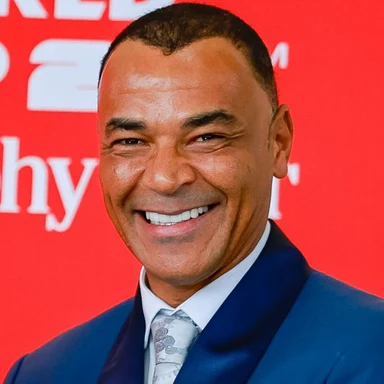 Photo: Lula Oficial. Source and license in Image credits.
Marcos Evangelista de Moraes
A right-sided connector whose repeated overlaps, moving combinations and recovery runs gave Brazil, Roma and Milan dependable width.
Senior club · all competitions
Completed club records only; not a complete career total.
Active club snapshots and records with another scope are excluded. Assist totals are not combined across incompatible definitions.
Stored archive snapshots, not live counters. Missing values are not zero; records with different scopes are never added together.
G/M = goals ÷ appearances. G+A = goals + assists. Per-90 metrics use documented minutes.
Senior international · all competitions
Brazil · completed senior record, 1990–2006
Stored archive snapshots, not live counters. Missing values are not zero; records with different scopes are never added together.
G/M = goals ÷ appearances. G+A = goals + assists. Per-90 metrics use documented minutes.
In context
Cafu made attacking width a sustained team resource, adapting between wing-back and full-back while winning world titles in 1994 and 2002.
Reading the game
Cafu made the right flank a dependable route through every phase of possession. He could begin alongside the centre-backs, offer a pass beyond midfield and arrive outside the penalty area in the same attack. The value was not simply the distance covered. His movement gave the player on the ball a decision to pass forward, combine inside or keep an opponent occupied while someone else advanced. Repeating that offer made the whole side harder to contain. Roma’s wing-back and Milan’s right-back illustrate two ways of organising this contribution. With three defenders behind him, he could start higher; in a back four, his departures needed a different relationship with the midfield and the nearest centre-back. Brazil added another setting, with Cafu and Roberto Carlos supplying width around an attack rich in central talent. His career is therefore an invitation to watch the player who creates the route rather than only the player who finishes it. Endurance mattered because it sustained useful decisions, technical execution and the journey back towards his own goal.
Historical references support the chronology; tactical explanations are museum editorial analysis.
Historical references: AS Roma: Cafu’s Hall of Fame biography and season records ↗ · AC Milan: Cafu’s official appearances and honours ↗ · FIFA: Cafu’s three World Cup finals and 2002 captaincy ↗
Career
| Period | Club | Apps | Goals | G/M |
|---|---|---|---|---|
| 1989—1994 | São PauloThe club’s retrospective records 273 matches and 38 goals, without separating competitive matches from friendlies. Those historical totals are retained here as context; the numeric fields remain unverified in a consistent competition scope. | — | — | — |
| 1995—1995 | Real ZaragozaSixteen La Liga appearances in the short 1994/95 Spanish spell. Cup appearances are outside this league-only record. Senior club · league only | 16 | 0 | 0.00 |
| 1995—1995 | JuventudeA brief registration between Zaragoza and Palmeiras. Roma’s biography explicitly states that Cafu did not play a match for Juventude; zero appearances is a confirmed distinction from missing data. Senior club · all competitions | 0 | 0 | — |
| 1995—1997 | PalmeirasPalmeiras records 102 matches and sixteen goals in its historical profile. The page does not separate match categories, so these are not presented as a national-league or a verified competitive-only total. The 1996 Paulista title belongs to this spell. | — | — | — |
| 1997—2003 | AS RomaRoma’s Hall of Fame archive records 218 matches and eight goals: 163 league appearances, forty in Europe and fifteen in the Coppa Italia. League goals total five. The archive records no appearance in the 2001 Italian Super Cup despite the squad honour. Senior club · all competitions Senior · #2 | 218 | 8 | 0.04 |
| 2003—2008 | AC MilanMilan’s official profile gives 166 appearances and four goals, including 119 Serie A appearances and all four goals. The 2007 European title is a squad honour: he was an unused substitute in the final. Senior club · all competitions Senior · #2 | 166 | 4 | 0.02 |
Stored archive snapshots, not live counters. Missing values are not zero; records with different scopes are never added together.
G/M = goals ÷ appearances. G+A = goals + assists. Per-90 metrics use documented minutes.
Honours
São Paulo · league
São Paulo · league
São Paulo · continental
São Paulo · world
São Paulo · continental
São Paulo · continental
Palmeiras · league
AS Roma · league
AS Roma · domestic cup
AC Milan · league
AC Milan · domestic cup
AC Milan · continental
AC Milan · continental
AC Milan · world
Brazil · world
Brazil · continental
Brazil · world
São Paulo · individual
Story
Career chapter
São Paulo gave Cafu a setting in which running and technique had to serve combinations rather than remain separate gifts. The young wide player developed in the successful side associated with Telê Santana, gaining experience of attacking from different heights on the right. Successive Libertadores and Intercontinental titles in 1992 and 1993 gave that education an international stage. Brazil initially offered a supporting role. At the 1994 World Cup final, an injury to Jorginho brought Cafu off the bench early in the match. He had to enter an established defence and help preserve its organisation, a different demand from leading every attack down the flank.
Historical references: AS Roma: Cafu’s route to Rome and the Pendolino role ↗ · São Paulo: Cafu’s return and the club’s historical totals ↗ · FIFA: Cafu’s three World Cup finals and 2002 captaincy ↗
Career chapter
The first European move took Cafu to Zaragoza in 1995, but it did not become the long stay that his later Italian career might suggest. A brief registration with Juventude followed before Palmeiras; Roma’s retrospective explicitly records no appearances in that intervening spell. Palmeiras supplied a more substantial return to Brazilian football. The 1996 Paulista championship placed his forward running within a prolific attack, rather than treating the full-back as an occasional visitor to the final third. This stage matters because the Cafu who reached Rome was already an experienced international. His Italian development refined a mature set of qualities instead of creating them from nothing.
Historical references: AS Roma: Cafu’s route to Rome and the Pendolino role ↗ · Palmeiras: Cafu’s 1995–1997 spell and Paulista title ↗ · National Football Teams: Cafu’s league seasons and separate international records ↗
Career chapter
Zeman’s Roma encouraged Cafu’s attacking instincts, while Capello later placed them within the three-defender structure that won the 2000/01 league title. The wing-back could offer width beyond a central midfield and an attack organised around Totti. His timing mattered as much as his willingness to go: arriving after an opponent had moved inside could preserve a clear route for the pass. The following year, Brazil used another structure with three central defenders and Cafu on the right. Captaining the 2002 world champions added a new responsibility to a familiar journey up and down the flank. The role connected individual stamina with carefully distributed team duties.
Historical references: AS Roma: Cafu’s Hall of Fame biography and season records ↗ · FIFA: Cafu’s three World Cup finals and 2002 captaincy ↗
Career chapter
Joining Milan in 2003 changed the starting point more than the attacking intention. From right-back, Cafu could advance outside a midfield rich in central combinations, while the team had to protect the space he left. The 2003/04 league title marked an immediate return, but the 2005 European final showed that a commanding first half did not settle a match. The 2007 title finally added the Champions League to his honours; Cafu was an unused substitute in that final, with Massimo Oddo starting. Keeping those roles distinct gives the late career its proper shape: continuing contribution, changing selection and a playing career that ended in 2008.
Historical references: AC Milan: Cafu’s official appearances and honours ↗ · UEFA: 2007 final report and unused substitutes ↗ · UEFA: Cafu reflects on the 2005 Champions League final ↗
Profile
Wing-Back
Also plays · Full-Back
Offers the outside pass, accelerates beyond the ball and connects with central teammates before choosing a cross or a return. Recoveries protect the inside route to goal; the freedom to advance depends on the midfield and defenders covering behind him.
Repeated overlaps
Moving combinations
Right-flank delivery
Recovery and availability
Illustrative role zones · not tracking data
An overlap is valuable only if the passer can use it or the defender must react to it. Cafu could wait behind the ball, then accelerate outside as the player ahead attracted attention towards the centre. The run stretched the distance between opposing defenders. Even without receiving, he could leave a teammate facing fewer immediate obstacles. Watching the defender’s turn helps explain the move better than measuring only how far the full-back travelled.
Cafu’s technique was particularly useful at the speed of a developing attack. A controlled first touch let him continue outside; a short return pass allowed an inside teammate to change the angle. Crossing was one possible ending, but not the purpose of every run. If the box was poorly occupied, keeping the ball available for another combination could preserve the advantage. This choice between delivery and connection made his width compatible with creative players who preferred central spaces.
The recovery run was not simply the attacking run played backwards. Cafu had to judge whether to challenge the ball, delay the carrier or regain a position between the opponent and goal. The nearest centre-back and midfielder affected that choice. In a back four, leaving the inside channel exposed could cost more than conceding a pass towards the touchline. His endurance helped him return, but the usefulness of the return depended on angle, timing and coordinated cover.
Repeated availability changed what teammates could expect from a possession. When an initial move was blocked and the ball returned towards midfield, Cafu could reorganise and offer the flank again. Opponents had to track the second movement instead of treating the first recovery as the end of their task. That continuity made endurance a tactical quality. It also required restraint: maintaining an outside passing option could be more helpful than sprinting into a crowded space ahead of the ball.
Historical references: AS Roma: Cafu’s route to Rome and the Pendolino role ↗ · AS Roma: Cafu’s Hall of Fame biography and season records ↗ · AC Milan: Cafu’s official appearances and honours ↗ · FIFA: Cafu’s three World Cup finals and 2002 captaincy ↗
Reading the game
| Era / team | Primary Role | Tactical Character |
|---|---|---|
| 1989–1994São Paulo | Develop a complete right side | Early attacking instincts become part of a broader defensive and combination role. |
| 1995–1997Palmeiras | Carry the flank through changing clubs | The return to Palmeiras gives forward running a place in a prolific attack. |
| 1997–2003AS Roma | Stretch the pitch beside the creators | Zeman encourages attacking width; Capello later uses the right wing-back beside a central attack and ahead of three defenders. |
| 2002Brazil | Provide tournament width as captain | Brazil’s three central defenders support the two flanks around its central attacking talent. |
| 2003–2008AC Milan | Advance from a line of four | Milan’s central combinations use the width of a right-back whose departures require shared cover. |
Historical references: AS Roma: Cafu’s route to Rome and the Pendolino role ↗ · AS Roma: Cafu’s Hall of Fame biography and season records ↗ · AC Milan: Cafu’s official appearances and honours ↗ · Palmeiras: Cafu’s 1995–1997 spell and Paulista title ↗ · FIFA: Cafu’s three World Cup finals and 2002 captaincy ↗
Reading the game
Cafu’s stamina was visible after the move that caught the eye. Once the ball had been recycled, he could become an option again rather than wait for the next isolated transition. The repeat mattered because it kept pressure on the same opponent and preserved width for teammates working inside.
The useful touch was often the one that allowed the next step without a pause. Cafu could combine that control with a quick exchange or a delivery from the outside lane. His technical identity therefore extended beyond spectacular tricks: small actions kept a developing attack at a productive speed.
An adventurous starting point created obligations after a turnover. Cafu’s willingness to recover made his attacking licence more sustainable, although no individual runner could repair every structural gap. The defining quality was a readiness to rejoin the team’s defensive task and help make another forward movement possible.
The 2002 captaincy put Cafu at the front of a successful group without making him the source of every attacking idea. His own account emphasised the squad’s common purpose. That is a useful frame for his leadership: responsibility and example within a collective, rather than a claim that one personality explains a world title.
Historical references: AS Roma: Cafu’s route to Rome and the Pendolino role ↗ · AC Milan: Cafu’s official appearances and honours ↗ · FIFA: Cafu’s three World Cup finals and 2002 captaincy ↗
Reading the game
Right-sided runner
The São Paulo version brings running, combination play and a growing defensive education together. The Libertadores and Intercontinental successes provide the setting. It is an earlier right-sided player learning how to influence both the route into attack and the organisation behind it, rather than an identical copy of the later Italian wing-back.
Attacking right wing-back
The reference version places Cafu on the right of Capello’s title-winning structure. Width, repeated overlaps and combinations with the central attack define the evaluation. Three defenders behind the midfield change his freedom to advance, but do not remove the duty to recover. Both rating panels refer to this season, rather than combining the best traits of every stage.
Attacking right-back
A back-four starting point asks the experienced Cafu to coordinate his advances with Milan’s midfield. His outside presence supports central creativity while the side redistributes cover behind him. The league-winning season shows that the same running capacity can perform a different job; tactical maturity matters alongside the physical continuity.
Historical references: AS Roma: Cafu’s route to Rome and the Pendolino role ↗ · AS Roma: Cafu’s Hall of Fame biography and season records ↗ · AC Milan: Cafu’s official appearances and honours ↗ · FIFA: Cafu’s three World Cup finals and 2002 captaincy ↗ · National Football Teams: Cafu’s league seasons and separate international records ↗
Statistics
| Season | Club | Apps | Goals | G/M |
|---|---|---|---|---|
| 2007–08 | AC Milan Senior club · league only | 15 | 1 | 0.07 |
| 2006–07 | AC Milan Senior club · league only | 24 | 0 | 0.00 |
| 2005–06 | AC Milan Senior club · league only | 19 | 1 | 0.05 |
| 2004–05 | AC Milan Senior club · league only | 33 | 1 | 0.03 |
| 2003–04 | AC Milan Senior club · league only | 28 | 1 | 0.04 |
| 2002–03 | AS Roma Senior club · league only | 26 | 0 | 0.00 |
| 2001–02 | AS Roma Senior club · league only | 27 | 0 | 0.00 |
| 2000–01 | AS Roma Senior club · league only | 31 | 1 | 0.03 |
| 1999–00 | AS Roma Senior club · league only | 28 | 2 | 0.07 |
| 1998–99 | AS Roma Senior club · league only | 20 | 1 | 0.05 |
Stored archive snapshots, not live counters. Missing values are not zero; records with different scopes are never added together.
G/M = goals ÷ appearances. G+A = goals + assists. Per-90 metrics use documented minutes.
Selected European league seasons only: La Liga at Zaragoza and Serie A at Roma and Milan. Cup matches are excluded. Brazilian state and national competitions are not merged into these rows, and assists remain unverified. Season appearances are already included in the relevant club record and must not be added to it again.
Club competitions
| Competition | Apps | Goals | G/M |
|---|---|---|---|
Serie A1997–2008 · Roma and Milan league matchesRoma’s 163 appearances and five goals plus Milan’s 119 appearances and four goals. Excludes cups, European competition and the Spanish spell. | 282 | 9 | 0.03 |
La Liga1994/95 · Zaragoza league matchesLeague-only appearances. This row is not a complete record of Zaragoza’s cup-winning season. | 16 | 0 | 0.00 |
Stored archive snapshots, not live counters. Missing values are not zero; records with different scopes are never added together.
G/M = goals ÷ appearances. G+A = goals + assists. Per-90 metrics use documented minutes.
International
International career
Played in the 1994, 1998 and 2002 World Cup finals, winning the first and third. He replaced the injured Jorginho in 1994 and captained the 2002 champions. The completed record is 142 appearances and five goals; his last senior match was the 2006 quarter-final against France.
Senior international · tournament splits
| Competition | Apps | Goals | G/M |
|---|---|---|---|
FIFA World CupWorld Cup finals · 1994–2006Three, six, seven and four appearances in the four editions. Playing in three finals is distinct from winning three titles; Cafu won in 1994 and 2002. | 20 | 0 | 0.00 |
Copa AméricaCopa América finals · 1991, 1993, 1997 and 1999Four, four, five and five appearances across the four editions. These matches are part of the senior Brazil total, not additional caps. | 18 | 0 | 0.00 |
Stored archive snapshots, not live counters. Missing values are not zero; records with different scopes are never added together.
G/M = goals ÷ appearances. G+A = goals + assists. Per-90 metrics use documented minutes.
Reading the game
Cafu belongs to a Brazilian tradition in which a defender can expand the attack without surrendering responsibility for the space behind him. He did not invent the attacking full-back. His particular contribution was to make that ambition repeatable across different teams, defensive structures and stages of a long career. The familiar image of a smiling runner is only the entrance to the story. Beneath it are the first touch that keeps an overlap alive, the decision to return a pass when the lane closes and the recovery that allows the team to try again. His success also makes a useful distinction between versatility and playing everywhere. Much of his work remained on the right, yet the job changed substantially between a wing-back supported by three defenders and a full-back completing a line of four. Two World Cup victories and league titles with both Roma and Milan give that adaptability historical weight. The lasting lesson is collective: reliable width can improve the football of the central players, while their protection makes the next forward run possible. Cafu made that exchange unusually durable.
Historical references: AS Roma: Cafu’s Hall of Fame biography and season records ↗ · AC Milan: Cafu’s official appearances and honours ↗ · FIFA: Cafu’s three World Cup finals and 2002 captaincy ↗
Archive
Wing-Back · editorial peak 2000—2001
Telê Santana · Vanderlei Luxemburgo · Zdeněk Zeman · Fabio Capello · Carlo Ancelotti · Carlos Alberto Parreira · Mário Zagallo · Luiz Felipe Scolari
Paolo Maldini— Overlapping AC Milan era · Ronaldo Nazário— Overlapping AC Milan era · Kaká— Overlapping AC Milan era · Andrea Pirlo— Overlapping AC Milan era
Capello’s third champions — AS Roma · Ancelotti’s orchestra — AC Milan

Adaptive tournament manager
1992—Present · AC Milan · Real Madrid Photo: Barcex (Wikimedia Commons); crop by EndzoneEnthusiast. Source and license in Image credits.
Discipline and defensive balance
1982—2018 · AC Milan · Real Madrid
AC Milan
1985—2009
Cruzeiro · PSV · Barcelona
1993—2011 Photo: Евгений Асмолов. Source and license in Image credits.
São Paulo · AC Milan · Real Madrid
2001—2017Cruzeiro · PSV · Barcelona
1993—2011 Photo: Unknown author. Source and license in Image credits.
Santos · New York Cosmos
1956—1977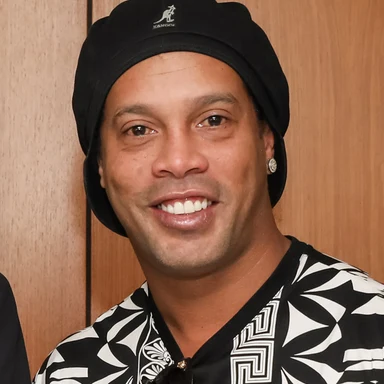 Photo: Marcos Corrêa/PR. Source and license in Image credits.
Grêmio · Paris Saint-Germain · FC Barcelona
1998—2018Statistics are displayed only within the scope supported by each cited source.
AS RomaAS Roma: Cafu’s route to Rome and the Pendolino roleAS RomaAS Roma: Cafu’s Hall of Fame biography and season recordsAC MilanAC Milan: Cafu’s official appearances and honoursSão Paulo FCSão Paulo: Cafu’s return and the club’s historical totalsPalmeirasPalmeiras: Cafu’s 1995–1997 spell and Paulista titleFIFAFIFA: Cafu’s three World Cup finals and 2002 captaincyRSSSFRSSSF: Cafu’s 142 Brazil appearances and five goalsNational Football TeamsNational Football Teams: Cafu’s league seasons and separate international recordsUEFAUEFA: 2007 final report and unused substitutesUEFAUEFA: Cafu reflects on the 2005 Champions League finalSão Paulo FCSão Paulo: Cafu’s ten club titlesAC MilanAC Milan: the 2004 Italian Super Cup squadAC MilanAC Milan: European Super Cup honoursWikipedia (cited biographical reference)Cafu — biographical and career reference