Nereo Rocco
Coach during his Milan playing career
Documented history
Rocco assigned him ball-winning responsibilities in midfield. This documented working relationship provides context for his later emphasis on defined roles.
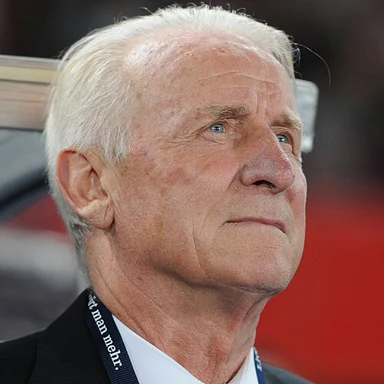 Photo: Michael Kranewitter, Wikimedia Commons, CC BY-SA 3.0 AT; crop by Heiko Gerber. Source and license in Image credits.
Pragmatic defensive organisation
A ball-winning Milan midfielder under Nereo Rocco who became a title-winning coach in Italy, Germany, Portugal and Austria.
Serie A · 1988/89 · Inter Milan
Inter Milan · 1988/89 Serie A only · 58 points under two points for a win. No modern three-point PPG is inferred; cup matches are excluded.
Stored archive snapshots, not live counters. Missing values are not zero; records with different scopes are never added together.
Win rate = wins ÷ matches. Points per game requires an explicit scoring convention; cup records are not silently treated as league points.
Career origins
Milan describes Trapattoni as a central figure in Rocco’s side, winning the ball and distributing it forward. Juventus later became the setting for his longest coaching cycle.
Coach during his Milan playing career
Rocco assigned him ball-winning responsibilities in midfield. This documented working relationship provides context for his later emphasis on defined roles.
His midfield work under Rocco combined recovery with forward distribution.
The first Juventus season brought the club’s first European trophy, won on away goals against Athletic Club.
Inter’s championship demonstrated how distinct attacking and defensive roles could be assembled around a new group.
His second Bayern appointment produced a league championship and a German Cup.
UEFA Cup
The two-leg final supplied a breakthrough at the start of a long Turin cycle.
His career links clearly defined responsibilities with adaptation across different club environments.
The later Ireland approach shows the same need to start from available qualities, not assume that a national team can reproduce a club squad.
Tactics
Coaching identity
Trapattoni’s football changed with its personnel: Inter could attack through Brehme and Matthäus, while Ireland required a more direct route. Defensive organisation was a starting point, not a complete description.
Tactical analysis
Milan’s archive describes Trapattoni’s playing role under Rocco through ball-winning and forward distribution. His later coaching can be read against this foundation without assuming it never evolved.
Inter’s 1989 side combined Brehme’s left-sided delivery, Matthäus’s surges and the finishing of Serena and Díaz. The attacking plan was more varied than a defensive label suggests.
Before EURO 2012, Trapattoni described Ireland as direct and precise rather than technically dominant. His stated plan began with the players he had.
UEFA’s 2007 Salzburg report identified a limitation: Zickler could be isolated against two markers while Kovač, Carboni and Aufhauser protected midfield. Adding Rakić alongside him offered another forward option. Defensive security and attacking support had to be balanced, not treated as the same task.
Brehme’s crossing gave Inter a route around central congestion. Width supported the forwards rather than replacing their central presence.
Matthäus’s forward surges added an attacking dimension from midfield. Inter’s organisation accommodated that movement instead of fixing every player in place.
Serena and Díaz offered Inter complementary scoring outlets. A direct attack still needs coordinated support and a clear destination.
Ireland’s approach acknowledged a creative disadvantage. The alternative was disciplined direct play, not a promise to dominate possession.
Trapattoni stressed that the opening result would shape the next decisions. Tournament risk depends on the evolving table, not only a preferred formation.
Illustrative sequence, not a measured event model.
Ireland’s preparation prioritised discipline and a direct route forward.
Inter could supply its forwards through Brehme’s delivery.
The 1977 outcome depended on away goals, not a second-leg victory.
Interpretation is editorial, not an official rating or a direct quotation. Match results, team statistics and formations retain their documented sources.
Tactical analysis
Signature systems, tactical evolution and defining teams are read together. A starting formation does not describe every phase of play.
The 1977 UEFA Cup opened a long period of European success. The final was won under the away-goals rule, despite defeat in Bilbao.
An immediate breakthrough became a sustained club cycle.
The 1988/89 league side joined Zenga’s goalkeeping to Brehme’s supply, Matthäus’s movement and the forwards’ finishing. Its 58 points belong to the two-points-for-a-win era.
Distinct individual strengths worked inside a shared plan.
Italian champions, 1989.
The difficult first Munich spell was followed by a return that brought the 1997 Bundesliga, the 1997 League Cup and the 1998 German Cup. In the League Cup final, Bayern beat Stuttgart 2–0 with goals from Basler and Élber. The two appointments had different outcomes and remain separate chapters.
The return changed the outcome, not the fact of the earlier difficulties.
EURO 2012 preparation emphasised a direct style and collective discipline. The description records the intended method, not a claim that Ireland controlled the tournament.
Elite club experience translated into a different national-team task.
Athletic Club2–1Juventus
Final · second leg · 2–2 on aggregate; Juventus won on away goals.
Juventus lost the second leg but won the trophy on away goals. The match result and the final outcome must remain separate.
Inter Milan2–1Napoli
League title clincher
Matthäus’s free-kick against Napoli helped Inter secure the title with four matches remaining.
Juventus3–0Borussia Dortmund
Final · second leg · Juventus won 6–1 on aggregate.
A 3–0 second-leg win completed a 6–1 aggregate victory over Dortmund. Roberto and Dino Baggio were central to the final’s scoring.
Interpretation is editorial, not an official rating or a direct quotation. Match results, team statistics and formations retain their documented sources.
Profile
Inter’s account of 1989 emphasises a group united behind the championship. Individual leadership and collective commitment reinforced one another.
After Salzburg’s 3–0 defeat at AEK in September 2007, Trapattoni accepted responsibility and questioned his tactical choice. The admission matters alongside the Austrian title won with Matthäus that spring: domestic success did not guarantee a successful European approach.
Trapattoni expressed confidence in Ireland without claiming technical superiority. Belief was intended to support the chosen method, not erase the opponent’s strengths.
Tactical analysis
Juventus records 596 matches across 13 seasons. The combined figure covers both Turin spells and is not assigned to either appointment alone.
Inter’s 1988/89 championship offers a complete numerical case study: 26 wins, six draws and two defeats in 34 league matches.
League championships with Bayern, Benfica and Salzburg extended his record beyond Italy. UEFA describes the 2007 Austrian success as the work of Trapattoni and Matthäus together; the archive preserves that shared coaching context.
Qualitative comparison of coaching approaches, not a cross-era ranking.
| Dimension | Giovanni Trapattoni | Fabio Capello ↗ |
|---|---|---|
| Team structure | Adapt roles and directness to the available group | Protect a stable base while enabling decisive attackers |
| Preparation emphasis | Clear responsibilities and realistic opponent assessment | Confidence drawn from repeated collective work |
Interpretation is editorial, not an official rating or a direct quotation. Match results, team statistics and formations retain their documented sources.
Career
| Period | Organisation | Role |
|---|---|---|
| 1974—1974 | Caretaker | |
| 1975—1976 | Head coach | |
| 1976—1986 | Head coach | |
| 1986—1991 | Inter Milan Inter Milan · 1986–1991 appointment · the 1988/89 league, 1989 Italian Super Cup and 1990/91 UEFA Cup. Season records are not full-appointment totals. Performance record
| Head coach |
| 1991—1994 | Head coach | |
| 1994—1995 | Head coach | |
| 1995—1996 | Cagliari | Head coach |
| 1996—1998 | Bayern Munich Bayern Munich · 1996–1998 appointment only · the 1996/97 league, 1997 League Cup and 1997/98 German Cup. Excludes the separate 1994–1995 appointment. Performance record
| Head coach |
| 1998—2000 | Fiorentina | Head coach |
| 2000—2004 | Italy | National-team coach |
| 2004—2005 | Head coach | |
| 2005—2006 | VfB Stuttgart | Head coach |
| 2006—2008 | Red Bull Salzburg | Head coach |
| 2008—2013 | Republic of Ireland | National-team coach |
Stored archive snapshots, not live counters. Missing values are not zero; records with different scopes are never added together.
Win rate = wins ÷ matches. Points per game requires an explicit scoring convention; cup records are not silently treated as league points.
| Competition | Period | Matches | Trophies |
|---|---|---|---|
Serie A Inter Milan · 1988/89 Serie A only · 58 points under two points for a win. No modern three-point PPG is inferred; cup matches are excluded. | 1988/89 · Inter Milan | 34 | 1 |
Juventus managerial record Juventus Hall of Fame career appearance count · both appointments combined. Not assigned to a single spell; no unverified W–D–L or PPG is added. | 1976–1986 · 1991–1994 | 596 | 14 |
UEFA Cup Inter Milan · complete 1990/91 UEFA Cup campaign only, using the club’s competition ledger. Twelve individual matches, not six ties; extra time counts within its match. Excludes Serie A and domestic cups. No league PPG is inferred. | 1990/91 · Inter Milan | 12 | 1 |
Stored archive snapshots, not live counters. Missing values are not zero; records with different scopes are never added together.
Win rate = wins ÷ matches. Points per game requires an explicit scoring convention; cup records are not silently treated as league points.
Honours
Documented senior coaching honours: Juventus 14, Inter three, Bayern three, Benfica one and Salzburg one. Includes verified cups and supercups; Salzburg’s 2006/07 title was won by the coaching partnership with Lothar Matthäus. Playing and individual honours are excluded.
Juventus
Juventus
Juventus
Inter Milan
Managerial record
Bayern Munich
Salzburg
Managerial record
Juventus
Juventus
Bayern Munich
Bayern Munich
Benfica
Documented senior coaching honours: Juventus 14, Inter three, Bayern three, Benfica one and Salzburg one. Includes verified cups and supercups; Salzburg’s 2006/07 title was won by the coaching partnership with Lothar Matthäus. Playing and individual honours are excluded.
Stored archive snapshots, not live counters. Missing values are not zero; records with different scopes are never added together.
G/M = goals ÷ appearances. G+A = goals + assists. Per-90 metrics use documented minutes.
Archive
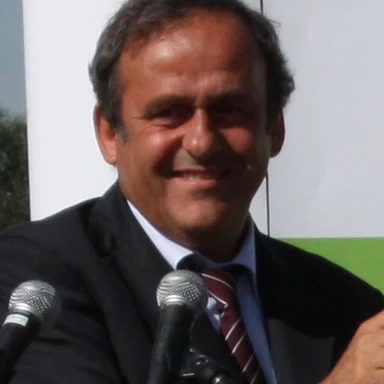 Photo: Klearchos Kapoutsis. Source and license in Image credits.
Nancy · Saint-Étienne · Juventus
1972—1987Coached this player in senior club or international football.
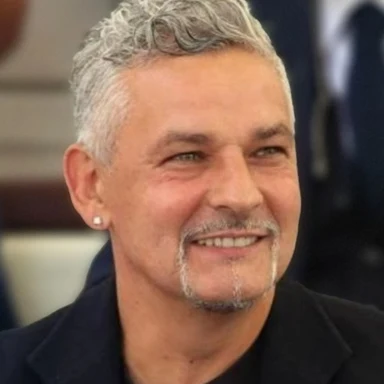 Photo: AbolfaZl0990. Source and license in Image credits.
Vicenza · Fiorentina · Juventus
1982—2004A decisive scorer in Trapattoni’s 1993 UEFA Cup final triumph.

Padova · Juventus · Sydney FC
1991—2014Coached this player in senior club or international football.

Parma · Juventus · Paris Saint-Germain
1995—2023Coached this player in senior club or international football.
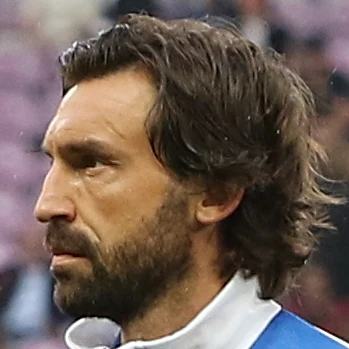 Photo: Clément Bucco-Lechat. Source and license in Image credits.
Brescia · Inter · Reggina
1995—2017Coached this player in senior club or international football.
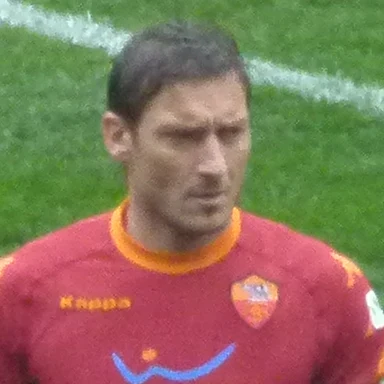 Photo: Totti_2011.jpg : Tontotti derivative work: TFCforever ( talk ). Source and license in Image credits.
AS Roma
1993—2017Coached this player in senior club or international football.

Positional football architect
2007—2026 · Barcelona · Bayern Munich
Adaptive tournament manager
1992—Present · AC Milan · Real Madrid
Elite knockout strategist
2000—Present · Real Madrid · Inter Milan
Collective pressing pioneer
1973—2001 · AC MilanCareer and honour facts cite their underlying sources, including clubs and governing bodies. Tactical readings are identified as editorial analysis.
Wikipedia (cited career reference)Giovanni Trapattoni — coaching chronologyAccessed 2026-09-14Inter MilanTrapattoni’s Inter competition-by-competition coaching recordAccessed 2026-09-15Inter MilanInter’s 1991 UEFA Cup: the route and two-legged finalAccessed 2026-09-15Inter MilanInter’s 1989 Italian Super CupAccessed 2026-09-15Bayern MunichBayern’s 1997 League Cup finalAccessed 2026-09-15UEFATrapattoni and Matthäus win the 2006/07 Austrian championshipAccessed 2026-09-15UEFATrapattoni accepts responsibility after Salzburg’s defeat in AthensAccessed 2026-09-15JuventusTrapattoni — Juventus Hall of FameAccessed 2026-09-14Inter MilanInter’s 1988/89 title: results and team rolesAccessed 2026-09-14UEFAAthletic–Juventus: the 1977 final, second legAccessed 2026-09-14UEFAJuventus’s 1993 UEFA Cup finalAccessed 2026-09-14Bayern MunichBayern in the 1990s: Trapattoni’s two spellsAccessed 2026-09-14UEFATrapattoni on Ireland’s EURO 2012 approachAccessed 2026-09-14AC MilanTrapattoni’s playing role under RoccoAccessed 2026-09-14BenficaBenfica’s 2004/05 championshipAccessed 2026-09-14Inter MilanInter remembers Trapattoni’s championship teamAccessed 2026-09-14