3
German Championship
First · 1955–56
Latest · 1962–63View winning seasons
1955–56 · 1956–57 · 1962–63
Ballspielverein Borussia 09 e. V. Dortmund
From the Borsigplatz to the Yellow Wall, Dortmund’s history joins national champions, European breakthroughs and recovery through successive generations.
Overview
Historical assessment
Overall Historical Index
87/100Football Legends DB editorial assessment
Football Legends DB editorial / historical index. This is not an official FIFA or UEFA ranking, a live form table or a player rating.
Version 1.0: editors assess eight dimensions from 0–100 using the cited historical record. The overall score is their equally weighted arithmetic mean, rounded to the nearest whole number. Trophy totals are evidence, not points automatically added to a formula.
Assessment guide: 0–39 limited documented impact; 40–59 established national contribution; 60–79 sustained national or continental influence; 80–94 major international influence; 95–100 a historical benchmark across generations. These are editorial judgements, not measured percentiles. Missing evidence means no published index.
World titles and sustained success across eras inform the historical and international assessments. Scores may be revised when the evidence or editorial assessment changes.
Assessment notes · An editorial assessment of European milestones, domestic history, coaching influence and youth pathways; current-season form does not change this historical snapshot.
Current chapter
Season
2026–27Verified
Kovac remains in charge in September 2026. This dated panel describes the present team separately from the historical eras and completed trophy campaigns below.
Honours
First · 1955–56
Latest · 1962–63First · 1994–95
Latest · 2011–12First · 1964–65
Latest · 2020–21First · 1989
Latest · 2019First · 1996–97
Latest · 1996–97First · 1965–66
Latest · 1965–66First · 1997
Latest · 1997History
Founded in Dortmund on 19 December 1909.
Preissler’s generation won in 1956 and 1957; Eppenhoff led the 1963 title before the Bundesliga began.
Tactical identity · A coordinated attacking line in the pre-Bundesliga era
The 1965 cup qualified Dortmund for Europe. Willi Multhaup’s team won the 1966 Cup Winners’ Cup against Liverpool.
Tactical identity · Compact defending with incisive wide attackers
Explore the defining match ↗Relegation preceded the 1974 stadium move. Promotion in 1976, survival in the 1986 play-off and the 1989 cup mark the route back.
Tactical identity · Rebuilding through changing teams and coaches
Consecutive league titles in 1995 and 1996 preceded victory over Juventus in Munich. Experienced recruits and local players shared the stage.
Tactical identity · A libero, midfield balance and complementary forwards
Explore the defining match ↗The former libero led the 2002 champions and UEFA Cup finalists. The European final defeat is separate from the domestic title.
Tactical identity · Physical presence up front and creative support
Explore the defining match ↗The financial crisis of 2005 forced a reset. Survival off the pitch preceded the sporting renewal under Klopp.
Tactical identity · Resources and stability before renewed title ambitions
The 2011 league, 2012 double and 2013 Champions League final made a young, energetic team internationally influential.
Tactical identity · Coordinated counterpressing and rapid forward combinations
Explore the defining match ↗Tuchel won the 2017 cup and Terzić the 2021 edition. A missed 2023 league opportunity preceded the 2024 European final.
Tactical identity · Different possession and transition models
Defining games
Cup Winners’ Cup final
Held opened the scoring and Libuda’s extra-time winner defeated Liverpool, delivering a first European trophy to a German club.
Champions League final
Riedle scored twice before substitute Ricken sealed the win against the holders with a long-range chip.
Bundesliga
Borussia Dortmund 2–1 Werder Bremen
Westfalenstadion, Dortmund
Koller and Ewerthon overturned Bremen’s lead to keep Dortmund ahead of Leverkusen and Bayern in the title race.
DFB-Pokal final
Lewandowski’s hat-trick completed an emphatic cup-final victory, adding the cup to the league championship.
Champions League semi-final · first leg
Lewandowski scored all four in a display of pressing, combination play and penalty-area finishing. Dortmund later advanced 4–3 on aggregate.
Legends
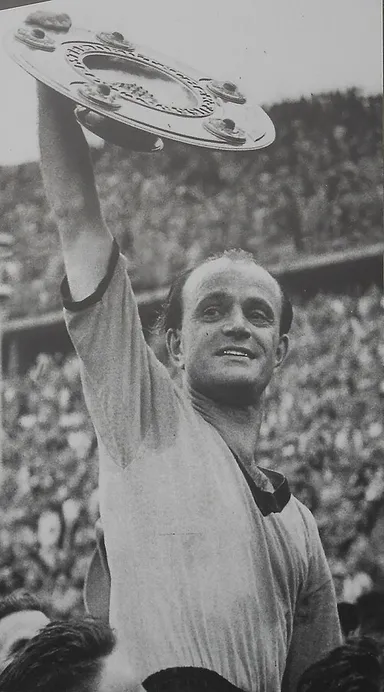 Photo: Joehawkins. Source and license in Image credits.
Forward
The attacking leader of the first championship generation remains the club’s historical scoring reference.
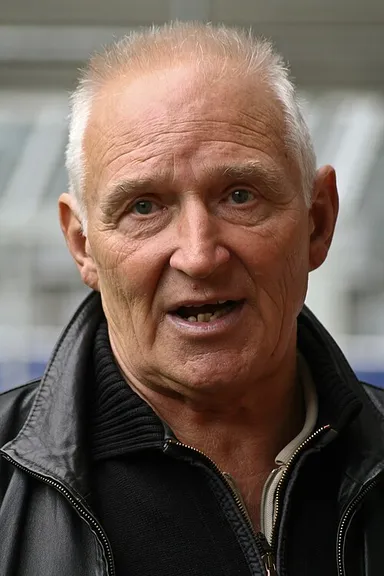 Photo: Arne Müseler. Source and license in Image credits.
Midfielder
A technical organiser who linked the 1963 national champions to the 1965 cup and 1966 European winners.
Forward
His left-footed finishing and partnership with Sigi Held powered the first European trophy-winning attack.
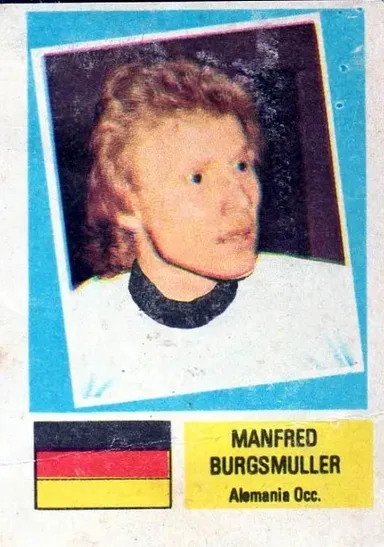 Photo: Unknown authorUnknown author. Source and license in Image credits.
Forward
A prolific scorer in the years after promotion, giving the rebuilt Bundesliga team a reliable attacking reference.
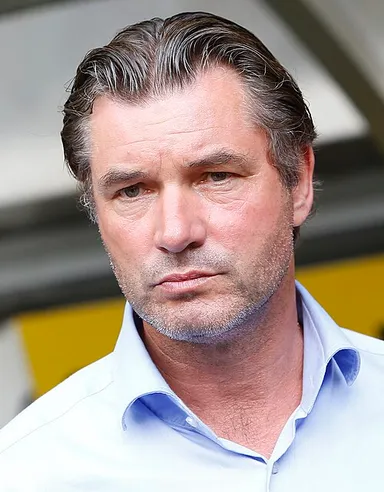 Photo: Tim.Reckmann. Source and license in Image credits.
Midfielder
A local midfielder and captain whose long service bridged the relegation play-off and European triumph.
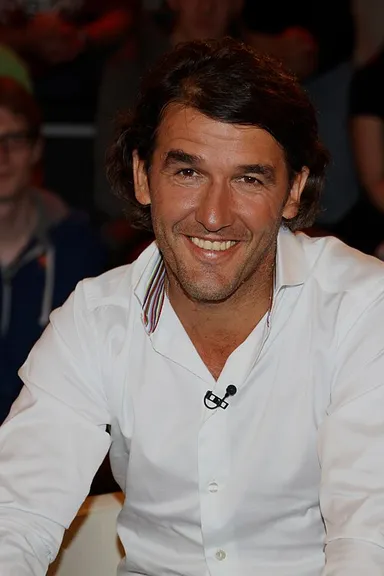 Photo: Udo Grimberg. Source and license in Image credits.
Forward
Two goals in the 1997 final made his penalty-area craft central to the club’s greatest European night.
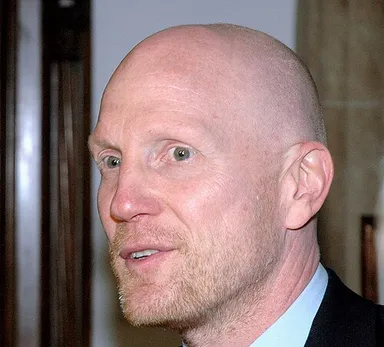 Photo: Harald Bischoff. Source and license in Image credits.
Defender
The libero combined anticipation and midfield progression in the league champions and 1997 European side.
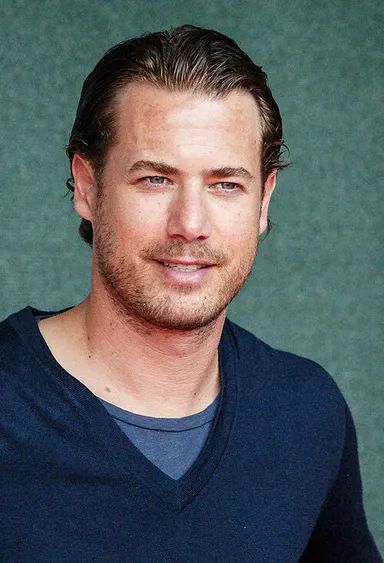 Photo: Die Bildermacherei Cuxhaven, Kerstin Tietje. Source and license in Image credits.
Midfielder
The locally developed attacker scored the decisive chip against Juventus and later worked in youth development.
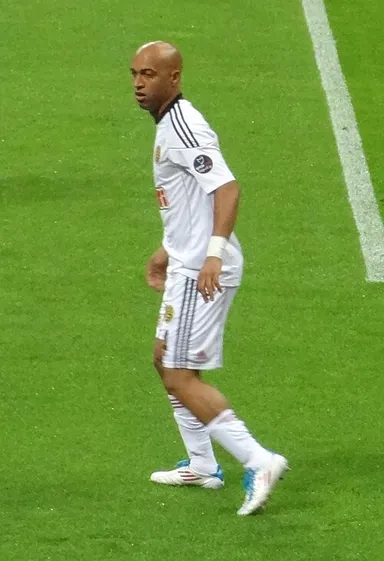 Photo: Ultraslansi. Source and license in Image credits.
Defender
The Brazilian left-back became a lasting supporter favourite, spanning the 2002 title, financial recovery and the 2011 championship.
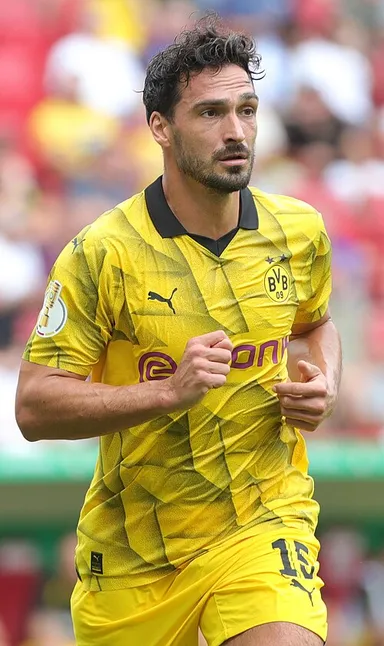 Photo: Sandro Halank, Wikimedia Commons. Source and license in Image credits.
Defender
An anticipatory centre-back and progressive passer across two spells, including the 2013 and 2024 European finals.
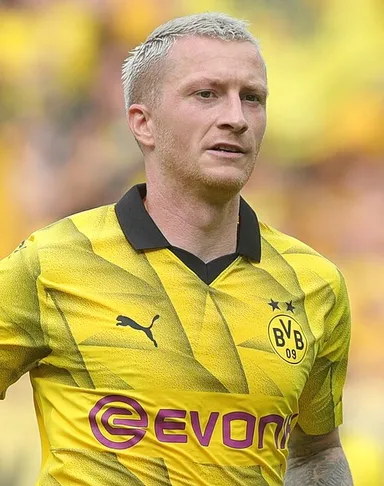 Photo: Sandro Halank, Wikimedia Commons. Source and license in Image credits.
Forward
The Dortmund-born attacker returned after developing elsewhere in senior football and became the creative face of a changing team.
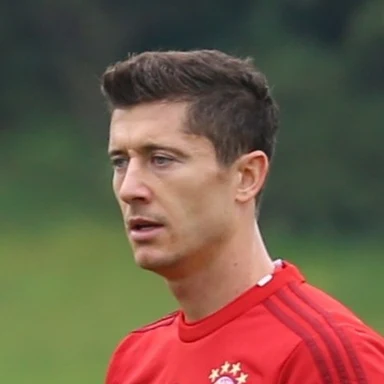 Photo: Rufus46. Source and license in Image credits.
Forward
His movement and finishing defined the 2012 cup final and the four-goal European semi-final against Madrid.
Photo: Joehawkins. Source and license in Image credits.The attacking leader of the first championship generation remains the club’s historical scoring reference.
Photo: Arne Müseler. Source and license in Image credits.A technical organiser who linked the 1963 national champions to the 1965 cup and 1966 European winners.
His left-footed finishing and partnership with Sigi Held powered the first European trophy-winning attack.
Photo: Unknown authorUnknown author. Source and license in Image credits.A prolific scorer in the years after promotion, giving the rebuilt Bundesliga team a reliable attacking reference.
Photo: Tim.Reckmann. Source and license in Image credits.A local midfielder and captain whose long service bridged the relegation play-off and European triumph.
Photo: Udo Grimberg. Source and license in Image credits.Two goals in the 1997 final made his penalty-area craft central to the club’s greatest European night.
Photo: Harald Bischoff. Source and license in Image credits.The libero combined anticipation and midfield progression in the league champions and 1997 European side.
Photo: Die Bildermacherei Cuxhaven, Kerstin Tietje. Source and license in Image credits.The locally developed attacker scored the decisive chip against Juventus and later worked in youth development.
Photo: Ultraslansi. Source and license in Image credits.The Brazilian left-back became a lasting supporter favourite, spanning the 2002 title, financial recovery and the 2011 championship.
Photo: Sandro Halank, Wikimedia Commons. Source and license in Image credits.An anticipatory centre-back and progressive passer across two spells, including the 2013 and 2024 European finals.
Photo: Rufus46. Source and license in Image credits.His movement and finishing defined the 2012 cup final and the four-goal European semi-final against Madrid.
Photo: Sandro Halank, Wikimedia Commons. Source and license in Image credits.The Dortmund-born attacker returned after developing elsewhere in senior football and became the creative face of a changing team.
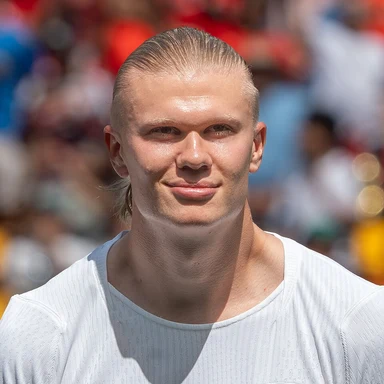 Photo: Bryan Berlin. Source and license in Image credits.
Haaland gives possession teams an immediate depth threat. His first City season demonstrated how a specialist box scorer could change the final action of an established attacking system.
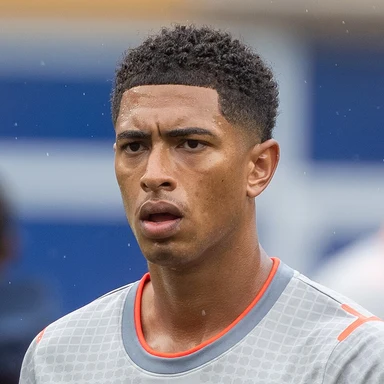 Photo: Bryan Berlin / WikiPortraits. Source and license in Image credits.
His first Madrid season showed how a midfielder could occupy the space vacated by a traditional centre-forward. The role remains distinct from his deeper development at Dortmund.
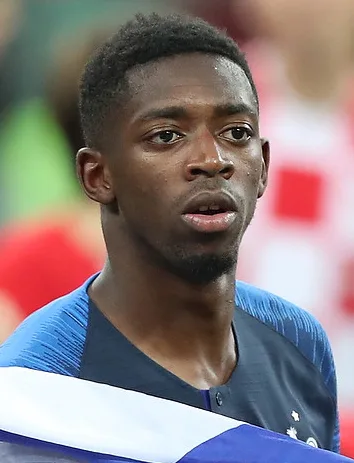
From Rennes and Dortmund to Barcelona and Paris, Dembélé’s active career connects unpredictable dribbling with a growing responsibility to create, finish and press for the team.
Coaching legacy
Club tenure only. Honours include senior first-team league, cup, super cup, continental and world titles where verified. European titles count European Cup / Champions League wins.
1955–1957
Won the 1956 and 1957 German championships before the Bundesliga existed.
National championships before the Bundesliga
1961–1965
Led the last pre-Bundesliga champions in 1963 and the 1965 German Cup winners.
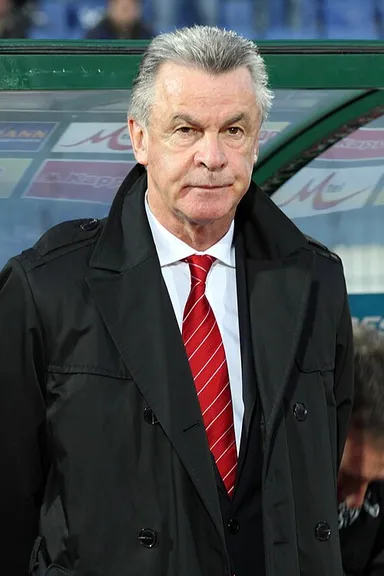 Photo: Biso. Source and license in Image credits.
1991–1997
Built the consecutive league champions and the 1997 European winners around experienced internationals.
Photo: Harald Bischoff. Source and license in Image credits.2000–2004
Returned as coach and won the 2002 league title; the UEFA Cup final that season ended in defeat.
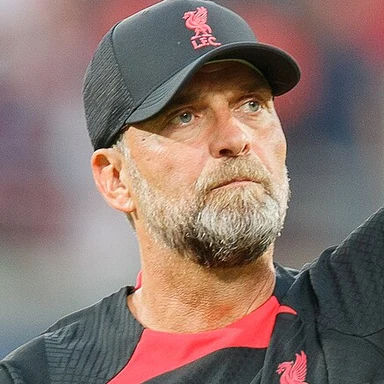 Photo: Steffen Prößdorf; crop by EndzoneEnthusiast. Source and license in Image credits.
2008–2015
Made coordinated pressing central to two championships, the first double and the 2013 European final.

2015–2017
Developed more varied possession structures and won the 2017 German Cup.
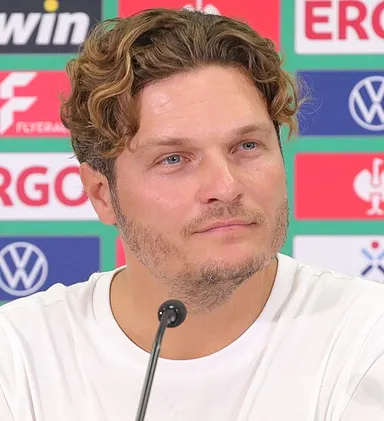 Photo: Sandro Halank, Wikimedia Commons. Source and license in Image credits.
2020–2021 · 2022–2024
Won the 2021 German Cup and returned for the 2023 title challenge and 2024 Champions League final.
Club identity
Klopp’s counterpressing is a defining modern chapter, while Hitzfeld, Sammer and Tuchel show that the club has succeeded with different structures.
The 2005 financial crisis makes sustainable rebuilding a historical concern, alongside the ambition represented by the 1997 European champions.
Experienced internationals strengthened Hitzfeld’s side; the Klopp era gave developing players demanding roles within a coherent team.
Brackel combines training, education and daily support. Local development and recruiting young senior professionals are distinct routes.
The Yellow Wall and memories of the Rote Erde connect the modern stadium to the city’s earlier football life.
Glasgow in 1966 and Munich in 1997 anchor the trophy story; the 2013 and 2024 final defeats remain part of the archive.
Identity
Stadium
Current home / Dortmund
Opened as the Westfalenstadion in April 1974. Later expansion created the modern setting for the South Stand and major European nights.
Former home / Dortmund
The first team’s earlier home stood next to the later Westfalenstadion. The ground continued to serve other Dortmund teams after the move.
Rivalries
Neighbouring industrial cities and generations of supporters give the Dortmund–Schalke fixture its regional significance.
The rivalry grew within the Ruhr’s coal-and-steel communities. It is distinct from Dortmund’s national contests with Bayern.
A national sporting rivalry intensified by Dortmund’s consecutive league titles and the 2012 cup final.
The 2013 Champions League final carried the contest into Europe. Bayern is the major national opponent; Schalke represents the distinct regional derby.
Development
Training, schooling and personal responsibility are coordinated through the youth centre, preparing players for football and everyday life.
Historical role
Zorc, Ricken and Götze represent the local development tradition. Reus spent youth years at Dortmund but first established himself in senior football elsewhere. Lewandowski, Haaland and Bellingham arrived as senior recruits and are not listed as academy graduates.
Famous graduates
Collection
Kits
Home kit / 1965–66
Home kit / 1996–97
Home kit / 2011–12
Commercial
TECHNICAL SUPPLIER
Kit studies are abstract colour and pattern references, not reproductions of official shirts.
Records
Uses the club’s March 2026 published total of 572; some earlier club tributes give 571. The source convention is retained rather than combining the figures.
As of 2026-09-15Eight national championships in total. The official Super Cup register separately contains six titles; the unofficial 2008 match is excluded.
As of 2026-09-15Against Real Madrid on 24 April 2013; a single-match achievement, not a season total.
As of 2026-09-15