

Serie A
Napoli · league
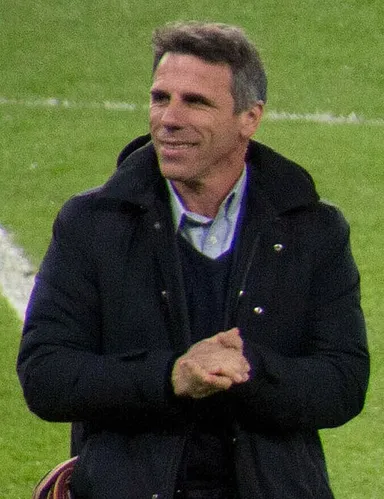 Photo: @cfcunofficial (Chelsea Debs) London from London, UK. Source and license in Image credits.
Gianfranco Zola
Gianfranco Zola brought the imagination of a second striker to Chelsea’s revival in the late 1990s. A deft first touch, disguised pass or precisely struck free-kick could change an attack without requiring a physical advantage. His winning goal in the 1998 Cup Winners’ Cup final became the defining moment of a seven-season spell.
Senior club · all competitions
Completed club records only; not a complete career total.
Active club snapshots and records with another scope are excluded. Assist totals are not combined across incompatible definitions.
Stored archive snapshots, not live counters. Missing values are not zero; records with different scopes are never added together.
G/M = goals ÷ appearances. G+A = goals + assists. Per-90 metrics use documented minutes.
Senior international · all competitions
Stored archive snapshots, not live counters. Missing values are not zero; records with different scopes are never added together.
G/M = goals ÷ appearances. G+A = goals + assists. Per-90 metrics use documented minutes.
In context
Zola helped Chelsea become a side capable of winning cups while making creative freedom part of its identity. His record belongs to a player who could link midfield and attack as well as decide a final. The absence of a Chelsea league title does not diminish that contribution, and the 1998 Cup Winners’ Cup must not be confused with the Champions League.
Reading the game
Gianfranco Zola brought the imagination of a second striker to Chelsea’s revival in the late 1990s. A deft first touch, disguised pass or precisely struck free-kick could change an attack without requiring a physical advantage. His winning goal in the 1998 Cup Winners’ Cup final became the defining moment of a seven-season spell.
Historical references support the chronology; tactical explanations are museum editorial analysis.
Historical references: Chelsea: Zola’s competitive record and club honours ↗ · Chelsea: Zola’s 1997 award, 1998 final winner and technical milestones ↗ · Parma: Zola’s 149 competitive appearances, 64 goals and European honours ↗ · National Football Teams: Zola’s identity, Italy matches and league seasons ↗
Career
| Period | Club | Apps | Goals | G/M |
|---|---|---|---|---|
| 1984—1986 | NuoreseAvailable league appearances and goals only; cup matches and unverified assists are outside this record. Senior club · league only | 31 | 10 | 0.32 |
| 1986—1989 | TorresAvailable league appearances and goals only; cup matches and unverified assists are outside this record. Senior club · league only | 88 | 21 | 0.24 |
| 1989—1993 | NapoliAvailable league appearances and goals only; cup matches and unverified assists are outside this record. Senior club · league only | 105 | 32 | 0.30 |
| 1993—1996 | ParmaParma’s official competitive record: 149 appearances and 64 goals, including the separate Serie A subset of 102 appearances and 49 goals. Senior club · all competitions | 149 | 64 | 0.43 |
| 1996—2003 | Chelsea312 competitive appearances and 80 goals; the Premier League subset is 229 appearances, 59 goals and 42 assists. Senior club · all competitions Senior · #25 | 312 | 80 | 0.26 |
| 2003—2005 | CagliariAvailable league appearances and goals only; cup matches and unverified assists are outside this record. Senior club · league only | 74 | 22 | 0.30 |
Stored archive snapshots, not live counters. Missing values are not zero; records with different scopes are never added together.
G/M = goals ÷ appearances. G+A = goals + assists. Per-90 metrics use documented minutes.
Honours
Napoli · league
Napoli · domestic cup
Parma · continental
Parma · continental
Chelsea · domestic cup
Chelsea · domestic cup
Chelsea · continental
Chelsea · continental
Chelsea · domestic cup
Chelsea · individual
Story
Club chapter
Zola’s early senior football was with Nuorese and Torres in Sardinia. At Napoli he was part of the 1989/90 Serie A champions, alongside Diego Maradona. He moved to Parma in 1993, winning the 1993 UEFA Super Cup and the 1994/95 UEFA Cup. Parma records 149 competitive appearances and 64 goals; his 102 Serie A appearances and 49 goals are a separate subset.
Explore club contextClub chapter
Zola joined Chelsea from Parma in November 1996 and won the writers’ player award in his first English season. He helped win the 1997 and 2000 FA Cups, the 1998 League Cup and the 1998 Cup Winners’ Cup. In the latter final against Stuttgart, he came off the bench to score the only goal. A late resurgence brought 14 league goals in 2002/03 before his return to Sardinia.
Explore club contextCareer chapter
Zola joined Cagliari in 2003 and helped the club earn promotion from Serie B in 2003/04. He scored 13 goals in 43 league matches that season, then nine in 31 Serie A appearances in 2004/05. He retired as a player in 2005. Promotion is recorded as a career achievement, not a Serie B championship, and later coaching work is outside this playing dossier.
Profile
Trequartista
Gianfranco Zola brought the imagination of a second striker to Chelsea’s revival in the late 1990s. A deft first touch, disguised pass or precisely struck free-kick could change an attack without requiring a physical advantage. His winning goal in the 1998 Cup Winners’ Cup final became the defining moment of a seven-season spell.
Turning the first touch into the next attacking option
Precision from a dead ball and invention near goal
Illustrative role zones · not tracking data
Zola’s touch could do two jobs at once: secure the ball and move it beyond the defender’s line of approach. Receiving slightly behind a striker gave him room to turn, combine or slip a pass into the box. His 1997 FA Cup semi-final goal against Wimbledon illustrates how control and a change of body direction could become a shooting chance. This is an editorial reading of the action, not a measured first-touch statistic.
Zola offered more than one way to finish an attack. A free-kick could punish a foul near the box; an improvised touch could redirect a cross before defenders reset. The free-kick against Barcelona in 2000 and the back-flick volley against Norwich in 2002 provide historical examples. They support an assessment of touch and technique, without turning spectacular moments into an invented career conversion rate.
Historical references: Chelsea: Zola’s 1997 award, 1998 final winner and technical milestones ↗
Editorial assessment
Historical role analysis
Seven qualitative bands · not measured scores
Editorial assessment of this period, not an official rating.
These bands are not percentiles or an overall ranking. The chart’s geometry represents ordered bands, not equal differences in ability.
Qualitative judgments describe football actions in context. They do not measure personality or medical fitness. Category assessments are editorial summaries, not averages. A lower defensive band describes the player’s role and contribution, not their value to the team.
Chelsea: Zola’s 1997 award, 1998 final winner and technical milestones ↗Reading the game
| Era / team | Primary Role | Tactical Character |
|---|---|---|
| 1996–2003Chelsea | Trequartista | Zola’s touch could do two jobs at once: secure the ball and move it beyond the defender’s line of approach. Receiving slightly behind a striker gave him room to turn, combine or slip a pass into the box. His 1997 FA Cup semi-final goal against Wimbledon illustrates how control and a change of body direction could become a shooting chance. This is an editorial reading of the action, not a measured first-touch statistic. |
Historical references: Chelsea: Zola’s 1997 award, 1998 final winner and technical milestones ↗
Reading the game
Zola’s touch could do two jobs at once: secure the ball and move it beyond the defender’s line of approach. Receiving slightly behind a striker gave him room to turn, combine or slip a pass into the box. His 1997 FA Cup semi-final goal against Wimbledon illustrates how control and a change of body direction could become a shooting chance. This is an editorial reading of the action, not a measured first-touch statistic.
Zola offered more than one way to finish an attack. A free-kick could punish a foul near the box; an improvised touch could redirect a cross before defenders reset. The free-kick against Barcelona in 2000 and the back-flick volley against Norwich in 2002 provide historical examples. They support an assessment of touch and technique, without turning spectacular moments into an invented career conversion rate.
Historical references: Chelsea: Zola’s 1997 award, 1998 final winner and technical milestones ↗
Reading the game
Zola joined Chelsea from Parma in November 1996 and won the writers’ player award in his first English season. He helped win the 1997 and 2000 FA Cups, the 1998 League Cup and the 1998 Cup Winners’ Cup. In the latter final against Stuttgart, he came off the bench to score the only goal. A late resurgence brought 14 league goals in 2002/03 before his return to Sardinia.
Historical references: Chelsea: Zola’s competitive record and club honours ↗ · Chelsea: Zola’s 1997 award, 1998 final winner and technical milestones ↗ · National Football Teams: Zola’s identity, Italy matches and league seasons ↗
Statistics
| Season | Club | Apps | Goals | G/M |
|---|---|---|---|---|
| 2004/05 | Cagliari Senior club · league only | 31 | 9 | 0.29 |
| 2003/04 | Cagliari Senior club · league only | 43 | 13 | 0.30 |
| 2002/03 | Chelsea Senior club · league only | 38 | 14 | 0.37 |
| 1998/99 | Chelsea Senior club · league only | 37 | 13 | 0.35 |
| 1996/97 | Chelsea Senior club · league only | 23 | 8 | 0.35 |
| 1994/95 | Parma Senior club · league only | 32 | 19 | 0.59 |
Stored archive snapshots, not live counters. Missing values are not zero; records with different scopes are never added together.
G/M = goals ÷ appearances. G+A = goals + assists. Per-90 metrics use documented minutes.
Chelsea’s 312 competitive appearances and 80 goals and Parma’s 149 and 64 form a documented club subtotal, not a complete career total. League-only records at other clubs stay separate. The selected seasons are league-only; their missing assists are not zeros. Premier League career assists use the league’s definition and are not extrapolated to all competitions.
Club competitions
| Competition | Apps | Goals | Assists | G/M | G+A/M |
|---|---|---|---|---|---|
Premier League1996/97–2002/03Premier League matches only, excluding domestic cups and European competitions. Assists follow the Premier League’s statistical definition. Performance record
| 229 | 59 | 42 | 0.26 | 0.44 |
Stored archive snapshots, not live counters. Missing values are not zero; records with different scopes are never added together.
G/M = goals ÷ appearances. G+A = goals + assists. Per-90 metrics use documented minutes.
International
International career
Zola scored ten goals in 35 senior Italy appearances from 1991 to 1997. His only 1994 World Cup appearance came as a substitute against Nigeria, when he was sent off; Italy’s runner-up finish does not mean he played in the final. He also appeared in all three group matches at Euro 1996. His Wembley winner in February 1997 was a World Cup qualifier, not a finals match.
Reading the game
Zola helped Chelsea become a side capable of winning cups while making creative freedom part of its identity. His record belongs to a player who could link midfield and attack as well as decide a final. The absence of a Chelsea league title does not diminish that contribution, and the 1998 Cup Winners’ Cup must not be confused with the Champions League.
Historical references: Chelsea: Zola’s competitive record and club honours ↗ · Chelsea: Zola’s 1997 award, 1998 final winner and technical milestones ↗ · Parma: Zola’s 149 competitive appearances, 64 goals and European honours ↗ · National Football Teams: Zola’s identity, Italy matches and league seasons ↗
Archive
Trequartista · editorial peak 1996—2003
Ruud Gullit · Gianluca Vialli · Claudio Ranieri · Nevio Scala · Carlo Ancelotti
Diego Maradona— Overlapping Napoli era · Ruud Gullit— Overlapping Chelsea era · Frank Lampard— Overlapping Chelsea era · John Terry— Overlapping Chelsea era
Maradona’s championship generation — Napoli · A more international Chelsea — Chelsea
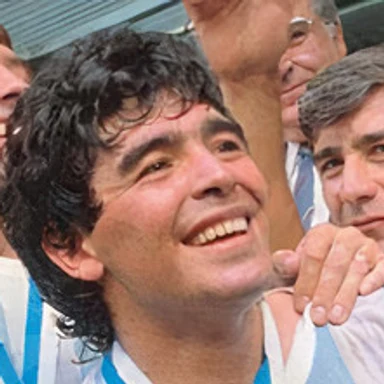 Photo: Unknown author. Source and license in Image credits.
Argentinos Juniors · Boca Juniors · Barcelona
1976—1997 Photo: Barcex. Source and license in Image credits.
Haarlem · Feyenoord · PSV
1979—1998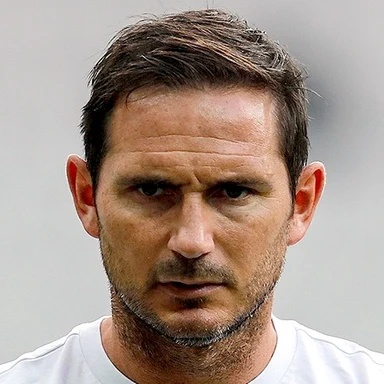 Photo: Mehdi Bolourian / Fars Media Corporation. Source and license in Image credits.
West Ham United · Swansea City · Chelsea
1995—2017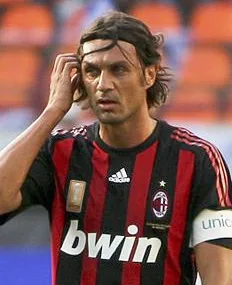
AC Milan
1985—2009
Padova · Juventus · Sydney FC
1991—2014
Parma · Juventus · Paris Saint-Germain
1995—2023Padova · Juventus · Sydney FC
1991—2014 Photo: Евгений Асмолов. Source and license in Image credits.
São Paulo · AC Milan · Real Madrid
2001—2017 Photo: AbolfaZl0990. Source and license in Image credits.
Vicenza · Fiorentina · Juventus
1982—2004Statistics are displayed only within the scope supported by each cited source.
Chelsea FCChelsea: Zola’s competitive record and club honoursChelsea FCChelsea: Zola’s 1997 award, 1998 final winner and technical milestonesParmaParma: Zola’s 149 competitive appearances, 64 goals and European honoursNational Football TeamsNational Football Teams: Zola’s identity, Italy matches and league seasonsPremier LeaguePremier League: Zola’s league appearances, goals and assistsCagliariCagliari: Zola’s return to Sardinia and the 2004 promotionFIFAFIFA: Zola’s dismissal in Italy’s 1994 match against NigeriaSSC NapoliNapoli: the club’s 1990 Italian Super Cup