Defining football actions
- Ball progression
- Generational
- Passing
- Elite
- Defensive reading
- Elite
- Chance creation
- Excellent

Franz Anton Beckenbauer
The defining libero: a defender who advanced with the authority of a playmaker and changed how leadership looked on the ball.
Senior international · all competitions
Stored archive snapshots, not live counters. Missing values are not zero; records with different scopes are never added together.
G/M = goals ÷ appearances. G+A = goals + assists. Per-90 metrics use documented minutes.
In context
FC Bayern records 396 Bundesliga matches and 44 Bundesliga goals from his professional Bayern years. These league-only figures must not be presented as all-competition totals.
Reading the game
Franz Beckenbauer matters because he made the deepest outfield position a place from which to shape an attack. The libero already existed: a defender without a fixed marking assignment could cover behind teammates. Beckenbauer gave that freedom a conspicuous creative purpose. Recovering the ball could be the beginning of a forward movement, with the same player carrying into midfield or selecting a pass that changed the direction of play.
His earlier midfield work helps explain the transition. Moving backwards did not remove his desire to participate in possession; it gave him a different view of the field and different opponents to draw out. Bayern Munich's rise and West Germany's tournament successes made this interpretation visible on the largest stages. Yet the freedom belonged to a team arrangement, with markers and covering teammates making his advances possible. To understand Beckenbauer is therefore to study a relationship: how the player responsible for protecting space could also create it elsewhere. His importance lies in that connection between defensive judgement and attacking initiative, rather than in treating every elegant carry as evidence that he had stopped being a defender.
Historical references support the chronology; tactical explanations are museum editorial analysis.
Historical references: Beckenbauer’s move to the libero role ↗ · West Germany’s attacking structure in the 1972 final ↗ · Franz Beckenbauer — Hall of Fame ↗
Career
| Period | Club |
|---|---|
| 1964—1977 | Bayern MunichThe club’s rise and the invention of the modern libero image. Senior club · league only Captaincy · #5Performance record
|
| 1977—1980 | New York CosmosA first North American spell.Senior · #6 |
| 1980—1982 | Hamburger SVA Bundesliga return away from Munich.Senior · #5 |
| 1983—1983 | New York CosmosA distinct final return spell.Senior · #6 |
Stored archive snapshots, not live counters. Missing values are not zero; records with different scopes are never added together.
G/M = goals ÷ appearances. G+A = goals + assists. Per-90 metrics use documented minutes.
Honours
Bayern Munich · continental
Bayern Munich · continental
Bayern Munich · domestic cup
West Germany · world
West Germany · continental
France Football · individual
Story
Club chapter
Bayern's promotion in 1965 placed Beckenbauer in a young side still establishing itself in the Bundesliga. His development included midfield responsibilities before the libero became his defining role. The change mattered because it moved his technical confidence behind the usual midfield contest: he could see the next line, bring possession forward and choose when to join teammates rather than remain beside a marker.
The club's cup successes and first Bundesliga championship in 1969 gave that development a competitive setting. Alongside Sepp Maier and Gerd Müller, he helped connect distinct functions within the team. Bayern's emergence was collective, and the developing libero gained meaning through the goalkeeper behind him and the attacking options ahead.
Historical references: Beckenbauer’s move to the libero role ↗ · Bayern’s rise and European Cup sequence ↗ · Franz Beckenbauer — Hall of Fame ↗
Explore club contextCareer chapter
The national-team story should not project the later libero backwards onto every tournament. At the 1966 World Cup, Beckenbauer played in midfield; by the European triumph of 1972 he was driving forward from defence, with Günter Netzer supplying another source of invention ahead. Different starting positions changed how he encountered pressure and how far a carry could reorganise the opposition.
The 1974 title brought a different test: captaining a side that had to recover from defeat by East Germany and then an early concession in the final. This chapter joins tactical change to tournament responsibility. It explains how his authority developed without suggesting that one player alone controlled West Germany's response.
Historical references: Beckenbauer’s World Cup roles: 1966 to 1974 ↗ · West Germany’s attacking structure in the 1972 final ↗ · West Germany v Netherlands: the 1974 World Cup final ↗
Club chapter
The European Cup sequence made Bayern's defensive organisation as significant as its finishing. Beckenbauer supplied direction from deep, while Hans-Georg Schwarzenbeck's defensive work helped sustain the partnership. Freedom to advance required a reliable arrangement behind the ball; the attacking libero was part of that division of responsibility, not an exception to it.
The three finals also resist a smooth story of effortless superiority. Schwarzenbeck's late equaliser forced the 1974 replay against Atlético Madrid. Victories over Leeds and Saint-Étienne followed under Dettmar Cramer. Read together, those matches show a side able to survive difficult passages and find decisive moments, with Beckenbauer providing continuity through changes of coach and opponent.
Historical references: Bayern’s rise and European Cup sequence ↗ · Schwarzenbeck and Bayern’s defensive partnership ↗ · Franz Beckenbauer — Hall of Fame ↗
Explore club contextCareer chapter
Leaving Bayern for New York Cosmos in 1977 placed Beckenbauer's reputation in a different football environment. The move broadened the public life of the player, but the later career also requires attention to what he could still contribute on the pitch. A deep organiser could offer positioning and distribution without recreating every surge of his European peak.
Hamburg's own account stresses that injuries limited his impact during the Bundesliga return of 1980–1982, even as he joined a championship-winning squad. That qualification matters: experience and status did not erase physical limits. The subsequent final Cosmos spell closes a playing career whose late chapters should be understood as adaptation, rather than an unchanged prime transported abroad.
Historical references: Beckenbauer’s Hamburg years and injury limitations ↗ · Franz Beckenbauer — Hall of Fame ↗
Profile
Libero
Also plays · Sweeper / Central midfielder
Beckenbauer stepped beyond the defensive line to organise possession, carrying into midfield and turning the spare defender into an attacking advantage.
Progressive carrying
Long passing
Positioning
Leadership
Illustrative role zones · not tracking data
As the spare defender, he could watch a run develop rather than follow one opponent everywhere. The first task was to judge the gap behind the challenge and arrive before it became a shooting lane. Interceptions could make defending appear quiet, but recovery runs, blocks and aerial clearances remained necessary when the first line was beaten. Elegance describes the execution, not an absence of defensive work.
A carry from deep posed a choice to the nearest midfielder: remain with his assignment and allow progress, or step out and expose a teammate behind. Beckenbauer could use close touches to keep both the pass and the next stride available. The gain was often the defender he displaced rather than the distance travelled; a short advance could improve several passing angles at once.
His right-footed distribution could bend towards a runner without a large preparatory change in his stance. That reduced the warning available to an opponent reading his body. A curved pass also approached its destination from a different angle than a straight delivery. The useful question is which lane the ball could enter and whether the receiver could continue forward, rather than how decorative the contact looked.
After releasing the ball, he could keep moving for a return pass. This changed the problem from stopping a dribbler to tracking an extra runner, particularly when a forward such as Müller provided the lay-off. The exchange was effective only if the return lane stayed open. Teammates also had to account for the space he had left behind when the combination failed.
The libero's decision to stay could matter as much as the decision to advance. When markers were occupied, remaining behind them preserved cover and a route for recycling possession. When support was secure, he could join the next line. His role therefore joined two readings of the same situation: where the attack could improve, and where the team would be exposed if it lost the ball.
Historical references: Beckenbauer: defending, carrying and combinations ↗ · Beckenbauer’s outside-foot distribution ↗ · Beckenbauer’s move to the libero role ↗ · West Germany’s attacking structure in the 1972 final ↗ · Beckenbauer’s anticipation and defensive leadership ↗ · Schwarzenbeck and Bayern’s defensive partnership ↗
Reading the game
| Era / team | Primary Role | Tactical Character |
|---|---|---|
| 1964–1966Bayern Munich | Emerging midfielder | Develops carrying and distribution while Bayern establishes itself in the Bundesliga. |
| 1966West Germany | World Cup midfielder | Starts in midfield, combining defensive duties with forward involvement rather than operating as the later libero. |
| 1966–1977Bayern Munich | Attacking libero behind the markers | From 1966/67, turns a spare defensive position into a route for carrying and passing, supported by the stopper. |
| 1972–1974West Germany | Tournament captain and libero | Connects the back line to creative midfielders; balances advances with cover as the team changes between tournaments. |
| 1977–1983New York Cosmos / Hamburger SV | Veteran organiser in new settings | Carries experience into new teams; injuries constrain the Hamburg years, so the late period requires its own assessment. |
Historical references: Beckenbauer’s outside-foot distribution ↗ · Beckenbauer’s move to the libero role ↗ · Beckenbauer’s World Cup roles: 1966 to 1974 ↗ · West Germany’s attacking structure in the 1972 final ↗ · West Germany v Netherlands: the 1974 World Cup final ↗ · Beckenbauer’s Hamburg years and injury limitations ↗ · Schwarzenbeck and Bayern’s defensive partnership ↗ · Franz Beckenbauer — Hall of Fame ↗
Reading the game
Recovering possession and building an attack are often evaluated separately. Beckenbauer made their connection visible: the angle of an interception or the first touch after it could determine the next move. A successful defensive action therefore had value beyond ending danger. It could leave his team facing forward, with opponents still arranged for the attack they had just lost.
A midfielder already has a place in the opposition's marking plan. A libero arriving from behind can ask a new question after that plan has been set. Beckenbauer's forward involvement was distinctive because it began outside the immediate midfield contest. The effect depended on timing: arriving while opponents were occupied could produce a temporary advantage that a permanent midfield position would not.
Distribution was more than identifying an unmarked shirt. The weight and curvature of a pass could invite a teammate to run, keep that runner facing the goal or move play away from pressure. Beckenbauer's technique expanded those options. This helps explain why a deep player could influence attacking rhythm without needing to supply the final pass of every move.
Schwarzenbeck's presence is essential to reading the famous image of the roaming Kaiser. Their different responsibilities allowed one defender to engage while the other interpreted the space around that contest. The partnership challenges the idea that technical brilliance eliminates dependence on teammates. Beckenbauer's freedom was unusually productive because it operated within shared defensive work, with others making their own decisive contributions.
Historical references: Beckenbauer’s outside-foot distribution ↗ · Beckenbauer’s move to the libero role ↗ · West Germany’s attacking structure in the 1972 final ↗ · Beckenbauer’s anticipation and defensive leadership ↗ · Schwarzenbeck and Bayern’s defensive partnership ↗
Reading the game
Central midfielder with attacking licence
The 1966 tournament is a useful corrective to the familiar image of a permanent sweeper. Beckenbauer operated in midfield and could carry an attack towards the penalty area; his debut against Switzerland included two goals. This version shows the attacking instincts that would later travel backwards with him. It belongs among his representative peaks because the role was different, not because every early performance should be judged as a rehearsal for 1974.
Attacking libero alongside a creative midfield
The opening goal in the final offers a specific example: Beckenbauer brought the ball out before Netzer's shot and the subsequent sequence finished by Müller. His advance helped connect the defence to an already creative midfield. The lesson is complementarity. He did not need to replace Netzer as the team's playmaker; arriving from a different line gave West Germany another way to initiate an attack.
Captain and covering libero
The final against the Netherlands tested defensive organisation as much as attacking freedom. West Germany conceded before settling into the game and recovered to win. Vogts carried the close-marking task against Cruyff; Beckenbauer's role belonged to the wider defensive arrangement. This peak should be read through composure, cover and collective adjustment, rather than retold as a personal duel in which the captain single-handedly stopped Dutch football.
Libero and long-range distributor
Bayern's European run displayed a club version built on familiar partnerships and varied routes forward. The 1976 semi-final against Real Madrid is a useful passing reference: Beckenbauer's curved deliveries could release runners beyond the immediate midfield exchanges. By this phase, carrying and long distribution were alternative answers to the same question of progression. The three titles frame the period; the choice between those answers explains the player.
Historical references: Beckenbauer’s outside-foot distribution ↗ · Beckenbauer’s World Cup roles: 1966 to 1974 ↗ · West Germany’s attacking structure in the 1972 final ↗ · West Germany v Netherlands: the 1974 World Cup final ↗ · Bayern’s rise and European Cup sequence ↗
International
International career
West Germany senior record: 103 appearances and 14 goals, verified by FIFA.
Reading the game
Beckenbauer left a lasting argument about what a defender could contribute. His case broadened the discussion beyond stopping an opponent: the defender could help decide where possession travelled and when the team gained an extra participant in attack. That remains a useful way to read players whose influence begins well before an assist. It also restores the importance of the supporting defender, whose positioning makes another player's freedom sustainable.
The historical distinction matters. A spare libero behind man-markers is not identical to a centre-back holding a modern zonal line. Copying the old starting position would not automatically reproduce the advantage in another system. The transferable idea is the decision to use defensive security as a basis for constructive possession, while accepting responsibility for the space left behind. Bayern's European era and West Germany's international successes gave that idea an enduring set of images. His playing history brings several versions into view: the young midfielder, the attacking libero, the defender required to clear danger and the veteran negotiating physical decline. Together those versions explain an influence that the nickname and trophy photographs alone cannot.
Historical references: Beckenbauer’s move to the libero role ↗ · Bayern’s rise and European Cup sequence ↗ · Beckenbauer’s Hamburg years and injury limitations ↗ · Schwarzenbeck and Bayern’s defensive partnership ↗
Archive
Libero · editorial peak 1966—1976
Zlatko Čajkovski · Udo Lattek · Dettmar Cramer
Gerd Müller— Overlapping Bayern Munich era · Sepp Maier— Overlapping Bayern Munich era · Karl-Heinz Rummenigge— Overlapping Bayern Munich era
Promotion to European dynasty — Bayern Munich
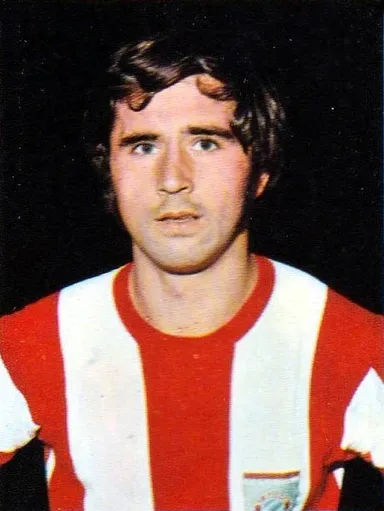 Photo: Unknown photographer / Panini, circa 1973. Source and license in Image credits.
TSV 1861 Nördlingen · Bayern Munich · Fort Lauderdale Strikers
1963—1981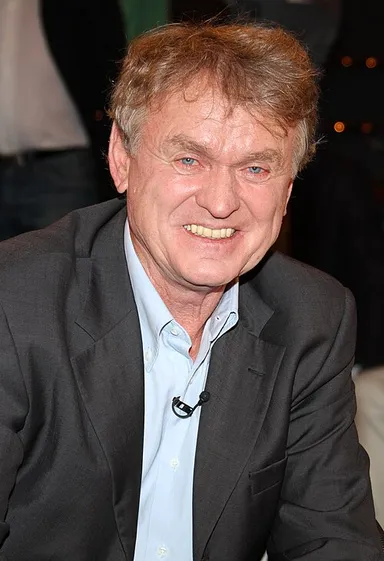 Photo: Udo Grimberg. Source and license in Image credits.
Bayern Munich
1962—1979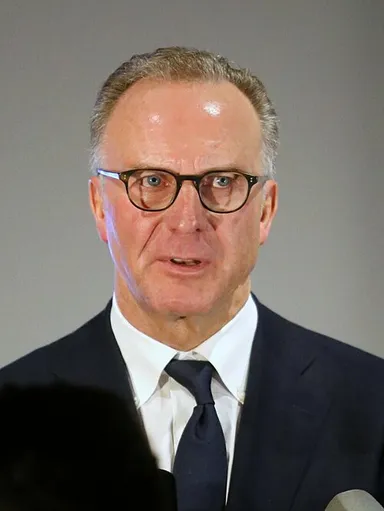 Photo: Michael Lucan. Source and license in Image credits.
Bayern Munich · Inter Milan · Servette FC
1974—1989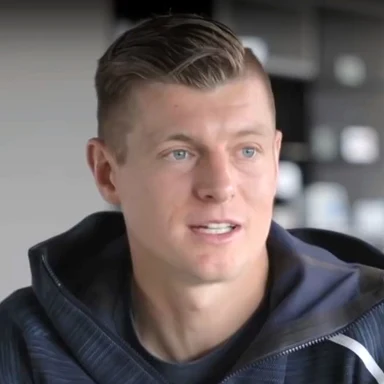 Photo: Real Madrid (YouTube channel). Source and license in Image credits.
Bayern Munich · Bayer Leverkusen · Real Madrid
2007—2024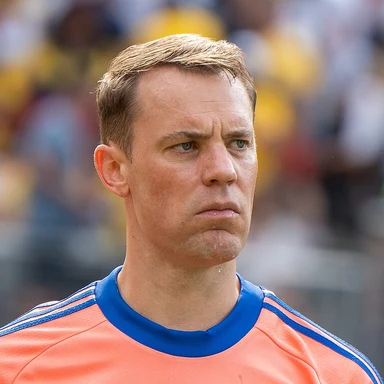 Photo: Bryan Berlin / WikiPortraits. Source and license in Image credits.
Schalke 04 · Bayern Munich
2006—Present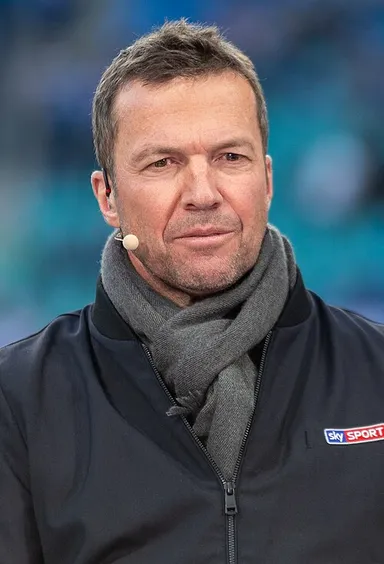 Photo: Steffen Prößdorf. Source and license in Image credits.
Borussia Mönchengladbach · Bayern Munich · Inter Milan
1979—2000Statistics are displayed only within the scope supported by each cited source.
FC BayernBeckenbauer: defending, carrying and combinationsFC BayernBeckenbauer’s outside-foot distributionFranz Beckenbauer official websiteBeckenbauer’s move to the libero roleFIFABeckenbauer’s World Cup roles: 1966 to 1974UEFAWest Germany’s attacking structure in the 1972 finalFIFAWest Germany v Netherlands: the 1974 World Cup finalFC BayernBayern’s rise and European Cup sequenceHamburger SVBeckenbauer’s Hamburg years and injury limitationsGerman Football AssociationBeckenbauer’s anticipation and defensive leadershipFC BayernSchwarzenbeck and Bayern’s defensive partnershipWikipedia (cited honours reference)franz beckenbauer — selected senior honoursFIFAA tribute to Franz BeckenbauerFC Bayern MunichFranz Beckenbauer — Hall of Fame