
Bundesliga
Bayern Munich · league
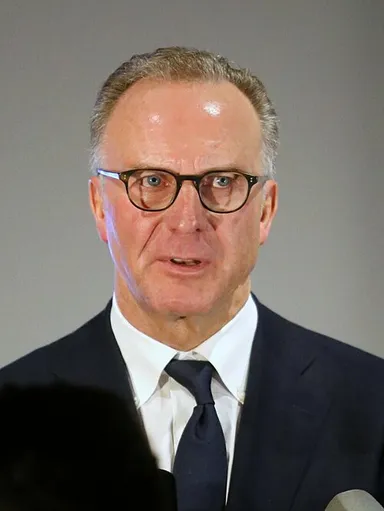 Photo: Michael Lucan. Source and license in Image credits.
Karl-Heinz Rummenigge
Karl-Heinz Rummenigge combined a winger’s acceleration and dribbling with a centre-forward’s scoring threat. After joining Bayern in 1974, he became the attacking face of the club’s renewal alongside Paul Breitner. Consecutive Ballon d’Or awards in 1980 and 1981 matched a peak built on movement, carrying power and goals, before spells at Inter and Servette.
Senior club · all competitions
Completed club records only; not a complete career total.
Active club snapshots and records with another scope are excluded. Assist totals are not combined across incompatible definitions.
Stored archive snapshots, not live counters. Missing values are not zero; records with different scopes are never added together.
G/M = goals ÷ appearances. G+A = goals + assists. Per-90 metrics use documented minutes.
Senior international · all competitions
Stored archive snapshots, not live counters. Missing values are not zero; records with different scopes are never added together.
G/M = goals ÷ appearances. G+A = goals + assists. Per-90 metrics use documented minutes.
In context
Rummenigge bridged two Bayern generations: he learned beside the 1970s European champions and then led the attack of a renewed domestic contender. Two Ballon d’Or awards and two World Cup finals as captain give that playing career its own standing. The club’s later triumphs under his executive leadership should not inflate his personal playing trophy count.
Reading the game
Karl-Heinz Rummenigge combined a winger’s acceleration and dribbling with a centre-forward’s scoring threat. After joining Bayern in 1974, he became the attacking face of the club’s renewal alongside Paul Breitner. Consecutive Ballon d’Or awards in 1980 and 1981 matched a peak built on movement, carrying power and goals, before spells at Inter and Servette.
Historical references support the chronology; tactical explanations are museum editorial analysis.
Historical references: Bayern: Rummenigge’s playing career and honours ↗ · German FA: Rummenigge’s development, EURO title and World Cup finals ↗
Career
| Period | Club |
|---|---|
| 1974—1984 | Bayern MunichRummenigge arrived from Borussia Lippstadt in 1974, after Bayern’s first European Cup victory. He belonged to the squads that won the 1975 and 1976 editions: an unused substitute in the 1975 final, he started the 1976 final against Saint-Étienne. Those were his two European Cups as a player; the 1974 title predates his arrival. Senior club · all competitions Performance record
|
| 1984—1987 | Inter MilanRummenigge moved to Inter in 1984 and played there for three seasons. Inter’s archive records 107 competitive appearances and 42 goals, including 64 Serie A matches and 24 league goals. He joined Servette in 1987 and ended his playing career in 1989 as the Swiss league’s leading scorer. His later Bayern executive career is separate from this playing record. Senior club · all competitions Performance record
|
| 1987—1989 | Servette FCRummenigge moved to Inter in 1984 and played there for three seasons. Inter’s archive records 107 competitive appearances and 42 goals, including 64 Serie A matches and 24 league goals. He joined Servette in 1987 and ended his playing career in 1989 as the Swiss league’s leading scorer. His later Bayern executive career is separate from this playing record. |
Stored archive snapshots, not live counters. Missing values are not zero; records with different scopes are never added together.
G/M = goals ÷ appearances. G+A = goals + assists. Per-90 metrics use documented minutes.
Honours
Bayern Munich · league
Bayern Munich · domestic cup
Bayern Munich · continental
Bayern Munich · world
West Germany · continental
Karl-Heinz Rummenigge · individual
Karl-Heinz Rummenigge · individual
Karl-Heinz Rummenigge · individual
Karl-Heinz Rummenigge · individual
Story
Club chapter
Rummenigge arrived from Borussia Lippstadt in 1974, after Bayern’s first European Cup victory. He belonged to the squads that won the 1975 and 1976 editions: an unused substitute in the 1975 final, he started the 1976 final against Saint-Étienne. Those were his two European Cups as a player; the 1974 title predates his arrival.
Explore club contextClub chapter
With Paul Breitner back at Bayern, Rummenigge supplied the forward thrust of a new attacking partnership. He scored 26 Bundesliga goals in 1979/80 and 29 in 1980/81, winning the scoring title as Bayern won both championships. His third Bundesliga scoring crown came with 26 goals in 1983/84, when he also won his second German Cup.
Explore club contextClub chapter
Rummenigge moved to Inter in 1984 and played there for three seasons. Inter’s archive records 107 competitive appearances and 42 goals, including 64 Serie A matches and 24 league goals. He joined Servette in 1987 and ended his playing career in 1989 as the Swiss league’s leading scorer. His later Bayern executive career is separate from this playing record.
Explore club contextProfile
Complete Forward
Also plays · Inside Forward
Karl-Heinz Rummenigge combined a winger’s acceleration and dribbling with a centre-forward’s scoring threat. After joining Bayern in 1974, he became the attacking face of the club’s renewal alongside Paul Breitner. Consecutive Ballon d’Or awards in 1980 and 1981 matched a peak built on movement, carrying power and goals, before spells at Inter and Servette.
Diagonal runs from the flanks
Close control at attacking speed
Finishing
Illustrative role zones · not tracking data
Rummenigge could begin outside a centre-back’s line of sight, accelerate diagonally and arrive in a finishing position. That movement made him more than a stationary penalty-area striker: the threat came from changing the angle of attack. Moving between wide and central spaces asked defenders to adjust their position before they could contest the ball.
The DFB describes close control and dynamic dribbling as central to Rummenigge’s game. Keeping the ball within reach while accelerating let him turn a carry into a shot, with right-footed finishes, left-footed finishes and headers in his range. He could threaten the goal before the defence had reset around his new position.
Historical references: German FA: Rummenigge’s development, EURO title and World Cup finals ↗
Editorial assessment
Historical role analysis
Seven qualitative bands · not measured scores
Editorial assessment of this period, not an official rating.
These bands are not percentiles or an overall ranking. The chart’s geometry represents ordered bands, not equal differences in ability.
Qualitative judgments describe football actions in context. They do not measure personality or medical fitness. Category assessments are editorial summaries, not averages. A lower defensive band describes the player’s role and contribution, not their value to the team.
German FA: Rummenigge’s development, EURO title and World Cup finals ↗Reading the game
| Era / team | Primary Role | Tactical Character |
|---|---|---|
| 1974–1989 | Close control at attacking speed | The DFB describes close control and dynamic dribbling as central to Rummenigge’s game. Keeping the ball within reach while accelerating let him turn a carry into a shot, with right-footed finishes, left-footed finishes and headers in his range. He could threaten the goal before the defence had reset around his new position. |
| 1979–1984 | Diagonal runs from the flanks | Rummenigge could begin outside a centre-back’s line of sight, accelerate diagonally and arrive in a finishing position. That movement made him more than a stationary penalty-area striker: the threat came from changing the angle of attack. Moving between wide and central spaces asked defenders to adjust their position before they could contest the ball. |
Historical references: German FA: Rummenigge’s development, EURO title and World Cup finals ↗
Reading the game
Rummenigge could begin outside a centre-back’s line of sight, accelerate diagonally and arrive in a finishing position. That movement made him more than a stationary penalty-area striker: the threat came from changing the angle of attack. Moving between wide and central spaces asked defenders to adjust their position before they could contest the ball.
The DFB describes close control and dynamic dribbling as central to Rummenigge’s game. Keeping the ball within reach while accelerating let him turn a carry into a shot, with right-footed finishes, left-footed finishes and headers in his range. He could threaten the goal before the defence had reset around his new position.
Historical references: German FA: Rummenigge’s development, EURO title and World Cup finals ↗
Reading the game
With Paul Breitner back at Bayern, Rummenigge supplied the forward thrust of a new attacking partnership. He scored 26 Bundesliga goals in 1979/80 and 29 in 1980/81, winning the scoring title as Bayern won both championships. His third Bundesliga scoring crown came with 26 goals in 1983/84, when he also won his second German Cup.
Historical references: Bayern: Rummenigge’s playing career and honours ↗ · German FA: Rummenigge’s development, EURO title and World Cup finals ↗ · National Football Teams: Rummenigge’s identity and selected league seasons ↗
Statistics
| Season | Club | Apps | Goals | G/M |
|---|---|---|---|---|
| 1985/86 | Inter Milan Senior club · league only | 24 | 13 | 0.54 |
| 1983/84 | Bayern Munich Senior club · league only | 29 | 26 | 0.90 |
| 1980/81 | Bayern Munich Senior club · league only | 34 | 29 | 0.85 |
| 1979/80 | Bayern Munich Senior club · league only | 34 | 26 | 0.76 |
| 1975/76 | Bayern Munich Senior club · league only | 32 | 8 | 0.25 |
| 1974/75 | Bayern Munich Senior club · league only | 21 | 5 | 0.24 |
Stored archive snapshots, not live counters. Missing values are not zero; records with different scopes are never added together.
G/M = goals ÷ appearances. G+A = goals + assists. Per-90 metrics use documented minutes.
Bayern’s complete competitive record is 422 appearances and 217 goals; its Bundesliga subset is 310 appearances and 162 goals. Inter’s 107 appearances and 42 goals also cover all competitions. The season table contains selected league records only. Servette’s full appearance total and historical assists remain unverified here, so no complete career total is calculated.
Club competitions
| Competition | Apps | Goals | G/M |
|---|---|---|---|
Bundesliga1974/75–1983/84Bayern’s complete competitive record is 422 appearances and 217 goals; its Bundesliga subset is 310 appearances and 162 goals. Inter’s 107 appearances and 42 goals also cover all competitions. The season table contains selected league records only. Servette’s full appearance total and historical assists remain unverified here, so no complete career total is calculated. | 310 | 162 | 0.52 |
Serie A1984/85–1986/87Bayern’s complete competitive record is 422 appearances and 217 goals; its Bundesliga subset is 310 appearances and 162 goals. Inter’s 107 appearances and 42 goals also cover all competitions. The season table contains selected league records only. Servette’s full appearance total and historical assists remain unverified here, so no complete career total is calculated. | 64 | 24 | 0.38 |
Stored archive snapshots, not live counters. Missing values are not zero; records with different scopes are never added together.
G/M = goals ÷ appearances. G+A = goals + assists. Per-90 metrics use documented minutes.
International
International career
Rummenigge scored 45 goals in 95 senior appearances for West Germany from 1976 to 1986. He won EURO 1980 and captained the teams that finished World Cup runners-up in 1982 and 1986. His goal in the 1986 final helped Germany recover from 2–0 down, but Argentina won 3–2; a World Cup title is not part of his playing honours.
Reading the game
Rummenigge bridged two Bayern generations: he learned beside the 1970s European champions and then led the attack of a renewed domestic contender. Two Ballon d’Or awards and two World Cup finals as captain give that playing career its own standing. The club’s later triumphs under his executive leadership should not inflate his personal playing trophy count.
Historical references: Bayern: Rummenigge’s playing career and honours ↗ · German FA: Rummenigge’s development, EURO title and World Cup finals ↗
Archive
Complete Forward · editorial peak 1979—1981
Udo Lattek · Dettmar Cramer · Pál Csernai · Jupp Derwall · Franz Beckenbauer
Franz Beckenbauer— Overlapping Bayern Munich era · Gerd Müller— Overlapping Bayern Munich era · Sepp Maier— Overlapping Bayern Munich era · Lothar Matthäus— Overlapping Germany era
Promotion to European dynasty — Bayern Munich · Breitner, Rummenigge and Bayern’s renewal — Bayern Munich · Trapattoni’s Inter — Inter Milan

Bayern Munich · New York Cosmos · Hamburger SV
1964—1983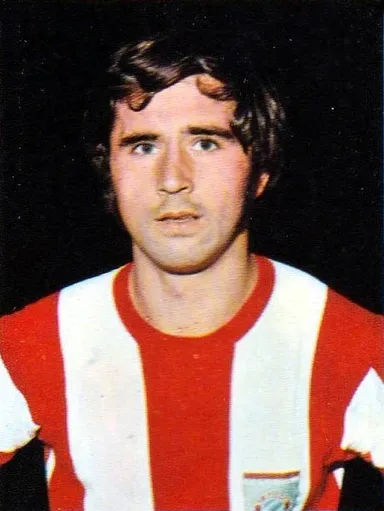 Photo: Unknown photographer / Panini, circa 1973. Source and license in Image credits.
TSV 1861 Nördlingen · Bayern Munich · Fort Lauderdale Strikers
1963—1981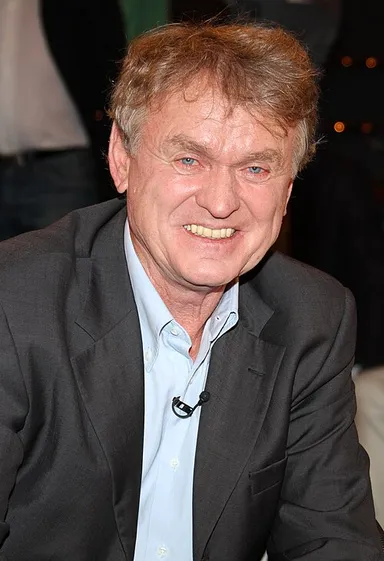 Photo: Udo Grimberg. Source and license in Image credits.
Bayern Munich
1962—1979Bayern Munich · New York Cosmos · Hamburger SV
1964—1983 Photo: Real Madrid (YouTube channel). Source and license in Image credits.
Bayern Munich · Bayer Leverkusen · Real Madrid
2007—2024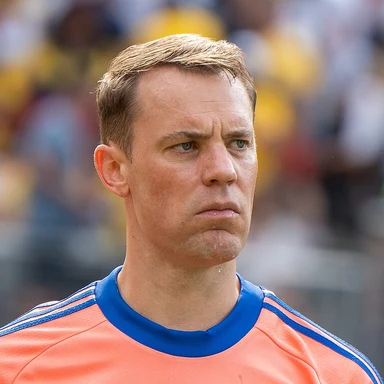 Photo: Bryan Berlin / WikiPortraits. Source and license in Image credits.
Schalke 04 · Bayern Munich
2006—Present
AS Monaco · Juventus · Arsenal
1994—2014
Cruzeiro · PSV · Barcelona
1993—2011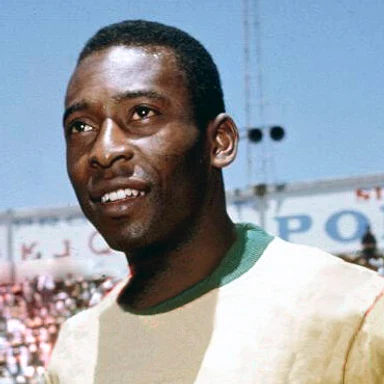 Photo: Unknown author. Source and license in Image credits.
Santos · New York Cosmos
1956—1977Statistics are displayed only within the scope supported by each cited source.
FC Bayern MünchenBayern: Rummenigge’s playing career and honoursBundesligaBundesliga: Rummenigge’s 422 Bayern appearances and 217 goalsGerman Football AssociationGerman FA: Rummenigge’s development, EURO title and World Cup finalsInterInter: Rummenigge’s 107 official matches, 42 goals and competition breakdownNational Football TeamsNational Football Teams: Rummenigge’s identity and selected league seasonsGerman Football AssociationGerman FA: senior international caps and goals register