English First Division
Liverpool · league
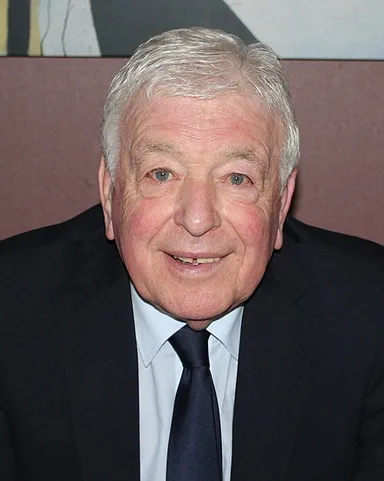 Photo: Rebecca Boardman. Source and license in Image credits.
Ian Robert Callaghan
Ian Callaghan linked Liverpool’s ascent from the Second Division to its first European Cup victories. Initially a right winger, he later brought his passing, awareness and stamina into central midfield. His club-record 857 competitive appearances reflect both longevity and the ability to remain useful as the team and his own role changed.
Senior club · all competitions
Completed club records only; not a complete career total.
Active club snapshots and records with another scope are excluded. Assist totals are not combined across incompatible definitions.
Stored archive snapshots, not live counters. Missing values are not zero; records with different scopes are never added together.
G/M = goals ÷ appearances. G+A = goals + assists. Per-90 metrics use documented minutes.
Senior international · all competitions
Stored archive snapshots, not live counters. Missing values are not zero; records with different scopes are never added together.
G/M = goals ÷ appearances. G+A = goals + assists. Per-90 metrics use documented minutes.
In context
Callaghan’s record belongs to a footballer who adapted, rather than simply lasted. Wing service for Hunt and St John gave way to midfield connections for Liverpool’s next generation. Five top-flight titles and two European Cup winning campaigns mark that continuity. The 1974 writers’ award recognised a player whose influence was not captured by his modest goal total.
Reading the game
Ian Callaghan linked Liverpool’s ascent from the Second Division to its first European Cup victories. Initially a right winger, he later brought his passing, awareness and stamina into central midfield. His club-record 857 competitive appearances reflect both longevity and the ability to remain useful as the team and his own role changed.
Historical references support the chronology; tactical explanations are museum editorial analysis.
Historical references: Liverpool: Callaghan’s record appearances, honours and midfield reinvention ↗
Career
| Period | Club | Apps | Goals | G/M |
|---|---|---|---|---|
| 1960—1978 | Liverpool857 competitive appearances and 68 goals, including 640 league appearances and 49 league goals. His senior debut was in April 1960. Senior club · all competitions | 857 | 68 | 0.08 |
| 1978—1978 | Fort Lauderdale StrikersA documented overseas loan; the available league record is kept separate from competitive totals at Liverpool and Swansea. Senior club · league only Loan | 20 | 0 | 0.00 |
| 1978—1981 | Swansea CitySwansea records 91 competitive appearances and one goal. The club’s 1978/79 promotion came from the Third Division, before the later top-flight promotion. Senior club · all competitions | 91 | 1 | 0.01 |
| 1979—1979 | Canberra CityA documented overseas loan; the available league record is kept separate from competitive totals at Liverpool and Swansea. Senior club · league only Loan | 9 | 0 | 0.00 |
| 1981—1981 | Cork UnitedA brief late-career spell, with league-only appearances; unverified cup totals remain unavailable. Senior club · league only | 2 | 0 | 0.00 |
| 1981—1982 | Crewe AlexandraA brief late-career spell, with league-only appearances; unverified cup totals remain unavailable. Senior club · league only | 15 | 0 | 0.00 |
Stored archive snapshots, not live counters. Missing values are not zero; records with different scopes are never added together.
G/M = goals ÷ appearances. G+A = goals + assists. Per-90 metrics use documented minutes.
Honours
Liverpool · league
Liverpool · league
Liverpool · domestic cup
Liverpool · continental
Liverpool · continental
Liverpool · continental
Liverpool · individual
England · world
Story
Club chapter
Callaghan made his senior Liverpool debut on 16 April 1960. On the right wing he helped the club win promotion in 1962 and league titles in 1964 and 1966. His cross supplied St John’s extra-time winner in the 1965 FA Cup final. He played against France at the 1966 World Cup, but did not appear in the final.
Explore club contextClub chapter
After knee surgery in 1970/71, Callaghan returned in a more central role. Three further league titles, two UEFA Cups and the 1974 FA Cup followed; he also won the Football Writers’ Association award in 1974. He started the 1977 European Cup final. In 1978 he was an unused substitute in the final, so the second title records a winning campaign rather than a final appearance.
Explore club contextCareer chapter
Callaghan’s final Liverpool appearance was in March 1978; he joined Swansea that September after a Fort Lauderdale loan. He made 91 competitive appearances for Swansea and helped the club rise from the Third Division in 1978/79. A Canberra loan and later spells at Cork and Crewe extended his career to 1982. He had left before Swansea’s 1981 promotion to the top flight.
Profile
Box-to-Box Midfielder
Also plays · Traditional Winger
Ian Callaghan linked Liverpool’s ascent from the Second Division to its first European Cup victories. Initially a right winger, he later brought his passing, awareness and stamina into central midfield. His club-record 857 competitive appearances reflect both longevity and the ability to remain useful as the team and his own role changed.
Reaching the byline and finding the striker
Keeping midfield connected as the play develops
Illustrative role zones · not tracking data
The early Callaghan gave Liverpool a route around the outside of the defence. By advancing on the right and delivering after drawing the full-back, he could change the angle from which the forwards attacked the ball. The 1965 FA Cup winning cross is a historical example. This is an editorial reading of his wing play, not a complete statistical account of crosses or chances created.
Moving inside changed Callaghan’s task from beating a full-back to helping successive passes connect. A supporting angle, an economical release and a recovery run could keep the side balanced around the ball. His midfield role combined awareness and repeated effort; it should not be mistaken for a modern specialist holding position or described through invented tracking data.
Historical references: Liverpool: Callaghan’s record appearances, honours and midfield reinvention ↗ · LFCHistory.net: Callaghan’s 857 matches, league subset and career chronology ↗ · Swansea: Callaghan’s 91 matches, promotion and 1966 medal ↗ · National Football Museum: Callaghan’s role change and unused 1978 final substitute ↗
Editorial assessment
Historical role analysis
Seven qualitative bands · not measured scores
Editorial assessment of this period, not an official rating.
These bands are not percentiles or an overall ranking. The chart’s geometry represents ordered bands, not equal differences in ability.
Qualitative judgments describe football actions in context. They do not measure personality or medical fitness. Category assessments are editorial summaries, not averages. A lower defensive band describes the player’s role and contribution, not their value to the team.
Liverpool: Callaghan’s record appearances, honours and midfield reinvention ↗Reading the game
| Era / team | Primary Role | Tactical Character |
|---|---|---|
| 1960–1970Liverpool | Traditional Winger | The early Callaghan gave Liverpool a route around the outside of the defence. By advancing on the right and delivering after drawing the full-back, he could change the angle from which the forwards attacked the ball. The 1965 FA Cup winning cross is a historical example. This is an editorial reading of his wing play, not a complete statistical account of crosses or chances created. |
| 1971–1978Liverpool | Box-to-Box Midfielder | Moving inside changed Callaghan’s task from beating a full-back to helping successive passes connect. A supporting angle, an economical release and a recovery run could keep the side balanced around the ball. His midfield role combined awareness and repeated effort; it should not be mistaken for a modern specialist holding position or described through invented tracking data. |
Historical references: Liverpool: Callaghan’s record appearances, honours and midfield reinvention ↗ · LFCHistory.net: Callaghan’s 857 matches, league subset and career chronology ↗ · National Football Museum: Callaghan’s role change and unused 1978 final substitute ↗
Reading the game
The early Callaghan gave Liverpool a route around the outside of the defence. By advancing on the right and delivering after drawing the full-back, he could change the angle from which the forwards attacked the ball. The 1965 FA Cup winning cross is a historical example. This is an editorial reading of his wing play, not a complete statistical account of crosses or chances created.
Moving inside changed Callaghan’s task from beating a full-back to helping successive passes connect. A supporting angle, an economical release and a recovery run could keep the side balanced around the ball. His midfield role combined awareness and repeated effort; it should not be mistaken for a modern specialist holding position or described through invented tracking data.
Historical references: Liverpool: Callaghan’s record appearances, honours and midfield reinvention ↗ · LFCHistory.net: Callaghan’s 857 matches, league subset and career chronology ↗ · Swansea: Callaghan’s 91 matches, promotion and 1966 medal ↗ · National Football Museum: Callaghan’s role change and unused 1978 final substitute ↗
Reading the game
After knee surgery in 1970/71, Callaghan returned in a more central role. Three further league titles, two UEFA Cups and the 1974 FA Cup followed; he also won the Football Writers’ Association award in 1974. He started the 1977 European Cup final. In 1978 he was an unused substitute in the final, so the second title records a winning campaign rather than a final appearance.
Historical references: Liverpool: Callaghan’s record appearances, honours and midfield reinvention ↗ · LFCHistory.net: Callaghan’s 857 matches, league subset and career chronology ↗ · National Football Teams: Callaghan’s identity, four England caps and later clubs ↗ · Swansea: Callaghan’s 91 matches, promotion and 1966 medal ↗ · National Football Museum: Callaghan’s role change and unused 1978 final substitute ↗
Statistics
Stored archive snapshots, not live counters. Missing values are not zero; records with different scopes are never added together.
G/M = goals ÷ appearances. G+A = goals + assists. Per-90 metrics use documented minutes.
Liverpool’s complete competitive record is 857 appearances and 68 goals. The 640 league appearances and 49 goals are a subset spanning the First and Second Divisions. Swansea’s 91 matches are a separate competitive total. The season table follows selected LFCHistory.net league records; historical assists and unverified later-club totals remain unavailable.
Club competitions
| Competition | Apps | Goals | G/M |
|---|---|---|---|
Liverpool league record1959/60–1977/78Liverpool only: league matches across the First and Second Divisions, excluding all cup competitions. | 640 | 49 | 0.08 |
Stored archive snapshots, not live counters. Missing values are not zero; records with different scopes are never added together.
G/M = goals ÷ appearances. G+A = goals + assists. Per-90 metrics use documented minutes.
International
International career
Callaghan won four senior England caps and scored no goals between 1966 and 1977. His only 1966 World Cup appearance was the group match against France. He did not play in the final, but was part of the winning squad and received his winners’ medal in June 2009. His two 1977 caps were not World Cup finals appearances.
Reading the game
Callaghan’s record belongs to a footballer who adapted, rather than simply lasted. Wing service for Hunt and St John gave way to midfield connections for Liverpool’s next generation. Five top-flight titles and two European Cup winning campaigns mark that continuity. The 1974 writers’ award recognised a player whose influence was not captured by his modest goal total.
Historical references: Liverpool: Callaghan’s record appearances, honours and midfield reinvention ↗ · LFCHistory.net: Callaghan’s 857 matches, league subset and career chronology ↗ · National Football Teams: Callaghan’s identity, four England caps and later clubs ↗ · Swansea: Callaghan’s 91 matches, promotion and 1966 medal ↗ · National Football Museum: Callaghan’s role change and unused 1978 final substitute ↗
Archive
Box-to-Box Midfielder · editorial peak 1972—1977
Bill Shankly · Bob Paisley · John Toshack
Kenny Dalglish— Overlapping Liverpool era · Roger Hunt— Overlapping Liverpool era · Ray Clemence— Overlapping Liverpool era · Kevin Keegan— Overlapping Liverpool era
Shankly rebuilds a club — Liverpool · The Boot Room reaches Europe — Liverpool
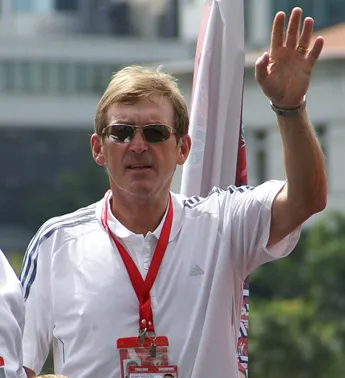 Photo: Saw from Singapore. Source and license in Image credits.
Celtic · Liverpool
1968—1990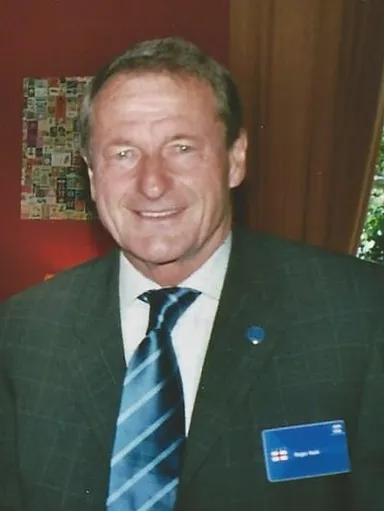 Photo: Christophe95. Source and license in Image credits.
Liverpool · Bolton Wanderers · Hellenic
1959—1972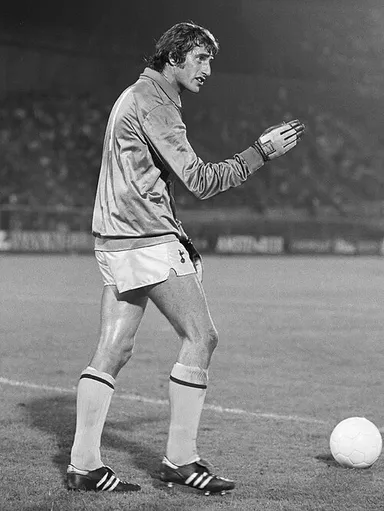 Photo: Marcel Antonisse / Anefo. Source and license in Image credits.
Scunthorpe United · Liverpool · St George
1966—1988
Liverpool · LA Galaxy
1998—2016
Manchester United · Preston North End · Waterford
1956—1976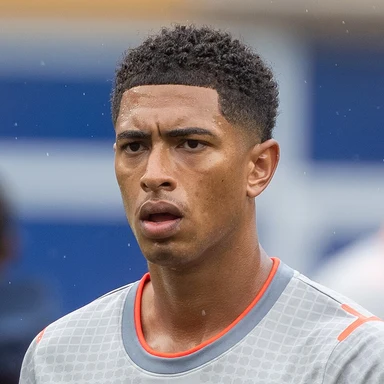 Photo: Bryan Berlin / WikiPortraits. Source and license in Image credits.
Birmingham City · Borussia Dortmund · Real Madrid
2019—PresentLiverpool · LA Galaxy
1998—2016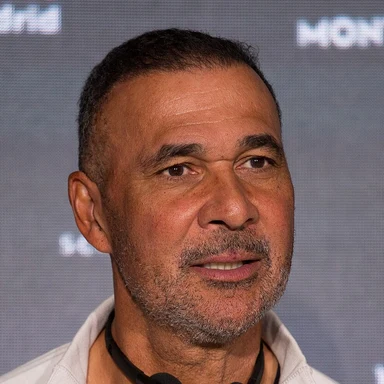 Photo: Barcex. Source and license in Image credits.
Haarlem · Feyenoord · PSV
1979—1998Photo: Bryan Berlin / WikiPortraits. Source and license in Image credits.Birmingham City · Borussia Dortmund · Real Madrid
2019—PresentStatistics are displayed only within the scope supported by each cited source.
Liverpool FCLiverpool: Callaghan’s record appearances, honours and midfield reinventionLFCHistory.netLFCHistory.net: Callaghan’s 857 matches, league subset and career chronologyNational Football TeamsNational Football Teams: Callaghan’s identity, four England caps and later clubsSwansea CitySwansea: Callaghan’s 91 matches, promotion and 1966 medalNational Football MuseumNational Football Museum: Callaghan’s role change and unused 1978 final substitute