
The football behind Raúl González’s ratings
- Attacking movement
- Elite
- Anticipation
- Elite
- Finishing variety
- Elite
- Combination play
- Excellent
- Power
- Good

Raúl González Blanco
A mobile scorer whose anticipation and combinations connected several generations of Real Madrid’s attack.
Senior club · all competitions
Completed club records only; not a complete career total.
Active club snapshots and records with another scope are excluded. Assist totals are not combined across incompatible definitions.
Stored archive snapshots, not live counters. Missing values are not zero; records with different scopes are never added together.
G/M = goals ÷ appearances. G+A = goals + assists. Per-90 metrics use documented minutes.
Senior international · all competitions
Spain · completed senior record, 1996–2006
Stored archive snapshots, not live counters. Missing values are not zero; records with different scopes are never added together.
G/M = goals ÷ appearances. G+A = goals + assists. Per-90 metrics use documented minutes.
In context
Raúl’s importance lies in the preparation behind the finish: movement, cooperation and repeated readiness across different teams.
Reading the game
Raúl makes movement worth watching even when the ball is elsewhere. A defender could appear to have him under control, then lose the useful angle as he drifted towards a partner, waited behind a shoulder or attacked the next rebound. His game was built around making the following action easier: arrive facing goal, give a teammate a short connection, or reach the ball before a goalkeeper could close the space. That intelligence allowed him to score within several very different Madrid attacks. He could support a more fixed striker without surrendering responsibility for finishing. The European finals of 2000 and 2002 give this story memorable goals, but the deeper subject is the work that made chances repeatable. His later Schalke spell matters for the same reason: familiar habits still worked in a different team. Our reference is the 2000/01 season, while the surrounding versions distinguish early mobility, central scoring and veteran adaptation. Spain’s later championship run belongs to a subsequent national side; it should not be added retrospectively to his achievements.
Historical references support the chronology; tactical explanations are museum editorial analysis.
Historical references: Real Madrid: Raúl’s first-team career ↗ · RFEF: Raúl González international record ↗ · Karlsruher SC: Raúl’s Schalke record and cup semi-final ↗
Career
| Period | Club | Apps | Goals | G/M |
|---|---|---|---|---|
| 1994—2010 | Real MadridReal Madrid · completed first-team competitive record. League season rows overlap this total; assists have not been reconciled. Senior club · all competitions Senior · #7 | 741 | 323 | 0.44 |
| 2010—2012 | Schalke 04Schalke 04 · completed first-team competitive record. League season rows overlap this total; assists have not been reconciled. Senior club · all competitions Senior · #7 | 98 | 40 | 0.41 |
| 2012—2014 | Al-SaddAl-Sadd · completed first-team competitive record. League season rows overlap this total; assists have not been reconciled. Senior club · all competitions Senior · #7 | 61 | 16 | 0.26 |
| 2015—2015 | New York CosmosNew York Cosmos · completed first-team competitive record. League season rows overlap this total; assists have not been reconciled. Senior club · all competitions Senior · #7 | 32 | 9 | 0.28 |
Stored archive snapshots, not live counters. Missing values are not zero; records with different scopes are never added together.
G/M = goals ÷ appearances. G+A = goals + assists. Per-90 metrics use documented minutes.
Honours
Real Madrid · league
Real Madrid · continental
Real Madrid · world
Real Madrid · continental
Real Madrid · domestic cup
Schalke 04 · domestic cup
Schalke 04 · domestic cup
Al-Sadd · league
Al-Sadd · domestic cup
New York Cosmos · league
Real Madrid · individual
Story
Career chapter
Raúl entered Madrid’s first team in 1994 and scored against Atlético in his first home derby. The more useful football question is how a young forward found room among established players. He could approach the ball without needing to stay on it, then move into the space created by a partner. That gave his mobility a purpose beyond running frequently. By the 1998 European triumph, the academy graduate belonged to a shared attack rather than a system built around one isolated scorer. This early version combines learning the relationships with already assuming responsibility near goal.
Historical references: Real Madrid: Raúl’s first-team career ↗
Career chapter
The years around the turn of the century brought the clearest expression of his scoring intelligence. The league totals of 25 in 1998/99 and 24 in 2000/01 show repeated production, while goals in the 2000 and 2002 European finals supply distinct images of finishing. His importance was not restricted to waiting for a delivery. A short connection could move a defender and prepare his own next run. Our reading of this phase puts anticipation, cooperation and finishing together: the apparently simple final action often depended on an earlier adjustment that a goals table cannot show.
Historical references: Real Madrid: Raúl’s first-team career ↗ · National Football Teams: Raúl’s league seasons ↗
Career chapter
Madrid’s attacking personnel changed around Raúl, and his work changed with them. The same player could connect underneath a striker or concentrate on arriving alongside one. This flexibility helped preserve useful relationships, but it should not be confused with an uninterrupted individual peak. The later league-winning teams of 2006/07 and 2007/08 gave his career a renewed domestic chapter. His return to eighteen league goals in the latter season is a better starting point for analysis than a vague claim that experience solved everything. Movement still needed service, physical sharpness and a team that supplied complementary runs.
Historical references: Real Madrid: Raúl’s first-team career ↗ · National Football Teams: Raúl’s league seasons ↗
Career chapter
Schalke offered a fresh test of familiar abilities. Raúl could contribute through connections and penalty-area timing without requiring the new team to reproduce Madrid. His German Cup semi-final header against Bayern is a concrete example of a decisive intervention within a different collective. Al-Sadd and the New York Cosmos then extended the playing story beyond Europe. These chapters should not be treated as identical competitive environments, nor should the Cosmos be labelled an MLS club: his team played in the NASL. The November 2015 final closed the playing career with another team success, separate from his later coaching work.
Historical references: Karlsruher SC: Raúl’s Schalke record and cup semi-final ↗ · La Razón: Raúl’s retirement and completed club totals ↗
Profile
Complete Forward
Also plays · Poacher
Moves around a marker’s attention, offers short combinations and returns to the scoring zone. Left-footed placement and lifted finishes exploit the goalkeeper’s movement. Defensive effort supports the attack without making him a specialist defender.
Attacking movement
Anticipation
Finishing variety
Combination play
Illustrative role zones · not tracking data
Raúl’s most useful runs often began while the defender was looking towards the ball. A small movement behind a shoulder could change who reached the delivery first. He did not need to win every long sprint if he had already shortened the route. This is the basis of his attacking-positioning assessment: movement should be judged by the receiving advantage it creates, not by the total distance covered.
A supporting position let him offer a short pass and read the centre-back’s response. If the defender followed, space might open behind; if the defender stayed, Raúl could help turn possession towards goal. The next run mattered as much as the first touch. His combination play was therefore closely tied to scoring rather than a separate ambition to direct every phase from midfield. It worked best with complementary movement ahead.
Left-footed placement, a lifted finish and quick contact all gave Raúl ways to exploit a goalkeeper’s movement. The important skill was recognising which solution the chance allowed. A chip needed the goalkeeper to commit; an early touch could prevent that commitment from becoming a block. The variety supports a strong finishing evaluation without making him a dominant long-range shooter or a forward whose main weapon was overwhelming physical power.
His involvement did not end when the first attempt was blocked or a teammate took possession. Following the rebound, adjusting towards the loose ball and remaining a passing option could keep an attack alive. That persistence is more specific than a general claim about effort. It also has limits: pressing contribution is not the same as specialist defending, and proximity to the box does not guarantee the chance will reach him.
Historical references: Real Madrid: Raúl’s first-team career ↗ · Karlsruher SC: Raúl’s Schalke record and cup semi-final ↗ · Schalke: Raúl’s European nights and chipped finishes ↗
Reading the game
| Era / team | Primary Role | Tactical Character |
|---|---|---|
| 1994–1998Real Madrid | Mobile second forward | Connect and arrive around an established partner. |
| 1998–2002Real Madrid | Scorer and connector | Make short combinations serve the next scoring run. |
| 2002–2010Real Madrid | Adaptive attacking captain | Adjust the supporting position as teammates change. |
| 2010–2015Schalke 04 / Al-Sadd / New York Cosmos | Veteran between the lines | Use timing and connections in different competitive settings. |
Historical references: Real Madrid: Raúl’s first-team career ↗ · National Football Teams: Raúl’s league seasons ↗ · Karlsruher SC: Raúl’s Schalke record and cup semi-final ↗ · La Razón: Raúl’s retirement and completed club totals ↗
Reading the game
A short finish can conceal a difficult decision made seconds earlier. Raúl repeatedly sought the place where a pass, rebound or goalkeeper movement would become useful. The result was an economy of action: fewer touches were needed because the preparation had already improved the situation in which he received.
Playing alongside another scorer gave him opportunities to react to movement rather than always create it alone. His willingness to connect was valuable because he continued into the finishing phase. The partnership was not a division between a creator and a finisher; those responsibilities could change within the same move.
A chip changes the problem from beating the goalkeeper’s reach to using the space above a committed body. Raúl’s touch could make that solution available without a long preparation. Its value depended on reading the moment accurately, not on attempting the most decorative option whenever he approached the goal.
The Schalke period makes his later career more than a farewell tour. Familiar habits found practical use among new partners, with different patterns of service and a different league. That adaptability is evidence of transferable football skills, while the changed competitive context still matters when comparing it with his Madrid peak.
Historical references: Real Madrid: Raúl’s first-team career ↗ · Karlsruher SC: Raúl’s Schalke record and cup semi-final ↗ · Schalke: Raúl’s European nights and chipped finishes ↗
Reading the game
Mobile forward
Twenty-five league goals anchor this version. The interest lies in how a mobile attacker could repeatedly become the finishing player, rather than staying fixed beside a centre-back. It is a scoring peak built from arrival and anticipation, with the supporting relationships kept in view.
Complete forward
The reference season combines 24 league goals with the wider responsibilities of a combining forward. Both rating systems use this specific period. The 2001 Ballon d’Or runner-up finish is contextual recognition across a calendar year, not an extra season statistic or a reason to inflate every attribute.
Supporting striker
Scoring in the 2002 European final provides an image of readiness: the forward recognises a route before the defence has fully reorganised. This version belongs to an attack with several creative reference points. His task was to make their deliveries useful while remaining a connection himself.
Veteran combining forward
The first Schalke season is a representative later version, not a claim of greater athletic capacity than his youth. Connections and box timing helped the team’s cup and European campaigns. His semifinal winner against Bayern illustrates how a changed setting could still make those habits decisive.
Historical references: Real Madrid: Raúl’s first-team career ↗ · National Football Teams: Raúl’s league seasons ↗ · Karlsruher SC: Raúl’s Schalke record and cup semi-final ↗ · UEFA: Raúl finishes second in the 2001 Ballon d’Or ↗
Statistics
| Season | Club | Apps | Goals | G/M |
|---|---|---|---|---|
| 2015 | New York Cosmos Senior club · all competitions | 32 | 9 | 0.28 |
| 2013–14 | Al-Sadd Senior club · league only | 17 | 2 | 0.12 |
| 2012–13 | Al-Sadd Senior club · league only | 22 | 9 | 0.41 |
| 2011–12 | Schalke 04 Senior club · league only | 32 | 15 | 0.47 |
| 2010–11 | Schalke 04 Senior club · league only | 34 | 13 | 0.38 |
| 2009–10 | Real Madrid Senior club · league only | 30 | 5 | 0.17 |
| 2008–09 | Real Madrid Senior club · league only | 37 | 18 | 0.49 |
| 2007–08 | Real Madrid Senior club · league only | 37 | 18 | 0.49 |
| 2006–07 | Real Madrid Senior club · league only | 35 | 7 | 0.20 |
| 2005–06 | Real Madrid Senior club · league only | 26 | 5 | 0.19 |
Stored archive snapshots, not live counters. Missing values are not zero; records with different scopes are never added together.
G/M = goals ÷ appearances. G+A = goals + assists. Per-90 metrics use documented minutes.
Madrid’s league seasons follow BDFutbol and reconcile to La Liga’s official 550 appearances and 228 goals. Cross-checking corrects the older database’s 2000/01 appearance count and its 2001/02 and 2006/07 goals. Schalke and Al-Sadd rows use National Football Teams. The Cosmos 2015 row explicitly uses the farewell’s all-competition 32 matches and nine goals. Scopes differ; season rows overlap club aggregates. Unverified assists remain unknown.
Club competitions
| Competition | Apps | Goals | G/M |
|---|---|---|---|
La Liga1994–2010 · Real Madrid league recordLeague-only record; already included in the club aggregate and season rows. | 550 | 228 | 0.41 |
Bundesliga2010–2012 · Schalke league recordLeague-only record; already included in the club aggregate and season rows. | 66 | 28 | 0.42 |
Stored archive snapshots, not live counters. Missing values are not zero; records with different scopes are never added together.
G/M = goals ÷ appearances. G+A = goals + assists. Per-90 metrics use documented minutes.
International
International career
Three World Cups and two European Championship finals tournaments form the senior international story. Raúl’s final Spain appearance came in September 2006. He did not play in the winning finals campaigns of 2008, 2010 or 2012; those titles are not assigned to his record.
Senior international · tournament splits
| Competition | Apps | Goals | G/M |
|---|---|---|---|
FIFA World Cup1998, 2002, 2006 · Spain finalsFinals only; excludes qualifying games and overlaps the senior international total. | 11 | 5 | 0.45 |
UEFA European Championship2000, 2004 · Spain finalsFinals only; excludes qualifying games and overlaps the senior international total. | 7 | 1 | 0.14 |
Stored archive snapshots, not live counters. Missing values are not zero; records with different scopes are never added together.
G/M = goals ÷ appearances. G+A = goals + assists. Per-90 metrics use documented minutes.
Reading the game
Raúl’s place in football history is a useful corrective to judging forwards only by the most visible action. His scoring record was substantial, but the smaller decisions explain the player: stay involved after a pass, move when a defender looks away, and choose a finish that suits the goalkeeper’s position. These habits made him compatible with teammates whose styles changed considerably across his Madrid years. They also make the idea of a supporting striker more interesting. Supporting another attacker need not mean accepting a minor scoring role; it can be a way of reaching the decisive space through cooperation. His captaincy and longevity connect several generations of the club, while Schalke provides evidence that the football travelled beyond that setting. The international story is less triumphant and should remain so: his Spain career ended before the senior tournament victories of 2008–2012. A balanced account can recognise that limit without reducing everything to missing medals. His enduring lesson is that anticipation becomes visible through repetition, often before a spectacular touch is required.
Historical references: Real Madrid: Raúl’s first-team career ↗ · RFEF: Raúl González international record ↗ · Karlsruher SC: Raúl’s Schalke record and cup semi-final ↗
Archive
Complete Forward · editorial peak 2000—2001
Jorge Valdano · Fabio Capello · Jupp Heynckes · Vicente del Bosque · Bernd Schuster · Felix Magath · Ralf Rangnick · Giovanni Savarese · Javier Clemente · José Antonio Camacho · Luis Aragonés
Cristiano Ronaldo— Overlapping Real Madrid era · Ronaldo Nazário— Overlapping Real Madrid era · Zinedine Zidane— Overlapping Real Madrid era · Kaká— Overlapping Real Madrid era
Galácticos — Real Madrid

Sporting CP · Manchester United · Real Madrid
2002—Present
Cruzeiro · PSV · Barcelona
1993—2011
AS Cannes · Bordeaux · Juventus
1989—2006
Barcelona
1999—2014
Barcelona · Al Sadd
1998—2019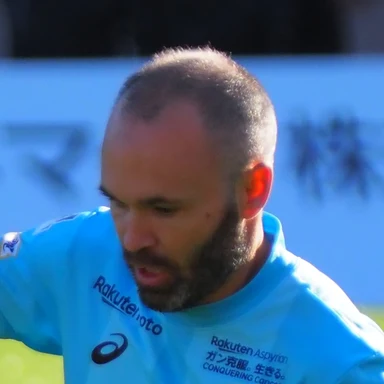 Photo: Tam Tam. Source and license in Image credits.
FC Barcelona · Vissel Kobe · Emirates Club
2002—2024
AS Monaco · Juventus · Arsenal
1994—2014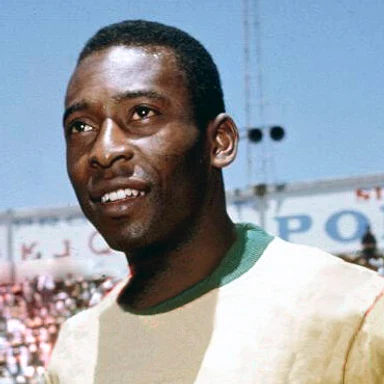 Photo: Unknown author. Source and license in Image credits.
Santos · New York Cosmos
1956—1977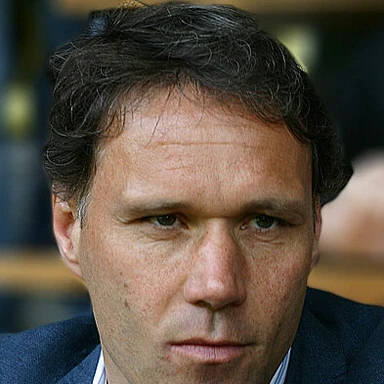 Photo: Paul Blank. Source and license in Image credits.
Statistics are displayed only within the scope supported by each cited source.
Real MadridReal Madrid: Raúl’s first-team careerRFEFRFEF: Raúl González international recordNational Football TeamsNational Football Teams: Raúl’s league seasonsKarlsruher SCKarlsruher SC: Raúl’s Schalke record and cup semi-finalLa RazónLa Razón: Raúl’s retirement and completed club totalsUEFAUEFA: Raúl finishes second in the 2001 Ballon d’OrSchalke 04Schalke: Raúl’s European nights and chipped finishesBDFutbolBDFutbol: Raúl’s complete Spanish league seasonsLa LigaLa Liga: Raúl’s 550 matches and 228 goals