The football behind Diego Milito’s ratings
- Movement after the lay-off
- Elite
- First-touch connection
- Elite
- Shooting disguise
- Excellent
- Penalty-area finishing
- Elite
- Attacking partnership
- Excellent
- Defending and deep distribution
- Limited
 Photo: Prensa TV Pública from Buenos Aires, Argentina. Source and license in Image credits.
Diego Alberto Milito
A centre-forward whose combinations, timed runs and disguised finishes supplied the decisive actions of Inter’s treble.
Senior club · all competitions
Completed club records only; not a complete career total.
Active club snapshots and records with another scope are excluded. Assist totals are not combined across incompatible definitions.
Stored archive snapshots, not live counters. Missing values are not zero; records with different scopes are never added together.
G/M = goals ÷ appearances. G+A = goals + assists. Per-90 metrics use documented minutes.
Senior international · all competitions
Argentina · official club retrospective
Stored archive snapshots, not live counters. Missing values are not zero; records with different scopes are never added together.
G/M = goals ÷ appearances. G+A = goals + assists. Per-90 metrics use documented minutes.
In context
Milito showed how mature centre-forward technique could connect a team’s attack, with influential chapters in Italy, Spain and back at Racing.
Reading the game
Diego Milito explains how a centre-forward can shape an attack through the quality of its final connections. His goals were the visible outcome, but his work began before the shot: moving across a defender’s sightline, providing a short lay-off, or delaying the decisive touch until an opponent committed. These actions made him an effective partner for a passer such as Wesley Sneijder and a useful outlet for a team defending deep. The Madrid final contains both sides of that game. He helped build the first goal before running beyond the defence; for the second, he created the finishing angle himself. The famous month of May 2010 therefore rewards closer viewing than a collection of winning goals. It shows how combination play, movement and composure can make a compact team dangerous with limited attacking opportunities. His route through Racing, Genoa and Zaragoza also matters: Inter acquired a mature striker whose craft had developed across different leagues. The later Racing return gives the story another centre of gravity, where leadership and partnership mattered alongside finishing. Milito’s importance lies in making the centre-forward’s apparently simple decisions unusually precise.
Historical references support the chronology; tactical explanations are museum editorial analysis.
Historical references: Racing: remembering the 2014 captain and team ↗ · UEFA: Milito’s hat-trick in the 2009 Genoa derby ↗ · UEFA: Milito’s two goals in the Madrid final ↗ · UEFA: the combinations and feints behind the final goals ↗ · UEFA: 2009/10 Champions League technical analysis ↗
Career
| Period | Club | Apps | Goals | G/M |
|---|---|---|---|---|
| 1999—2004 | Racing ClubThe selected NFT league rows from 1999/00 to the first half of 2003/04 total 137 appearances and 34 goals. They are a documented subset, not a claim to reconcile every early Racing fixture. Senior club · league only | 137 | 34 | 0.25 |
| 2004—2005 | GenoaThe first Genoa spell contains 59 Serie B appearances and 33 goals across two league seasons. Cup matches are outside this row. Senior club · league only Senior · #22 | 59 | 33 | 0.56 |
| 2005—2008 | Real ZaragozaThree La Liga seasons total 108 appearances and 53 goals. The famous four-goal Real Madrid match belongs to the Copa del Rey, not this league subtotal. Senior club · league only Senior · #22 | 108 | 53 | 0.49 |
| 2008—2009 | GenoaThe return under Gasperini produced 24 Serie A goals in 31 appearances. It is kept separate from the earlier Serie B spell. Senior club · league only Senior · #22 | 31 | 24 | 0.77 |
| 2009—2014 | Inter MilanThe Serie A subset is 128 appearances and 62 goals; Inter’s complete competitive aggregate is 171/75. These scopes must not be added together. Senior club · league only Senior · #22 | 128 | 62 | 0.48 |
| 2014—2016 | Racing ClubThe selected regular league rows total 50 appearances and eighteen goals. Continental competition, domestic cups and qualification play-offs are outside this subset. Senior club · league only Senior · #22 | 50 | 18 | 0.36 |
Stored archive snapshots, not live counters. Missing values are not zero; records with different scopes are never added together.
G/M = goals ÷ appearances. G+A = goals + assists. Per-90 metrics use documented minutes.
Honours
Racing Club · league
Inter Milan · league
Inter Milan · domestic cup
Inter Milan · domestic cup
Inter Milan · continental
Inter Milan · world
Diego Milito · individual
Diego Milito · individual
Diego Milito · individual
Story
Career chapter
Milito emerged at Racing as a forward still assembling his game. The 2001 league title placed that development inside a collective recovery rather than an individual scoring exhibition. His move to Genoa brought the different demands of Italian second-tier football: a centre-forward had to offer a usable pass as well as threaten the space behind. The recorded league seasons show his scoring contribution increasing before the transfer to Spain. This early period helps explain why his later work looked economical. The ability to receive, connect and arrive was built through repeated attacking situations, well before the European final made those skills internationally familiar.
Historical references: Racing: Milito’s career, return and farewell ↗ · National Football Teams: Maradona’s league seasons ↗
Career chapter
Zaragoza gave Milito room to develop combinations around another forward while keeping the penalty area as his destination. Four goals against Real Madrid in the 2006 cup semi-final made his timing and varied finishing impossible to overlook, but the club’s later relegation prevents a simple story of uninterrupted ascent. Returning to Genoa under Gian Piero Gasperini restored a productive setting. His derby hat-trick against Sampdoria in May 2009 was part of a sustained league season, not the discovery of an unknown talent. Inter’s subsequent signing brought together an established scorer and a team preparing to redistribute its attacking responsibilities after a major change of personnel.
Historical references: Inter: Diego Milito’s Hall of Fame profile ↗ · BDFutbol: Milito’s Spanish and Italian league record ↗ · UEFA: four goals against Real Madrid in 2006 ↗ · UEFA: Milito’s hat-trick in the 2009 Genoa derby ↗
Career chapter
Mourinho’s Inter could use Milito with a strike partner or as the central point ahead of Sneijder. His movement gave the creators an option beyond the ball without removing the possibility of a short combination. In May, the cup final against Roma required a decisive finish; the league finale at Siena rewarded the run into Zanetti’s pass. Madrid then added a header into Sneijder’s path, an immediate forward run and a separate piece of one-on-one invention. Those goals belonged to a team whose defensive organisation and supporting work made them sufficient. Milito supplied the finishing craft that allowed different routes to goal to end with the same clarity.
Historical references: UEFA: Milito decides the 2010 Coppa Italia final ↗ · UEFA: the goal that secured Inter’s 2010 league title ↗ · UEFA: Milito’s two goals in the Madrid final ↗ · UEFA: 2009/10 Champions League technical analysis ↗
Career chapter
The years after the treble did not repeat its perfect alignment. Milito still produced a strong league return in 2011/12, but a serious knee injury interrupted the following campaign. His two goals on returning against Sassuolo offered a vivid recovery moment without restoring an entire career peak. Back at Racing in 2014, he became a senior reference alongside Gustavo Bou in another championship team. The distinction matters: Bou supplied more league goals, while Milito contributed experience, combinations and six of his own. His farewell in 2016 closed a career whose last successful chapter depended on adapting his contribution, rather than reproducing every movement of the Madrid striker.
Historical references: Inter: Milito’s season and competition register ↗ · Racing: Milito’s career, return and farewell ↗ · Racing: the 2014 title campaign ↗ · Racing: remembering the 2014 captain and team ↗ · Inter: Milito returns with two goals at Sassuolo ↗ · UEFA: the knee injury that interrupted Milito’s 2012/13 season ↗
Profile
Complete Forward
Also plays · Poacher
The 2009/10 reference combines a central scoring position with short lay-offs, runs beyond the defence and economical one-on-one feints. Sneijder supplies the creative connection; Milito turns that connection into a finishing position. The same season anchors both assessments.
Timed movement beyond defenders
First-touch combinations
Disguised finishing angles
Composure in decisive moments
Illustrative role zones · not tracking data
The first Madrid goal is a useful starting point for understanding his movement. Milito did not treat the header towards Sneijder as the end of his involvement. He immediately changed from a receiving reference into a runner beyond the defence. The defender then had to adjust from contesting a direct ball to protecting depth. That quick change of task made a simple return pass dangerous. His off-ball value was therefore linked to the previous touch: the combination and the run worked as one action rather than two unrelated skills.
His second goal in the final illustrates a different mechanism. Facing Van Buyten, Milito used the suggestion of one route to open another and preserved enough balance to finish across the goalkeeper. The point was not a long sequence of tricks. A small change in direction could create the shooting lane if the defender had already shifted his weight. His best dribbling therefore belonged close to the decisive action, where one successful deception changed the quality of the chance more than an extended carry would have done.
Milito could meet a direct pass, return it towards support and then occupy the centre-backs again. That sequence helped a team leave its defensive shape without requiring every midfielder to run ahead of the ball. Sneijder’s passing and the work of the wide forwards gave the central striker several possible connections. Describing him only as a penalty-box finisher misses this supporting role. Equally, his combinations did not make him a deep playmaker: their purpose was usually to bring the next attack closer to a finish.
The finish followed the situation. At Siena, he placed the ball after meeting a teammate’s advance; in Madrid, he could disguise the moment of release or create a new angle before shooting. Placement, first-touch preparation and calm under pressure mattered more than maximum power on every attempt. His profile also needs limits. He was not a constant wide creator or a midfield tempo controller, and his defensive contribution should be read through supporting the team’s shape rather than specialist tackling. The centre-forward’s craft is the core of the assessment.
Historical references: UEFA: the goal that secured Inter’s 2010 league title ↗ · UEFA: Milito’s two goals in the Madrid final ↗ · UEFA: the combinations and feints behind the final goals ↗ · UEFA: 2009/10 Champions League technical analysis ↗
Reading the game
| Era / team | Primary Role | Tactical Character |
|---|---|---|
| 1999–2004Racing Club | Developing the receiving and finishing game | Learn to combine around the central attacking position. |
| 2004–2008Genoa / Real Zaragoza | Different partners, the same penalty-area destination | Link attacks before moving into finishing positions. |
| 2008–2009Genoa | A mobile point for Genoa’s attack | Connect with support and attack the space opened ahead. |
| 2009–2014Inter Milan | Connect, separate and finish at Inter | Work ahead of the creator and adapt between paired and lone-striker structures. |
| 2014–2016Racing Club | A senior partner back at Racing | Share scoring responsibility while supporting the next generation. |
Historical references: Inter: Milito’s season and competition register ↗ · Racing: Milito’s career, return and farewell ↗ · Racing: the 2014 title campaign ↗ · Racing: remembering the 2014 captain and team ↗ · National Football Teams: Maradona’s league seasons ↗ · UEFA: four goals against Real Madrid in 2006 ↗ · UEFA: Milito’s hat-trick in the 2009 Genoa derby ↗ · UEFA: Milito’s two goals in the Madrid final ↗ · UEFA: 2009/10 Champions League technical analysis ↗
Reading the game
A defender tracking Milito’s first action could still be late for the second. The lay-off invited attention towards the ball, while the following run attacked the space that attention had left. This made his movement productive without depending on a spectacular sprint. The timing of the change, and the passer’s understanding of it, were central to the threat.
Milito’s feints mattered because they changed the next available finish. A hesitation could make the goalkeeper set early; a change of direction could take a centre-back out of the shooting lane. These were practical adjustments performed with the ball under control. Their value lies in improving the chance, rather than adding spectacle to an attack already won.
His central presence did not require every attack to end through him alone. A short connection could bring a creative teammate into play, while a later run restored his own scoring position. The Racing partnership with Bou adds a useful late-career example: the veteran could contribute to a championship attack even when another forward led the team’s scoring.
The treble arrived after productive years in several football settings. Zaragoza’s cup run and Genoa’s derby success show a striker already capable of deciding demanding matches. Inter supplied the collective context in which those abilities carried their greatest consequence. This makes his breakthrough best understood as the meeting of mature technique and a suitable team, rather than a sudden invention of talent.
Historical references: Inter: Diego Milito’s Hall of Fame profile ↗ · Racing: the 2014 title campaign ↗ · Racing: remembering the 2014 captain and team ↗ · UEFA: four goals against Real Madrid in 2006 ↗ · UEFA: Milito’s hat-trick in the 2009 Genoa derby ↗ · UEFA: Milito’s two goals in the Madrid final ↗ · UEFA: the combinations and feints behind the final goals ↗ · UEFA: 2009/10 Champions League technical analysis ↗
Reading the game
Mobile centre-forward
The 2008/09 version is an established scorer who can connect the attack and then reach the finish. The Sampdoria hat-trick gives this season a concrete reference beyond the later treble. Its 24 league goals belong to Genoa’s context, without borrowing Inter’s European achievements.
Complete forward with penalty-box instincts
Both rating systems assess the striker who combined with Sneijder, attacked the space behind defenders and finished the decisive May matches. This version puts movement, first touch, composure and finishing together. It preserves the distinction between an outstanding season and a claim of equal performance throughout his career.
Penalty-area scorer
His 24 Serie A goals in 2011/12 exceeded his league return in the treble year, while the team achieved much less. This is a useful reminder that individual output and collective success move differently. It offers another strong version without replacing the shared 2009/10 tactical reference.
Historical references: Inter: Milito’s season and competition register ↗ · BDFutbol: Milito’s Spanish and Italian league record ↗ · UEFA: Milito’s hat-trick in the 2009 Genoa derby ↗ · UEFA: Milito decides the 2010 Coppa Italia final ↗ · UEFA: the goal that secured Inter’s 2010 league title ↗ · UEFA: Milito’s two goals in the Madrid final ↗ · UEFA: 2009/10 Champions League technical analysis ↗
Statistics
| Season | Club | Apps | Goals | G/M |
|---|---|---|---|---|
| 2016 | Racing Club Senior club · league only | 13 | 4 | 0.31 |
| 2015 | Racing Club Senior club · league only | 20 | 8 | 0.40 |
| 2014 | Racing Club Senior club · league only | 17 | 6 | 0.35 |
| 2013/14 | Inter Milan Senior club · league only | 17 | 2 | 0.12 |
| 2012/13 | Inter Milan Senior club · league only | 20 | 9 | 0.45 |
| 2011/12 | Inter Milan Senior club · league only | 33 | 24 | 0.73 |
| 2010/11 | Inter Milan Senior club · league only | 23 | 5 | 0.22 |
| 2009/10 | Inter Milan Senior club · league only | 35 | 22 | 0.63 |
| 2008/09 | Genoa Senior club · league only | 31 | 24 | 0.77 |
| 2007/08 | Real Zaragoza Senior club · league only | 35 | 15 | 0.43 |
Stored archive snapshots, not live counters. Missing values are not zero; records with different scopes are never added together.
G/M = goals ÷ appearances. G+A = goals + assists. Per-90 metrics use documented minutes.
Nineteen selected league rows total 513 appearances and 224 goals. This is a documented series, not a fully reconciled career total: Racing’s early records and qualification play-offs are not resolved against its wider official aggregate. Genoa’s 2003/04 and 2004/05 rows are Serie B; its 2008/09 row is Serie A. Club aggregates already contain their own league subsets. Unknown assists stay null.
Club competitions
| Competition | Apps | Goals | G/M |
|---|---|---|---|
Serie ASerie A · Genoa and Inter, 2008–2014Genoa’s 31/24 and Inter’s 128/62 combined. The earlier Genoa spell belongs to Serie B and is excluded. | 159 | 86 | 0.54 |
La LigaLa Liga · Zaragoza, 2005–2008League only: 36/15, 37/23 and 35/15 across three seasons. The four-goal cup semi-final is outside this scope. | 108 | 53 | 0.49 |
UEFA Champions LeagueChampions League · Inter, 2009–2012The UEFA main-competition record is 22 appearances and nine goals, including 11/6 in 2009/10. Europa League, UEFA Cup, UEFA Super Cup and Club World Cup matches are separate. | 22 | 9 | 0.41 |
Stored archive snapshots, not live counters. Missing values are not zero; records with different scopes are never added together.
G/M = goals ÷ appearances. G+A = goals + assists. Per-90 metrics use documented minutes.
International
International career
Racing’s retrospective records 25 senior appearances and four goals. Milito appeared twice at the 2010 World Cup and scored at the 2007 Copa América. He was also selected for the 2011 Copa América but did not play; his last appearance in the selected match register is in October 2010.
National Football Teams: 26 appearances / 4 goals · NFT lists 26 senior appearances and four goals, differing by one appearance from the preferred official club retrospective. No extra match is invented to reconcile the totals.
Senior international · tournament splits
| Competition | Apps | Goals | G/M |
|---|---|---|---|
FIFA World CupWorld Cup finals · 2010Appearances against Nigeria and Greece. Qualifying and friendlies are excluded; Argentina’s quarter-final result does not imply he played every round. | 2 | 0 | 0.00 |
Copa AméricaCopa América · 2007 appearances; 2011 squadTwo appearances in 2007, including a goal against Colombia. He was an unused member of the 2011 squad, which adds no appearances or goals. | 2 | 1 | 0.50 |
Stored archive snapshots, not live counters. Missing values are not zero; records with different scopes are never added together.
G/M = goals ÷ appearances. G+A = goals + assists. Per-90 metrics use documented minutes.
Reading the game
Milito’s career is a reminder that the centre-forward’s craft extends beyond being present when the final pass arrives. He could help create the move that would later need his finish, and could make a defender’s small mistake decisive through control and disguise. Inter’s treble gives those abilities an unusually concentrated historical setting, but it should not flatten the rest of his career into preparation for one night. Zaragoza and Genoa showed his scoring authority before Madrid; Racing gave his later experience a different purpose. The return mattered because it produced a useful partnership and another title, not simply an affectionate farewell. His international career was more limited than his greatest club season might suggest, and the later injury makes uninterrupted excellence the wrong description. These boundaries help locate the achievement accurately. His strongest football offered a rare alignment of mature decisions, suitable teammates and precise execution. For anyone studying how an attack functions, Milito provides a clear example of why a lay-off, a delayed run and a controlled change of direction can matter as much as the shot that appears on the scoreboard.
Historical references: Racing: the 2014 title campaign ↗ · National Football Teams: Maradona’s league seasons ↗ · UEFA: Milito’s hat-trick in the 2009 Genoa derby ↗ · UEFA: the combinations and feints behind the final goals ↗ · UEFA: 2009/10 Champions League technical analysis ↗ · Inter: Milito returns with two goals at Sassuolo ↗
Archive
Complete Forward · editorial peak 2009—2010
Reinaldo Merlo · Víctor Muñoz · Víctor Fernández · Gian Piero Gasperini · José Mourinho · Rafael Benítez · Claudio Ranieri · Andrea Stramaccioni · Walter Mazzarri · Diego Cocca
Patrick Vieira— Overlapping Inter Milan era · Javier Zanetti— Overlapping Inter Milan era · Esteban Cambiasso— Overlapping Inter Milan era · Dejan Stanković— Overlapping Inter Milan era
The treble — Inter Milan
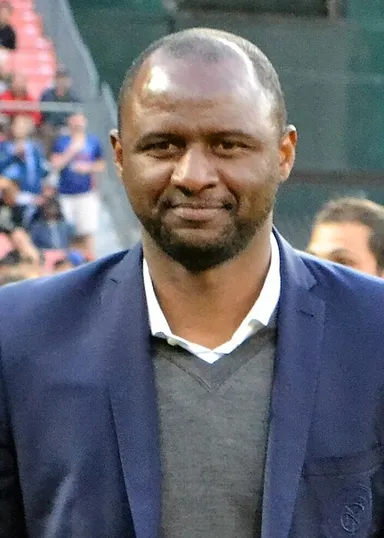 Photo: Simon Heseltine. Source and license in Image credits.
Cannes · AC Milan · Arsenal
1993—2011 Photo: Илья Хохлов. Source and license in Image credits.
Talleres de Remedios de Escalada · Banfield · Inter Milan
1992—2014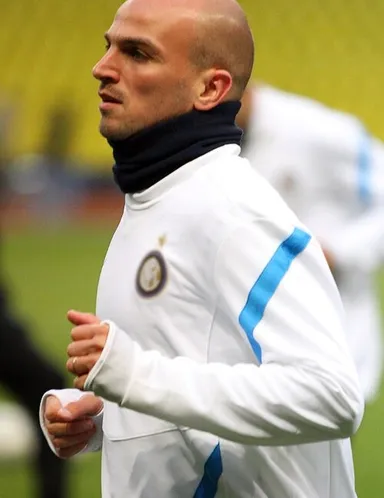 Photo: Майоров Владимир. Source and license in Image credits.
Real Madrid B · Independiente · River Plate
1996—2017
FC Barcelona · Paris Saint-Germain · Inter Miami CF
2004—Present Photo: Unknown author. Source and license in Image credits.
Argentinos Juniors · Boca Juniors · Barcelona
1976—1997 Photo: Unknown author. Source and license in Image credits.
River Plate · Huracán · Millonarios
1945—1966
AS Monaco · Juventus · Arsenal
1994—2014
Cruzeiro · PSV · Barcelona
1993—2011 Photo: Unknown author. Source and license in Image credits.
Santos · New York Cosmos
1956—1977Statistics are displayed only within the scope supported by each cited source.
Inter MilanInter: Diego Milito’s Hall of Fame profileInter MilanInter: Milito’s season and competition registerRacing ClubRacing: Milito’s career, return and farewellRacing ClubRacing: the 2014 title campaignRacing ClubRacing: remembering the 2014 captain and teamNational Football TeamsNational Football Teams: Maradona’s league seasonsBDFutbolBDFutbol: Milito’s Spanish and Italian league recordRacingpediaRacing’s historical goalscorers: an alternative appearance totalUEFAUEFA: four goals against Real Madrid in 2006UEFAUEFA: Milito’s hat-trick in the 2009 Genoa derbyUEFAUEFA: Milito decides the 2010 Coppa Italia finalUEFAUEFA: the goal that secured Inter’s 2010 league titleUEFAUEFA: Milito’s two goals in the Madrid finalUEFAUEFA: the combinations and feints behind the final goalsUEFAUEFA: 2009/10 Champions League technical analysisUEFAUEFA: Milito’s Champions League and European appearance totalsUEFAUEFA: Club Footballer of the Year winnersUEFAUEFA: the 2010 Club Forward of the YearInter MilanInter: Milito returns with two goals at SassuoloInter MilanInter: Milito inducted into the 2020 Hall of FameUEFAUEFA: the knee injury that interrupted Milito’s 2012/13 seasonRSSSFRSSSF: Argentina’s 2011 Copa América squad and match line-ups