The football behind Dejan Stanković’s ratings
- First-time striking
- Elite
- Long shooting
- Elite
- Midfield links
- Excellent
- Attacking movement
- Excellent
- Role flexibility
- Excellent
- Defensive specialisation
- Good
 Photo: Вячеслав Евдокимов. Source and license in Image credits.
Dejan Stanković
A versatile midfielder who joined powerful ball striking to passing support, forward movement and the changing needs of title-winning teams.
Senior club · all competitions
Completed club records only; not a complete career total.
Active club snapshots and records with another scope are excluded. Assist totals are not combined across incompatible definitions.
Stored archive snapshots, not live counters. Missing values are not zero; records with different scopes are never added together.
G/M = goals ÷ appearances. G+A = goals + assists. Per-90 metrics use documented minutes.
Senior international · all competitions
Serbia and predecessor teams · federation record
Stored archive snapshots, not live counters. Missing values are not zero; records with different scopes are never added together.
G/M = goals ÷ appearances. G+A = goals + assists. Per-90 metrics use documented minutes.
In context
Stanković’s spectacular goals are the entry point to a wider story of midfield technique, adaptability and sustained contribution in Italy.
Reading the game
Dejan Stanković matters because his most spectacular skill belonged to a much broader midfield game. The long volleys are unforgettable, but they can obscure the player who connected passes, competed for second balls and adjusted his position around teammates with different responsibilities. He could operate in the centre or support an attack from a wider starting point, giving coaches a way to change the team without removing its passing and shooting threat. That flexibility became valuable at both Lazio and Inter, where his career moved from an ambitious young arrival in Italy to a trusted contributor in title-winning teams. The 2009/10 season is the common reference here: it contains the remarkable finish at Genoa, two important Champions League group-stage goals and a role in Inter’s treble. His appearance from the bench in the Madrid final also matters. A player’s contribution to a campaign is larger than the starting eleven on its last night. Stanković’s appeal lies in that combination of extraordinary contact with the ball and the willingness to do ordinary midfield work repeatedly.
Historical references support the chronology; tactical explanations are museum editorial analysis.
Historical references: Inter: fifteen trophies and every midfield role ↗ · UEFA: Stanković’s farewell to Lazio and new central role ↗ · UEFA: Inter’s 2009 win and Stanković’s long volley at Genoa ↗ · UEFA: Stanković’s equalising header in Kazan ↗ · UEFA: Inter and Dynamo share four goals ↗ · Inter: the 2010 final and Stanković’s substitute appearance ↗
Career
| Period | Club | Apps | Goals | G/M |
|---|---|---|---|---|
| 1995—1998 | Red Star BelgradeThe selected NFT league series totals 85 appearances and thirty goals. UEFA’s 2010 handbook gives 85/29 instead; the one-goal difference remains unresolved. This row follows the season table and does not claim an all-competition total. Senior club · league only | 85 | 30 | 0.35 |
| 1998—2004 | LazioSix league-season segments total 137 appearances and 22 goals. The last segment ends with his January 2004 transfer. Lazio’s broader 208/34 retrospective is not used as a league total. Senior club · league only | 137 | 22 | 0.16 |
| 2004—2013 | Inter MilanInter’s league subset is 231 appearances and 29 goals; its complete competitive record is 326/42. The two scopes overlap and must not be added. Senior club · league only Senior · #5 | 231 | 29 | 0.13 |
Stored archive snapshots, not live counters. Missing values are not zero; records with different scopes are never added together.
G/M = goals ÷ appearances. G+A = goals + assists. Per-90 metrics use documented minutes.
Honours
Red Star Belgrade · league
Red Star Belgrade · domestic cup
Lazio · league
Lazio · domestic cup
Lazio · domestic cup
Lazio · continental
Lazio · continental
Inter Milan · league
Inter Milan · domestic cup
Inter Milan · domestic cup
Inter Milan · continental
Inter Milan · world
Dejan Stanković · individual
Dejan Stanković · individual
Story
Career chapter
Stanković entered Red Star’s senior side in the 1994/95 season, with his competitive debut arriving in 1995. By 1997 he had become the club’s young captain, an early sign that responsibility accompanied his attacking talent. League and cup success gave the teenage midfielder experience of expectation before his move abroad. The scoring record shows that forward contribution was present early, although the sources disagree by one goal on his Red Star league total. That discrepancy is retained in the statistical notes. The central story is clear without forcing the figures to agree: a technically ambitious midfielder grew up in a team expected to win.
Historical references: Red Star: Stanković’s development and playing honours ↗ · National Football Teams: Stanković’s season and international registers ↗ · UEFA: Stanković’s 2010 player dossier ↗
Career chapter
The move to Lazio in 1998 placed Stanković among experienced internationals under Sven-Göran Eriksson. The Cup Winners’ Cup and UEFA Super Cup arrived in 1999, followed by the league and cup double in 2000. His development was about fitting technique and attacking ambition into an established collective, rather than becoming its only source of invention. Subsequent work with different coaches added further positional demands. When he left for Inter in January 2004, he described Lazio as essential to the reputation he had built. The move ended five and a half seasons in Rome, but the habits learned there travelled with him.
Historical references: Lazio: five and a half seasons, six trophies ↗ · Lazio: the club’s historical honours ↗ · UEFA: Stanković’s farewell to Lazio and new central role ↗
Career chapter
Stanković’s Inter career began centrally under Alberto Zaccheroni before developing through Roberto Mancini’s title-winning midfield. José Mourinho then used his adaptability during the 2009/10 treble season. He headed the equaliser at Rubin Kazan, scored against Dynamo Kyiv and produced the remarkable long volley at Genoa. UEFA records twelve Champions League appearances, showing a campaign extending beyond one famous finish. As the team’s structure changed, his contribution included connecting passes and providing different midfield options. He came on for Cristian Chivu in the final against Bayern rather than starting it. The story is therefore one of sustained usefulness across changing demands, not an identical role in every decisive match.
Historical references: UEFA: Stanković’s farewell to Lazio and new central role ↗ · UEFA: Stanković’s 2007 contract and midfield contribution ↗ · UEFA: Inter’s 2009 win and Stanković’s long volley at Genoa ↗ · UEFA: Stanković’s equalising header in Kazan ↗ · UEFA: Inter and Dynamo share four goals ↗ · UEFA: Inter in the 2009/10 technical report ↗ · Inter: the 2010 final and Stanković’s substitute appearance ↗
Career chapter
The April 2011 volley against Schalke became Stanković’s most widely replayed action: he met Manuel Neuer’s headed clearance first time from near halfway. Inter nevertheless lost the match 5–2, so its brilliance should not be confused with a winning performance. His remaining Inter seasons brought fewer appearances, ending with only three league outings in 2012/13. The club career closed in 2013, and an October farewell against Japan added the final appearance to his international record. The ending connects technical memory with physical limits. It also marks the boundary of this dossier: his subsequent coaching work does not add to the footballer’s trophy count.
Historical references: Inter: Stanković’s competitive archive ↗ · UEFA: the extraordinary 2011 volley against Schalke ↗ · UEFA: Schalke win 5–2 despite Stanković’s opener ↗ · UEFA: the 2013 farewell against Japan ↗
Profile
Box-to-Box Midfielder
Also plays · Advanced Playmaker
The 2009/10 reference values shooting technique, midfield connections and flexibility within Mourinho’s Inter. Stanković could arrive onto a cross, support another creator or strike from outside the box. Both rating panels use that season, keeping the famous 2011 Schalke goal outside the scoring evidence.
Powerful first-time striking
Midfield passing connections
Attacking support and arrivals
Adaptation across midfield roles
Illustrative role zones · not tracking data
Stanković’s long shooting depended on reading the ball before generating power. A clearance does not arrive with the predictability of a stationary set piece: its height, spin and speed keep changing. The Genoa volley offers a reference-season example of controlling the contact before the goalkeeper can recover. The later Schalke strike reinforces the technical pattern, but is kept outside the 2009/10 rating evidence. The assessment rewards exceptional striking technique without pretending every ambitious attempt was the best possible decision.
His attacking contribution was not confined to shooting from distance. Stanković could move the ball into a teammate, continue his run and appear in a different line of the attack. The equalising header at Rubin is particularly useful because it challenges a highlights-only reading: the scorer of long volleys could also find space to meet a cross. This supports an interpretation built around movement and participation. It does not turn him into a specialist penalty-area scorer or a creator who controlled every possession.
The early Inter report places him centrally in Zaccheroni’s system; later seasons show a player available for several midfield assignments. The value of that flexibility is relational. Starting wider, supporting a creator or joining a compact central unit requires different distances to the full-back, holding midfielder and forwards. His task was to keep those connections useful. The editorial profile therefore treats versatility as the ability to adapt decisions to a role, rather than awarding elite mastery of every possible position.
Stanković supplied effort, contact and repeated involvement, but his strongest qualities should not be confused with specialist defending or explosive dribbling. He was more convincing as a midfielder supporting a collective than as an isolated solution to every transition. The numeric and qualitative panels reflect that balance: powerful shooting, good passing and useful tactical range sit alongside more moderate acceleration, aerial defence and one-on-one invention. Late-career availability is described separately from the selected reference season.
Historical references: Inter: Stanković’s competitive archive ↗ · Inter: fifteen trophies and every midfield role ↗ · UEFA: Stanković’s farewell to Lazio and new central role ↗ · UEFA: Inter’s 2009 win and Stanković’s long volley at Genoa ↗ · UEFA: Stanković’s equalising header in Kazan ↗ · UEFA: Inter and Dynamo share four goals ↗ · UEFA: Inter in the 2009/10 technical report ↗ · UEFA: the extraordinary 2011 volley against Schalke ↗
Reading the game
| Era / team | Primary Role | Tactical Character |
|---|---|---|
| 1995–1998Red Star Belgrade | Young captain with attacking ambition | Red Star combined early responsibility with opportunities to contribute goals from midfield. |
| 1998–2004Lazio | Learning in a decorated collective | Lazio required technique and attacking support to fit around established international teammates. |
| 2004–2008Inter Milan | Central work and flexible support | A central start under Zaccheroni developed into several midfield assignments under Mancini. |
| 2008–2010Inter Milan | Adjusting to Mourinho’s match plans | Connect play, support the attack and accept changing positions and selection within the treble squad. |
| 2010–2013Inter Milan | Technique through reduced availability | Memorable striking remained, while the final league seasons brought fewer appearances before retirement. |
Historical references: Inter: Stanković’s competitive archive ↗ · Red Star: Stanković’s development and playing honours ↗ · Lazio: five and a half seasons, six trophies ↗ · UEFA: Stanković’s farewell to Lazio and new central role ↗ · UEFA: Stanković’s 2007 contract and midfield contribution ↗ · UEFA: Inter in the 2009/10 technical report ↗ · Inter: the 2010 final and Stanković’s substitute appearance ↗ · UEFA: the extraordinary 2011 volley against Schalke ↗
Reading the game
The opportunity in the Genoa goal existed only briefly. Stanković had to recognise the goalkeeper’s position and the ball’s flight before selecting a first-time strike. That sequence explains why the technique matters beyond raw power: observation, body preparation and clean contact had to fit into the same short window. It remains a difficult execution rather than a routine scoring method.
A defender could not assume Stanković would always wait outside the box. His header in Kazan showed the other possibility: moving into the space a cross could reach. The contrast with his long-range finishes is valuable because it restores the midfielder’s movement to the portrait. Different finishes came from recognising different invitations within a team attack.
Versatility becomes meaningful when it preserves a team’s connections. Stanković could support a holding midfielder, work around an advanced creator or begin from a wider area. The roles did not make him several different specialists at once. They made him a player whom coaches could redeploy while retaining passing quality, physical involvement and a threat near the attack.
Twelve Champions League appearances in the treble season and a substitute role in the final can both be true. Stanković’s case illustrates why a season should be assessed across its changing demands. His goals helped Inter through difficult group matches, while the final required a different entry point. The profile credits that contribution without rewriting him as an ever-present starter.
Historical references: Inter: fifteen trophies and every midfield role ↗ · UEFA: Stanković’s farewell to Lazio and new central role ↗ · UEFA: Inter’s 2009 win and Stanković’s long volley at Genoa ↗ · UEFA: Stanković’s equalising header in Kazan ↗ · UEFA: Inter and Dynamo share four goals ↗ · UEFA: Stanković’s 2010 player dossier ↗ · Inter: the 2010 final and Stanković’s substitute appearance ↗
Reading the game
Developing all-round midfielder
An early representative version learning to contribute inside a decorated team. Passing support, movement and shooting were developing around experienced teammates. The league and cup double is the historical anchor, rather than a claim that he already possessed every quality of his mature Inter game.
Box-to-box midfielder
Thirty-four league appearances and six goals capture the regular involvement of this Mancini-era version. His flexibility allowed attacking support without removing the obligation to work within midfield. This is a representative season of mature contribution, distinct from the later European treble.
Versatile box-to-box midfielder
The common season for both assessments combines striking technique, midfield links and changing responsibilities. Genoa illustrates the exceptional contact; Rubin and Dynamo illustrate important group-stage scoring. The final substitute appearance keeps the account proportional to his actual use across the campaign.
Historical references: Inter: Stanković’s competitive archive ↗ · Lazio: five and a half seasons, six trophies ↗ · Lazio: the club’s historical honours ↗ · UEFA: Stanković’s 2007 contract and midfield contribution ↗ · UEFA: Inter’s 2009 win and Stanković’s long volley at Genoa ↗ · UEFA: Stanković’s equalising header in Kazan ↗ · UEFA: Inter and Dynamo share four goals ↗ · Inter: the 2010 final and Stanković’s substitute appearance ↗
Statistics
| Season | Club | Apps | Goals | G/M |
|---|---|---|---|---|
| 2012/13 | Inter Milan Senior club · league only | 3 | 0 | 0.00 |
| 2011/12 | Inter Milan Senior club · league only | 19 | 0 | 0.00 |
| 2010/11 | Inter Milan Senior club · league only | 26 | 5 | 0.19 |
| 2009/10 | Inter Milan Senior club · league only | 29 | 3 | 0.10 |
| 2008/09 | Inter Milan Senior club · league only | 31 | 5 | 0.16 |
| 2007/08 | Inter Milan Senior club · league only | 21 | 1 | 0.05 |
| 2006/07 | Inter Milan Senior club · league only | 34 | 6 | 0.18 |
| 2005/06 | Inter Milan Senior club · league only | 23 | 2 | 0.09 |
| 2004/05 | Inter Milan Senior club · league only | 31 | 3 | 0.10 |
| 2003/04 | Inter Milan Senior club · league only | 14 | 4 | 0.29 |
Stored archive snapshots, not live counters. Missing values are not zero; records with different scopes are never added together.
G/M = goals ÷ appearances. G+A = goals + assists. Per-90 metrics use documented minutes.
Twenty league-season rows total 453 appearances and 81 goals under the selected NFT and Inter series. Red Star’s four rows sum to 85/30, differing from UEFA’s 85/29 handbook subtotal; the early one-goal discrepancy is not silently removed. The debut occurred in 1995 within the 1994/95 season. The two 2003/04 rows separate Lazio and Inter at the January transfer. Cup and international club matches are excluded, and unknown assists stay null.
Club competitions
| Competition | Apps | Goals | G/M |
|---|---|---|---|
Serie ASerie A · Lazio and Inter, 1998–2013Lazio’s selected 137/22 league series plus Inter’s official 231/29 league subset. Club all-competition aggregates are not added. | 368 | 51 | 0.14 |
UEFA Champions LeagueChampions League · career main competitionUEFA’s all-time main-competition table lists 93 appearances and twelve goals. Qualification and other European competitions remain outside this scope. | 93 | 12 | 0.13 |
UEFA Champions LeagueChampions League · 2009/10 reference seasonTwelve appearances, including eight starts, and goals at Rubin and at home to Dynamo. This season is already included in the career competition total. | 12 | 2 | 0.17 |
Stored archive snapshots, not live counters. Missing values are not zero; records with different scopes are never added together.
G/M = goals ÷ appearances. G+A = goals + assists. Per-90 metrics use documented minutes.
International
International career
The federation’s 103-cap, fifteen-goal record spans FR Yugoslavia, Serbia and Montenegro, and Serbia. He appeared at the 1998, 2006 and 2010 World Cups under those successive names, and returned for the October 2013 farewell against Japan. The historical periods form one combined career record.
National Football Teams: 102 appearances / 14 goals · NFT separately lists one non-FIFA appearance in 2010 and reports fourteen goals. RSSSF credits a goal in the November 2003 Poland match that is absent from NFT’s 2003 goal tally. The preferred 103/15 federation record remains separate; neither this record nor the extra classification is added to it.
Senior international · tournament splits
| Competition | Apps | Goals | G/M |
|---|---|---|---|
FIFA World CupWorld Cup finals · 1998, 2006 and 2010Three appearances in each tournament under successive national-team names. Qualification is excluded. | 9 | 0 | 0.00 |
UEFA European ChampionshipEuropean Championship finals · 2000Appearances against Slovenia and the Netherlands for FR Yugoslavia. Team results do not imply he played all four tournament matches. | 2 | 0 | 0.00 |
Stored archive snapshots, not live counters. Missing values are not zero; records with different scopes are never added together.
G/M = goals ÷ appearances. G+A = goals + assists. Per-90 metrics use documented minutes.
Reading the game
Stanković left a career that should be remembered at two speeds. The first is instantaneous: a clearance drops, he reads its flight and an unlikely shooting opportunity becomes a goal before the defence can reset. The second is cumulative: years of learning different midfield jobs, contributing to domestic titles and accepting that a strong team needs more than one type of creator. Inter’s 326 competitive appearances, 42 goals and fifteen trophies give that second story substance. Lazio’s earlier successes and Red Star’s formative years prevent the portrait from beginning only with the treble. Internationally, his World Cup appearances under the names Yugoslavia, Serbia and Montenegro, and Serbia belong to a historical succession, rather than three unrelated career totals to add together. The Serbian federation’s record is 103 appearances and fifteen goals, with the 2013 Japan farewell included. Some statistical databases apply different match or goal classifications, which this page keeps visible. His 2011 Schalke volley is another useful distinction: an exceptional individual action occurred in a heavy team defeat. Remembering both truths preserves the achievement without rewriting the match. His later work in coaching belongs to a separate career; these honours and assessments describe the footballer.
Historical references: Inter: Dejan Stanković, Hall of Fame ↗ · Red Star: Stanković’s development and playing honours ↗ · Lazio: five and a half seasons, six trophies ↗ · National Football Teams: Stanković’s season and international registers ↗ · RSSSF: Stanković’s 103 international appearances ↗ · Serbian FA: senior international appearance and goal records ↗ · UEFA: Schalke win 5–2 despite Stanković’s opener ↗ · UEFA: the 2013 farewell against Japan ↗
Archive
Box-to-Box Midfielder · editorial peak 2009—2010
Ljupko Petrović · Sven-Göran Eriksson · Dino Zoff · Alberto Zaccheroni · Roberto Mancini · José Mourinho · Rafael Benítez · Leonardo · Claudio Ranieri · Andrea Stramaccioni
Luís Figo— Overlapping Inter Milan era · Patrick Vieira— Overlapping Inter Milan era · Javier Zanetti— Overlapping Inter Milan era · Diego Milito— Overlapping Inter Milan era
The treble — Inter Milan
 Photo: Žan Kolman. Source and license in Image credits.
Sporting CP · Barcelona · Real Madrid
1989—2009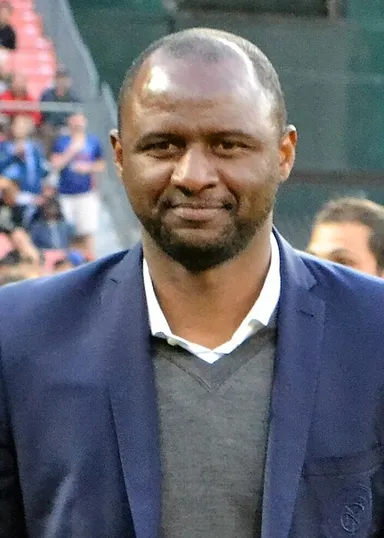 Photo: Simon Heseltine. Source and license in Image credits.
Cannes · AC Milan · Arsenal
1993—2011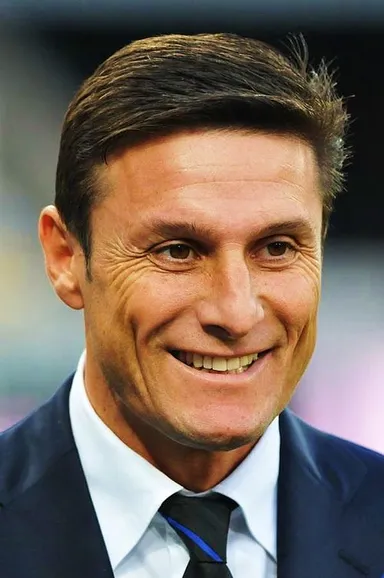 Photo: Илья Хохлов. Source and license in Image credits.
Talleres de Remedios de Escalada · Banfield · Inter Milan
1992—2014
Liverpool · LA Galaxy
1998—2016 Photo: Barcex. Source and license in Image credits.
Haarlem · Feyenoord · PSV
1979—1998 Photo: Bryan Berlin / WikiPortraits. Source and license in Image credits.
Birmingham City · Borussia Dortmund · Real Madrid
2019—PresentStatistics are displayed only within the scope supported by each cited source.
Inter MilanInter: Dejan Stanković, Hall of FameInter MilanInter: Stanković’s competitive archiveInter MilanInter: fifteen trophies and every midfield roleInter MilanInter: all 42 Stanković goalsRed Star BelgradeRed Star: Stanković’s development and playing honoursLazioLazio: five and a half seasons, six trophiesLazioLazio: the club’s historical honoursNational Football TeamsNational Football Teams: Stanković’s season and international registersRSSSFRSSSF: Stanković’s 103 international appearancesFootball Association of SerbiaSerbian FA: senior international appearance and goal recordsUEFAUEFA: Stanković’s farewell to Lazio and new central roleUEFAUEFA: Stanković’s 2007 contract and midfield contributionUEFAUEFA: Inter’s 2009 win and Stanković’s long volley at GenoaUEFAUEFA: Stanković’s equalising header in KazanUEFAUEFA: Inter and Dynamo share four goalsUEFAUEFA: Inter in the 2009/10 technical reportUEFAUEFA: Stanković’s 2010 player dossierInter MilanInter: the 2010 final and Stanković’s substitute appearanceUEFAUEFA: the extraordinary 2011 volley against SchalkeUEFAUEFA: Schalke win 5–2 despite Stanković’s openerUEFAUEFA: the 2013 farewell against JapanUEFAUEFA: all-time Champions League appearances and goals