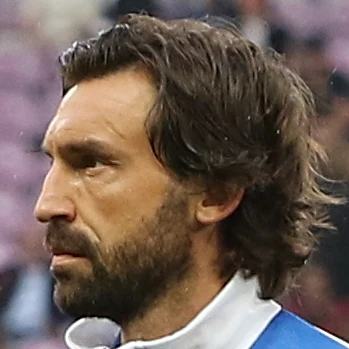
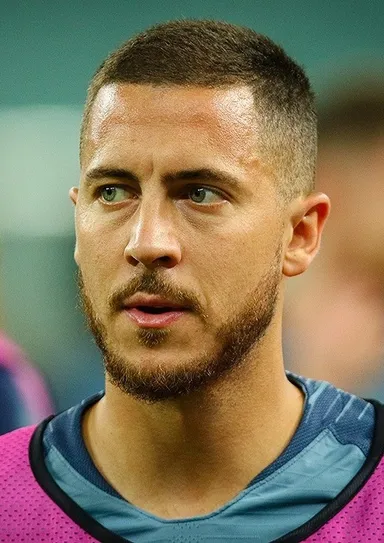
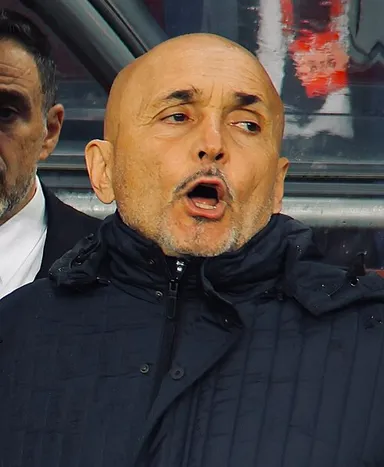
Antonio Conte — historical portraitPhoto: Clément Bucco-Lechat / Wikimedia Commons. Source and license in Image credits.
Coach profileNot currently coaching

ITA · 2000s–2020s · 2005—2026

Antonio Conte

Rehearsed patterns, wing-back width and collective intensity

Conte’s teams turn repeated training patterns into coordinated movement: a forward comes short, a teammate runs beyond and the wide player stretches the next line. His success spans different structures and leagues, from Juventus and Chelsea to Inter and Napoli. The constant is demanding collective work, not an obligation to play three centre-backs.

Full name
Antonio Conte
Birthplace
Lecce, Italy
Coaching since
2005
Latest archived appointment
Napoli · 2024 — 2026
Nationality
Italy
Born
31 Jul 1969
Primary shape
3-5-2
Appointments
12
Selected honours
11

Documented performance

Chelsea · Premier League · 2016/17

Complete domestic league season only. Excludes cups and other seasons of the appointment; three points per win.

Matches
38
Wins
30
Draws
3
Losses
5
Win rate
78.9%
Points / game
2.45

PPG uses three points for a win and one for a draw in league matches.

Sources & methodology

Stored archive snapshots, not live counters. Missing values are not zero; records with different scopes are never added together.

Win rate = wins ÷ matches. Points per game requires an explicit scoring convention; cup records are not silently treated as league points.

01

Career origins

From Juventus captain to a new coaching craft

Documented history

Conte played for Lecce and Juventus before starting as a Siena assistant in 2005. Senior head-coaching responsibility followed at Arezzo, where his first season included dismissal, a return and relegation.

Formative years

  1. 1985–2004

    A player inside a demanding team

    Juventus ↗

    Player

    His playing route ran from hometown Lecce to a long Juventus career. Captaincy and high-level competition gave him experience of responsibility, but did not remove the need to learn coaching as a separate craft.

  2. 2005–2006

    Learning from the staff role

    Siena

    Assistant coach

    Siena provided his first coaching role as an assistant. The move from playing to staff work preceded his first senior head-coach appointment.

  3. 2006–2007

    Arezzo and an interrupted first season

    Arezzo

    Head coach

    Arezzo replaced Conte with Maurizio Sarri, then brought him back later in the same season. Improved results after his return did not prevent relegation. The setback belongs in the story, rather than being edited out by later trophies.

  4. 2007–2011

    Promotion work before the elite return

    Bari / Siena

    Bari’s Serie B title and Siena’s later promotion built his coaching credentials. An intervening Atalanta spell was part of that uneven route, not another championship.

  5. 2011–2012

    Back to Turin, now responsible for the team

    Juventus ↗

    Head coach

    Juventus appointed their former captain in 2011. The unbeaten league campaign that followed brought together Pirlo’s passing, midfield movement and a renewed competitive identity.

Breakthrough · 2012

A first Serie A title as coach

Juventus ↗

Unbeaten in the 2011/12 league season.

Serie A

Documented history

The first Scudetto established Conte as a top-level coach. Juventus still lost that season’s Coppa Italia final: unbeaten in the league does not mean unbeaten in every competition.

Editorial interpretation

The early setbacks show why playing authority and coaching effectiveness are not interchangeable. Conte’s later success was built through the work between those stages.

How it shaped their coaching

Editorial interpretation

The route from assistant to promotion coach and title winner helps explain the emphasis on repeatable collective work. Later changes of formation show that the method can survive a different shape.

Career origins · sources
02

Tactics

Tactical identity

Playing principles and tactical tendencies · qualitative assessment.

Coaching identity

Collective intensity, organised in advance

Conte’s touchline energy is the visible edge of a more systematic method. Runs, passing angles and defensive responsibilities are rehearsed so that players can act together at speed. The formation can change; clarity about each role remains the organising principle.

  • Rehearsed combinations
  • Wing-back width
  • Vertical connections
  • Collective commitment

Tactical principles

Synchronised movements

The receiver’s movement needs a second run and a supporting pass, not an isolated duel.

Width with protection

Wing-backs can advance because the players behind them retain defensive balance.

A structure fitted to the group

Three centre-backs are a recurring solution, not the only shape used across his career.

03

Tactical analysis

Football philosophy

A pattern gives the next player an answer

A pass into a forward is only the first action. Support underneath and a run beyond can turn a contested reception into forward progress. The aim is not to eliminate creativity but to provide reliable options around the player on the ball.

Balance allows ambition

At Chelsea, the wing-backs and inside forwards could attack because the back three and central midfield retained protection. Width and defensive security were linked parts of the same plan, not opposing choices.

Change the shape when the players need it

Conte identified the 2016 defeat at Arsenal as the moment that pushed him to find a better fit for Chelsea. At Napoli he later discussed 4-3-3 alongside other alternatives. His commitment to preparation should not be confused with loyalty to one diagram.

Tactical principles

Build with a spare defender

Three centre-backs can create different passing angles around the first press. The central passer needs a midfielder or forward to open the next line, not merely another sideways option.

Connect the two forwards

One striker can receive with an opponent behind him while the other attacks space. Inter’s Lukaku–Lautaro partnership made those complementary tasks especially visible.

Let the wing-backs stretch the block

At Chelsea, Alonso and Moses supplied width while the wide forwards moved inside. This freed Hazard and Pedro to threaten closer to the striker.

A midfielder attacks beyond the receiver

The forward pass becomes more dangerous when a third player moves beyond the immediate duel. Juventus’s midfield runners complemented Pirlo’s distribution.

Press with coordinated support

Italy’s approach against Spain in 2016 used the forwards and midfield together to disturb the first pass. A compact back line allowed that pressure to have support behind it.

Keep a route after defending

A team defending in numbers still needs a way out. Inter could connect quickly through a striker or use the flank, rather than treating every recovery as a clearance.

Transition sequence

  1. 01Recover inside a connected block
  2. 02Find the forward or the free midfielder
  3. 03Support the receiver from a different angle
  4. 04Release the runner or the wing-back
  5. 05Retain cover behind the attack

Illustrative sequence, not a measured event model.

Match-state management

Against pressure on the first pass

Use a forward connection and a supporting third player instead of forcing every pass through midfield.

Against a narrow defensive block

Give the wide player room, then attack the spaces created inside.

With an advantage to protect

Keep the lines connected without removing the forward outlet.

When the original plan is failing

Reassign roles and change the shape; effort alone cannot repair poor spacing.

Tactical analysis · sources and scope

Interpretation is editorial, not an official rating or a direct quotation. Match results, team statistics and formations retain their documented sources.

04

Tactical analysis

Signature systems & defining teams

Signature systems, tactical evolution and defining teams are read together. A starting formation does not describe every phase of play.

2011–2014

Juventus: the passer and the runners ↗

3–5–2 · Schematic, not tracking data

The 3-5-2 placed Pirlo behind a midfield capable of supporting both sides of the ball. Wing-backs widened the pitch and two forwards offered targets beyond the first press. UEFA’s technical report emphasised the speed of the transition, including Pirlo’s longer distribution.

Tactical evolution

The deeper organiser and the running midfielders had different, complementary responsibilities.

Defining team · documented record

Three consecutive Serie A titles; 102 league points in 2013/14.

2016–2018

Chelsea: width outside, forwards inside ↗

3–4–3 · Schematic, not tracking data

The switch to 3-4-3 let Moses and Alonso occupy the flanks while Hazard and Pedro operated closer to Diego Costa. Behind them, two midfielders and three defenders provided a stable base. This redistributed tasks rather than simply adding another defender.

Tactical evolution

A change after the Arsenal defeat helped each player find a more suitable role.

Defining team · documented record

2016/17 Premier League champions with 30 wins.

2019–2021

Inter: two strikers and several routes ↗

3–5–2 · Schematic, not tracking data

Lukaku could receive, run the channel and release a partner; Lautaro could combine or finish. The 2021 derby showed both direct attacks and a wider combination through Eriksen and Perisic. The partnership was embedded in a collective, not a substitute for one.

Tactical evolution

Midfield quality and wing-back movement added alternatives around the forward pair.

Defining team · documented record

2020/21 Serie A champions, with 91 points.

2024–2026

Napoli: principles beyond a back three ↗

4–3–3 · Schematic, not tracking data

Napoli also used a back four, with midfield support around Lukaku and wide attackers. The February 2025 Udinese match records that personnel arrangement; Conte’s later explanation explicitly treats 4-3-3 as one of several options. The continuity lies in the collective tasks, not a fixed defensive count.

Tactical evolution

The diagram represents one documented setup, not every match of the two-season appointment.

Defining team · documented record

2024/25 Serie A champions and 2025 Italian Super Cup winners.

Defining matches

UEFA European Championship · 2016

Italy2–0Spain

Round of 16

Italy disrupt the defending champions

Italy did not merely wait for Spain to attack. Coordinated pressure and forward support created an assertive first half; Chiellini put them ahead and Pellè finished a late move to secure the result. Defensive discipline and attacking intent worked together.

Premier League · 2016/17

Arsenal3–0Chelsea

League match

The defeat that forced a better fit

A 3–0 loss at Arsenal exposed the gap between Conte’s intentions and Chelsea’s execution. He later identified this as the turning point for changing the system. The lesson is adaptation after evidence of failure, rather than a claim that the title-winning structure was present from day one.

Serie A · 2020/21

AC Milan0–3Inter Milan

League match

The derby made the connections visible

Lautaro scored twice before Lukaku added the third. Inter alternated quick forward attacks with combinations across the width of the pitch; Handanović’s saves also mattered when Milan threatened. The score should not obscure those defensive moments.

UEFA Europa League · 2019/20

Sevilla3–2Inter Milan

Final

A European final, not a European title

Inter reached the 2020 Europa League final but lost to Sevilla. It remains an important achievement and an important boundary: domestic league success cannot be relabelled as European dominance, and a runner-up finish is not added to the trophy total.

Tactical analysis · sources and scope

Interpretation is editorial, not an official rating or a direct quotation. Match results, team statistics and formations retain their documented sources.

05

Profile

Management style

Leadership, preparation and shapes in context.

High demands need clear instruction

Conte’s training reputation rests on demanding work and detailed preparation. Repetition is productive when players understand the purpose of the movement and the support around it. Effort without a shared reference can simply produce more running.

Commitment is a relationship, not a guarantee

Tottenham qualified for the Champions League in his first season, yet the appointment ended by mutual agreement in March 2023. Sporting improvement and the durability of a working relationship are different questions; one does not guarantee the other.

Build a group that acts like a club

After beating Spain, Conte credited Italy’s club-like spirit. In a short international camp, shared responsibilities and trust can make coordinated work possible. The useful quality is commitment to a common task, not a numerical claim about a player’s mentality.

Strengths & trade-offs

Strengths

  • Coordinating movement around the receiver
  • Giving wing-backs and forwards complementary jobs
  • Turning collective structure into league consistency

Trade-offs

  • Wing-back pressure can pin the team into a deeper line.
  • A rehearsed route needs alternatives when its first receiver is blocked.
  • Rapid improvement does not ensure a long managerial tenure.
06

Tactical analysis

Why this coach matters

Restarting Juventus’s winning cycle

Three consecutive Scudetti established a new domestic baseline, ending with 102 points in 2013/14. Conte’s contribution was foundational, while the club’s later titles belong to subsequent coaches and teams.

A different distribution of attacking duties

Chelsea’s 2017 title made the relationship between wing-backs, inside forwards and a protected central base especially visible in England. The impact was not the invention of three defenders, but the effective use of those roles with that squad.

Rebuilding beyond one club

The Inter and Napoli championships extended his record beyond Juventus and England. Napoli’s June 2026 statement closes the latest documented appointment with a league title and a Super Cup, not a claim that the original contract ran to completion.

Tactical analysis · sources and scope

Interpretation is editorial, not an official rating or a direct quotation. Match results, team statistics and formations retain their documented sources.

07

Career

Management career

Every senior appointment remains distinct in one compact record.
Managerial appointment record
PeriodOrganisationRole
2005—2006
Siena
Assistant coach
2006—2006
ArezzoFirst spell; dismissed during the 2006/07 season.
Head coach
2007—2007
ArezzoReappointed later in the same season; kept separate from the first spell.
Head coach
2007—2009
Bari
Head coach
2009—2010
Atalanta
Head coach
2010—2011
Siena
Head coach
2011—2014Head coach
2014—2016
Italy
Head coach
2016—2018Head coach
2019—2021Head coach
2021—2023Head coach
2024—2026
NapoliDeparted by mutual agreement on 4 June 2026, before the scheduled end of his contract.
Head coach
Sources & methodology

Stored archive snapshots, not live counters. Missing values are not zero; records with different scopes are never added together.

Win rate = wins ÷ matches. Points per game requires an explicit scoring convention; cup records are not silently treated as league points.

Competition record

Competition record
CompetitionPeriodMatchesWDLWin %PPG
Chelsea · Premier League

Complete domestic league season only. Excludes cups and other seasons of the appointment; three points per win.

2016/17
Performance record
Goals for
85
Goals against
33
38303578.9%2.45
Inter Milan · Serie A

Complete domestic league season only. Excludes cups and other seasons of the appointment; three points per win.

2020/21
Performance record
Goals for
89
Goals against
35
38287373.7%2.39
Napoli · Serie A

Complete domestic league season only. Excludes cups and other seasons of the appointment; three points per win.

2024/25
Performance record
Goals for
59
Goals against
27
382410463.2%2.16
Sources & methodology

Stored archive snapshots, not live counters. Missing values are not zero; records with different scopes are never added together.

Win rate = wins ÷ matches. Points per game requires an explicit scoring convention; cup records are not silently treated as league points.

08

Honours

Major achievements

Documented head-coach titles through 4 June 2026: includes Bari’s Serie B championship and domestic super cups. Excludes playing honours, assistant roles, promotions without a title and runner-up finishes.

DOMESTIC LEAGUE1

Serie B

Bari

DOMESTIC LEAGUE5

Serie A

Managerial record

DOMESTIC CUP3

Supercoppa Italiana

Managerial record

DOMESTIC LEAGUE1

Premier League

Chelsea

DOMESTIC CUP1

FA Cup

Chelsea

Selected trophies by club

Documented head-coach titles through 4 June 2026: includes Bari’s Serie B championship and domestic super cups. Excludes playing honours, assistant roles, promotions without a title and runner-up finishes.

Sources & methodology

Stored archive snapshots, not live counters. Missing values are not zero; records with different scopes are never added together.

G/M = goals ÷ appearances. G+A = goals + assists. Per-90 metrics use documented minutes.

09

Archive

Connected archive

Relationships situate the manager inside the wider archive.

Sources

Career and honour facts cite their underlying sources, including clubs and governing bodies. Tactical readings are identified as editorial analysis.

UEFAAntonio Conte — UEFA coaching profileAccessed 2026-09-15Tottenham HotspurConte appointed Tottenham head coachAccessed 2026-09-15Tottenham HotspurTottenham announce Conte departureAccessed 2026-09-15Sky SportsConte and Sarri at Arezzo: an early setbackAccessed 2026-09-15UEFAConte returns to Juventus as coachAccessed 2026-09-15JuventusJuventus: return to successAccessed 2026-09-15UEFAJuventus celebrate Pirlo and Conte’s contributionAccessed 2026-09-15UEFAUEFA Champions League 2012/13 technical reportAccessed 2026-09-15Premier LeagueThe balance behind Chelsea’s 2017 titleAccessed 2026-09-15Premier LeagueConte explains Chelsea’s change of systemAccessed 2026-09-15Premier LeagueConte’s tactical variety and training demandsAccessed 2026-09-15Premier LeaguePremier League 2016/17 final tableAccessed 2026-09-15RSSSFItaly 2020/21 final tablesAccessed 2026-09-15RSSSFItaly 2024/25 final tablesAccessed 2026-09-15Inter MilanMilan 0–3 Inter: match reportAccessed 2026-09-15Inter MilanConte reflects on Inter’s 2021 championshipAccessed 2026-09-15UEFAItaly 2–0 Spain: tactical analysisAccessed 2026-09-15UEFAConte on Italy’s collective spiritAccessed 2026-09-15UEFASevilla 3–2 Inter: 2020 Europa League finalAccessed 2026-09-15SSC NapoliConte appointed Napoli head coachAccessed 2026-09-15SSC NapoliNapoli and Conte part ways — 4 June 2026Accessed 2026-09-15SSC NapoliConte discusses alternative systems at NapoliAccessed 2026-09-15SSC NapoliNapoli 1–1 Udinese: match reviewAccessed 2026-09-15SSC NapoliNapoli crowned champions in 2025Accessed 2026-09-15Tottenham HotspurTottenham’s 2022 north London derby winAccessed 2026-09-15