
FA Cup
Chelsea · domestic cup
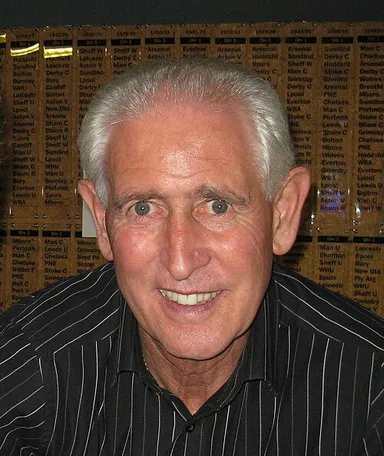
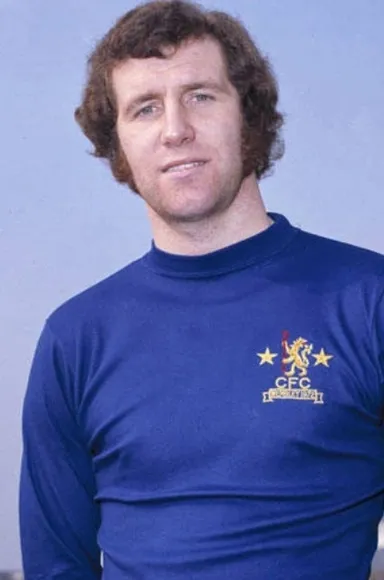 Photo: JohnPosey22 of perchance-chat.fandom.com. Source and license in Image credits.
Peter Leslie Osgood
Peter Osgood gave Chelsea’s attack a combination of physical presence and delicate touch. With Ian Hutchinson beside him, he could contest the ball, link a move and finish it himself. His equalising header in the 1970 FA Cup replay and goals in both games of the 1971 Cup Winners’ Cup final made him central to the club’s breakthrough.
Senior club · all competitions
Completed club records only; not a complete career total.
Active club snapshots and records with another scope are excluded. Assist totals are not combined across incompatible definitions.
Stored archive snapshots, not live counters. Missing values are not zero; records with different scopes are never added together.
G/M = goals ÷ appearances. G+A = goals + assists. Per-90 metrics use documented minutes.
Senior international · all competitions
Stored archive snapshots, not live counters. Missing values are not zero; records with different scopes are never added together.
G/M = goals ÷ appearances. G+A = goals + assists. Per-90 metrics use documented minutes.
In context
The “King of Stamford Bridge” nickname reflects Osgood’s place in Chelsea’s supporter culture as well as his goals. His best years linked invention with the ability to settle major cup matches. The brief return at the end of the 1970s belongs to a different stage of his career. Reading the two spells separately preserves the importance of his peak without confusing affection with later performance.
Reading the game
Peter Osgood gave Chelsea’s attack a combination of physical presence and delicate touch. With Ian Hutchinson beside him, he could contest the ball, link a move and finish it himself. His equalising header in the 1970 FA Cup replay and goals in both games of the 1971 Cup Winners’ Cup final made him central to the club’s breakthrough.
Historical references support the chronology; tactical explanations are museum editorial analysis.
Historical references: Chelsea: Osgood’s 380 appearances, 150 goals and career development ↗ · Chelsea: Osgood’s 1970 header, 1971 final goal and 1973 volley ↗ · Chelsea: Osgood’s Southampton cup win and December 1978 return ↗
Career
| Period | Club | Apps | Goals | G/M |
|---|---|---|---|---|
| 1964—1974 | ChelseaAvailable league appearances and goals only; cup matches and unverified assists are outside this record. Senior club · league only Senior · #9 | 279 | 103 | 0.37 |
| 1974—1977 | SouthamptonAvailable league appearances and goals only; cup matches and unverified assists are outside this record. Senior club · league only | 126 | 28 | 0.22 |
| 1976—1977 | Norwich CityAvailable league appearances and goals only; cup matches and unverified assists are outside this record. Senior club · league only Loan | 3 | 0 | 0.00 |
| 1978—1978 | Philadelphia FuryAvailable league appearances and goals only; cup matches and unverified assists are outside this record. Senior club · league only Senior · #9 | 22 | 1 | 0.05 |
| 1978—1979 | ChelseaAvailable league appearances and goals only; cup matches and unverified assists are outside this record. Senior club · league only | 10 | 2 | 0.20 |
| 1980—1981 | Walton & HershamHistorical Lineups records a later Walton & Hersham spell in 1980/81, without appearance or goal totals. Those figures are unavailable and are excluded from the recorded subtotals. Senior club · league only | — | — | — |
Stored archive snapshots, not live counters. Missing values are not zero; records with different scopes are never added together.
G/M = goals ÷ appearances. G+A = goals + assists. Per-90 metrics use documented minutes.
Honours
Chelsea · domestic cup
Chelsea · continental
Southampton · domestic cup
Chelsea · individual
Story
Club chapter
Osgood scored twice on his December 1964 senior debut against Workington in the League Cup. A broken leg in 1966 interrupted his progress. On returning, he adapted his game, using touch and strength as well as acceleration. A period in midfield preceded the partnership with Ian Hutchinson. His debut belonged to Chelsea’s 1964/65 cup campaign; it does not establish that he played in the final.
Explore club contextClub chapter
In 1969/70 Osgood scored in every FA Cup round Chelsea entered, including the replayed final against Leeds. His diving header restored parity before David Webb’s extra-time winner. In 1971 he scored against Real Madrid in both the drawn Cup Winners’ Cup final and the victorious replay. These were separate matches in one European title campaign, not two trophies. His 1973 volley against Arsenal offered another example of his finishing range.
Explore club contextCareer chapter
Osgood left Chelsea for Southampton in March 1974 and helped the second-division side win the 1976 FA Cup against Manchester United. A Norwich loan and Philadelphia Fury spell followed. He returned to Chelsea in December 1978, scoring twice during a difficult final spell that ended in 1979. Chelsea’s 380 appearances and 150 goals include both visits; league statistics at other clubs have a different scope. Historical Lineups records a later non-league spell with Walton & Hersham in 1980/81, without match totals.
Profile
Complete Forward
Peter Osgood gave Chelsea’s attack a combination of physical presence and delicate touch. With Ian Hutchinson beside him, he could contest the ball, link a move and finish it himself. His equalising header in the 1970 FA Cup replay and goals in both games of the 1971 Cup Winners’ Cup final made him central to the club’s breakthrough.
A centre-forward who could keep the combination alive
One chance, several ways to finish
Illustrative role zones · not tracking data
Osgood’s first touch gave Chelsea an alternative to merely fighting for a long ball. He could secure possession under contact and bring a partner into the next move, then turn back towards goal. Hutchinson’s presence offered another target and another runner. The partnership helps explain why Osgood’s value exceeded his goals, although surviving records do not support a complete career assist total.
Osgood did not require every chance to arrive on the same foot or at the same height. The 1970 final replay header, his left-foot volley against Arsenal in 1973 and the turn before his 1971 European replay goal show different solutions. Their value lies in adapting the body to the ball and the defender.
Historical references: Chelsea: Osgood’s 380 appearances, 150 goals and career development ↗ · Chelsea: Osgood’s 1970 header, 1971 final goal and 1973 volley ↗
Editorial assessment
Historical role analysis
Seven qualitative bands · not measured scores
Editorial assessment of this period, not an official rating.
These bands are not percentiles or an overall ranking. The chart’s geometry represents ordered bands, not equal differences in ability.
Qualitative judgments describe football actions in context. They do not measure personality or medical fitness. Category assessments are editorial summaries, not averages. A lower defensive band describes the player’s role and contribution, not their value to the team.
Chelsea: Osgood’s 1970 header, 1971 final goal and 1973 volley ↗Reading the game
| Era / team | Primary Role | Tactical Character |
|---|---|---|
| 1969–1973Chelsea | Complete Forward | Osgood’s first touch gave Chelsea an alternative to merely fighting for a long ball. He could secure possession under contact and bring a partner into the next move, then turn back towards goal. Hutchinson’s presence offered another target and another runner. The partnership helps explain why Osgood’s value exceeded his goals, although surviving records do not support a complete career assist total. |
Historical references: Chelsea: Osgood’s 380 appearances, 150 goals and career development ↗
Reading the game
Osgood’s first touch gave Chelsea an alternative to merely fighting for a long ball. He could secure possession under contact and bring a partner into the next move, then turn back towards goal. Hutchinson’s presence offered another target and another runner. The partnership helps explain why Osgood’s value exceeded his goals, although surviving records do not support a complete career assist total.
Osgood did not require every chance to arrive on the same foot or at the same height. The 1970 final replay header, his left-foot volley against Arsenal in 1973 and the turn before his 1971 European replay goal show different solutions. Their value lies in adapting the body to the ball and the defender.
Historical references: Chelsea: Osgood’s 380 appearances, 150 goals and career development ↗ · Chelsea: Osgood’s 1970 header, 1971 final goal and 1973 volley ↗
Reading the game
In 1969/70 Osgood scored in every FA Cup round Chelsea entered, including the replayed final against Leeds. His diving header restored parity before David Webb’s extra-time winner. In 1971 he scored against Real Madrid in both the drawn Cup Winners’ Cup final and the victorious replay. These were separate matches in one European title campaign, not two trophies. His 1973 volley against Arsenal offered another example of his finishing range.
Historical references: Chelsea: the 1967 Bonetti and 1973 Osgood supporters’ awards ↗ · Chelsea: Osgood’s 380 appearances, 150 goals and career development ↗ · Chelsea: Osgood’s 1970 header, 1971 final goal and 1973 volley ↗
Statistics
| Season | Club | Apps | Goals | G/M |
|---|---|---|---|---|
| 1979/80 | Chelsea Senior club · league only | 1 | 0 | 0.00 |
| 1978/79 | Chelsea Senior club · league only | 9 | 2 | 0.22 |
| 1975/76 | Southampton Senior club · league only | 33 | 6 | 0.18 |
| 1971/72 | Chelsea Senior club · league only | 36 | 18 | 0.50 |
| 1969/70 | Chelsea Senior club · league only | 38 | 23 | 0.61 |
| 1967/68 | Chelsea Senior club · league only | 42 | 16 | 0.38 |
Stored archive snapshots, not live counters. Missing values are not zero; records with different scopes are never added together.
G/M = goals ÷ appearances. G+A = goals + assists. Per-90 metrics use documented minutes.
Chelsea’s 380 competitive appearances and 150 goals cover both spells. The 289-match, 105-goal league subset includes his final Second Division appearance. Southampton, Norwich and Philadelphia figures are league-only. In 11v11 season tables, starts and substitute appearances are separate columns and are added once. These records do not form a complete competitive career total; unavailable assists remain null.
Club competitions
| Competition | Apps | Goals | G/M |
|---|---|---|---|
Football League1964–1979Chelsea’s 380 competitive appearances and 150 goals cover both spells. The 289-match, 105-goal league subset includes his final Second Division appearance. Southampton, Norwich and Philadelphia figures are league-only. In 11v11 season tables, starts and substitute appearances are separate columns and are added once. These records do not form a complete competitive career total; unavailable assists remain null. | 289 | 105 | 0.36 |
Stored archive snapshots, not live counters. Missing values are not zero; records with different scopes are never added together.
G/M = goals ÷ appearances. G+A = goals + assists. Per-90 metrics use documented minutes.
International
International career
Osgood earned four senior England caps from 1970 to 1973, without a goal. His two 1970 World Cup appearances were substitute outings against Romania and Czechoslovakia in the group stage. He did not play in the quarter-final against West Germany and was not part of the 1966 winning squad. The two substitute appearances are included in the four caps, not added to them.
Reading the game
The “King of Stamford Bridge” nickname reflects Osgood’s place in Chelsea’s supporter culture as well as his goals. His best years linked invention with the ability to settle major cup matches. The brief return at the end of the 1970s belongs to a different stage of his career. Reading the two spells separately preserves the importance of his peak without confusing affection with later performance.
Historical references: Chelsea: Osgood’s 380 appearances, 150 goals and career development ↗ · Chelsea: Osgood’s 1970 header, 1971 final goal and 1973 volley ↗ · Chelsea: Osgood’s Southampton cup win and December 1978 return ↗
Archive
Complete Forward · editorial peak 1969—1973
Tommy Docherty · Dave Sexton · Lawrie McMenemy · Danny Blanchflower
Peter Bonetti— Overlapping Chelsea era · Ian Callaghan— Overlapping England era · Ray Clemence— Overlapping England era · Kevin Keegan— Overlapping England era
The King’s Road cup winners — Chelsea

Liverpool · LA Galaxy
1998—2016
Manchester United · Preston North End · Waterford
1956—1976 Photo: Bryan Berlin / WikiPortraits. Source and license in Image credits.
Birmingham City · Borussia Dortmund · Real Madrid
2019—Present
AS Monaco · Juventus · Arsenal
1994—2014
Cruzeiro · PSV · Barcelona
1993—2011 Photo: Unknown author. Source and license in Image credits.
Santos · New York Cosmos
1956—1977Statistics are displayed only within the scope supported by each cited source.
Chelsea FCChelsea: the 1967 Bonetti and 1973 Osgood supporters’ awardsChelsea FCChelsea: Osgood’s 380 appearances, 150 goals and career developmentChelsea FCChelsea: Osgood’s 1970 header, 1971 final goal and 1973 volleyChelsea FCChelsea: Osgood’s Southampton cup win and December 1978 return11v1111v11: Osgood’s season records, including starts and substitute appearancesEnglandStatsEnglandStats: Osgood’s four senior caps and two World Cup substitute appearancesNASL archiveNASL archive: Osgood’s 1978 Philadelphia league appearances and goalHistorical LineupsHistorical Lineups: Osgood’s Norwich loan, league seasons and later non-league spell