Serie A
AC Milan · league
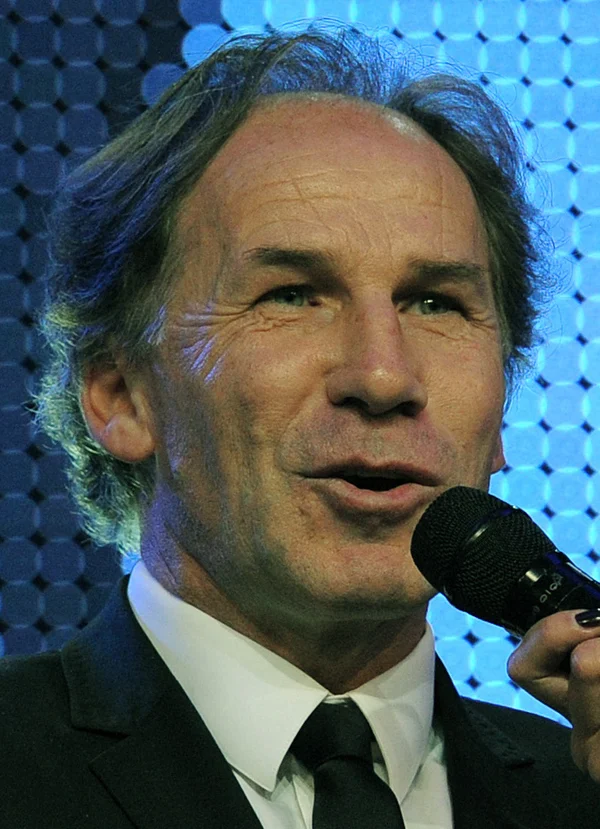
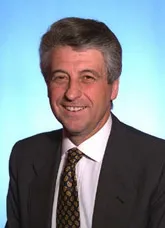 Photo: Italian House of Representatives. Source and license in Image credits.
Giovanni Rivera
Rivera gave Milan’s attack direction through touch, timing and the final pass. A creative number ten rather than a runner built around power, he connected midfield possession to the forwards. His career spans Milan’s first two European Cups, Italy’s 1968 European title and the 1969 Ballon d’Or.
Senior club · all competitions
Completed club records only; not a complete career total.
Active club snapshots and records with another scope are excluded. Assist totals are not combined across incompatible definitions.
Stored archive snapshots, not live counters. Missing values are not zero; records with different scopes are never added together.
G/M = goals ÷ appearances. G+A = goals + assists. Per-90 metrics use documented minutes.
Senior international · all competitions
Stored archive snapshots, not live counters. Missing values are not zero; records with different scopes are never added together.
G/M = goals ÷ appearances. G+A = goals + assists. Per-90 metrics use documented minutes.
In context
Rivera’s place in football history rests on the creative number ten’s influence, not just the 1969 individual award. Nineteen Milan seasons linked domestic success to European ambition, while his 1970 semi-final goal gave Italy one of its defining international moments. The last Scudetto joined his generation to the young Franco Baresi.
Reading the game
Rivera gave Milan’s attack direction through touch, timing and the final pass. A creative number ten rather than a runner built around power, he connected midfield possession to the forwards. His career spans Milan’s first two European Cups, Italy’s 1968 European title and the 1969 Ballon d’Or.
Historical references support the chronology; tactical explanations are museum editorial analysis.
Historical references: AC Milan: Rivera’s birth date, 658 official matches and league record ↗ · Italian FA: Rivera’s career and honours ↗
Career
| Period | Club | Apps | Goals | G/M |
|---|---|---|---|---|
| 1958—1960 | AlessandriaRivera made his Serie A debut for Alessandria at fifteen. His two league seasons total 26 appearances and six goals, before the move to Milan in 1960. Senior club · league only | 26 | 6 | 0.23 |
| 1960—1979 | AC MilanRivera gave Milan’s attack direction through touch, timing and the final pass. A creative number ten rather than a runner built around power, he connected midfield possession to the forwards. His career spans Milan’s first two European Cups, Italy’s 1968 European title and the 1969 Ballon d’Or. Senior club · all competitions Senior · #10 | 658 | 164 | 0.25 |
Stored archive snapshots, not live counters. Missing values are not zero; records with different scopes are never added together.
G/M = goals ÷ appearances. G+A = goals + assists. Per-90 metrics use documented minutes.
Honours
AC Milan · league
AC Milan · continental
AC Milan · domestic cup
AC Milan · continental
AC Milan · world
Italy · continental
Gianni Rivera · individual
Gianni Rivera · individual
Story
Club chapter
Born on 18 August 1943, Rivera made his Serie A debut for Alessandria against Inter on 2 June 1959, aged fifteen. He joined Milan in 1960 and won his first league title in 1961/62. Under Nereo Rocco, his creativity gained a secure platform within a carefully organised side.
Explore club contextClub chapter
Milan won the European Cup in 1963 and again in 1969. In the latter final, Rivera’s passing helped shape the 4–1 victory over Ajax and Prati’s hat-trick. He also won the 1969 Intercontinental Cup and became the first Italy-born Ballon d’Or winner. The qualifier matters: Argentina-born Italy international Omar Sívori had won the award in 1961.
Explore club contextClub chapter
Rivera scored 17 league goals in 1972/73 and finished as a joint Serie A top scorer. His Milan honours include four Italian Cups and two Cup Winners’ Cups. In 1978/79, injuries restricted his appearances, but the captain’s final season ended with Milan’s tenth league title under Nils Liedholm, earning the club its first championship star.
Explore club contextProfile
Trequartista
Also plays · Advanced Playmaker
Rivera gave Milan’s attack direction through touch, timing and the final pass. A creative number ten rather than a runner built around power, he connected midfield possession to the forwards. His career spans Milan’s first two European Cups, Italy’s 1968 European title and the 1969 Ballon d’Or.
The pass that releases the forward
Creativity within a defensive structure
Vision
Illustrative role zones · not tracking data
Rivera could delay the release until a forward’s movement opened the channel, then pass beyond the defender rather than towards the player’s feet. His contribution to Prati’s second goal in the 1969 European final illustrates that relationship between timing and direction. The tactical interpretation is qualitative, not a claim of measured chance-creation statistics.
Rocco’s Milan gave its playmaker a defined place between the ball-winners and the strikers. Rivera could receive, change the rhythm and bring runners into play without making speed his principal weapon. The balance depended on teammates providing defensive coverage and forward movement; describing him as a modern all-action pressing midfielder would obscure that division of labour.
Historical references: AC Milan: Rivera’s birth date, 658 official matches and league record ↗ · Italian FA: Rivera’s career and honours ↗ · UEFA: Rivera and Milan’s 1969 European final ↗
Editorial assessment
Historical role analysis
Seven qualitative bands · not measured scores
Editorial assessment of this period, not an official rating.
These bands are not percentiles or an overall ranking. The chart’s geometry represents ordered bands, not equal differences in ability.
Qualitative judgments describe football actions in context. They do not measure personality or medical fitness. Category assessments are editorial summaries, not averages. A lower defensive band describes the player’s role and contribution, not their value to the team.
UEFA: Rivera and Milan’s 1969 European final ↗Reading the game
| Era / team | Primary Role | Tactical Character |
|---|---|---|
| 1960–1979 | Creativity within a defensive structure | Rocco’s Milan gave its playmaker a defined place between the ball-winners and the strikers. Rivera could receive, change the rhythm and bring runners into play without making speed his principal weapon. The balance depended on teammates providing defensive coverage and forward movement; describing him as a modern all-action pressing midfielder would obscure that division of labour. |
| 1960–1979 | The pass that releases the forward | Rivera could delay the release until a forward’s movement opened the channel, then pass beyond the defender rather than towards the player’s feet. His contribution to Prati’s second goal in the 1969 European final illustrates that relationship between timing and direction. The tactical interpretation is qualitative, not a claim of measured chance-creation statistics. |
Historical references: AC Milan: Rivera’s birth date, 658 official matches and league record ↗ · Italian FA: Rivera’s career and honours ↗ · UEFA: Rivera and Milan’s 1969 European final ↗
Reading the game
Rivera could delay the release until a forward’s movement opened the channel, then pass beyond the defender rather than towards the player’s feet. His contribution to Prati’s second goal in the 1969 European final illustrates that relationship between timing and direction. The tactical interpretation is qualitative, not a claim of measured chance-creation statistics.
Rocco’s Milan gave its playmaker a defined place between the ball-winners and the strikers. Rivera could receive, change the rhythm and bring runners into play without making speed his principal weapon. The balance depended on teammates providing defensive coverage and forward movement; describing him as a modern all-action pressing midfielder would obscure that division of labour.
Historical references: AC Milan: Rivera’s birth date, 658 official matches and league record ↗ · Italian FA: Rivera’s career and honours ↗ · UEFA: Rivera and Milan’s 1969 European final ↗
Reading the game
Milan won the European Cup in 1963 and again in 1969. In the latter final, Rivera’s passing helped shape the 4–1 victory over Ajax and Prati’s hat-trick. He also won the 1969 Intercontinental Cup and became the first Italy-born Ballon d’Or winner. The qualifier matters: Argentina-born Italy international Omar Sívori had won the award in 1961.
Seventeen Serie A goals in 1972/73 show that Rivera’s influence was not confined to supplying others. He shared the league’s scoring crown while Milan won the Italian Cup and Cup Winners’ Cup. This version combines a playmaker’s passing responsibility with a substantial personal scoring contribution.
Historical references: National Football Teams: Rivera’s selected league seasons and Italy record ↗ · Italian FA: Rivera’s career and honours ↗ · UEFA: Rivera and Milan’s 1969 European final ↗ · AC Milan: Rivera’s 1972/73 season ↗ · Juventus: Sívori’s Argentine origins and 1961 Ballon d’Or ↗
Statistics
Stored archive snapshots, not live counters. Missing values are not zero; records with different scopes are never added together.
G/M = goals ÷ appearances. G+A = goals + assists. Per-90 metrics use documented minutes.
Milan’s complete official record is 658 appearances and 164 goals; the Serie A subset is 501 appearances and 122 goals. Alessandria’s 26 appearances and six goals are league-only. The season table contains selected league records, not all nineteen Milan seasons. Historical assists remain unavailable; no modern assist total is reconstructed from match narratives.
Club competitions
| Competition | Apps | Goals | G/M |
|---|---|---|---|
Serie A1960/61–1978/79Milan’s complete official record is 658 appearances and 164 goals; the Serie A subset is 501 appearances and 122 goals. Alessandria’s 26 appearances and six goals are league-only. The season table contains selected league records, not all nineteen Milan seasons. Historical assists remain unavailable; no modern assist total is reconstructed from match narratives. | 501 | 122 | 0.24 |
Stored archive snapshots, not live counters. Missing values are not zero; records with different scopes are never added together.
G/M = goals ÷ appearances. G+A = goals + assists. Per-90 metrics use documented minutes.
International
International career
Rivera’s senior Italy record is 60 caps and 14 goals from 1962 to 1974. He belonged to the EURO 1968 winning squad and played at four World Cups. On 17 June 1970, he scored the extra-time winner in the 4–3 semi-final against West Germany; Italy then finished runners-up to Brazil. His 1960 Olympic appearances are separate from these senior totals.
Reading the game
Rivera’s place in football history rests on the creative number ten’s influence, not just the 1969 individual award. Nineteen Milan seasons linked domestic success to European ambition, while his 1970 semi-final goal gave Italy one of its defining international moments. The last Scudetto joined his generation to the young Franco Baresi.
Historical references: AC Milan: Rivera’s birth date, 658 official matches and league record ↗ · Italian FA: Rivera’s career and honours ↗ · Italian FA: Rivera’s winner against West Germany in 1970 ↗ · AC Milan: Rivera’s final season and the 1978/79 Scudetto ↗
Archive
Trequartista · editorial peak 1968—1969
Nereo Rocco · Nils Liedholm · Giovanni Trapattoni · Ferruccio Valcareggi
Franco Baresi— Overlapping AC Milan era
Rocco and Rivera’s Europe — AC Milan
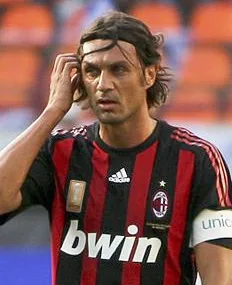
AC Milan
1985—2009
Padova · Juventus · Sydney FC
1991—2014
Parma · Juventus · Paris Saint-Germain
1995—2023Padova · Juventus · Sydney FC
1991—2014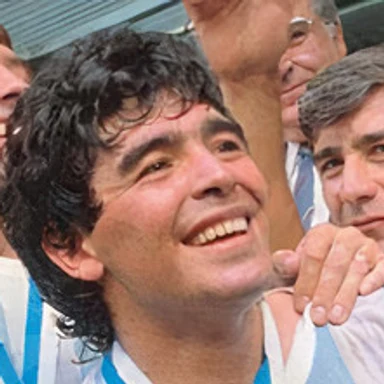 Photo: Unknown author. Source and license in Image credits.
Argentinos Juniors · Boca Juniors · Barcelona
1976—1997 Photo: Евгений Асмолов. Source and license in Image credits.
São Paulo · AC Milan · Real Madrid
2001—2017Statistics are displayed only within the scope supported by each cited source.
AC MilanAC Milan: Rivera’s birth date, 658 official matches and league recordNational Football TeamsNational Football Teams: Rivera’s selected league seasons and Italy recordAC MilanAC Milan: Rivera’s Serie A debut at fifteenItalian Football FederationItalian FA: Rivera’s career and honoursUEFAUEFA: Rivera and Milan’s 1969 European finalItalian Football FederationItalian FA: Rivera’s winner against West Germany in 1970AC MilanAC Milan: Rivera’s final season and the 1978/79 ScudettoAC MilanAC Milan: Rivera’s 1972/73 seasonJuventusJuventus: Sívori’s Argentine origins and 1961 Ballon d’Or