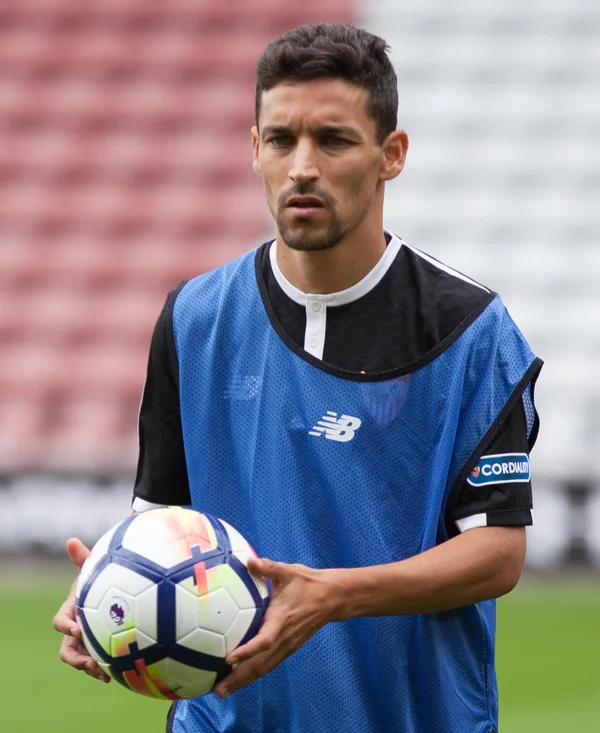
Luis de la Fuente — historical portraitPhoto: Bryan Berlin / WikiPortraits. Source and license in Image credits.
Coach profileActive

ESP · 2010s–2020s · 1997—Present

Luis de la Fuente

Development continuity, width and collective trust

De la Fuente brought years of work with Spain’s younger generations into senior international football. His teams combine midfield connections with the freedom of wide attackers, while asking those same attackers to defend together. Continuity is the foundation; adapting the roles around the available players is the method.

Full name
Luis de la Fuente Castillo
Birthplace
Haro, La Rioja, Spain
Coaching since
1997
Latest archived appointment
Spain · 2022 — Present
Nationality
Spain
Born
21 Jun 1961
Primary shape
4-3-3
Appointments
13
Selected honours
3

Documented performance

Spain · first 50 senior matches · 2021–2026

RFEF’s first 50 senior internationals through 19 July 2026, including the June 2021 stand-in match against Lithuania. Includes friendlies and competitive matches; penalty shoot-outs remain draws in W–D–L. Not a live total or a youth record; no league PPG.

Matches
50
Wins
38
Draws
10
Losses
2
Win rate
76.0%
Sources & methodology

Stored archive snapshots, not live counters. Missing values are not zero; records with different scopes are never added together.

Win rate = wins ÷ matches. Points per game requires an explicit scoring convention; cup records are not silently treated as league points.

01

Career origins

Through the age groups to the senior team

Documented history

A former professional defender, De la Fuente developed as a coach through local clubs, youth football and reserve teams before joining Spain’s national-team structure in 2013. His rise was gradual rather than an immediate move from playing fame into an elite senior job.

Formative years

  1. 1997–2011

    Club work before the national pathway

    Portugalete · Sevilla youth · Bilbao Athletic

    Local senior football, youth coaching and reserve-team appointments formed a varied apprenticeship. Bilbao Athletic’s 2006 appointment is documented separately from his later 2009–2011 spell.

  2. 2013–2015

    The first European youth title

    Spain U19

    Head coach

    Joined Spain’s youth structure in 2013 and won the 2015 U19 European final against Russia. It established an international achievement without yet being a senior national-team honour.

  3. 2018–2019

    Move up with a developing generation

    Spain U21

    Head coach

    Took charge of the U21 team in 2018 and won the European title a year later. Fabián Ruiz and Dani Olmo scored against Germany in the final.

  4. 2021

    Olympic and stand-in responsibilities

    Spain Olympic team

    Won silver at the delayed Tokyo 2020 Olympics. Separately, he led the June friendly against Lithuania when the regular senior squad was isolating; these were different teams and assignments.

  5. 2022–2023

    The permanent senior appointment

    Spain

    Head coach

    Appointed permanently in December 2022, then won the 2023 Nations League final four. The earlier league phase belonged to Luis Enrique’s tenure and is not reassigned to De la Fuente.

Breakthrough · 2015

A European title with the U19s

Spain U19

Spain 2–0 Russia

UEFA European Under-19 Championship

Documented history

Borja Mayoral and Matías Nahuel scored in the final. The title was a formative coaching achievement, kept outside the senior honours count.

Editorial interpretation

Repeated work with developing players offers an explanation for continuity and trust, not proof that later success was inevitable. Senior football still required new selections, decisions and adjustments.

How it shaped their coaching

Editorial interpretation

The developmental pathway helps explain why individual ability and team responsibility appear together in his public message. The link is interpretive; no invented personality score or undocumented mentor relationship is attached.

Career origins · sources
02

Tactics

Tactical identity

Playing principles and tactical tendencies · qualitative assessment.

Coaching identity

Continuity with room to evolve

De la Fuente’s Spain keeps technical midfield play but does not make possession an end in itself. Wide attackers can take on defenders, full-backs can advance and midfielders can vary their receiving positions. This is an editorial reading of documented team behaviour, not a numerical assessment of coaching ability.

  • Development continuity
  • Attacking width
  • Midfield connections
  • Collective responsibility
  • Role flexibility

Tactical principles

Width with a route inside

Wingers stretch the opponent while midfield and full-back movements create an inside connection.

Creativity carries defensive duties

The wide attacker must support the full-back when the opponent attacks that side.

Preserve functions, adjust personnel

A replacement must preserve useful team relationships, not imitate every movement of the player who leaves.

03

Tactical analysis

Football philosophy

Build on players already understood

Years across Spain’s age groups gave De la Fuente experience of players before they reached senior prominence. Familiarity can shorten the explanation of a role, but it is not a guarantee of selection: senior competition still asks different questions of the same player.

Use possession to create an advantage

The early senior side retained a 4-3-3 reference, while UEFA described an approach shaped around individual strengths. The useful distinction is not possession versus direct football: it is whether the team can turn circulation into a favourable duel, a forward pass or space to attack.

Individuality belongs inside the team

After the 2024 semi-final, De la Fuente praised players who put their individual qualities at the service of the group. This connects creative freedom with collective obligation: asking a winger to defend does not mean removing his licence to attack.

Tactical principles

The winger and full-back form a pair

Against France in 2024, Nico Williams repeatedly supported Cucurella against Dembélé. UEFA highlighted how a potential one-on-one became a two-on-one defensive situation. The flank was protected through cooperation, not by assigning all responsibility to the defender.

Width opens the inside lane

In the EURO final, Carvajal’s more advanced positioning allowed Yamal to move inside. Williams remained a threat on the opposite side. The roles were complementary: an attacker could leave the touchline because another player occupied a position that kept the defence stretched.

Change receiving positions around the pivot

Rodri’s half-time injury in the final brought Zubimendi into the team. With Fabián Ruiz dropping deeper, Spain created different passing relationships and made England choose between pressing the deeper receivers and protecting space behind midfield.

The pivot must work without the ball too

UEFA’s review of the Germany quarter-final examines Rodri as more than a distributor. His role links Spain’s use of possession with the work needed when Germany can advance. Treating the pivot only as a passing metronome would leave half the job unexplained.

Substitutes can change the route to goal

Joselu’s late winner against Italy in the 2023 Nations League came from a substitute entering a live contest. It illustrates why the bench is part of the attacking plan: the next player can offer a different penalty-area presence instead of simply repeating the starter’s movements.

Game control is not immunity from setbacks

The 2025 Nations League final finished 2–2 before Portugal won the shoot-out. Reaching another final did not make the outcome automatic. Tactical analysis must leave room for an opponent’s responses and distinguish controlling phases of play from securing the trophy.

Transition sequence

  1. 01Offer the ball-carrier a central connection and a wide outlet.
  2. 02Move the ball to make the opponent defend the full width.
  3. 03When a defender steps out, attack the new inside lane or the space behind.
  4. 04After losing possession, the winger supports the full-back and midfield protects the centre.
  5. 05After regaining possession, exploit an open route; otherwise reconnect before forcing the attack.

Illustrative sequence, not a measured event model.

Match-state management

Facing man-oriented midfield pressure

Vary the depth of the receivers so one opponent cannot close every central route at once.

Protecting a flank

Ask the wide attacker to support his full-back rather than leaving the defender in repeated isolated duels.

Needing a late goal

Use the bench to change penalty-area occupation and the type of finish being sought.

Replacing a key midfielder

Preserve the essential connections, then adjust surrounding movement to suit the replacement.

Tactical analysis · sources and scope

Interpretation is editorial, not an official rating or a direct quotation. Match results, team statistics and formations retain their documented sources.

04

Tactical analysis

Signature systems & defining teams

Signature systems, tactical evolution and defining teams are read together. A starting formation does not describe every phase of play.

2019

U21 · circulation and the counterattack

The 2019 final showed Spain combining an assured start in possession with opportunities on the break as Germany chased the game. Fabián Ruiz scored first and Dani Olmo added the second. It is a useful formative example of technical control that could also exploit open space.

Tactical evolution

An age-group tournament example, not a senior national-team statistical record.

Defining team · documented record

2019 European U21 champions.

2023

Senior Spain · a flexible 4-3-3 base

4–3–3 · Schematic, not tracking data

The first senior matches used a 4-3-3 framework. The Nations League final four then demonstrated different demands: finding a late winner against Italy, followed by a goalless final against Croatia. The same structure needed both attacking alternatives and patience in a tight contest.

Tactical evolution

The winning shoot-out is recorded separately from the drawn final.

Defining team · documented record

2023 Nations League winners.

2024

EURO 2024 · width and central adjustment

4–3–3 · Schematic, not tracking data

The Italy line-up placed Williams and Yamal around Morata, with Rodri, Fabián Ruiz and Pedri in midfield. By the final, personnel and receiving positions had changed. The enduring feature was the link between wide threat and central support, rather than a demand for every player to remain in a fixed lane.

Tactical evolution

A shared framework with different movements as opponents and personnel changed.

Defining team · documented record

Seven wins in seven EURO finals matches.

Defining matches

UEFA European Championship · 2024

Spain2–1England

Final

Berlin · adaptation without abandoning the plan

Spain lost Rodri to injury at half-time but reorganised their midfield relationships. Yamal created the opening goal for Williams and Oyarzabal supplied the winner. The final is a reference for keeping a team’s functions intact while changing the people executing them.

UEFA Nations League · 2024/25

Portugal2–2Spain

Final · After extra time; Portugal won 5–3 on penalties.

Munich · the limits of a winning sequence

Spain and Portugal finished level after extra time, then Portugal won 5–3 on penalties. The result belongs alongside the titles: another final appearance is evidence of competitiveness, but a shoot-out defeat must not be relabelled as a championship or a match loss in a draw-based statistical convention.

FIFA World Cup · 2026

Spain1–0Argentina

Final

A senior world title after the age-group pathway

Spain defeated Argentina in the 2026 final, with Ferran Torres scoring the decisive goal. The RFEF’s account completes a documented progression from youth competition to the senior world title. It does not make the earlier youth trophies interchangeable with the World Cup.

Tactical analysis · sources and scope

Interpretation is editorial, not an official rating or a direct quotation. Match results, team statistics and formations retain their documented sources.

05

Profile

Management style

Leadership, preparation and shapes in context.

Protect a young player from the comparison

Ahead of the Albania match, De la Fuente rejected comparisons between Yamal and other players. That public stance allows a young footballer to carry a real role without being asked to reproduce someone else’s career. It is a communication choice, not evidence of a hidden motivational formula.

Make squad depth part of the plan

Spain had already secured first place in the EURO group before playing Albania, yet the coach insisted on treating the match seriously. Tournament rotation can protect resources while keeping reserves involved; it still requires a clear competitive standard from everyone selected.

Confidence without complacency

De la Fuente describes his group through the language of family and trust. Before the EURO knockout stage, he also warned against assuming that previous games had been comfortable. The useful coaching principle is a supportive environment with continuing demands, not a claim about players’ private psychology.

Strengths & trade-offs

Strengths

  • Connects youth development knowledge to senior role selection.
  • Combines wide attacking freedom with shared defensive responsibility.
  • Preserves team functions when important personnel change.

Trade-offs

  • Aggressive wide occupation needs disciplined recovery and central protection.
  • Midfield familiarity does not eliminate the need to solve man-oriented pressure.
  • Tournament progress and trophy outcomes must be evaluated separately.
06

Tactical analysis

Why this coach matters

A pathway across Spain’s age groups

The 2015 U19 title and the 2019 U21 title came in distinct competitions with different eligibility rules. They show sustained responsibility within Spain’s development structure; neither should be added to a senior international win total.

An evolution of Spain’s attacking identity

EURO 2024 put the wide attackers in prominent creative roles while midfield remained essential. The combination is more useful than a claim that Spain abandoned its football tradition: the familiar technical base supported different routes through and around opponents.

Keep each level of achievement distinct

Tokyo brought Olympic silver, followed by senior Nations League, European and world titles. The chronological connection matters, but the categories do too. This archive separates age-restricted tournaments, senior championships and the one-off 2021 stand-in appointment.

Tactical analysis · sources and scope

Interpretation is editorial, not an official rating or a direct quotation. Match results, team statistics and formations retain their documented sources.

07

Career

Management career

Every senior appointment remains distinct in one compact record.
Managerial appointment record
PeriodOrganisationRole
1997—2000
Club Portugalete
Head coach
2000—2001
CD Aurrerá de Vitoria
Head coach
2001—2005
Sevilla youth
Youth coach
2005—2006
Athletic Club youth
Youth coach
2006—2007
Bilbao Athletic
Head coach
2009—2011
Bilbao Athletic
Head coach
2011—2011
Deportivo AlavésA short appointment in 2011; left in October. No unverified club W–D–L is added.
Head coach
2013—2018
Spain U19
Head coach
2018—2018
Spain U18Mediterranean Games assignment; overlaps his youth national-team work.
Head coach
2018—2022
Spain U21
Head coach
2021—2021
Spain Olympic teamTokyo 2020 tournament played in 2021. Silver medal, not a senior championship.
Head coach
2021—2021
Spain · temporary assignmentOne senior friendly against Lithuania while the regular squad was isolating; not the start of his permanent appointment.
Head coach
2022—Now
SpainPermanent appointment from December 2022; contract extended through EURO 2028. Dated records below are not live appointment totals.
Head coach
Sources & methodology

Stored archive snapshots, not live counters. Missing values are not zero; records with different scopes are never added together.

Win rate = wins ÷ matches. Points per game requires an explicit scoring convention; cup records are not silently treated as league points.

Competition record

Competition record
CompetitionPeriodMatchesWDLWin %
Spain · first 50 senior matches

RFEF’s first 50 senior internationals through 19 July 2026, including the June 2021 stand-in match against Lithuania. Includes friendlies and competitive matches; penalty shoot-outs remain draws in W–D–L. Not a live total or a youth record; no league PPG.

2021–2026503810276.0%
Spain · EURO 2024 finals

Senior EURO 2024 final tournament only; includes the extra-time win against Germany. Excludes qualifiers and overlaps the 50-match senior snapshot.

20247700100.0%
Spain · Nations League final four

June 2023 semi-final and final only. The 0–0 final is a draw after extra time; Spain won the shoot-out 5–4. The earlier league phase was coached by Luis Enrique and is excluded. Overlaps the senior snapshot.

2023211050.0%
Sources & methodology

Stored archive snapshots, not live counters. Missing values are not zero; records with different scopes are never added together.

Win rate = wins ÷ matches. Points per game requires an explicit scoring convention; cup records are not silently treated as league points.

08

Honours

Major achievements

Documented senior national-team titles through 19 July 2026. The 2015 U19 and 2019 U21 European titles, 2018 Mediterranean Games gold and Tokyo 2020 Olympic silver are discussed separately. Excludes playing honours, youth titles, silver medals and individual awards from this senior trophy total.

CONTINENTAL1

UEFA Nations League

Spain

CONTINENTAL1

UEFA European Championship

Spain

INTERNATIONAL1

FIFA World Cup

Spain

09

Archive

Connected archive

Relationships situate the manager inside the wider archive.

Sources

Career and honour facts cite their underlying sources, including clubs and governing bodies. Tactical readings are identified as editorial analysis.

RFEFLuis de la Fuente — coach profile and match ledgerAccessed 2026-09-15RFEFDe la Fuente extends through EURO 2028Accessed 2026-09-15RFEFFrom the youth ranks to the world titleAccessed 2026-09-15RFEF / Federación Aragonesa2019 coaching conference — career biographyAccessed 2026-09-15Athletic ClubLuis de la Fuente appointed Bilbao Athletic coachAccessed 2026-09-15ASDe la Fuente’s Alavés appointment and departureAccessed 2026-09-15UEFASpain defeat Russia for the 2015 U19 titleAccessed 2026-09-15UEFASpain beat Germany for the 2019 U21 titleAccessed 2026-09-15RFEFDe la Fuente introduced as U21 coachAccessed 2026-09-15RFEFSpain 4–0 Lithuania — the 2021 stand-in matchAccessed 2026-09-15UEFASpain 2–1 Italy — Joselu’s late winnerAccessed 2026-09-15UEFASpain win the 2023 Nations League on penaltiesAccessed 2026-09-15UEFAMeet the 2022/23 Nations League winnersAccessed 2026-09-15UEFAEURO 2024 — meet the winnersAccessed 2026-09-15UEFASpain 2–1 England — midfield superiorityAccessed 2026-09-15UEFAEURO 2024 final — performance analysisAccessed 2026-09-15UEFANico Williams’ defensive role against FranceAccessed 2026-09-15UEFARodri’s influence against GermanyAccessed 2026-09-15UEFASpain v Italy — EURO 2024 tactical line-upsAccessed 2026-09-15UEFAPortugal win the 2025 Nations LeagueAccessed 2026-09-15RFEFDe la Fuente on the team’s route to the EURO finalAccessed 2026-09-15RFEFA different EURO begins — confidence without complacencyAccessed 2026-09-15RFEFPreparing for Albania and managing the squadAccessed 2026-09-15RFEFSpain return to the summit — 2026 World Cup finalAccessed 2026-09-15