1

Bundesliga
First · 2023–24
Latest · 2023–24View winning seasons
2023–24
Bayer 04 Leverkusen Fußball GmbH
From the factory gates to an unbeaten championship: Bayer 04’s story joins industrial roots, European ambition and the red-and-black team that changed German football history in 2024.
Overview
Historical assessment
Overall Historical Index
79/100Football Legends DB editorial assessment
Football Legends DB editorial / historical index. This is not an official FIFA or UEFA ranking, a live form table or a player rating.
Version 1.0: editors assess eight dimensions from 0–100 using the cited historical record. The overall score is their equally weighted arithmetic mean, rounded to the nearest whole number. Trophy totals are evidence, not points automatically added to a formula.
Assessment guide: 0–39 limited documented impact; 40–59 established national contribution; 60–79 sustained national or continental influence; 80–94 major international influence; 95–100 a historical benchmark across generations. These are editorial judgements, not measured percentiles. Missing evidence means no published index.
World titles and sustained success across eras inform the historical and international assessments. Scores may be revised when the evidence or editorial assessment changes.
Assessment notes · An editorial assessment of the UEFA Cup, two major European finals, the unbeaten double and continuous Bundesliga membership since 1979. One top-flight championship limits the domestic-dominance score despite the exceptional 2024 peak.
Current chapter
Season
2026–27Verified
Martínez Novell took charge on 1 July 2026, succeeding Kasper Hjulmand. The club’s stated focus combines the development of a talented squad with sustained European competitiveness; Alonso’s 2024 double remains a separate historical benchmark.
Honours
First · 2023–24
Latest · 2023–24First · 1992–93
Latest · 2023–24First · 1987–88
Latest · 1987–88First · 2024
Latest · 2024First · 1978–79
Latest · 1978–79History
The works sports club founded in 1904 added football in 1907. Local grounds, regional football and gradual growth preceded the professional ascent.
Tactical identity · Community roots before national competition
Kremer’s northern second-division champions secured promotion in 1979, beginning an uninterrupted stay in the Bundesliga.
Tactical identity · Organisation and adaptation to the top flight
Ribbeck’s side overturned a three-goal final deficit against Espanyol. Vollborn and Cha became enduring faces of the first major trophy.
Tactical identity · Collective resilience and decisive attacking moments
Explore the defining match ↗A new attacking reference emerged with Kirsten. His goal settled the 1993 German Cup final under Stepanović.
Tactical identity · Penalty-box movement and finishing
Explore the defining match ↗Daum’s teams repeatedly finished near the top and entered the Champions League for the first time in 1997.
Tactical identity · Ambitious attacking football with a strong spine
Ballack, Schneider and their teammates reached two finals and challenged for the league. The 2002 season ended without a trophy, but with a place in European memory.
Tactical identity · Midfield runs, technical combinations and attacking courage
Explore the defining match ↗Rolfes, Kießling and Bender formed a new core. Heynckes’ 2011 runners-up finish restored a Champions League place.
Tactical identity · Midfield balance and a reliable central striker
Havertz graduated into the first team and Wirtz arrived in 2020. Their paths illustrate both academy development and the recruitment of gifted teenagers.
Tactical identity · Technical development and attacking initiative
Alonso combined controlled possession, adventurous wing-backs and Wirtz’s creativity. The 2024 league and cup double, followed by the Supercup, transformed the club’s ceiling.
Tactical identity · Three-man build-up, width and creative freedom
Explore the defining match ↗A 2–2 draw with Stuttgart was followed by a 4–3 shootout win in the German Supercup.
Atalanta won the Europa League final 3–0, ending Bayer 04’s 51-game unbeaten run across all competitions.
Martínez Novell takes over a club whose expectations have been reshaped by the double-winning era.
Tactical identity · Developing talent within a clear collective structure
Defining games
UEFA Cup final · second leg
Bayer Leverkusen 3–0 Espanyol
3–3 on aggregate · won 3–2 on penalties
Ulrich-Haberland-Stadion
After losing the first leg 3–0, Ribbeck’s team levelled the tie at home. Cha’s header completed the comeback before Vollborn helped settle the shootout.
DFB-Pokal final
Bayer Leverkusen 1–0 Hertha BSC Amateurs
Olympiastadion, Berlin
Kirsten’s goal defeated Hertha’s amateur reserve side. The opponent was the remarkable second team that reached the final, not Hertha’s first team.
UEFA Champions League final
Bayer Leverkusen 1–2 Real Madrid
Champions League runners-up
Hampden Park, Glasgow
Lúcio cancelled out Raúl’s opener before Zidane’s volley decided the final. Leverkusen’s spirited performance closed a season of runners-up finishes in the league, German Cup and Champions League.
Bundesliga
Bayer Leverkusen 5–0 Werder Bremen
BayArena
Wirtz scored a hat-trick as Leverkusen secured the first German championship in club history. Five league fixtures still remained before the unbeaten campaign was complete.
DFB-Pokal final
Bayer Leverkusen 1–0 Kaiserslautern
Olympiastadion, Berlin
Xhaka’s long-range goal and a resilient second half after Kossounou’s dismissal secured the cup. Three days after the Europa League final defeat, Bayer 04 completed the domestic double.
Legends
Goalkeeper
The goalkeeper who links the 1988 UEFA Cup and 1993 German Cup wins, with a club record 401 Bundesliga appearances.
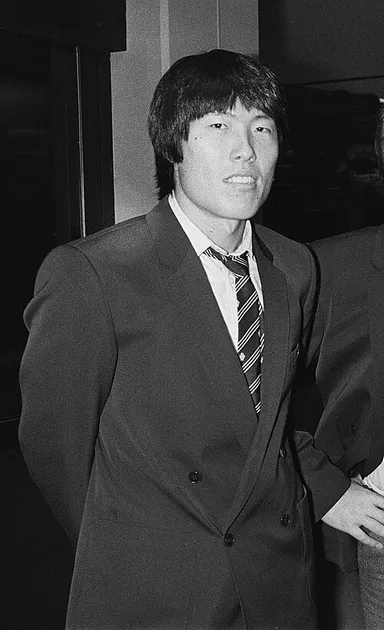 Photo: Nationaal Archief, Den Haag, Rijksfotoarchief: Fotocollectie Algemeen Nederlands Fotopersbureau (ANEFO), 1945-1989 - negatiefstroken zwart/wit, nummer toegang 2.24.01.05, bestanddeelnummer 930-5808. Source and license in Image credits.
Forward
The Korean attacking pioneer whose header levelled the 1988 UEFA Cup final on aggregate.
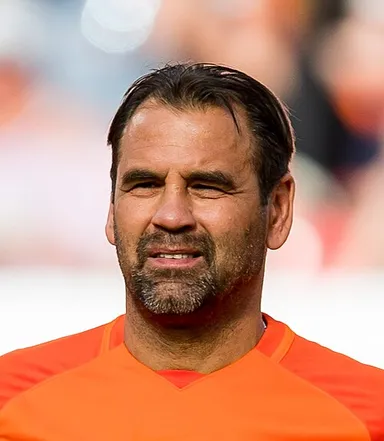 Photo: Sven Mandel. Source and license in Image credits.
Forward
A relentless penalty-box finisher, three-time Bundesliga top scorer and the match-winner in the 1993 cup final.
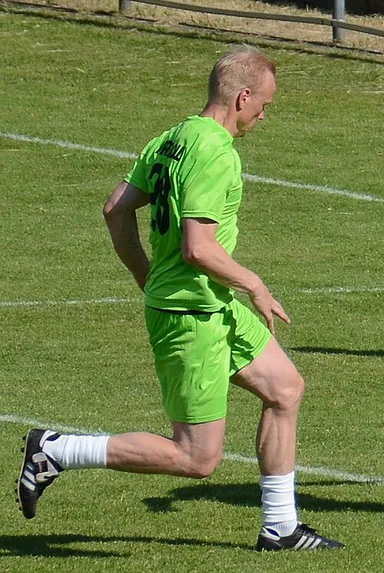 Photo: Chris from Berlin, Germany. Source and license in Image credits.
Midfielder
A versatile defensive leader who captained the team in Glasgow after Nowotny’s injury.
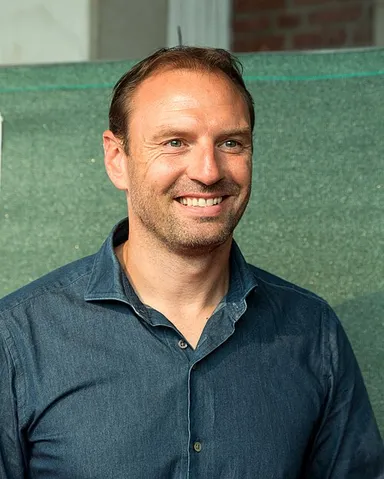 Photo: Frank Schwichtenberg. Source and license in Image credits.
Defender
The long-serving defensive organiser at the heart of the late-1990s and early-2000s sides.
Midfielder
A subtle technician whose touch and invention gave the 2002 team much of its character.
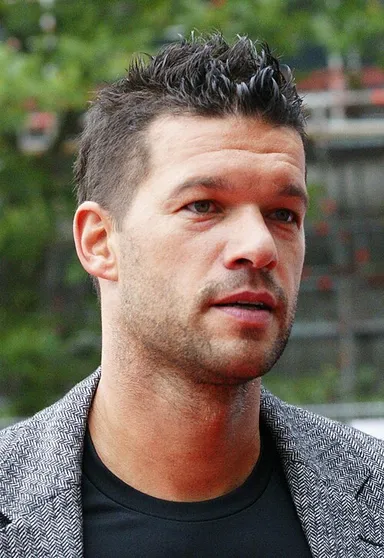 Photo: Die Bildermacherei Cuxhaven, Kerstin Tietje. Source and license in Image credits.
Midfielder
The goal-scoring midfield leader of the 2002 finalists, who returned after spells with Bayern and Chelsea.
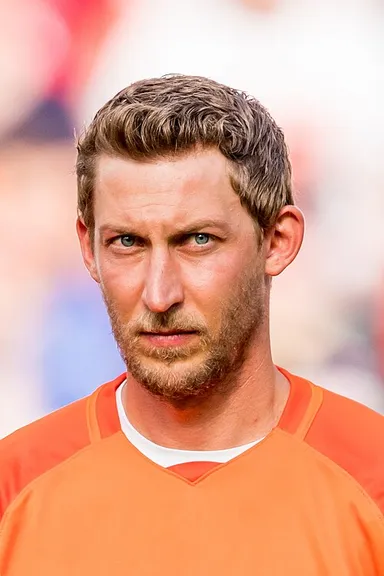 Photo: Sven Mandel. Source and license in Image credits.
Forward
A durable centre-forward and team player whose finishing made him the 2012–13 Bundesliga top scorer.
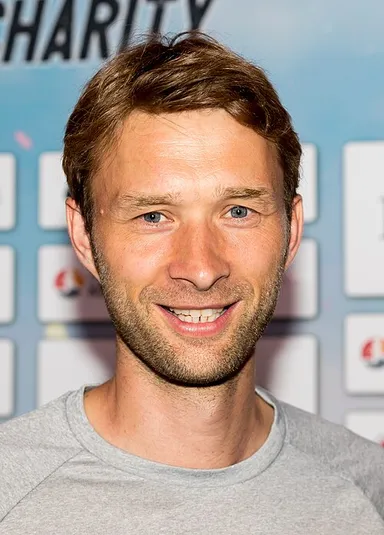 Photo: Sven Mandel. Source and license in Image credits.
Midfielder
A measured midfield organiser and captain who later moved into sporting leadership at the club.
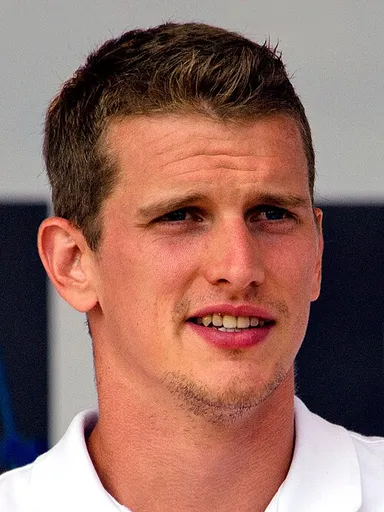 Photo: Fuguito. Source and license in Image credits.
Midfielder
A committed captain whose defensive intelligence connected midfield and the back line over twelve seasons.
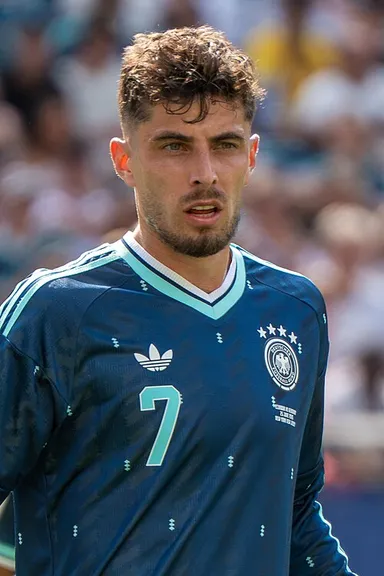 Photo: Bryan Berlin. Source and license in Image credits.
Midfielder
A Kurtekotten graduate who developed from a teenage first-team player into an international attacking midfielder.
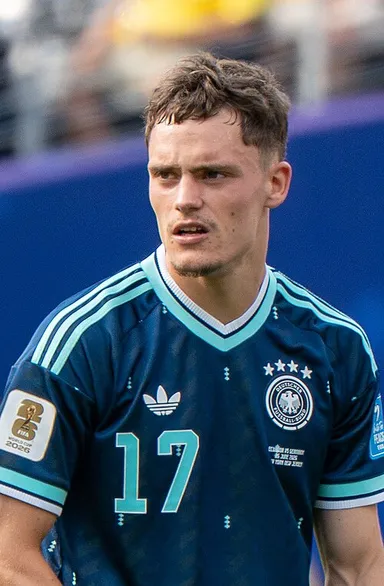 Photo: Bryan Berlin. Source and license in Image credits.
Midfielder
The creative centre of Alonso’s champions, with a hat-trick on the title-clinching day before his 2025 Liverpool move.
The goalkeeper who links the 1988 UEFA Cup and 1993 German Cup wins, with a club record 401 Bundesliga appearances.
Photo: Nationaal Archief, Den Haag, Rijksfotoarchief: Fotocollectie Algemeen Nederlands Fotopersbureau (ANEFO), 1945-1989 - negatiefstroken zwart/wit, nummer toegang 2.24.01.05, bestanddeelnummer 930-5808. Source and license in Image credits.The Korean attacking pioneer whose header levelled the 1988 UEFA Cup final on aggregate.
Photo: Sven Mandel. Source and license in Image credits.A relentless penalty-box finisher, three-time Bundesliga top scorer and the match-winner in the 1993 cup final.
Photo: Frank Schwichtenberg. Source and license in Image credits.The long-serving defensive organiser at the heart of the late-1990s and early-2000s sides.
Photo: Chris from Berlin, Germany. Source and license in Image credits.A versatile defensive leader who captained the team in Glasgow after Nowotny’s injury.
A subtle technician whose touch and invention gave the 2002 team much of its character.
Photo: Die Bildermacherei Cuxhaven, Kerstin Tietje. Source and license in Image credits.The goal-scoring midfield leader of the 2002 finalists, who returned after spells with Bayern and Chelsea.
Photo: Sven Mandel. Source and license in Image credits.A durable centre-forward and team player whose finishing made him the 2012–13 Bundesliga top scorer.
Photo: Sven Mandel. Source and license in Image credits.A measured midfield organiser and captain who later moved into sporting leadership at the club.
Photo: Fuguito. Source and license in Image credits.A committed captain whose defensive intelligence connected midfield and the back line over twelve seasons.
Photo: Bryan Berlin. Source and license in Image credits.A Kurtekotten graduate who developed from a teenage first-team player into an international attacking midfielder.
Photo: Bryan Berlin. Source and license in Image credits.The creative centre of Alonso’s champions, with a hat-trick on the title-clinching day before his 2025 Liverpool move.
Coaching legacy
Club tenure only. Honours include senior first-team league, cup, super cup, continental and world titles where verified. European titles count European Cup / Champions League wins.
1976–1981
Led the 1979 promotion as champions of the northern second division and established the first Bundesliga team.
The 1979 title was in the second tier
1985–1988 · 1995–1996
The coach behind the 1988 UEFA Cup comeback; returned for a separate spell in the mid-1990s.
UEFA Cup winner; no European Cup / Champions League title
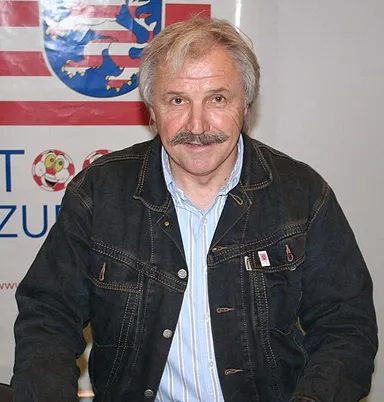 Photo: Benutzer:Smalltown Boy. Source and license in Image credits.
1993–1995
Took over near the end of the 1992–93 season and led the German Cup final victory in Berlin.
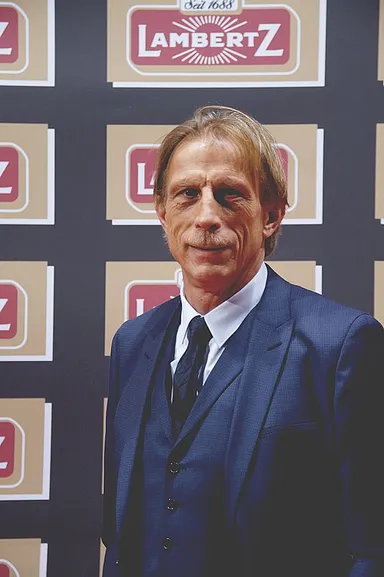 Photo: 9EkieraM1. Source and license in Image credits.
1996–2000
Turned the club into a regular title challenger and led its first Champions League campaign.
2001–2003
Guided the memorable 2002 team to the Champions League and German Cup finals while finishing second in the league.

2009–2011
Restored Champions League qualification with second place in the 2010–11 Bundesliga.

2022–2025
Built the 2024 unbeaten league champions, German Cup winners and subsequent Supercup winners.
Domestic double in 2024; Europa League runners-up, not European champions
Club identity
Bayer 04’s strongest sides pair technical midfielders with direct attacking intent, from the 2002 finalists to Alonso’s controlled, expansive champions.
Kurtekotten and the BayArena provide connected settings for youth development, while first-team opportunity gives the pathway its purpose.
The city’s industrial history and the Bayer Works are part of the club’s origins, name and everyday geography.
The red-and-black home crowd turned the 1988 comeback and the 2024 title-clinching afternoon into shared local memories.
Development and ambition meet here: players can grow into international leaders while the team pursues collective honours.
The Bayer Cross and red-and-black palette tie shirts, flags and the Werkself name back to the works-club identity.
Identity
Stadium
Current home / Leverkusen
Opened in 1958 as the Ulrich-Haberland-Stadion and renamed BayArena in 1998. Pitch repairs briefly sent the team back to the Stadtpark ground in 1958–59, and the 2009 rebuild required a temporary move to Düsseldorf. The modernised ground opened that August with 30,210 places.
Rivalries
A local Rhineland meeting between the Werkself and neighbouring Cologne, shaped by proximity and contrasting club identities.
The derby connects Bundesliga competition with the loyalties of two neighbouring football communities.
Development
Founded · 2000
Opening of the Kurtekotten facility; youth football predates the centre
Connect technical education, individual progression and proximity to the first team, with younger age groups at Kurtekotten and older teams around the BayArena.
Historical role
Havertz and Henrichs represent the club’s academy pathway, alongside the earlier emergence of Castro. Wirtz arrived from Cologne as a teenager in 2020: his later development is central to the club’s story, but differs from growing up throughout the Bayer academy.
Famous graduates
Collection
Kits
Home kit / 2001–02
Home kit / 2023–24
Home kit / 2025–26
Commercial
TECHNICAL SUPPLIER
TECHNICAL SUPPLIER
TECHNICAL SUPPLIER
Kit studies are abstract colour and pattern references, not reproductions of official shirts.
Records
Bundesliga appearances only; not an all-competition total.
As of 2026-09-1528 wins and six draws across the Bundesliga season.
As of 2026-09-15Across all competitions; ended with the 0–3 Europa League final defeat to Atalanta on 22 May 2024.
As of 2026-09-15The UEFA Cup is distinct from the European Cup / Champions League.
As of 2026-09-15